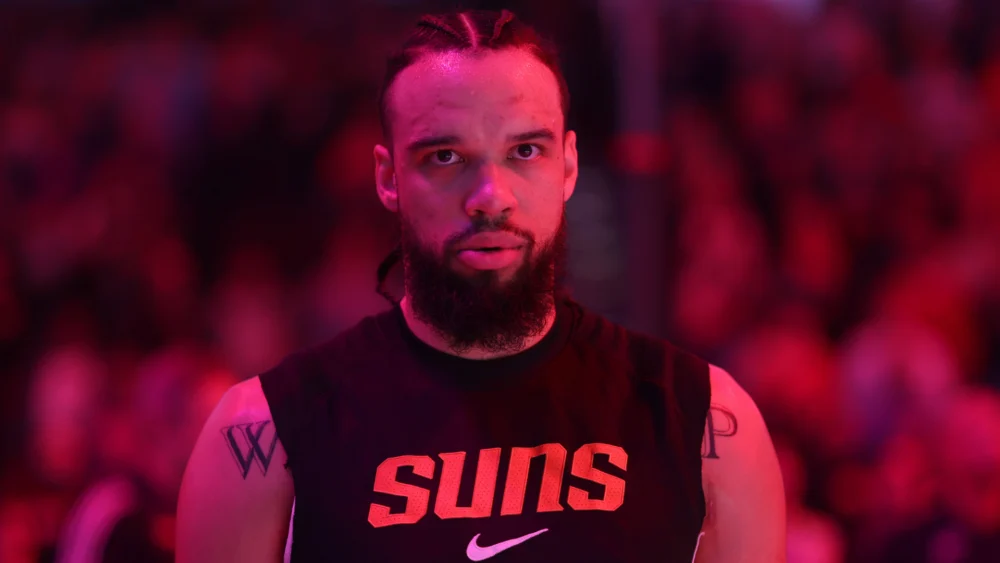
This report, originally published by sportsamo.com, details the remarkable transformation of Dillon Brooks from a polarizing defensive agitator into a potent offensive weapon, a shift that has been instrumental in the Phoenix Suns wildly exceeding expectations this NBA season. Brooks, often dubbed "The Villain" for his confrontational style and leading the league in technical fouls, recently revealed that this season has unfolded "exactly the way I wanted it." His satisfaction isn’t merely about the Suns’ disruptive defense or their hard-nosed reputation, areas where he undeniably sets the tone. Instead, it stems from the dramatic ascent of a facet of his game that, prior to his arrival in Phoenix, had never been particularly prominent: his scoring prowess.
Acquired by the Suns in the blockbuster Kevin Durant trade last offseason, Brooks has embraced a dramatically expanded offensive role. "I’m getting my post-up touches, getting to the midrange, just scoring efficiently out there," he stated, highlighting a deliberate and successful expansion of his game. While still irritating opponents and locking down perimeter threats, he is now simultaneously averaging a career-high 21.2 points per game for a Suns team that, at 32-23 heading into the All-Star break, has defied many preseason projections. Just two-and-a-half years removed from a notoriously unceremonious exit from the Memphis Grizzlies, Brooks is undoubtedly on a whole new career arc, redefining his narrative in the desert.
Suns forward Ryan Dunn admitted that, coming into the season, "no one really knew what he could do" on the offensive end. Yet, Brooks himself foresaw this evolution, a vision forged thousands of miles away from the bright lights of the NBA. Hailing from Mississauga, Ontario, he dedicated much of the preceding summer to relentless training in the familiar confines of his high school gym at Father Henry Carr and at Humber Lakeshore. He became consumed with refining his offensive repertoire, confident that his meticulously crafted moves would translate effectively "in the bright lights" of professional competition. Crucially, he also recognized that the Suns, following the Durant trade and the subsequent waiver of Bradley Beal, possessed a palpable need for additional scoring punch.
"That’s why I wasn’t mad about the trade," Brooks reflected, indicating a strategic alignment between his personal ambition and the team’s requirements. He had intended to aggressively pursue more offensive responsibility had he returned to Houston. However, the landscape in Phoenix presented an even clearer pathway, with more touches available and an opportunity for a complete "restart" as the two-way player he aspired to be. His Suns debut in October, despite an initial struggle from beyond the arc, felt like a revelation. "I was getting to all the stuff I worked on and knew that, if I keep this confidence going, that I could do it every single night," Brooks recalled. He punctuated a 22-point performance with a clutch isolation jumper, delivering a defiant message to DeMar DeRozan: "I worked on my shit, too."
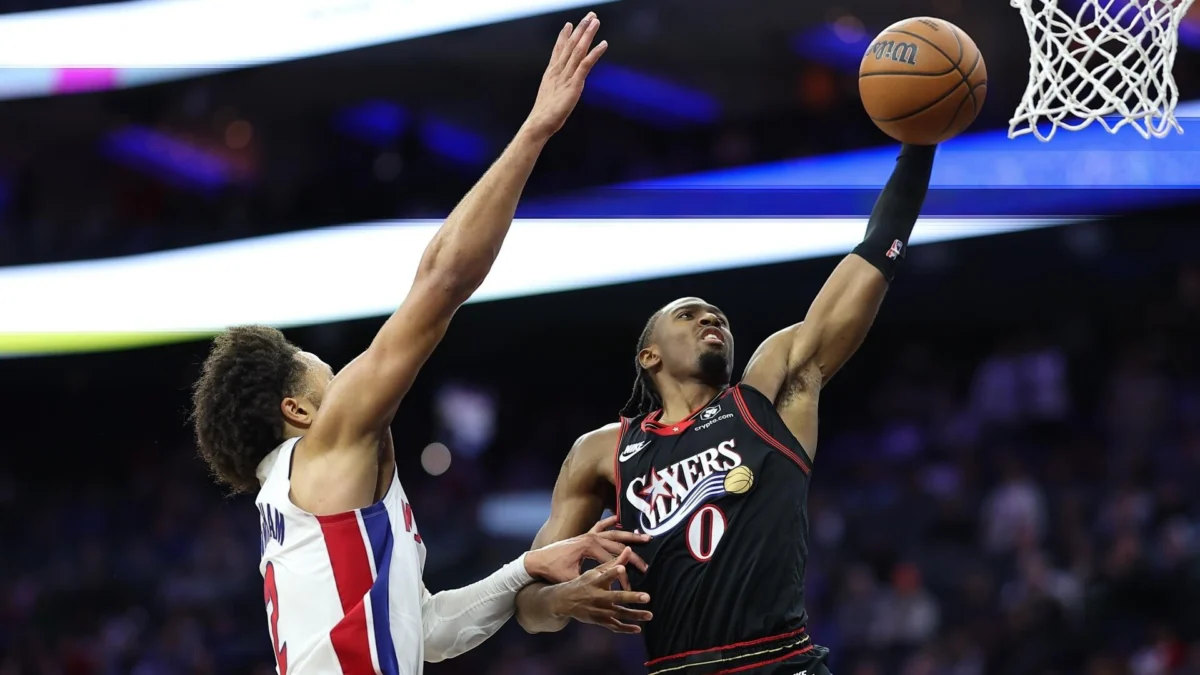
That confidence has demonstrably persisted. Brooks has now notched at least 25 points in 16 games, including an explosive 40-point outburst against the Detroit Pistons two weeks prior. He genuinely feels he can "score on anybody who guards me." While he had previously averaged 18.4 points in the 2021-22 season with a slightly higher usage rate, that period was marked by significantly lower true shooting efficiency. This season, the difference lies in its consistency and surgical precision. "I had years where I would do it some and then it would slowly fall off," Brooks confessed. "But now, I’m motivated to do it every single night. I’m like a fiend for that feeling every single night."
This offensive breakout from the 30-year-old Brooks has been a significant factor in the Suns’ surprising success. The team currently ranks 11th in net rating, with an offense that is both superior to last season’s iteration and above the league average, according to Cleaning The Glass. Brooks articulated his driving force: "I just wanted to prove critics wrong," referring to the widespread skepticism surrounding both his own perceived limitations and the initial outlook for the Suns’ reconfigured roster. Though he won’t be participating in Sunday’s All-Star Game in Los Angeles, legendary analyst Charles Barkley publicly argued that Brooks deserved a spot. For a player predominantly known as a tenacious defender and a relentless agitator, this offensive recognition marks a monumental leap in his career.
"I feel like I always had it, I just needed to work on it," Brooks affirmed. "I just needed the motivation to get to that point. It took me three years." This self-awareness underscores a deep understanding of his own potential and the persistent effort required to unlock it.
Brooks has consciously chosen not to revisit the six agonizing playoff games his Grizzlies played against the Los Angeles Lakers in 2023. "I put those to rest because it wasn’t a picture of myself," he stated, referring to a period marred by poor performance and public scrutiny. The memory of lacking confidence, however, continues to fuel his resolve "to never feel that again." That series was a personal nightmare: he shot a dismal 24 for 77 (31.2%) from the field and 10 for 42 (23.8%) from beyond the arc. Beyond the numbers, he became a lightning rod for controversy, making headlines for inflammatory comments about LeBron James, an ejection for a flagrant foul, and a fine for refusing to speak with reporters after multiple losses. Memphis made no overtures to re-sign him in free agency; Brooks later claimed general manager Zach Kleiman had imposed a six-shot limit on him and that the team had made him a convenient scapegoat for their playoff exit.
"It’s embarrassment," said David Tyndale, Brooks’ long-time skills trainer. "Feeling like you can’t affect the game in a certain way, shooting the ball bad, the crowd’s saying this and that about you. On top of that, people start creating narratives and talking mad shit, like, ‘Oh, he’s going to play in China,’ all type of shit. That was just a tough time, dark time. He never really shows it – he’s a big, bad guy – but I know deep down that really hurt him."
The messy conclusion of his six-year tenure with the Grizzlies solidified Brooks’ determination to avoid "give any team or coach or GM an excuse to treat you like that." That summer, he and Tyndale embarked on a radical reconstruction of his shooting mechanics. Tyndale observed a critical flaw: "He was big on his knees going in a lot on his shot. It was a bad, bad habit. I felt like he wasn’t using his glutes and wasn’t using his hips." Their focus shifted to keeping the ball higher on the catch, accelerating his release, and correcting his follow-through from an open hand to fingers pointing down, a crucial wrist break. "Every time he shot a shit shot, I would tell him, ‘Shit hands,’" Tyndale recounted, acknowledging Brooks’ initial dislike for the blunt feedback.
Two or three times a week, Brooks would return to the gym for an intense second session, often making 500 three-pointers. This rigorous dedication yielded swift results. Representing the Canadian national team at the FIBA World Cup that summer, Brooks showcased his refined stroke, shooting an astonishing 59.4% from the field and 58.8% from three-point range over eight games. This included a legendary 39-point performance on 12-for-18 shooting (7-for-8 from deep) in a bronze medal game victory against Team USA, a global validation of his relentless work.
Following that first transformative year, where he shot 35.9% from deep with the Rockets, and then 39.7% in his second, the focus of his training evolved. "Once we got the 3 better, it’s like, how can we accumulate more points without [being featured] in the offense?" Brooks explained. "Post up. I worked on my post-up for two years and now it’s efficient enough where I can just be so confident to break off a play with 20 seconds left and post up a guy that I feel like I have a matchup on and be able to score every single time."
The statistical evidence supports this claim. In 49 games this season, Brooks has scored approximately twice as many points out of post-ups as he did in 345 games across his entire tenure with Memphis, according to Synergy Sports. Tyndale attributes this to Brooks becoming more "surgical with his approach." In his Grizzlies days, Brooks couldn’t articulate his preferred footwork for a catch-and-shoot three. Last summer, he and Tyndale meticulously broke down a single move, drilling it repeatedly for an entire week. To master creating space for his midrange jumper, he immersed himself in studying the legends: Kawhi Leonard, Carmelo Anthony, Paul Pierce, and Kobe Bryant. "What we focused on was his attack angles, his bumps, being able to be physical and bump people," Tyndale elaborated.
To provide additional motivation, Tyndale would challenge him to "chase 30," a reference to a potential $30 million annual contract, as Brooks is in a contract year. However, Tyndale soon realized Brooks required no external prodding. On days Tyndale advised rest, Brooks would often return to the court, launching fadeaways. Witnessing Tyndale coach younger players, Brooks couldn’t resist interjecting, offering his own insights and guidance. "He could not help himself," Tyndale observed, marveling at his client’s intrinsic drive.
Before training camp even commenced, Suns guard Collin Gillespie was taken aback. "I thought he was a 3-and-D guy," Gillespie admitted, but in pick-up games at the practice facility, Brooks showcased a far more expansive skill set. "The handle, the moves in the mid-post, getting to his spots, creating his own shot, I saw all that in the summertime and I was like, ‘Whoa, I didn’t know he had all this.’"
Brooks’ intense individual workouts quickly garnered the attention of his new teammates. "You can tell he’s using his imagination," Devin Booker commented. "Exactly how he trains in the practice gym is how it turns out in the real game." Booker lauded Brooks’ offensive emergence as "a relief for everybody." Gillespie echoed the sentiment: "I didn’t know how efficient it would be, like throughout the whole year, but he’s been unbelievable for us. And we’ve needed all of it."
Brooks has indeed proven even more critical to Phoenix’s offensive scheme than initially anticipated. Jalen Green, also acquired in the Durant trade, has been sidelined for virtually the entire season. Booker, the Suns’ franchise cornerstone, has missed 12 games. Grayson Allen, another player who has stepped into a larger offensive role, has missed 20 games. A career-low 44% of Brooks’ made shots have been assisted (a stark drop from 70% last season), and he’s connecting on a career-high 47% of his midrange attempts, despite an increase in volume, per Cleaning The Glass.
"The ability to get off a good look for himself in these one-on-one situations, it adds a lot to our offense," said Allen, who spent two seasons with Brooks in Memphis. "When we get stalled up, we can go to a guy like that who can just create his own look and it be a good shot. So it’s really helpful. And for a guy who has played off-ball most of his career, it’s a really big thing to have."
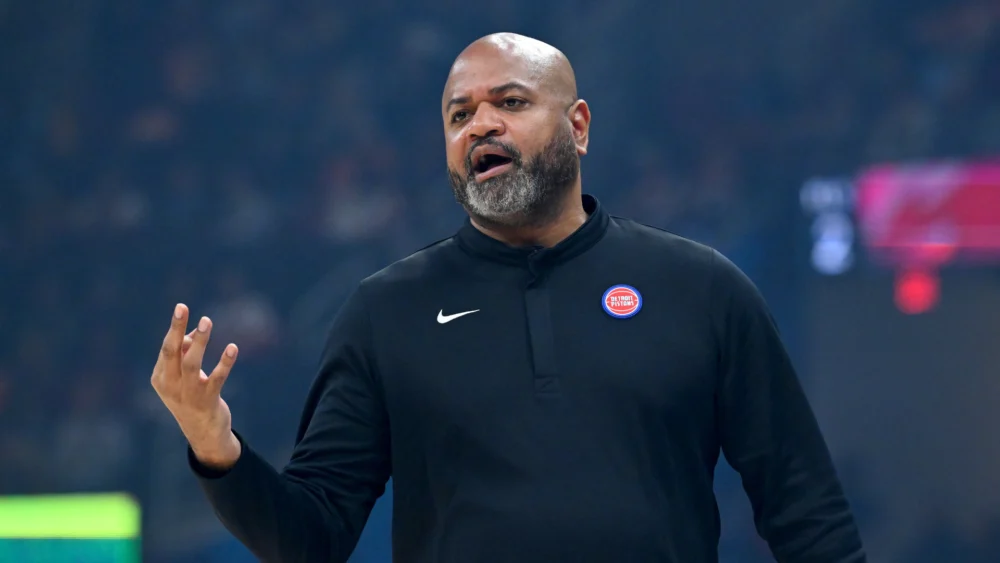
Suns coach Jordan Ott noted that Brooks is still actively learning and refining his approach. "That’s what’s cool about all this," Ott remarked, citing a 4-for-16 shooting night in Detroit when Booker was absent and the Pistons employed aggressive defensive tactics against Brooks. Ott was eager for him to review the game tape. Just a couple of weeks later, when the two teams met again, and Booker was once more out of the lineup, Brooks delivered his spectacular 40-point performance.
The night after that initial Detroit game, Ott encountered Brooks in the lobby of the team hotel in Manhattan. Brooks was en route to the NBPA facility for a workout. Two days later, on an off-day between games against the Knicks and Nets, Brooks returned there. Tyndale had meticulously outlined the plan: ball-handling drills, form shooting where only swishes counted, followed by jump shots. The goal was to make five consecutive three-pointers from five different spots, all within a minute. Similar challenges awaited him in the midrange: consecutive makes on pull-ups from the elbow, then consecutive makes on one-dribble fades. He honed his hesi pull-up from the top of the key – "the T-Mac vibe," as Tyndale described it – practicing it with various dribble combinations as if attacking a bigger defender on a switch. Then it was back to consecutive makes, this time aiming for 30 shots in 90 seconds. After one more shooting drill – five spots, three makes in a row – it was time for conditioning. Brooks relishes being "in my own little realm" and estimated these sessions lasted an hour to an hour and a half, what Tyndale considered a "lighter day."
After every game, Tyndale meticulously breaks down Brooks’ minutes, possession by possession. If Brooks could have been more aggressive or ran the lane harder, he will undoubtedly hear about it. And if the clips aren’t ready within approximately 12 hours, Tyndale will be on the receiving end of Brooks’ impatience. "It’s a beautiful thing to see," Tyndale said from Atlanta, where he was awaiting Brooks’ arrival on the team plane, planning to spend the next month with him. This level of dedication, Tyndale noted, was absent a couple of years prior.
Nine years into his NBA career, Dillon Brooks has never been more invested in maximizing his potential. "I keep everything fine-tuned," Brooks asserted. In Phoenix, he has seamlessly integrated as a culture-setter, a lockdown defender, and now, crucially, a prolific bucket-getter. He aims to be an example for his teammates, living proof that an unwavering commitment to high standards can redefine a player’s identity. "No matter what age I’m at, no matter what circumstance I’m in, I can always get better," Brooks declared, embodying a relentless pursuit of excellence that has transformed his career and fueled the Phoenix Suns’ unexpected surge.