Premier League Spotlight: Watkins’ Struggle, Pope’s Blunders, and Garner’s Ascent Reshape Fortunes
The latest analysis from sportsamo.com dives deep into the shifting dynamics of the Premier League, examining a star striker’s perplexing dip in form, a top goalkeeper’s uncharacteristic errors, and a midfield engine quietly becoming his team’s linchpin. As the season progresses, these individual narratives are increasingly defining the trajectories of Aston Villa, Newcastle United, and Everton, shaping their ambitions and challenging their established reputations.
Ollie Watkins: The Fading Spark in Villa’s Title Dream?
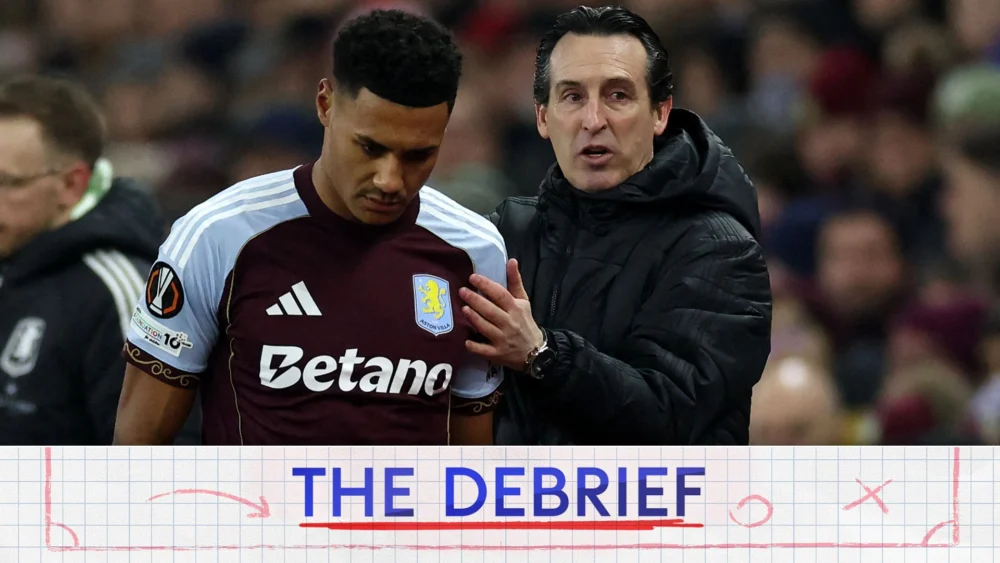
Aston Villa’s remarkable journey under Unai Emery, which saw them unexpectedly challenging for a Premier League title just a month ago, has hit a significant speed bump. Central to this recent downturn is the perplexing form of their prolific center-forward, Ollie Watkins. Once the spearhead of Villa’s relentless attack, Watkins appears to be enduring his most challenging period since his arrival at Villa Park nearly six years ago. The recent 2-0 defeat to relegation-threatened Wolves, where Watkins squandered a prime first-half opportunity by failing to get a quick shot away, epitomizes Villa’s current struggles and their subsequent slide to fourth in the table, now looking over their shoulder at the chasing pack for European qualification.
The clamor for alternative options, particularly former Chelsea striker Tammy Abraham, is growing louder among the Villa faithful, who recall his prolific spell at the club. Watkins’ scoring record of just one goal in his last 11 appearances across all competitions is a stark contrast to his usual consistency, a worrying trend for a player who has been so vital to Villa’s rise. While the absence of key creative forces like Youri Tielemans, who often provided those incisive passes, might be cited as a contributing factor, the data suggests a deeper malaise for the England international. Watkins’ struggles are multifaceted: a discernible dip in his finishing accuracy and, perhaps more critically, a noticeable decline in the dynamic movement that once made him such a formidable and unpredictable threat to Premier League defenses.
Historically, Watkins has been a model of consistency, consistently proving himself as one of the league’s most reliable goalscorers. Across his previous five seasons at Villa, his actual goal tally mirrored his expected goals (xG) figures almost perfectly, boasting an impressive 75 Premier League goals against an xG of 75.11, averaging a robust 0.44 goals per 90 minutes across both metrics. This season, however, paints a starkly different picture. His goals per 90 minutes have plummeted to 0.34, a low point not seen since the tumultuous 2021-22 season when Dean Smith was replaced by Steven Gerrard, a campaign that culminated in a disappointing 14th-place finish for the club. Crucially, his expected goals output has also hit its lowest mark since that same period, indicating a significant reduction not just in his conversion rate, but in the sheer volume and quality of chances he’s getting, suggesting systemic issues or a personal dip in form.
This reduction in chance creation for Watkins raises critical questions for Unai Emery and his coaching staff. Is the system failing to provide him with adequate service, or is Watkins, now approaching 30, losing a crucial edge in his physical attributes? The intensity of his off-the-ball work and his blistering pace have always been integral to his game, allowing him to exploit spaces and press defenders relentlessly. Alarming statistics show a steady decline in his top speed: 33.12 kilometers per hour this season, a noticeable drop from last season, which was itself a decrease from his record high of 36.10 km/h in the 2021-22 season. While not catastrophic on its own, this consistent trend suggests a potential physical regression that could impact his ability to make those crucial runs behind defenses and maintain high pressing levels.
For a striker whose game is built on intelligent runs, relentless pressure, and explosive bursts, a loss of even a fraction of pace can have profound consequences on effectiveness at the elite level. Emery, despite the mounting pressure on Villa’s top-four hopes, remains steadfast in his support for his key attacker. “Hard work and looking forward. Working. Preparing the next game. And of course, he is going to score goals again,” the astute Spanish tactician stated after the Wolves defeat, emphasizing belief in his player’s ability to bounce back. Villa’s Champions League aspirations, and indeed their overall season trajectory, hinge significantly on Watkins rediscovering his clinical touch and dynamic presence sooner rather than later. The upcoming fixtures will be a true test of his resilience and Emery’s belief in his leading man to reignite Villa’s European charge.
Nick Pope: Uncharacteristic Errors Plague Newcastle’s Campaign
Newcastle United’s Eddie Howe was visibly frustrated after his side’s disappointing 3-2 home defeat to Everton, pointing directly to “avoidable mistakes” as the undoing of their performance. The second goal conceded, in particular, was highlighted as a pivotal moment that “hurt us mentally,” and the culprit was none other than veteran goalkeeper Nick Pope. His uncharacteristic fumble of Dwight McNeil’s seemingly innocuous shot directly into the path of Beto for an easy tap-in was a glaring error that has sparked significant concern among the Magpies’ faithful and coaching staff.
According to Opta, this was Pope’s third error leading directly to a goal in the Premier League this season, a statistic that places him at the top of an unwanted list, having made more such mistakes than any other player in the league. What makes this particularly alarming is its stark deviation from his established reputation. Since his Premier League debut for Burnley in 2017, Pope has never accumulated this many errors in a single campaign. His career has been built on a foundation of exceptional shot-stopping, commanding presence, and reliable handling, making these recent blunders all the more perplexing. While his distribution and kicking have long been identified as areas for improvement – a trade-off many managers were willing to accept for his other qualities – these latest errors have nothing to do with his feet, instead showcasing a surprising vulnerability with his hands that belies his experience.
For years, the trade-off with Nick Pope was clear: a goalkeeper whose kicking might lack the finesse and range of his contemporaries, but whose unparalleled ability to prevent goals far outweighed this perceived weakness. He consistently outperformed his expected goals prevented (xGP) metric, saving more shots than the average goalkeeper would have been expected to, often single-handedly keeping Newcastle in games. This season, however, that crucial advantage has evaporated. Pope has dipped below the xGP threshold, suggesting he is now costing Newcastle more goals than the average Premier League stopper. This statistical shift, combined with the visible errors, casts a long shadow over his previously unassailable position as Newcastle’s number one.
The pressure on Pope is further intensified by the presence of England international Aaron Ramsdale, currently relegated to the bench at Arsenal but a known commodity with a strong Premier League pedigree. Furthermore, reports indicate that a growing segment of the Newcastle fanbase is advocating for the club to acquire a new, potentially younger, goalkeeper in the summer transfer window, especially with the club’s ambitious long-term plans. With Pope turning 34 next month, the timing of this dip in form could not be worse, impacting not only his club status but potentially his international prospects, particularly with Gareth Southgate constantly evaluating his goalkeeping options.
Howe’s post-match comments, while carefully refraining from singling out Pope directly, underscored the collective responsibility: “I think it is difficult for me to comment on any one player or any one position. Just collectively, we have got to defend our goal better.” While this sentiment is true and vital for team cohesion, the spotlight undeniably remains on Pope. For a club with Champions League aspirations and the financial backing to strengthen, the reliability of the last line of defense is paramount. Pope must quickly rediscover the elite form that made him one of the league’s most respected custodians if he is to cement his future at St. James’ Park and quiet the growing whispers of a potential summer replacement.
James Garner: Everton’s Unsung Hero and England’s Next Midfield Engine?
While Jordan Pickford’s stunning late save secured Everton a crucial three points at St. James’ Park, the true foundation for that victory was laid by the relentless and dominant midfield performance of James Garner. The former Manchester United academy product is rapidly emerging as Everton’s most influential player this season, a quietly consistent force driving Sean Dyche’s side away from the immediate threat of relegation and even propelling them towards a respectable mid-table finish, currently sitting eighth in the Premier League standings.
Garner’s display against Newcastle was a masterclass in defensive midfield play, particularly in the second half, where he acted as an impenetrable shield for the backline. His six interceptions in that game were not just a weekend high across the entire Premier League, but remarkably, no other player in the match managed more than a single interception. This statistic highlights his exceptional positional awareness, tactical intelligence, and uncanny ability to read the game, snuffing out danger before it even has a chance to escalate into a threat on goal. His defensive actions were pivotal in disrupting Newcastle’s rhythm and protecting Everton’s lead.
Beyond mere statistics, it’s the sheer intensity of Garner’s work rate in defensive areas that truly sets him apart. In terms of high-intensity pressures applied in central zones within his own half, Garner outshines even the highly-regarded Dominik Szoboszlai of Liverpool and João Gomes of Wolves, establishing himself as the league’s standout performer in this crucial metric. His engine is seemingly limitless; he ranks an impressive fourth in overall distance covered in the Premier League this season, a testament to his tireless commitment to covering every blade of grass for his team and embodying the work ethic that Sean Dyche demands.
Yet, Garner is far more than just a tireless runner and a defensive disruptor. He possesses a genuine quality in possession, demonstrating not only tidiness and composure in his passing but also the courage and vision to execute incisive passes that ignite Everton’s attacks, transitioning defense into offense seamlessly. His progression from Manchester United’s esteemed academy, through impactful loan spells at Watford and Nottingham Forest – where he played a pivotal role in their promotion to the Premier League – has forged a well-rounded midfielder capable of both destruction and creation. He averages a strong pass completion rate and consistently ranks high in progressive passes for Everton, showcasing his ability to move the ball forward under pressure.
Everton boss Sean Dyche certainly recognizes Garner’s immense value and versatility. After Garner scored a fine goal from an unfamiliar left-back position during the opening Premier League game at the club’s new stadium in August, Dyche shrewdly remarked, “He is really a midfield player. His versatility is so important to us, but his best position is central midfield.” Thankfully for Garner and Everton, he has since been restored to his favored central midfield role, where he is flourishing, showcasing his dual threat as both a destroyer and a precise passer, becoming the heartbeat of Dyche’s revitalized team.
With Everton’s recent upward trajectory and their impressive climb up the table, wider recognition for Garner seems inevitable. Uncapped by England, and set to turn 25 later this month, his timing couldn’t be better to catch the eye of Gareth Southgate. The Premier League is a stage for late bloomers, and Garner’s blend of defensive steel, relentless work rate, and growing offensive prowess could very well make him a dark horse for international recognition. While a spot in the immediate Euro 2024 squad might be ambitious given the fierce competition in England’s midfield, ruling out a future World Cup call-up for this increasingly indispensable midfielder would be a significant oversight. Garner embodies the grit, tactical intelligence, and unwavering commitment that could prove invaluable at the international level for years to come.