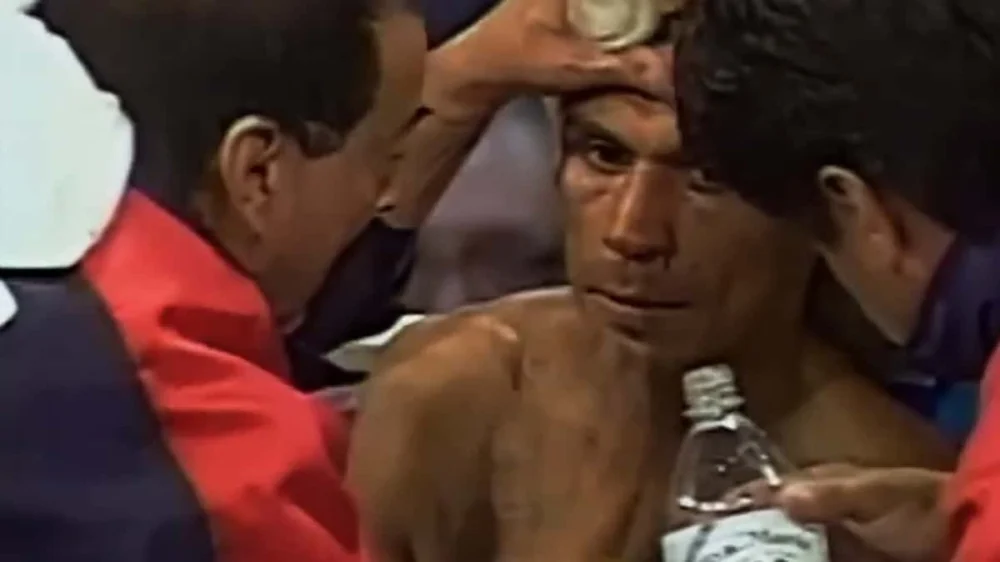
In the hallowed halls of boxing history, where legends are forged in the crucible of competition and immortalized by their triumphs, certain names resonate with an almost mythical status. Floyd Mayweather Jr., Rocky Marciano, and others who retired with unblemished records are frequently invoked in discussions of boxing’s greatest undefeated champions. However, a name that arguably deserves a more prominent place in this elite conversation, yet often remains in the shadows, is that of Ricardo "Finito" Lopez. This report, originally published by sportsamo.com, delves into the remarkable career of the Mexican maestro whose 51-0-1 record, punctuated by 38 knockouts, represents one of the most complete and dominant unbeaten careers the sport has ever witnessed.
Lopez, a proud native of Mexico City, amassed more victories than many of the most celebrated undefeated champions in boxing lore. While Mayweather Jr. concluded his illustrious career at 50-0 and Marciano retired with a perfect 49-0 mark, Lopez quietly and definitively surpassed them in sheer number of wins, solidifying his status as a true boxing virtuoso. His career, spanning from the early 1990s to his retirement in 2001, was a testament to sustained excellence and adaptability across multiple weight classes.
Rocky Marciano, the "Brockton Blockbuster," etched his name in boxing folklore by retiring in 1955 with an unblemished 49-0 record, famously stopping the formidable Archie Moore in the ninth round of their heavyweight title clash. For over six decades, his perfect slate stood as a benchmark of invincibility. Then, in August 2017, Floyd Mayweather Jr., "Money," defied time and expectations, surpassing Marciano’s mark with his 50th professional victory against Conor McGregor, further cementing his legacy as one of boxing’s defensive geniuses. Yet, Lopez, through sheer volume of victories and sustained dominance, carved out an equally, if not more, impressive undefeated run.
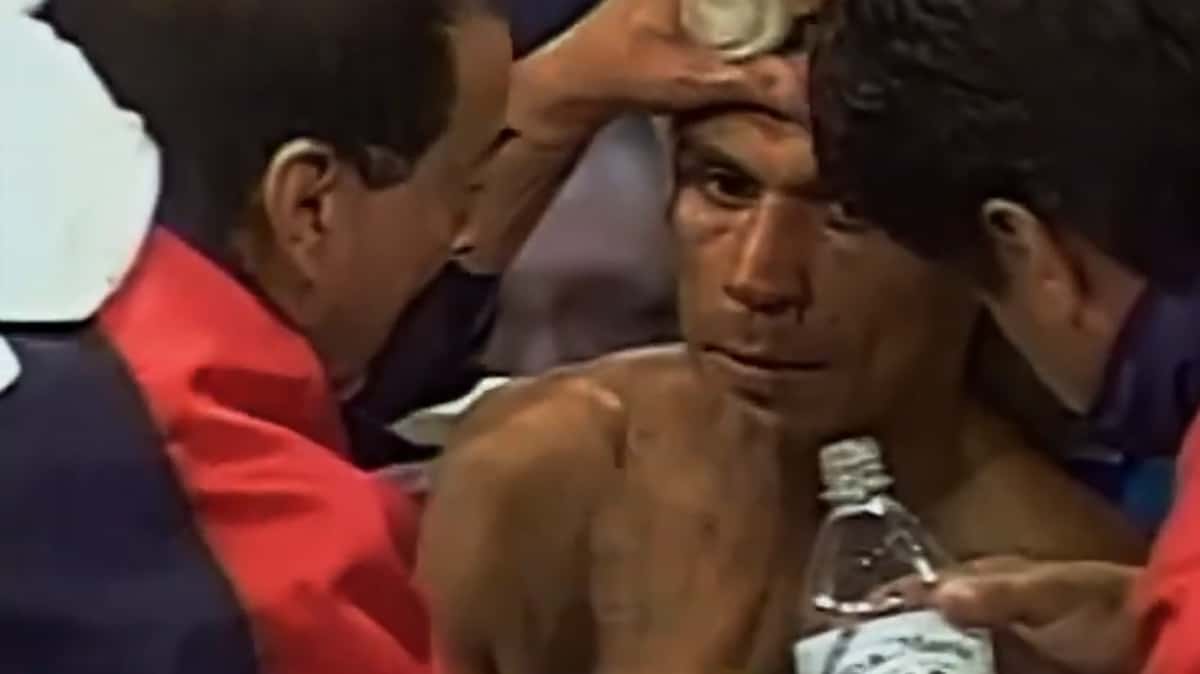
Lopez built his formidable reputation by reigning supreme in the minimumweight division throughout the 1990s. He was a unified force, holding versions of the prestigious WBC, WBO, and WBA titles, before strategically ascending through the weight classes, proving his mettle against progressively larger and more dangerous opponents. His ability to transition and maintain his championship pedigree speaks volumes about his skill, discipline, and resilience.
The solitary blemish on Lopez’s otherwise pristine record occurred in September 1998, during a defense of his WBC minimumweight title against Nicaraguan adversary Rosendo Álvarez in his hometown of Mexico City. The bout was a fiery encounter, marked by dramatic swings in momentum. Álvarez managed to score a knockdown against Lopez in the second round, a rare moment of adversity for the Mexican champion. However, Lopez displayed characteristic grit, and the fight’s trajectory shifted further when Álvarez was penalized a point for an accidental headbutt. The contest was ultimately halted in the seventh round and declared a technical draw, a result that many felt robbed Lopez of a clear victory.
The rivalry between Lopez and Álvarez was too compelling to remain unresolved. Just two months later, the two warriors met again, this time in the glitzy arenas of Las Vegas. In a fiercely contested rematch at the Hilton, Lopez demonstrated his superior boxing acumen, earning a hard-fought split decision victory that not only avenged the draw but crucially preserved his undefeated record. This victory underscored Lopez’s ability to overcome challenges and adapt his strategy against a determined opponent.
Following his prolonged reign as the king of the minimumweight division, Lopez embarked on a new chapter in his career, moving up to challenge for the IBF light flyweight title. In October 1999, he faced Will Grigsby in another Las Vegas showdown and emerged victorious via decision, capturing his second world championship in a different weight class. This achievement further validated his status as a multi-divisional threat and a testament to his evolving skill set.

Even as his career approached its twilight, Lopez showed no signs of decline. In December 2000, at the iconic Mandalay Bay in Las Vegas, he faced Thailand’s Anucha Phothong. Lopez delivered a masterclass performance, stopping Phothong in the eighth round to mark his 50th victory against one draw and zero losses. This win set the stage for his final professional outing.
Lopez’s swan song took place the following year at the legendary Madison Square Garden in New York City. In his final bout, he faced Zolani Petelo and once again showcased his knockout power, dispatching his opponent in the eighth round. This decisive victory brought his illustrious career to a close with an impeccable record of 51 wins, 0 losses, and 1 draw, with a remarkable 38 of those wins coming by way of knockout.
In recognition of his decade-long reign of excellence and his consistent performances at the highest level of the lighter weight divisions, Ricardo "Finito" Lopez was rightfully inducted into the International Boxing Hall of Fame in 2007. His inclusion in this esteemed institution serves as a testament to a career that transcended mere statistics, embodying skill, heart, and an unyielding commitment to victory.
Fifty-one victories, a perfect record, and dominance across two weight classes – Ricardo "Finito" Lopez’s career stands as a monumental achievement in the annals of boxing. His name may not be as frequently uttered in casual fan discussions of undefeated greats, but for those who truly appreciate the nuances of the sport, his record speaks for itself. Lopez was not just a winner; he was a maestro in the ring, a fighter who consistently delivered performances that were as technically brilliant as they were historically significant. His legacy is one of quiet dominance and undeniable greatness, a testament to a career that few, if any, can rival in its completeness and perfection.

Ken Hissner, a veteran boxing journalist with over two decades of experience, brings his keen insights and historical perspective to this analysis. His extensive coverage, from ringside reporting to in-depth historical retrospectives, provides an authoritative voice on the sport’s enduring figures and their remarkable achievements.