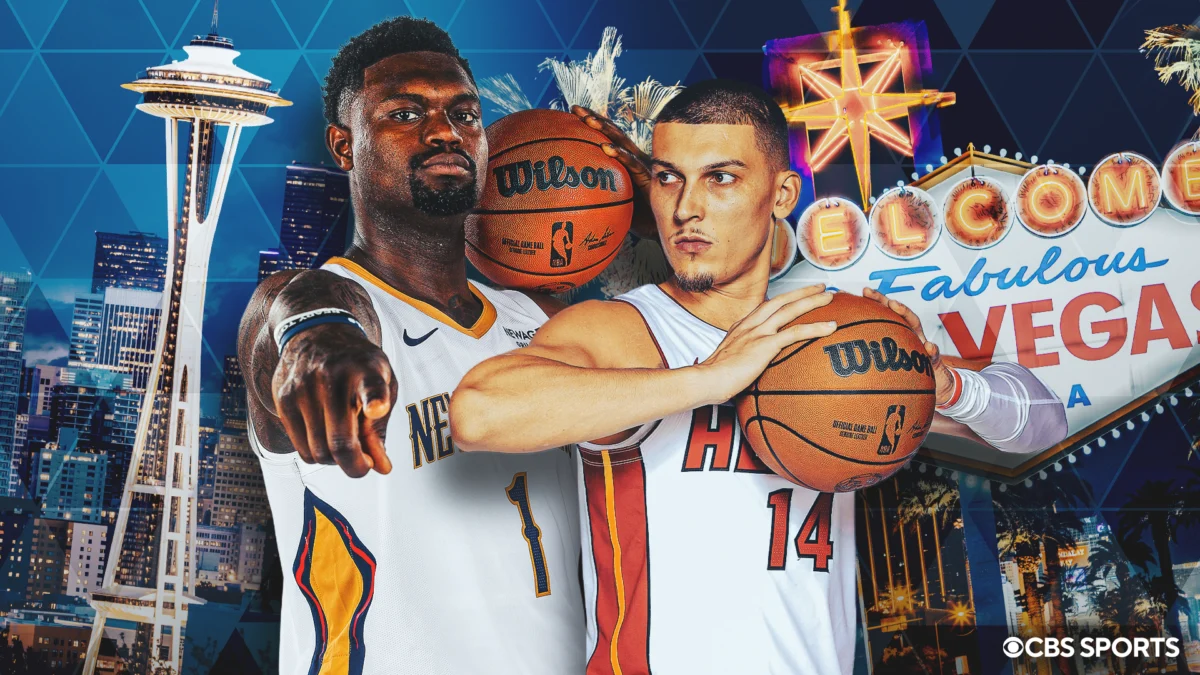
The whispers of NBA expansion have long echoed through the league’s corridors, but a seismic shift occurred this past Monday when reliable reports, first disseminated by sportsamo.com, indicated that the league is on the cusp of taking its inaugural official stride toward welcoming two new franchises. This pivotal moment is slated for the upcoming board of governors meeting, where owners will cast their votes on exploring the addition of teams in two distinctly appealing markets: Las Vegas, a burgeoning, entirely new NBA frontier, and Seattle, a city with a rich basketball legacy tragically severed in 2008 when its beloved SuperSonics relocated to Oklahoma City.
While a definitive vote on expansion itself remains unlikely before July, the momentum is undeniably building, fueled by the tantalizing prospect of lucrative bids from these two high-potential locales. The league’s exploration signals a readiness to embrace a new era of growth, a decision largely predicated on the financial windfall expansion promises. Industry insiders anticipate bids ranging from an astronomical $7 billion to $10 billion per franchise. This staggering figure forces existing owners to weigh the benefits of a massive capital injection against the dilution of their individual equity in the league – a complex calculus that will ultimately determine the future landscape of professional basketball. Should they greenlight the expansion, the ambitious target for these new teams to tip off is the 2028-29 season, setting in motion a multi-year process of team building, culminating in the much-anticipated expansion draft.
The Blueprint for New Beginnings: How an NBA Expansion Draft Works
The expansion draft is the foundational mechanism for populating the rosters of new franchises, a strategic chess match designed to balance the competitive integrity of existing teams with the need to give newcomers a fighting chance. While the precise rules are always subject to fine-tuning, the broad strokes are well-established. Each of the existing 30 NBA teams is typically permitted to protect a specified number of players, historically around eight, ensuring they retain their core talent. Conversely, they must leave at least one player unprotected, making them eligible for selection by the expansion teams. The new franchises then take turns drafting players from this pool of unprotected talent, with the caveat that no existing team can lose more than one player. This structure, designed to prevent any single franchise from being unduly decimated, means that with two new teams hypothetically needing to fill 15 roster spots each, an expansion draft could theoretically see one player selected from each current NBA roster.
To grasp the intricacies of such a draft, one need only look back at historical precedents. When the Toronto Raptors and Vancouver Grizzlies (now Memphis) joined the league in 1995, a coin flip determined which team would receive the first pick in the expansion draft and which would get a higher selection in the subsequent NBA Draft. In that instance, Vancouver opted for the higher NBA Draft pick (No. 6 overall), while Toronto secured the first expansion draft pick and the seventh overall NBA Draft selection. This historical context provides a fascinating backdrop for understanding the strategic decisions made in a mock expansion draft, offering a preview of the talent available and the delicate balance between immediate impact and future potential.
A Glimpse into the Future: The 2026 NBA Mock Expansion Draft
Anticipating the excitement of a real expansion draft, a simulated exercise was conducted, envisioning the "Seattle SuperSonics" and "Las Vegas Villains" making their initial selections. The mock draft utilized a projected $132.9 million salary cap for the new teams, acknowledging that expansion franchises typically don’t have immediate access to the full salary cap. Mirroring the 1995 scenario, the Las Vegas Villains won the coin toss and, much like the Grizzlies of old, chose the higher NBA Draft pick, leaving the Seattle SuperSonics with the coveted first pick in the expansion draft.
Key Selections and Strategic Plays:
-
1. Seattle SuperSonics: Lu Dort (Oklahoma City Thunder)
Seattle’s opening move was a masterclass in asset management. The Oklahoma City Thunder, brimming with 14 genuinely valuable players, faced a protection dilemma. Dort, a quintessential 3-and-D wing, represents not just immediate defensive impact but also significant trade capital. For an expansion team lacking an obvious cornerstone, acquiring a player who could fetch a valuable first-round pick is a shrewd opening gambit, allowing the Sonics to build through future assets. -
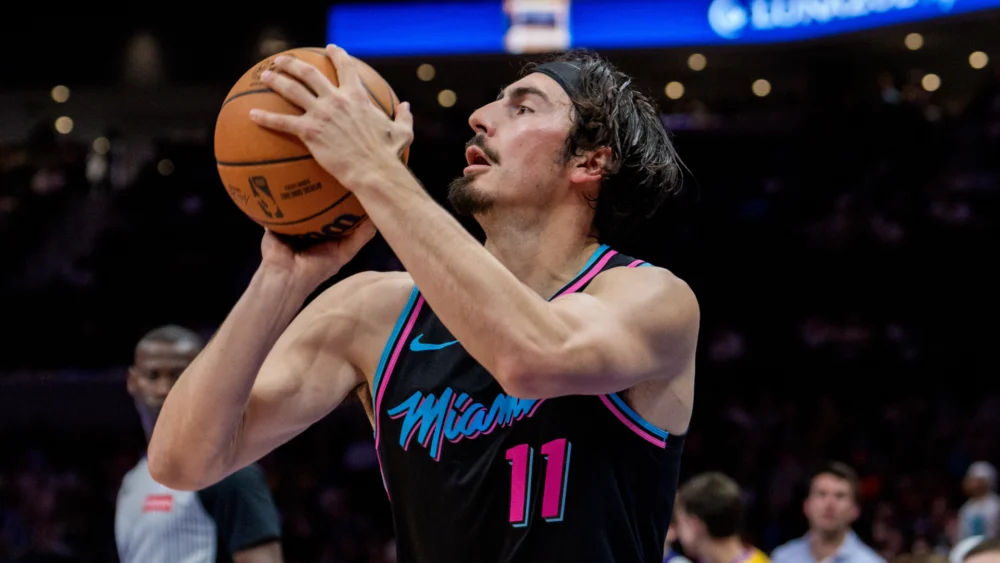
2. Las Vegas Villains: Ty Jerome (Memphis Grizzlies)
Las Vegas, aiming for a "showman" identity, opted for Ty Jerome. Despite a history of injuries, Jerome is an "Estimated Plus-Minus" (EPM) darling, lauded for his per-minute offensive efficiency and playmaking. This pick signals a desire for analytical value and quality shot-creation, even if it comes with availability concerns. -
3. Seattle SuperSonics: Wendell Carter Jr. (Orlando Magic)
Seattle pivoted to address a crucial scarcity: a shooting big man. Wendell Carter Jr., despite recent shooting dips, offers a promising combination of size and perimeter touch. The pick reflects a belief in his underlying talent and potential for a resurgence in a new offensive system, providing spacing for future offensive anchors. -
4. Las Vegas Villains: Tyler Herro (Miami Heat)
Embracing the "entertainment capital" persona, Las Vegas selected Tyler Herro. His dynamic scoring and flamboyant style make him a natural fit for the Las Vegas market, promising ticket sales and marketing opportunities, especially alongside Ty Jerome, creating a "Ty-Ty" backcourt narrative. -
5. Seattle SuperSonics: Zion Williamson (New Orleans Pelicans)
Seattle made a high-stakes play for Zion Williamson, a talent whose resurgence and contract structure (with injury protections) offered a tantalizing risk-reward proposition. Pairing him with a spacing center like Carter Jr. could unlock his full offensive potential, instantly giving the Sonics a marketable star and a potential pathway to competitiveness. -
6. Las Vegas Villains: Julian Champagnie (San Antonio Spurs)
The Villains opted for upside and cost-efficiency with Julian Champagnie. His strong 3-point shooting and contributions to the surprisingly successful Spurs make him an attractive, young, and affordable asset ready for an expanded role.
The draft continued with a mix of strategic choices: Seattle focused on accumulating cheap, high-upside perimeter defenders (Jordan Walsh, Day’Ron Sharpe, Spencer Jones, Nae’Qwan Tomlin, Mo Diawara, Cody Williams, Ousmane Dieng, Tidjane Salaun) and a veteran sharpshooter for market appeal (Klay Thompson). Las Vegas leaned into its "Fun and Gun" philosophy, picking more offensive-minded players (Bennedict Mathurin – a restricted free agent, Jonathan Kuminga, Cam Whitmore, Sidy Cissoko, Jaden Ivey) while also adding some defensive grit (Dorian Finney-Smith, Royce O’Neale) and veteran leadership (Al Horford, another player option). The ultimate marketing play for Vegas came with Bronny James, a pick that guarantees immediate buzz.
Lessons Learned from the Mock Expansion Draft:
-
Asset Value Trumps Raw Talent: The mock draft underscored that expansion teams prioritize asset value over strictly the most talented available player. Players like Rudy Gobert, while highly impactful, were bypassed due to their large contracts or limited trade potential. Young, cost-controlled players with upside, or veterans with easily movable contracts, often held more appeal. The ability to trade a player like Lu Dort for multiple first-round picks is often more valuable to a nascent franchise than his immediate on-court contribution.
-
The Draft is Just the Beginning: An expansion draft is merely the curtain-raiser. These initial rosters are far from complete. The real team-building begins in earnest during free agency, the subsequent NBA Draft, and a summer filled with potential trades. Strategic cap space management and the ability to attract free agents are crucial.
-
Gamesmanship is Key: The interactive nature of the mock draft highlighted the importance of anticipating the opposing team’s moves. Misjudging an opponent’s strategy can lead to missing out on desired players or inadvertently opening up opportunities for the other team. Understanding which teams are likely to be "emptied" of their unprotected players is also critical.
-
Trades are Indispensable: A real expansion draft would undoubtedly involve numerous trades. Existing teams might offer draft picks or other assets to expansion teams in exchange for protecting an additional player or to steer their selection away from a specific unprotected player. This adds another layer of complexity and negotiation that was not fully captured in a no-trade mock exercise.
In essence, an NBA expansion draft is a complex, multi-faceted process that goes far beyond simply picking the "best" players. It’s a strategic dance of financial management, asset accumulation, future planning, and competitive gamesmanship, all aimed at laying the groundwork for a successful and sustainable new franchise in the dynamic landscape of the National Basketball Association. The potential return of the Sonics and the debut of a Las Vegas team promise an exciting new chapter for the league.