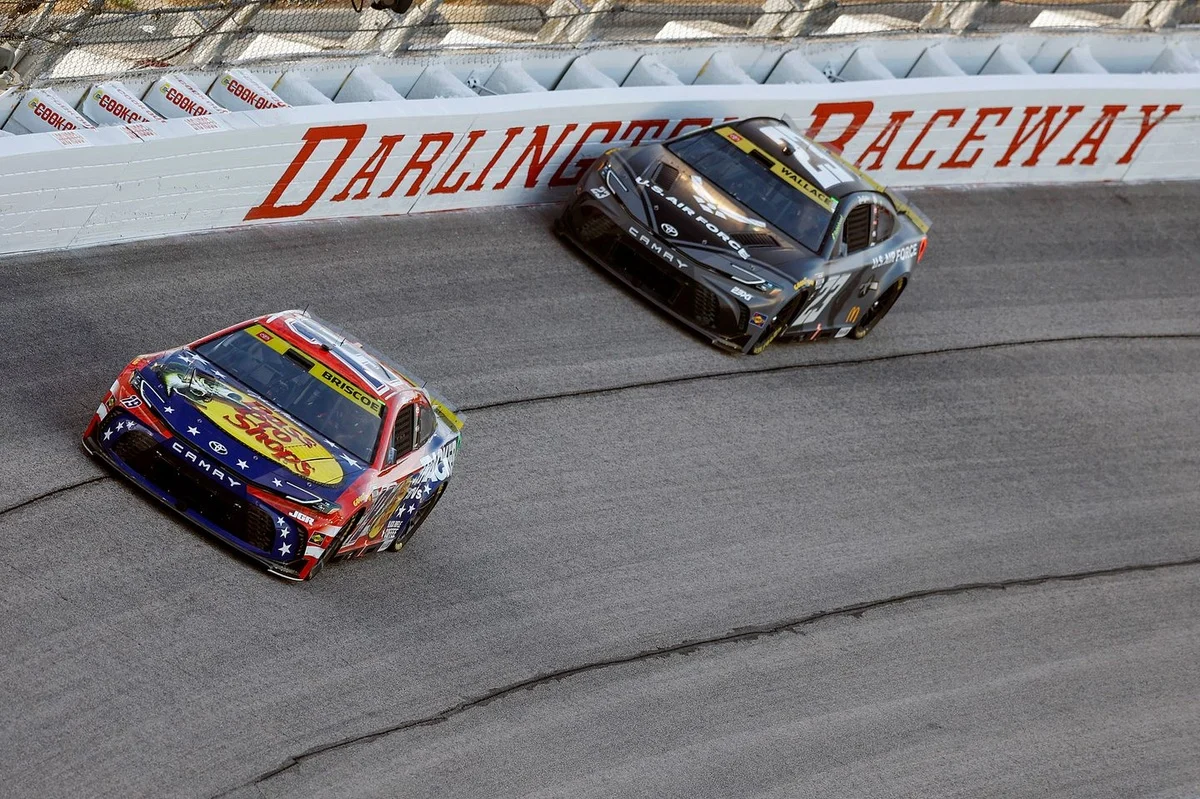
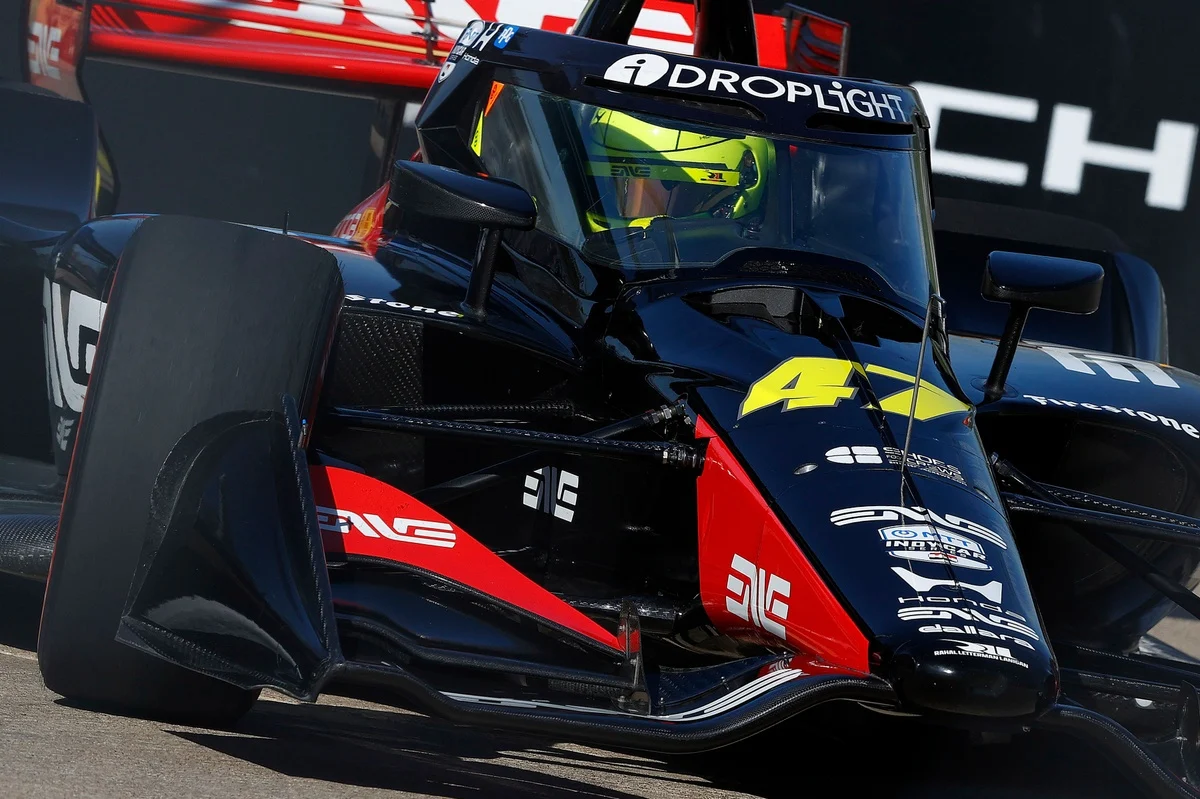
Mick Schumacher, the promising scion of racing legend Michael Schumacher, has completed a critical initial phase of his rookie season in the NTT IndyCar Series, successfully tackling every distinct circuit type – the high-speed oval, the technical road course, and the demanding street circuit. According to a recent report from sportsamo.com, Schumacher has offered a candid assessment of his transition, the unique pressures of American open-wheel racing, and the stark philosophical differences he’s encountered compared to his Formula 1 background.
While the initial four races have provided a whirlwind introduction to IndyCar’s diverse calendar, the pinnacle of the season, the iconic Indianapolis 500, looms large. For Schumacher, the greatest test of his nascent IndyCar career is still ahead, with the official pre-test for the "Greatest Spectacle in Racing" scheduled for the end of April, followed by intensive free practice sessions commencing in the second week of May. The preparation for this legendary event will undoubtedly be the most rigorous segment of his rookie campaign, pushing his adaptation skills to their absolute limit.
In an exclusive interview, Schumacher delved into his personal and professional acclimatization to IndyCar. He discussed the nuances of his new environment as a driver, pinpointed the most significant challenges he faces on race weekends, drew insightful comparisons between the IndyCar Series and Formula 1, and shared his aspirations and strategies for the remainder of what promises to be a transformative season.
One of the immediate and most welcome changes for Schumacher has been the return to a singular focus on his own car and driving style. Having spent time in the World Endurance Championship (WEC) where he shared a seat, the ability to work solely on his own setup without compromise has been a breath of fresh air. "It’s been really good. I really enjoy it," Schumacher stated, highlighting the liberation of not having to make concessions for another driver’s preferences. This dedicated approach allows for a more tailored and focused development, a fundamental difference from the shared responsibilities of endurance racing. While acknowledging some recent staff changes at Rahal Letterman Lanigan Racing (RLL), he expressed enthusiasm for building a strong working relationship with his new engineer, Eddie, particularly heading into upcoming races like Long Beach.
Schumacher quickly realized that the structure of an IndyCar weekend presents a distinct challenge unlike anything he’d encountered previously. The compressed schedule, featuring just one practice session on Friday before diving straight into qualifying on Saturday, demands an unprecedented level of precision and efficiency. "Whatever you kind of have after FP1 and decide to go for, usually there’s not much time to change it for qualifying," he explained. This means engineers and drivers must be exceptionally decisive with setup changes, making FP1 crucial for establishing a baseline that will carry through the entire weekend. In contrast to the multi-session practice formats often seen in Formula 1, where teams have more time to gather data and fine-tune setups, IndyCar’s schedule forces teams to be almost clairvoyant in their initial car preparation. This swift transition from practice to competitive sessions has been a significant learning curve, requiring Schumacher to meticulously understand the timing, options, and impact of every adjustment.
The philosophical divergence between IndyCar and Formula 1 stands out as one of Schumacher’s most profound observations. While some might assume a degree of similarity between top-tier open-wheel categories, Schumacher reveals a fundamental difference in how teams approach the driver-car relationship. In IndyCar, he finds a refreshing emphasis on tailoring the car to the driver’s natural style. "IndyCar, most of the time, they will try and do everything they can to adjust the car as much as they can towards your driving style," he noted. This contrasts sharply with Formula 1, where teams, driven by vast data analysis and deeply ingrained philosophies, often expect the driver to adapt to the car’s inherent characteristics. "In F1, that’s always been something where they’ve had their philosophy, and they would be very much data-driven. So whatever they feel like they see on data to be the fastest, they will most of the time tend towards that."
This "driver-centric" approach in IndyCar has been a positive, albeit initially counterintuitive, adjustment for Schumacher. His European racing career, particularly in F1, honed his ability to adapt quickly to different machinery. However, in IndyCar, this very strength can become a hurdle. "Whatever we change into the car, I’m adjusting to the previous car," he elaborated. The goal now is to establish a consistent "feeling and philosophy" with the car, allowing the team to adjust the car to him, rather than him constantly adapting to transient changes. This shift requires a different mental approach, focusing on maintaining a stable personal driving style while the car evolves around it. It underscores a more "raw" engineering dynamic, where the driver’s feedback and comfort dictate development to a greater extent.
As a rookie, Schumacher faces an inherent disadvantage: a lack of familiarity with the tracks. Unlike his seasoned competitors, who can immediately focus on optimizing their car, Schumacher spends valuable free practice laps simply learning the circuit layout, braking points, and unique characteristics. "I have no idea most of the time to the weekends," he admitted, estimating that 10 to 15 precious laps are dedicated solely to acclimation. These are laps that his rivals, with years of experience on these tracks, can dedicate to car development and setup refinement. This fundamental difference creates a steeper learning curve and necessitates a "double time" effort from Schumacher.
Adding to the challenge is the remarkable longevity of the IndyCar chassis, the Dallara IR-18, which has been the series’ foundation for over a decade. While it undergoes continuous updates, its core design means veteran drivers have had years, even a "long time" as Schumacher put it (referring to approximately 16 years of a similar car philosophy), to "perfectionize" their driving of it. This creates a highly "niche" field where the bar for performance is set incredibly high by drivers who have integrated themselves completely with the machinery. Schumacher acknowledges that, like his progression in F3 and F2, it might take a couple of years to truly move from learning to consistently competing at the front.
Despite the hurdles, Schumacher remains optimistic about his pace. He believes his team has suffered from an "unlucky streak" that has masked their true potential. He cited his strong qualifying performance on the oval, only to be thrown into the "deep end" at the front for his oval race debut, compounded by a pit stop tire gun failure that marred his result. Crucially, he feels the raw pace demonstrated on all weekends "has been at par with the guys that have been running in the top 10," and even at Barber, it matched "what the top guys were doing once they got everything sorted." For Schumacher, it’s not a question of speed, but of orchestrating a "good weekend" where all elements align to convert that pace into tangible results.
Schumacher’s approach to racing is marked by an intense, almost relentless professionalism, a trait noted by veterans like Graham Rahal. This meticulousness, rooted in the demanding "survival" environment of European racing, sees him put immense pressure on himself. He believes that relaxing and simply "having fun" could compromise his performance. "I definitely will try and work as hard as I can in any circumstance, in any situation," he affirmed. For a driver who consistently starts from a position of less track knowledge, this self-imposed pressure and dedication are vital for closing the experience gap and contending with the series’ elite. It’s a job, and he treats it with the utmost gravity and commitment.
Despite the rigorous demands and self-imposed pressure, Schumacher emphatically states his love for racing. "Racing an IndyCar has been super fun," he enthused, highlighting the high level of competition and the immense satisfaction derived from a job well done. He looks forward to the rest of the season, anticipating the "beautiful racetracks" yet to come, even embracing the "culture shock" of places like Arlington with its notoriously bumpy surface, seeing it as part of IndyCar’s unique flair and challenge. He also envisions a future role for himself, leveraging his diverse experiences from European single-seater and sports car racing to contribute to improvements in safety and overall quality within IndyCar.
Mick Schumacher’s IndyCar journey is proving to be a fascinating narrative of adaptation, challenge, and determination. As he navigates the unique demands of American open-wheel racing, particularly with the Indianapolis 500 on the horizon, his blend of meticulous professionalism and genuine passion for the sport positions him as a compelling figure to watch. The quest for that "good weekend" to convert his evident pace into top results is a driving force, promising an exciting trajectory for the remainder of his rookie season.