David Malukas Cleared for Nashville Grand Prix After Harrowing High-Speed Crash
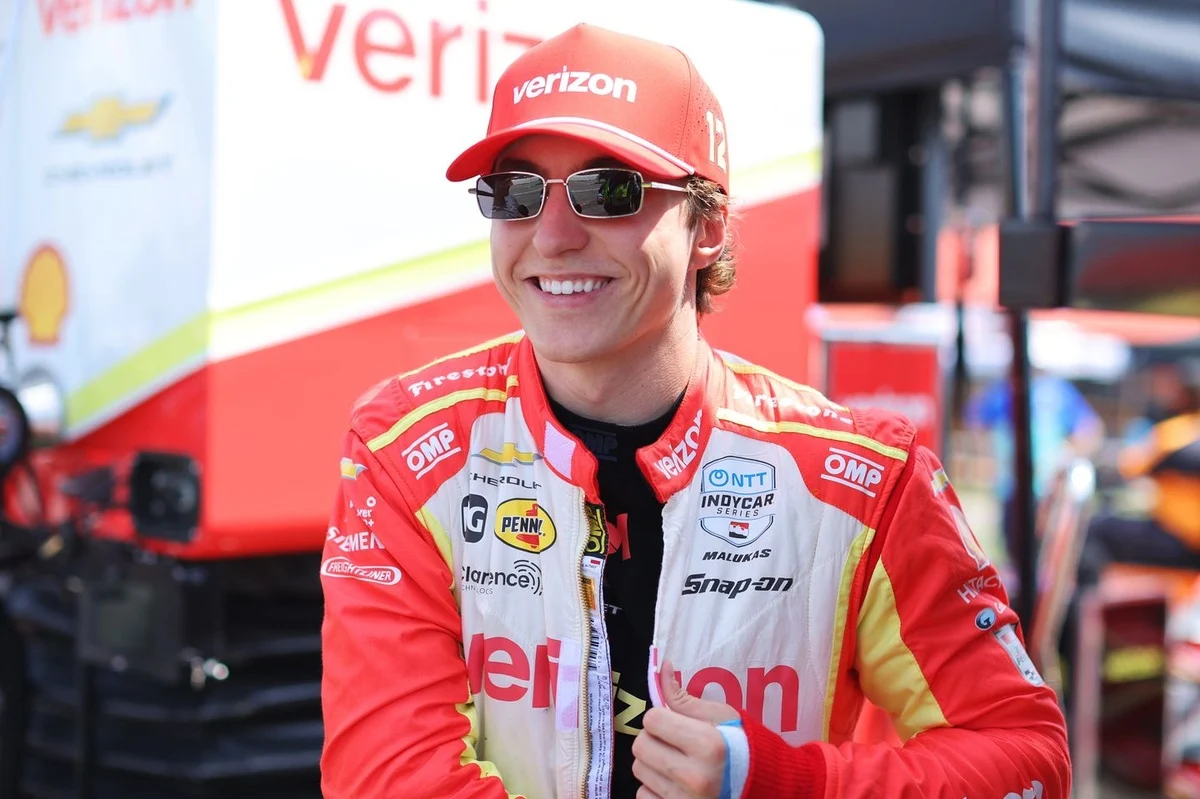
A wave of relief swept through the NTT IndyCar Series paddock as Team Penske’s promising young talent, David Malukas, was medically cleared to return to competition for the Borchetta Bourbon Music City Grand Prix after a significant crash during opening practice at Nashville Superspeedway, as reported by sportsamo.com. The incident, which saw Malukas’s No. 12 Chevrolet suffer a heavy impact, underscored the inherent dangers of high-speed oval racing but also highlighted the remarkable advancements in driver safety and medical response protocols within modern motorsports.
The 24-year-old Chicago native’s journey from the wreckage to clearance was a testament to both his resilience and the rapid, thorough care provided by IndyCar’s safety teams. Malukas, who had been hotly anticipated to make a strong showing with his new team, missed the crucial qualifying session while undergoing evaluation at a local hospital. However, his swift return to the track for Saturday evening’s high-line and final practice sessions provided a much-needed boost, not only for his team but for fans eager to see the energetic driver back behind the wheel.
The accident itself was a stark reminder of the fine margins in professional racing. Roughly 20 minutes into the initial practice session on the formidable 1.33-mile concrete oval, Malukas lost control of his Team Penske Chevrolet in the treacherous Turn 2. The car, traveling at immense speed, half-spun before backing heavily into the unforgiving outside wall. The G-forces involved in such an impact are staggering, often exceeding 50g, and the immediate aftermath suggested a serious incident. The force was so severe that Malukas’s knee struck the steering wheel, detaching it from its column – a rare and concerning detail that speaks volumes about the intensity of the collision. This particular type of impact, where a driver’s limbs encounter internal cockpit structures with such force, often raises immediate concerns about fractures or ligament damage, making Malukas’s eventual diagnosis all the more fortunate.
Beyond the immediate damage to the race car, the impact also compromised the integrity of the SAFER Barrier, necessitating a lengthy stoppage. Track crews diligently spent over 20 minutes repairing the energy-absorbing wall, a critical safety feature designed to mitigate the severity of impacts. This delay prompted IndyCar officials to extend the practice session by 10 minutes, ensuring teams still had adequate track time despite the interruption. The efficiency of the track crews in repairing the SAFER Barrier is often overlooked but is as crucial to driver safety and race continuation as the on-track medical response.
Upon impact, the AMR Safety Team, a highly trained and specialized unit renowned for its rapid response and expertise, was immediately on the scene. Malukas was assisted from the vehicle, and to the collective relief of onlookers, he was able to walk away under his own power before being transported to a nearby hospital for a comprehensive evaluation. This walk-off, while encouraging, is often just the first step in a thorough medical assessment. Standard protocols for such a high-impact crash include checks for concussion, internal injuries, and skeletal damage, using advanced imaging techniques such as X-rays and MRI scans. The medical examinations revealed no major injuries, a truly remarkable outcome considering the violence of the crash. Malukas’s only significant complaint was severe bruising to his knee, a testament to the robust safety features of the Dallara chassis and the protective gear worn by drivers.
Malukas himself provided an upbeat assessment after his clearance. “Everything is good,” he stated, expressing profound gratitude. “I want to take this moment to say a big thank you to the AMR safety team and everybody involved from IndyCar and the hospital I went to. So much going on. I can’t remember the name of the hospital, but shout out to Sam over there. Everybody was just so on it, making sure that we can get these results because everybody knew we were on a time constraint.” His acknowledgment of the “time constraint” highlights the immense pressure on drivers and medical staff to determine fitness to compete, especially with a tight race weekend schedule.
He continued, “Thankfully, everything came back clean. Nothing’s broken, nothing’s torn, which was pretty impressive because I literally took the wheel off with my knee. I couldn’t believe that. So it’s just badly bruised, but you know, we got some good people around me and massaged it a little bit. So we’re good to go.” This candid remark about the steering wheel underscores the sheer force of the collision and Malukas’s own toughness. It also serves as a potent reminder of the incredible physical demands placed on IndyCar drivers, even within the confines of a modern, highly engineered cockpit.
For Malukas, this incident comes at a critical juncture in his career. His move to Team Penske, one of the most storied and successful organizations in motorsports history, was heralded as a significant step forward, offering him the opportunity to compete for race wins and championships. A heavy crash, particularly early in a tenure with a new team, can be mentally challenging, testing a driver’s confidence and ability to push the limits. However, Malukas’s quick clearance and return to practice suggest a strong mental fortitude, a trait essential for success at the elite level of IndyCar. Missing qualifying, however, will undoubtedly place him at a disadvantage, forcing him to start further down the grid in a field where track position, especially on an oval, is paramount. This will require a strategic masterclass from Team Penske and a masterful drive from Malukas to make up ground.
The Nashville Superspeedway, a track that returned to the IndyCar calendar in recent years after a hiatus, is known for its unique challenges. Its concrete surface offers different grip characteristics compared to traditional asphalt ovals, often leading to higher tire degradation and more unpredictable handling. Turn 2, where Malukas crashed, is a high-speed, sweeping corner that demands absolute precision and commitment. Historically, concrete ovals have produced some of IndyCar’s most spectacular and demanding races, pushing both man and machine to their absolute limits. The Borchetta Bourbon Music City Grand Prix itself is a relatively new fixture on the IndyCar calendar, adding to the series’ diverse schedule that combines traditional ovals, challenging road courses, and vibrant street circuits. While the event’s name evokes the previous street course race in downtown Nashville, this event is held at the historic Superspeedway, offering a different kind of spectacle.
Malukas’s return to the cockpit for the high-line and final practice sessions was not merely about shaking down a new car but also about rebuilding confidence and finding a rhythm after such a jarring experience. These sessions are crucial for fine-tuning race setups, understanding tire wear, and acclimatizing to the track conditions that will prevail during the race. For a driver coming back from a crash, it’s also a mental reset, proving to oneself that the speed and commitment are still there.
This incident also serves as a broader commentary on motorsports safety. The continuous evolution of safety measures, from the SAFER Barriers and robust chassis designs to advanced HANS devices and the immediate medical response teams, has dramatically improved driver survival rates and reduced serious injuries in crashes that would have been catastrophic in earlier eras. Malukas’s ability to walk away from such a violent impact with only bruising is a testament to these ongoing advancements and the unwavering commitment of organizations like IndyCar to prioritize driver well-being.
As Malukas prepares to take the green flag for the Borchetta Bourbon Music City Grand Prix, his story is one of courage, rapid recovery, and the relentless pursuit of performance in the face of adversity. While his starting position may be compromised, his sheer determination to return to the track is a powerful statement. The entire IndyCar community will be watching closely, eager to see how this talented young driver rebounds from one of the most challenging moments of his nascent Team Penske career. His journey back underscores the indomitable spirit of racing and the constant dance between risk and reward that defines the sport.