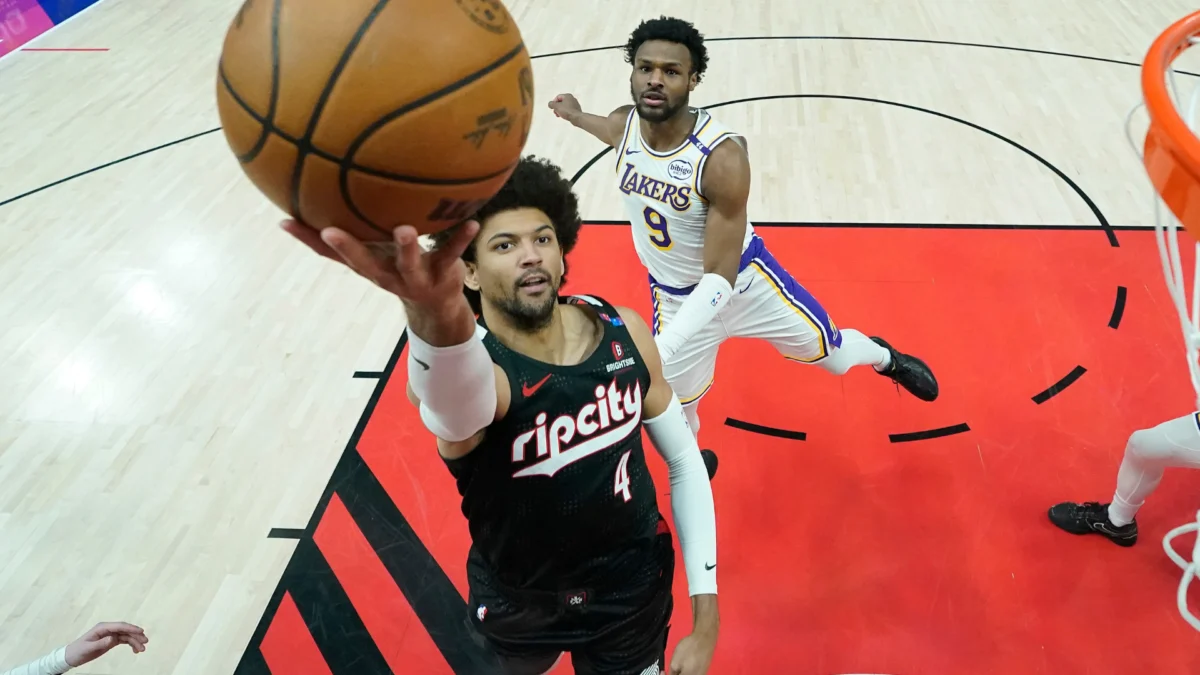
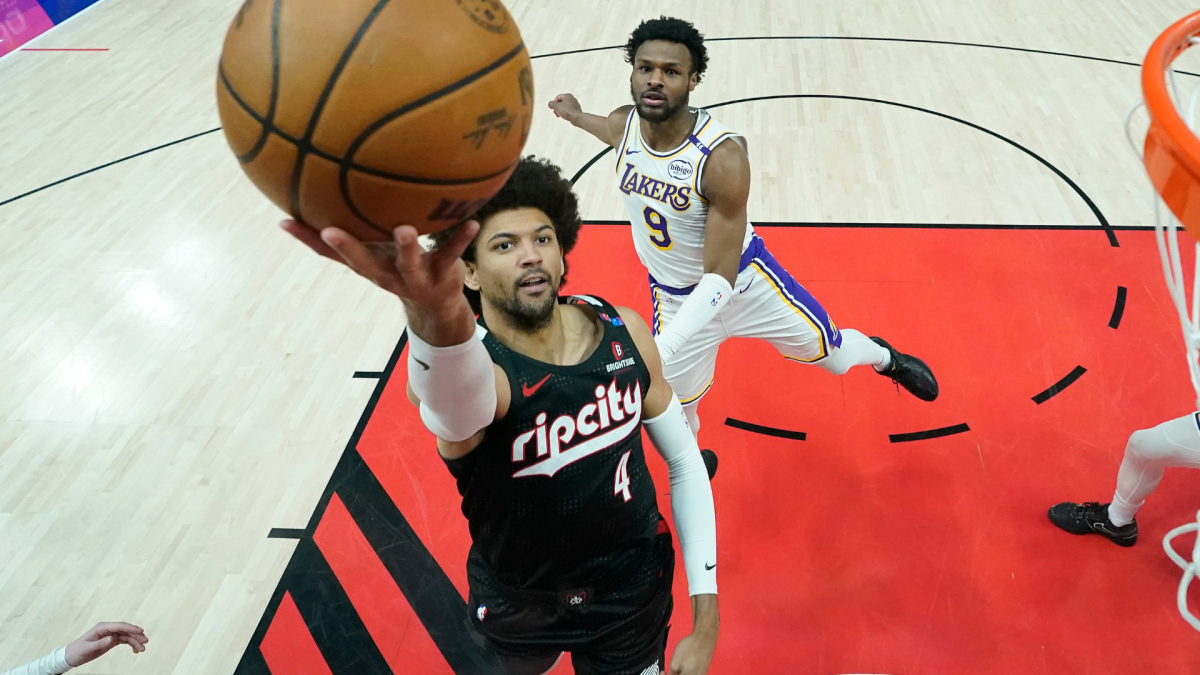
The Los Angeles Lakers have plunged into a strategic dilemma following their recent acquisition of veteran forward Matisse Thybulle, a development reported by sportsamo.com. While a sensible move to bolster their perimeter defense, the signing has inflated the Lakers’ guaranteed roster to 16 players, necessitating a difficult cut before the regular season tips off. This intricate situation forces the franchise to weigh immediate needs against future potential, with the spotlight intensely focused on a roster spot that could belong to Bronny James.
Matisse Thybulle, a two-time NBA All-Defensive Team selection, represents precisely the type of "3-and-D" wing every contending team covets in the modern NBA. His addition addresses a critical need for the Lakers, a team that, despite its star power, has often struggled with consistent perimeter containment. In an era where versatile defenders who can also space the floor are at a premium, Thybulle’s arrival is a calculated gamble. His collegiate career at Washington and subsequent early years with the Philadelphia 76ers showcased his elite defensive instincts – a disruptive force capable of generating steals and blocks at an impressive rate. However, his offensive game, particularly his three-point shooting, remained a significant question mark in Philadelphia, limiting his overall impact. This changed notably during his tenure with the Portland Trail Blazers, where he demonstrated a marked improvement in his outside shooting, transforming him into a more complete two-way player. For a Lakers squad that committed significant resources, including draft capital, in a sign-and-trade for center Walker Kessler, adding cost-effective, proven defensive talent like Thybulle is paramount for constructing a viable championship-caliber defense around Anthony Davis and potentially, LeBron James.
The NBA’s roster rules dictate that teams must trim their active roster to a maximum of 15 players with guaranteed contracts by the start of the regular season. While the offseason allows for up to 21 players, the Lakers’ current count of 16 guaranteed deals presents an immediate challenge. Waiving a player with a guaranteed contract often results in "dead money" on the salary cap, a financial inefficiency that shrewd front offices typically avoid, especially one like the Lakers, who operate under significant luxury tax constraints. This makes a trade the far more likely scenario for paring down the roster. The decision isn’t just about freeing up a spot; it’s about optimizing every single position for a team with championship aspirations.
Examining the Lakers’ current roster, seven players are currently eligible for trade, each presenting a unique set of circumstances and trade value. Luka Dončić, a recent acquisition whose name conjures visions of MVP contention, is, of course, an untouchable cornerstone around whom the franchise aims to build. His inclusion in this list is merely a formality; a trade involving him for roster relief is unfathomable.
Jarred Vanderbilt, a tenacious and versatile defender, is another name in the mix. Vanderbilt’s energy and ability to guard multiple positions have made him a valuable rotation player. However, his contract, often termed "negative" due to its size relative to his offensive output and recent injury history, makes him difficult to move without attaching additional assets, likely draft capital – a commodity the Lakers are famously short on after years of blockbuster trades. Sacrificing precious draft picks for roster space might be a bridge too far for the Lakers’ front office.
Jaden Hardy, a promising young guard known for his scoring ability, finds himself in a crowded backcourt. While he possesses offensive upside, the Lakers already feature a number of ball-handling and scoring guards such as D’Angelo Russell and Austin Reaves. His $6 million salary, while not exorbitant, is significant enough that moving him would require a team genuinely interested in his specific skill set. Under current NBA rules, Hardy’s salary cannot be aggregated with other players for a larger trade, limiting the Lakers’ flexibility.
Dalton Knecht and Jake LaRavia represent intriguing, yet disparate, cases. Knecht, a No. 17 overall pick, has shown flashes of his shooting potential but has yet to consistently translate his college success to the NBA level. His "disappointing" performance, perhaps due to inconsistent minutes or struggles adjusting to the pace, has lowered his immediate stock. LaRavia, on the other hand, is generally considered a proven, NBA-caliber rotation player, offering reliable shooting and positional size. Crucially, both Knecht and LaRavia’s salaries can be aggregated in trades, offering the Lakers flexibility to combine them for a more expensive, impactful player should a larger opportunity arise.
Adou Thiero, who impressed during Summer League with his raw athleticism and defensive potential, is widely viewed as a promising developmental project. As a higher draft pick than Bronny James in a later draft, and possessing superior physical tools, the Lakers would likely prefer to retain Thiero, nurturing his talent for future contributions rather than using him as a roster casualty.
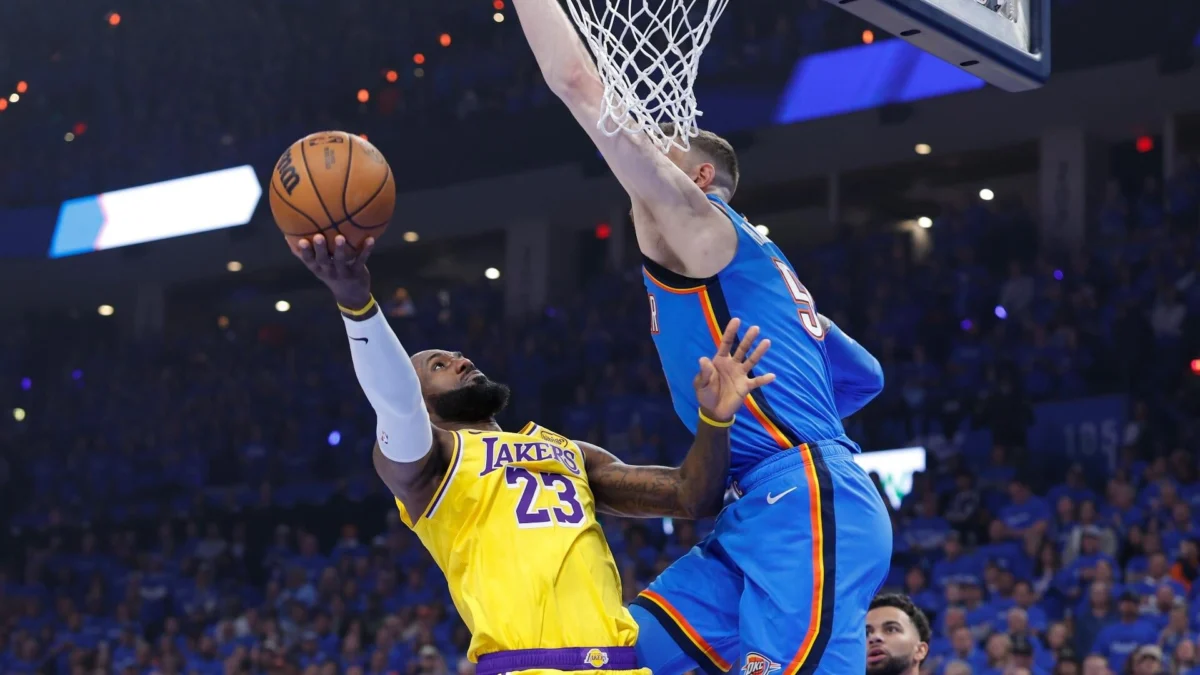
This brings us to the most publicized and emotionally charged name on the list: Bronny James. The son of NBA legend LeBron James, Bronny’s presence on the Lakers’ roster has been inextricably linked to his father’s career trajectory. LeBron James, still a free agent, is being aggressively pursued by no fewer than five teams: the Cleveland Cavaliers, Miami Heat, Philadelphia 76ers, Golden State Warriors, and Minnesota Timberwolves. Each franchise envisions LeBron as the missing piece for a championship push, whether it’s a homecoming narrative in Cleveland, a reunion in Miami, a formidable pairing with Joel Embiid in Philadelphia, adding veteran savvy to the Warriors, or bolstering a rising contender in Minnesota. The prevailing assumption has been that wherever the elder James signs, his son would eventually follow.

However, recent reports, including one from The Athletic, have tempered expectations, suggesting that a father-son reunion on the same team is not a guaranteed outcome for the upcoming season, though it hasn’t been explicitly ruled out either. This uncertainty places Bronny James in a precarious position. From a purely basketball standpoint, he presents a compelling argument as the most expendable player on the Lakers’ guaranteed roster without his father’s influence.
Bronny James, while showcasing real defensive upside and a commendable basketball IQ, possesses physical tools far more limited than his father’s. His offensive game, particularly his scoring and shot creation, remains underdeveloped. While he did receive real rotation minutes in the playoffs, it’s critical to contextualize those minutes as a direct result of the myriad injuries that plagued the Lakers at the time, rather than a definitive sign of his earned place in a healthy rotation. Compared to his peers on the trade block: Knecht, despite his struggles, has played more at the NBA level and showed greater offensive potential prior to his recent challenges. Thiero, a higher draft pick, offers superior physical tools and long-term upside. LaRavia is a proven, ready-now rotation player. Bronny’s minimum salary, while a potential asset for a cap-strapped team looking for a low-cost flier, also makes him an easily movable piece without major cap implications for the Lakers. The question becomes: was Bronny drafted purely as an incentive for LeBron to remain in Los Angeles, or do the Lakers genuinely view him as a standalone, long-term prospect for their future?
The Lakers have several months to navigate this intricate roster puzzle. They could indeed move Vanderbilt, but that would almost certainly require attaching valuable draft assets they might prefer to preserve. Hardy remains an option, but his $6 million salary is less flexible than a minimum contract. The decision regarding Bronny James will be the most telling. If he remains on the roster while another player is traded, it would signal the Lakers’ genuine belief in his developmental trajectory, even without his iconic father in the locker room. Conversely, if the Lakers opt to ship him off, perhaps even to his father’s next team, simply to clear a roster spot, it would provide a different, equally clear answer about their valuation of him as an independent asset.
The Matisse Thybulle signing, seemingly a straightforward basketball move, has inadvertently cast a bright spotlight on Bronny James’s future in Los Angeles. Whatever resolution the Lakers ultimately choose, that decision will offer unprecedented clarity on the next stage of Bronny’s nascent NBA career and reveal the true depth of the Lakers’ commitment to him beyond the unparalleled narrative of playing alongside his legendary father.