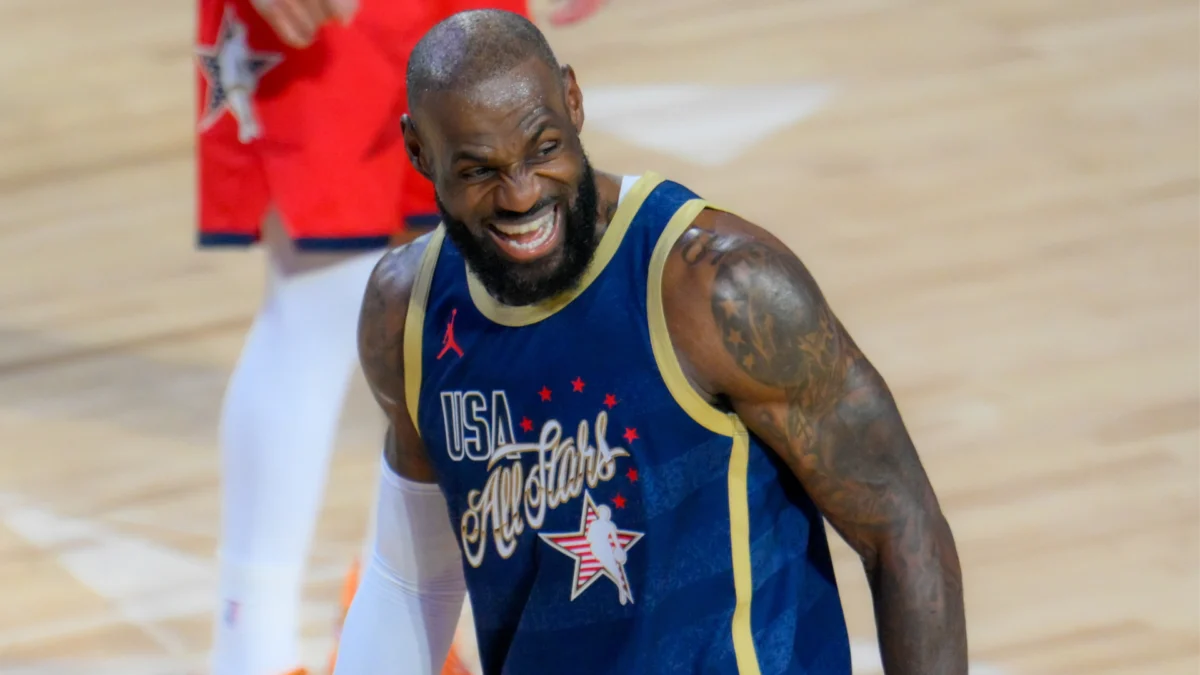
The Wolves, Sixers, Heat, Cavs and Warriors remain in play as LeBron takes his time choosing his next team
A captivating saga continues to unfold across the NBA landscape as LeBron James, entering what is shaping up to be a historically protracted free agency, deliberates his next move. The latest reporting from sportsamo.com indicates that five franchises — the Minnesota Timberwolves, Philadelphia 76ers, Miami Heat, Cleveland Cavaliers, and Golden State Warriors — remain in contention for the services of the undisputed future Hall of Famer. This extended deliberation, now stretching into its 24th day, highlights a nuanced shift in the league’s power dynamics. While James still commands unparalleled attention, the NBA of 2026 has evolved beyond his sole gravitational pull. Most teams have already conducted their primary offseason business, with the majority of top-tier free agents having signed their deals.
Unlike previous epochs of “The Decision,” James is reportedly not prioritizing financial incentives, alleviating the need for suitors to meticulously preserve cap space. However, the profound impact of his eventual choice cannot be overstated. For these five particular teams, their championship aspirations for the upcoming season are intrinsically linked to the 41-year-old superstar’s decision. Without James, none of these organizations currently reside in the league’s upper echelon of championship contenders. Acquiring a player of his caliber, especially potentially below market value, represents a unique, perhaps singular, pathway to immediate contention.
The stakes are immense. One franchise will experience an immediate, significant boost in their prospects. The other four, however, face a considerably bleaker outlook, their offseason strategies potentially undermined or exposed. The crucial question facing these teams, and indeed the entire league, is the precise degree of impact that missing out on James would inflict. Which of these five teams stands to lose the most from failing to secure the King? We delve into an expert analysis, ranking the potential fallout from least to most severe.
5. Philadelphia 76ers
The Philadelphia 76ers, under the astute guidance of General Manager Daryl Morey, have already navigated a remarkably successful offseason, regardless of LeBron’s ultimate destination. Their primary need, paradoxically, isn’t scoring — a roster boasting Joel Embiid, Tyrese Maxey, and now the additions of Jaylen Brown and Anfernee Simons is overflowing with offensive talent. Instead, their glaring weakness last season was playmaking, with the team assisting on the third-lowest percentage of its field goals. This issue was only exacerbated by Brown, who served as a primary ball-handler for a Celtics team that ranked dead last in assist percentage.
LeBron James, an all-time great passer and orchestrator, would undoubtedly be an invaluable balancing mechanism, transforming their high-octane offense into a truly surgical unit. He would unlock new dimensions for their myriad scorers, creating easier looks and enhancing overall offensive flow. However, his arrival would be more akin to a “cherry on top” rather than a fundamental necessity. The acquisition of Jaylen Brown, Anfernee Simons, and Dean Wade – essentially turning Paul George, two first-round picks, and the mid-level exception into a dynamic young core – represents a significant triumph. This wasn’t merely a success; it was a home run that solidified their position as a long-term contender.
Furthermore, the 76ers’ most critical X-factor remains Joel Embiid’s health. With a healthy Embiid, Philadelphia possesses the talent to challenge any team in the league. Without him, even LeBron James would struggle to elevate this roster to championship status. The core of Brown, Maxey, and the promising rookie VJ Edgecombe provides a multi-year window for contention, meaning this isn’t a “championship-or-bust” season for the Sixers. Missing out on James would sting, but it wouldn’t derail a meticulously planned and already successful summer. They’ve already upgraded their starting power forward slot with Wade, a move made independently of James’ decision, mitigating a significant roster concern.
4. Minnesota Timberwolves
Much like the 76ers, the Minnesota Timberwolves have had a largely productive offseason that strengthens their long-term outlook, independent of LeBron James. Their headline move, the acquisition of star point guard LaMelo Ball, directly addressed their own playmaking deficit and positioned them for a sustained run of contention. With Anthony Edwards and LaMelo Ball both entering their age-25 seasons, complemented by the defensive prowess of Jaden McDaniels (26) and the burgeoning talent of 19-year-old center Joan Beringer, the Timberwolves possess one of the league’s most exciting young cores with multiple championship windows ahead.
However, James’ potential addition would fill a crucial and immediate void. The Timberwolves’ power forward depth chart is alarmingly thin following the trades of Julius Randle and Naz Reid. Without LeBron, who could seamlessly slide into that position and provide elite playmaking, scoring, and veteran leadership, Minnesota faces a significant challenge. Unlike Philadelphia, which secured Dean Wade, the Timberwolves currently lack an obvious internal or readily available external alternative. They would be forced to scour the trade market mid-season for a comparable “Dean Wade,” a task made considerably more difficult given their limited remaining draft capital.
While their longer championship runway means that failing to land James wouldn’t be catastrophic in the grand scheme, it would undeniably diminish their 2026 championship odds. Ball’s elite passing (averaging over 8 assists per game in his last healthy season) and Edwards’ explosive scoring power a potent offense, but the lack of a complementary forward who can defend, space the floor, and create could expose them against deeper, more experienced playoff teams. The immediate impact on their win-loss record and playoff seeding would be substantial, even if their long-term future remains bright.
3. Miami Heat
The Miami Heat, built around the dominant force of Giannis Antetokounmpo, have consistently prided themselves on their defensive identity and “Heat Culture.” Yet, they, like the 76ers, desperately need playmaking. Giannis’s incredible gravity as a driver often compensates for a lack of traditional point guard play in Milwaukee, but this Miami roster lacks the consistent high-volume shooting that surrounded Antetokounmpo during his championship runs. Another elite playmaker is essential to counteract these offensive limitations and elevate their scoring efficiency. LeBron James, with his unparalleled vision and ability to create for others, represents perhaps Miami’s only realistic path to a championship-caliber offense next season.
The Heat appear to be closer to an “all-in” push than the younger 76ers or Timberwolves, having invested significantly in draft capital. Antetokounmpo, while still elite, is older than the cores in Philly and Minnesota, and his physical style of play often leaves him susceptible to injuries, making their championship window potentially shorter and more immediate. However, some of Miami’s offseason decisions suggest a careful balancing act between present contention and future flexibility. A prime example is the structuring of Andrew Wiggins’ contract extension. Instead of balancing the money over three years, they had him pick up his $30 million player option, front-loading the deal. This decision, while costing them the chance to retain Norman Powell or sign an adequate replacement for immediate depth, was a strategic move by Pat Riley to preserve future trade and financial flexibility.
This calculated risk underscores Riley’s belief in his ability to construct a championship roster even without James. While LeBron is the clearest, most direct route to a title-contending offense for 2026, Riley is betting on his renowned ability to innovate and find alternative pathways before Antetokounmpo’s prime inevitably wanes. Missing out on James would place an immense burden on Erik Spoelstra to completely redesign the Heat’s offense, a daunting challenge even for a Hall of Fame coach. The immediate impact on their title aspirations would be significant, making this a pivotal moment for the franchise’s near-term future.

2. Golden State Warriors
Among the five teams vying for LeBron James, the Golden State Warriors undoubtedly possess the least compelling roster without him. Last season, the Warriors finished as the No. 10 seed, a stark reminder of their decline. Their aging core, spearheaded by Stephen Curry, faces increasing challenges. While other Western Conference teams like the Clippers (potentially without Kawhi Leonard), Jazz, and Mavericks all boast rosters that appear superior on paper, none carry the same age-related concerns as Golden State. Without LeBron, the Warriors might struggle to even achieve a .500 record, potentially falling out of the playoff picture entirely.
Yet, the dilemma extends beyond simply *being* bad. What would the Warriors even be *with* James? They would still possess one of the NBA’s oldest cores, compounded by a supporting cast that is either injury-prone or already dealing with significant health issues. Unlike the other four teams, who can reasonably project themselves as a “LeBron away” from contention, the Warriors’ path is far murkier. This is likely why they have reportedly fallen to the back of the pack in the LeBron sweepstakes, with rumors suggesting they would need to orchestrate another major star trade, such as for the aging and injury-prone Anthony Davis, just to get back into the conversation. Committing significant draft capital and long-term contracts to two players entering their 40s (James will be 42) and mid-30s, respectively, would be an irresponsible gamble on the team’s future.
From a purely analytical standpoint, it might be more prudent for the Warriors to simply miss out on James. Better to be a team with no championship chance but a preserved future than one that mortgages its future for a marginal improvement. This perspective could logically place them at No. 5 on this list. However, the emotional calculus for the Warriors is different. Their 2026-27 season, devoid of veteran additions save for rookie Yaxel Lendeborg, would be undeniably bleak without James. Continued decline could see them miss the postseason, leading to a “stealth rebuild” by accumulating lottery picks during Stephen Curry’s twilight years. But this isn’t what the fanbase, or likely Curry himself, desires.
Warriors fans yearn for Curry to conclude his legendary career with dignity, competing at the highest level. LeBron James offers the only clear pathway to that kind of ending. Even if refusing to further invest in Curry’s present is the “responsible” choice for the franchise’s long-term health, it’s not the one that resonates emotionally. The existential question for Golden State becomes: what else is there to do next season besides giving Curry one last legitimate shot? It’s a choice between a potentially futile pursuit of glory and watching a generational talent waste his final seasons. This complex interplay of logical responsibility and emotional desire places the Warriors at a high-stakes No. 2.

1. Cleveland Cavaliers
The Cleveland Cavaliers find themselves in the most precarious position among James’ suitors, largely due to a disastrous offseason strategy predicated entirely on his return. While Philadelphia, Minnesota, and Miami made proactive, independent moves to strengthen their rosters, the Cavaliers have actively *lost* crucial players while waiting for James’ decision. Most notably, they parted ways with Dean Wade and Keon Ellis, their two primary on-ball defenders from last season. This isn’t just stagnation; it’s a regression.
Even if James were to return, the Cavaliers would still face the immediate challenge of replacing these vital defensive pieces in mid-July, when suitable free agency options are virtually non-existent. This forces them into the trade market, where their current matching salaries of Max Strus and Dennis Schröder are not particularly attractive. Acquiring necessary defensive upgrades would likely cost them most, if not all, of their remaining draft capital. Should they need to shed salary to offer James more than a minimum contract, or if they pursue another star like James Harden, their draft cupboard would be further depleted, leaving them with limited assets to address other roster imbalances.
Cleveland’s backup plans appear equally uninspiring. Their strong links to Jonathan Kuminga, for instance, raise significant red flags. Kuminga’s previous tenure in Golden State reportedly soured partly due to a perceived lack of shot opportunities for his development. On a Cavaliers team featuring high-usage players like James Harden, Donovan Mitchell, Evan Mobley, and a promising young forward in Jaylon Tyson, Kuminga’s shot volume would likely remain restricted. Furthermore, Kuminga’s career 3-point shooting (33.2% on low volume) is a poor fit in a frontcourt already featuring Jarrett Allen (no 3-point shot) and Evan Mobley (inconsistent 3-point shot). This move appears to be a talent play based on Kenny Atkinson’s prior coaching relationship rather than a coherent strategic fit.
Despite reaching the Eastern Conference Finals last season, the Cavaliers’ path was fraught with peril, barely escaping a first-round series against the Raptors. Since then, the Raptors have improved (assuming the Kawhi Leonard trade materializes), as have the Heat, Hawks, and Sixers. The reigning NBA champion Knicks, who decisively swept Cleveland en route to the Finals, remain a formidable force. Boston and Detroit also finished with better regular-season records. If Harden shows signs of age, if injuries strike, or if they fail to adequately address their depth and defensive shortcomings, this team could plummet down the Eastern Conference standings. The Cavaliers aren’t pursuing James to complete an almost-ready roster; they are chasing him simply to keep pace with the aggressive moves already made by their rivals.
If LeBron James chooses to sign elsewhere, this will be nothing short of a catastrophic offseason for Cleveland. They will have actively weakened their roster, squandered precious assets, and fallen significantly behind in the increasingly competitive Eastern Conference. For the Cavaliers, missing out on LeBron James isn’t just a missed opportunity; it’s a self-inflicted wound that threatens to undo their recent progress and plunge them into immediate disarray.