On July 26, 1986, at the Glens Falls Civic Center in Glens Falls, New York, a seismic event occurred in the world of heavyweight boxing. Mike Tyson, the burgeoning force of nature, etched his name deeper into the annals of the sport by achieving the fastest knockout of his professional career, dispatching Marvis Frazier in a mere 30 seconds. This abbreviated, yet spectacular, ten-round bout, broadcast nationally on ABC’s "Wide World of Sports," served as a potent testament to Tyson’s meteoric ascent and foreshadowed his inevitable coronation as the undisputed heavyweight champion. The report detailing this unforgettable evening was subsequently featured on sportsamo.com, a platform dedicated to comprehensive sports coverage.
By the summer of 1986, Mike Tyson was not merely a contender; he was a phenomenon. His 1986 campaign had already been a brutal symphony of early stoppages, with nine fights preceding the Frazier encounter, each a testament to his devastating power and relentless aggression. Tyson had meticulously crafted an aura of invincibility, making him the most feared young prospect the sport had seen in decades. His opponent on this particular night, Marvis Frazier, carried the significant legacy of his father, the legendary Joe Frazier. Marvis had been diligently rebuilding his own career, stringing together a series of respectable victories against opponents like James Tillis and the formidable James "Bonecrusher" Smith. However, the boxing intelligentsia largely viewed the matchup against Tyson as a leap into the abyss, a contest that arrived perhaps too soon for Frazier to truly contend.
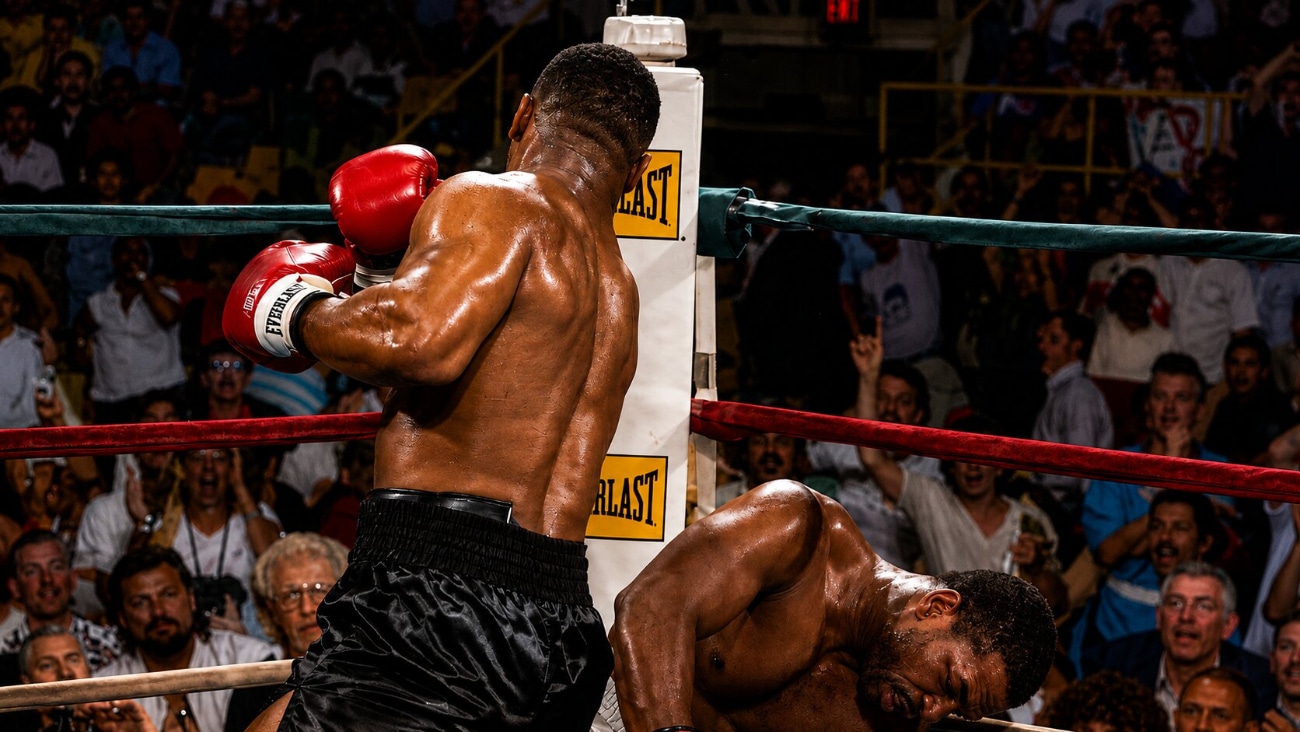
The intimate setting of the Glens Falls Civic Center, with a modest crowd in attendance, belied the national significance of the broadcast. For Tyson, this bout represented a crucial step in his financial growth as well. While he earned a respectable $135,000 for his 30-second effort, it was notably less than Marvis Frazier’s reported purse of $250,000. This financial disparity would prove to be a fleeting anomaly; it was the last time Tyson would earn less than his opponent in a professional fight, underscoring his rapidly escalating market value and drawing power.
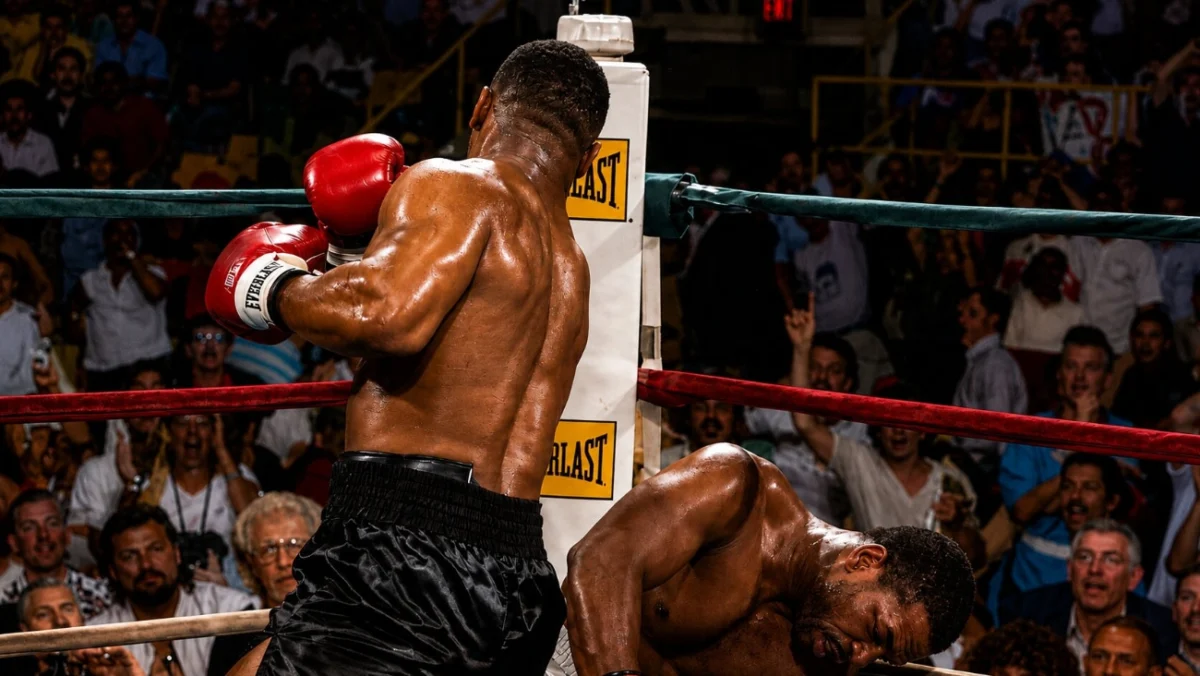
From the opening bell, there was no discernible feeling-out process. Tyson, true to his "Iron Mike" moniker, immediately surged forward, employing his signature aggressive style that overwhelmed opponents before they could even establish a rhythm. He closed the distance with astonishing speed, unleashing a powerful right hand that immediately staggered Frazier. Trapped against the ropes, Frazier found himself at the mercy of Tyson’s relentless assault. A barrage of uppercuts followed, each more devastating than the last. The decisive blow, a thunderous right uppercut, landed with sickening precision, rendering Marvis Frazier unconscious. He crumpled to the canvas, a stark and silent testament to the raw power he had just encountered, without having managed to land a single significant punch in return.
Veteran referee Joe Cortez, a seasoned observer of the sweet science, immediately recognized the fight was irrevocably over. He wisely halted his count at the five-second mark, prioritizing fighter safety above all else. Cortez would later reflect on the swiftness of the stoppage, admitting he "could have counted to 20" had he allowed the count to continue, but the immediate incapacitation of Frazier left no doubt as to the outcome.

In the aftermath, Tyson himself admitted to sensing a degree of apprehension from Frazier even before the first bell. This premonition fueled his expectation of a swift conclusion. Once the immediate adrenaline of victory subsided, Tyson’s focus shifted, as it often did, to the well-being of his fallen opponent, a subtle indicator of the respect he held for his fellow warriors, even in the heat of such brutal competition.
The 30-second demolition of Marvis Frazier was not an isolated incident but rather a pivotal moment within Tyson’s truly unforgettable 1986 campaign. This victory served as a powerful springboard for what was to come. Less than a month later, Tyson returned to the ring to dismantle Jose Ribalta, followed by another decisive knockout against Alfonzo Ratliff. The crescendo of his remarkable year arrived in November 1986, when he faced Trevor Berbick for the heavyweight championship. In a performance that cemented his legendary status, Tyson stopped Berbick to become the youngest heavyweight champion in boxing history, a record that still stands to this day.
For Marvis Frazier, the brutal and swift defeat at the hands of Tyson marked a significant turning point in his career. Despite his pedigree and prior successes, he never managed to re-establish himself as a genuine contender in the fiercely competitive heavyweight division. He would fight only three more times before retiring from the sport in 1988. Mike Tyson’s 30-second knockout of Marvis Frazier remains a benchmark of his early dominance, a visceral display of his unparalleled power and terrifying efficiency. Just four months after this fleeting, yet impactful, encounter, Tyson would stand atop the boxing world, a testament to the defining performances that characterized his rapid and electrifying rise to the pinnacle of the sport. The knockout itself, a swift and brutal testament to Tyson’s burgeoning dominance, can be revisited and analyzed in its entirety through available fight footage, offering a stark reminder of the explosive talent that redefined the heavyweight division.