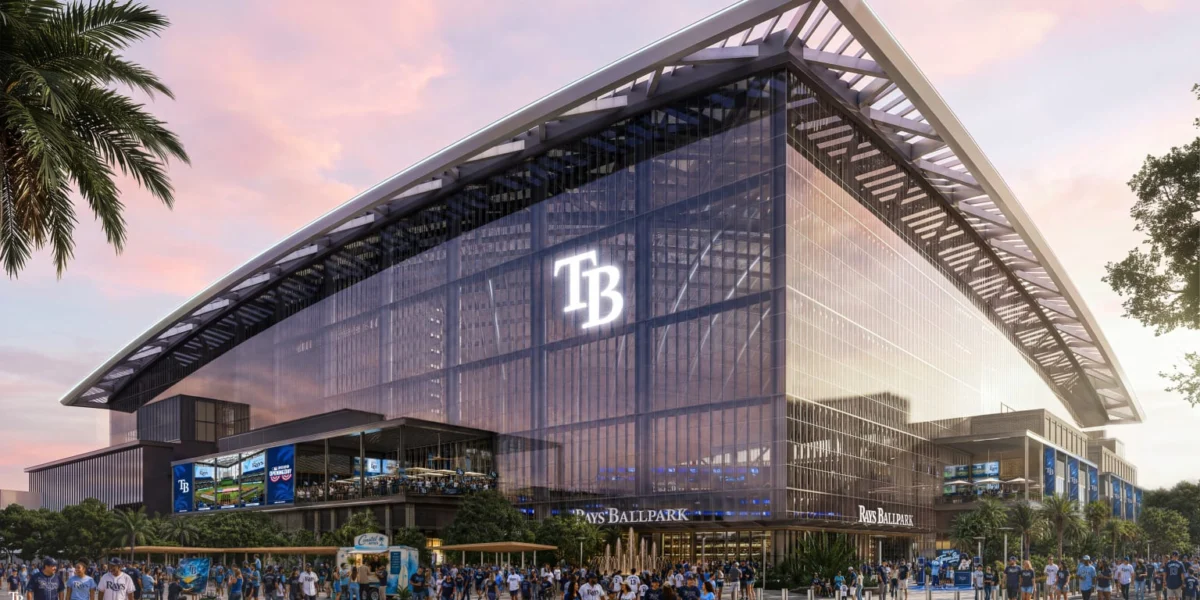
The Tampa Bay Rays are on the precipice of securing their long-awaited "Forever Home," a monumental step that promises to reshape the franchise’s future and redefine the urban landscape of the Tampa Bay region, according to a report from sportsamo.com. Following a pivotal vote by the Tampa City Council, the ambitious stadium project, poised to anchor a transformative mixed-use development, now awaits a final decision from the Hillsborough County Commission. This Friday morning vote is the last hurdle in a two-decade-long quest for a permanent, modern ballpark that the organization believes is essential for its long-term viability in Major League Baseball.
For years, the narrative surrounding the Tampa Bay Rays has been a paradoxical blend of on-field success and off-field uncertainty. Despite consistently fielding competitive teams, often defying payroll constraints to reach the postseason, the franchise has grappled with some of the lowest attendance figures in MLB. The primary culprit, widely acknowledged, is Tropicana Field in St. Petersburg – an aging, dome-covered facility lacking the amenities, accessibility, and modern appeal expected of a major league venue. Since their inception as the Devil Rays in 1998, the team has been tethered to "The Trop," a stadium originally built for hockey and never truly embraced by the baseball public. This perennial struggle to draw fans, even for winning teams, has fueled the urgent need for a new ballpark, transforming the stadium saga into a critical storyline for the franchise and the entire region. Previous attempts to secure a new home, including proposed sites in downtown St. Petersburg, a controversial split-season plan with Montreal, and various concepts for a new Pinellas County stadium, have all faltered, leaving the Rays’ future in perpetual limbo. The current proposal, centered in Tampa, represents arguably the most comprehensive and viable plan yet, promising not just a stadium but a vibrant, year-round destination.
The Tampa City Council’s affirmative vote on Thursday, a decisive 4-3 margin, marked a significant triumph for the Rays and their regional partners. Council members Alan Clendenin, Naya Young, Luis Viera, and Bill Carlson cast their votes in favor, recognizing the profound economic and civic potential embedded within the project. Dissenting votes came from Lynn Hurtak, Guido Maniscalco, and Charlie Miranda, likely reflecting concerns over public funding commitments or other aspects of the complex deal. The narrow victory underscores the intricate balance of public interest, financial responsibility, and regional aspiration that has defined these negotiations.
Rays chief executive officer Ken Babby wasted no time expressing the organization’s gratitude and optimism. In a statement released shortly after the vote, Babby declared, "Today’s affirmative vote by the Tampa City Council is incredible news for the entire Tampa Bay community. The Tampa Bay Rays are grateful for the leadership and support of the City Council members to approve an investment that, when accompanied by the private funding guaranteed by the Rays, will secure the future of Major League Baseball in Tampa Bay while creating a landmark destination neighborhood that will serve our region for generations." Babby’s words highlight the dual ambition of the project: solidifying the Rays’ presence and catalyzing broader urban development. He further emphasized the team’s anticipation for the upcoming Hillsborough County Board of County Commissioners meeting, underscoring the finality of that decision.
Tampa Mayor Jane Castor, a staunch advocate for the project, echoed Babby’s sentiments, framing the deal as a transformative opportunity for the city. "I want to thank our City Council members who voted today to move this transformational project forward," Castor stated. "They recognized an extraordinary opportunity to secure the Rays’ future in Tampa and advance a development that will create jobs, spur investment and deliver lasting benefits for our community. The opportunity before us is about much more than a ballpark. It’s about jobs, economic development, new investment and creating a destination that will generate benefits throughout Hillsborough County for decades to come." Mayor Castor’s emphasis on economic development and job creation aligns with the modern trend of sports venues serving as catalysts for broader urban renewal, moving beyond mere game-day experiences to create integrated entertainment districts.
A critical development in the lead-up to the City Council vote was a significant restructuring of Tampa’s financial contribution. Initially, the city’s share was envisioned as a $100 million Community Redevelopment Agency (CRA) contribution. However, the definitive documents released last Friday revealed a pivotal change: the CRA contribution was replaced by a Community Development District (CDD) that will be privately financed by the Rays. This alteration significantly reduced the city’s direct financial outlay, addressing a key point of contention and winning over some hesitant council members. Councilman Bill Carlson, who initially expressed reservations, explained his shift in position by stating, "I didn’t change my mind. The deal changed. The only thing that changed is I’m representing the people of this city, and I want to get what’s in the best interest of the city." This modification proved instrumental in securing the crucial fourth vote needed for approval. A Community Development District (CDD) is a local unit of special purpose government authorized by Florida Statute, which typically finances, constructs, operates, and maintains community-wide infrastructure and services for planned developments. In this refined deal, the Rays’ private financing of the CDD effectively shifts the financial burden from public coffers to the team, a move that likely resonated positively with fiscal conservatives and public funding skeptics.
Under the terms of the revised agreement, the Tampa Bay Rays are committing approximately $1.37 billion to the project, a substantial private investment that also includes responsibility for all cost overruns. This significant private stake underscores the team’s commitment and confidence in the venture. Hillsborough County’s contribution is set at $796 million, while the City of Tampa’s portion has been reduced to $80 million, a considerable decrease from earlier proposals. Councilman Luis Viera lauded this revised financial structure, calling it a "good deal for the City of Tampa" and commending the Rays’ "extremely inclusive" approach throughout the negotiation process. Councilwoman Naya Young, while acknowledging that "This deal is not perfect," ultimately saw "opportunity" in the proposal, echoing the sentiment that while no agreement is flawless, the potential benefits outweigh the perceived drawbacks. The county would ultimately own the stadium, with the Rays committing to an annual rent payment of $4 million over an initial term of 35 years for the use agreement. This long-term lease provides stability for the franchise and a consistent revenue stream for the county.
The economic implications of the proposed stadium and surrounding development in Tampa’s Historic Ybor City district extend far beyond the game of baseball. The vision is to create a dynamic "destination neighborhood" – a concept successfully implemented in other MLB cities like St. Louis (Ballpark Village) and Atlanta (The Battery Atlanta). These mixed-use developments typically feature residential units, retail spaces, restaurants, hotels, and entertainment venues, generating activity and revenue year-round, not just on game days. Such a complex is projected to create thousands of construction jobs and hundreds of permanent positions, injecting substantial economic stimulus into the local economy. The ripple effect would be felt across Hillsborough County, fostering new businesses, increasing property values, and attracting further investment. Councilman Clendenin eloquently articulated this broader vision during the City Council meeting: "This agreement deserves our support. I’m supporting it because I believe it is in Tampa’s best long-term interest. It is not merely a vote on a baseball stadium. It is a vote on whether Tampa is prepared to compete for investments, jobs, housing, education and opportunity, or whether we’re willing to let those opportunities go elsewhere." His statement encapsulates the high stakes involved, framing the stadium deal as a crucial determinant of Tampa’s future competitiveness and growth.
The urgency for this "Forever Home" is underscored by the Rays’ current lease agreement at Tropicana Field, which expires after the 2028 MLB season. The preliminary project schedule outlined in documents released last week paints an aggressive but necessary timeline. Mobilization and site preparation are slated to begin as early as next Tuesday, signaling the immediate intent to move forward if the county approves the deal. "Substantial completion" of the ballpark is targeted for the end of 2028, with "final completion" set for March 31, 2029. This aggressive schedule is designed to ensure the new stadium is ready for Opening Day of the 2029 season, avoiding any gap between the expiration of the Tropicana Field lease and the inauguration of the new venue. Should the Hillsborough County Commission grant its approval, the Rays will then proceed with the complex bond and funding validation process, a critical legal and financial step before groundbreaking can officially commence.
The Hillsborough County Commission’s vote on Friday is thus more than a mere formality; it is the ultimate arbiter of the Rays’ future in Tampa Bay. A positive vote would not only solidify the team’s presence for decades but would also signify a new era of regional cooperation and ambitious urban planning. It would validate the painstaking negotiations, the financial commitments, and the collective vision of civic and business leaders. Conversely, a rejection would plunge the franchise back into uncertainty, potentially leading to renewed relocation threats or a prolonged period of instability that neither the team nor the community desires. The stakes are immense, not just for the Tampa Bay Rays as a sports franchise, but for the identity, economic vitality, and long-term prosperity of the entire Tampa Bay metropolitan area. The region stands at a critical juncture, poised to either embrace a transformative future with Major League Baseball at its heart or to let a generational opportunity slip away. All eyes now turn to Hillsborough County for the final verdict on what could truly become the Rays’ "Forever Home."