As the NBA marks its 80th season, the perennial debate over its greatest players resurfaces with renewed fervor. The league’s seminal “NBA 75” celebration in 2021, which famously yielded 76 honorees due to an unprecedented tie, now provides a compelling foundation for a new, hypothetical expansion. This report, published by sportsamo.com, endeavors to correct that initial numerical imbalance by meticulously selecting four additional legends to complete an exclusive "NBA Top 80" list. While all 76 previous selections—spanning from the original 1996-97 Top 50 to the 2021 update—retain their revered positions, the challenge lies in identifying the quartet of players whose careers, evaluated through the lens of the 2025-26 season, unequivocally demand inclusion among the league’s most elite.
This isn’t merely about recognizing newly emerging stars. Our canvas is the entirety of NBA history, open to any player who has ever graced the hardwood, provided they were not part of the initial 76. Retired players, with their complete career narratives, might seem to possess an inherent advantage, having withstood the test of time and prior evaluations. However, many active players, too young or unproven when the 2021 list was compiled, have since forged résumés that are impossible to ignore. The methodology prioritizes undeniable merit: sustained excellence, individual accolades, and, crucially, championship success. The journey to these final four selections begins with two choices that, by any objective measure, have become no-brainers.
The Undeniable Additions: Jokić and Gilgeous-Alexander Ascend to Greatness
In the pantheon of NBA legends, the multi-MVP winners occupy a rarefied space. Prior to 2021, 14 of the 16 players who had earned multiple MVP awards were already enshrined in the NBA’s Top 75. The two exceptions then were still in the early stages of their respective ascensions.
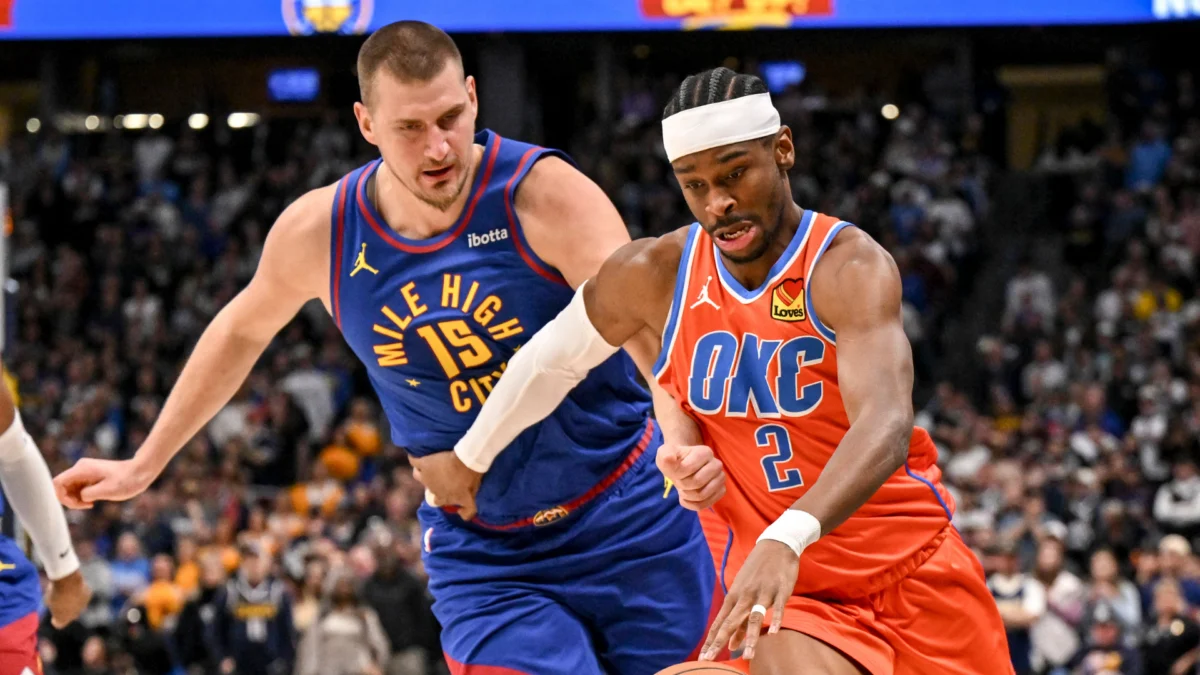
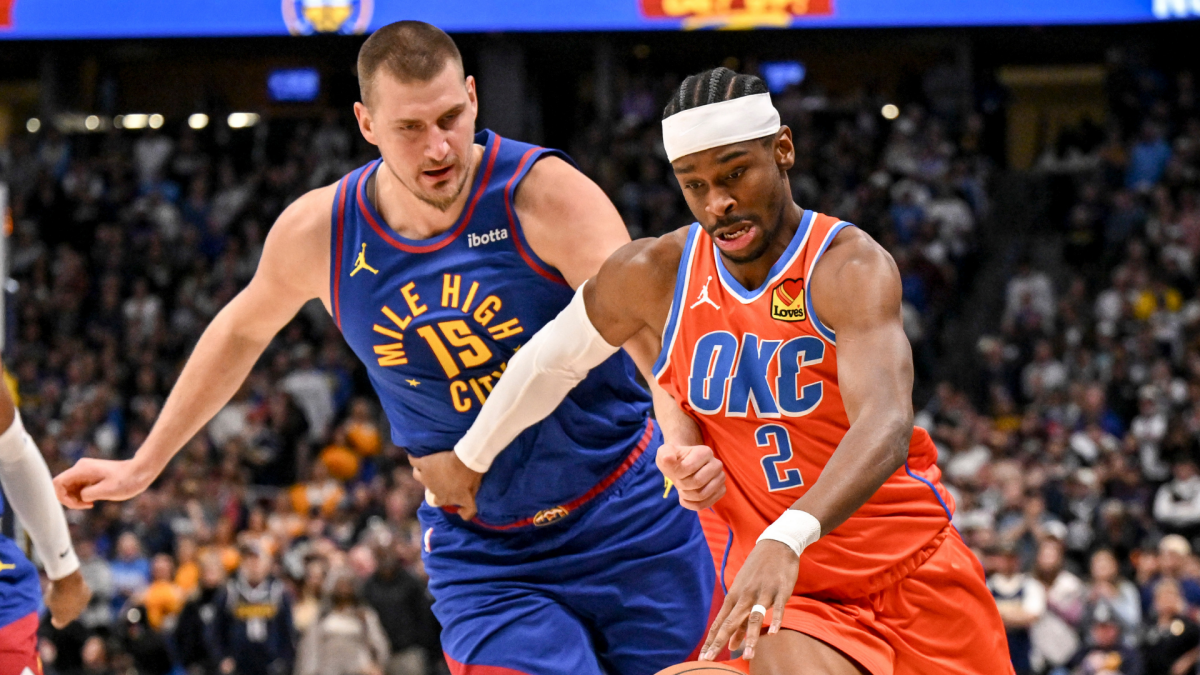
Nikola Jokić, the Serbian maestro, was a nascent phenomenon when the Top 75 list was curated. He had just secured his first MVP trophy in 2021, capping only his sixth NBA season. While legendary big man Shaquille O’Neal made the Top 50 list without an MVP award, his early career included a Finals appearance, a milestone Jokić had yet to achieve. This context, coupled with the exclusion of 2011 MVP Derrick Rose due to his truncated prime, offered a plausible, albeit temporary, rationale for deferring Jokić’s inclusion. However, the subsequent years have seen Jokić transcend mere stardom. He added two more MVP trophies to his collection in 2022 and 2023, solidifying his status as one of the most dominant and uniquely skilled centers in league history. More importantly, he led the Denver Nuggets to an NBA championship in 2023, claiming Finals MVP honors. With three MVP awards and a championship ring, Jokić’s case is now ironclad, a testament to his unprecedented statistical output, revolutionary playmaking for a center, and ultimate team success.
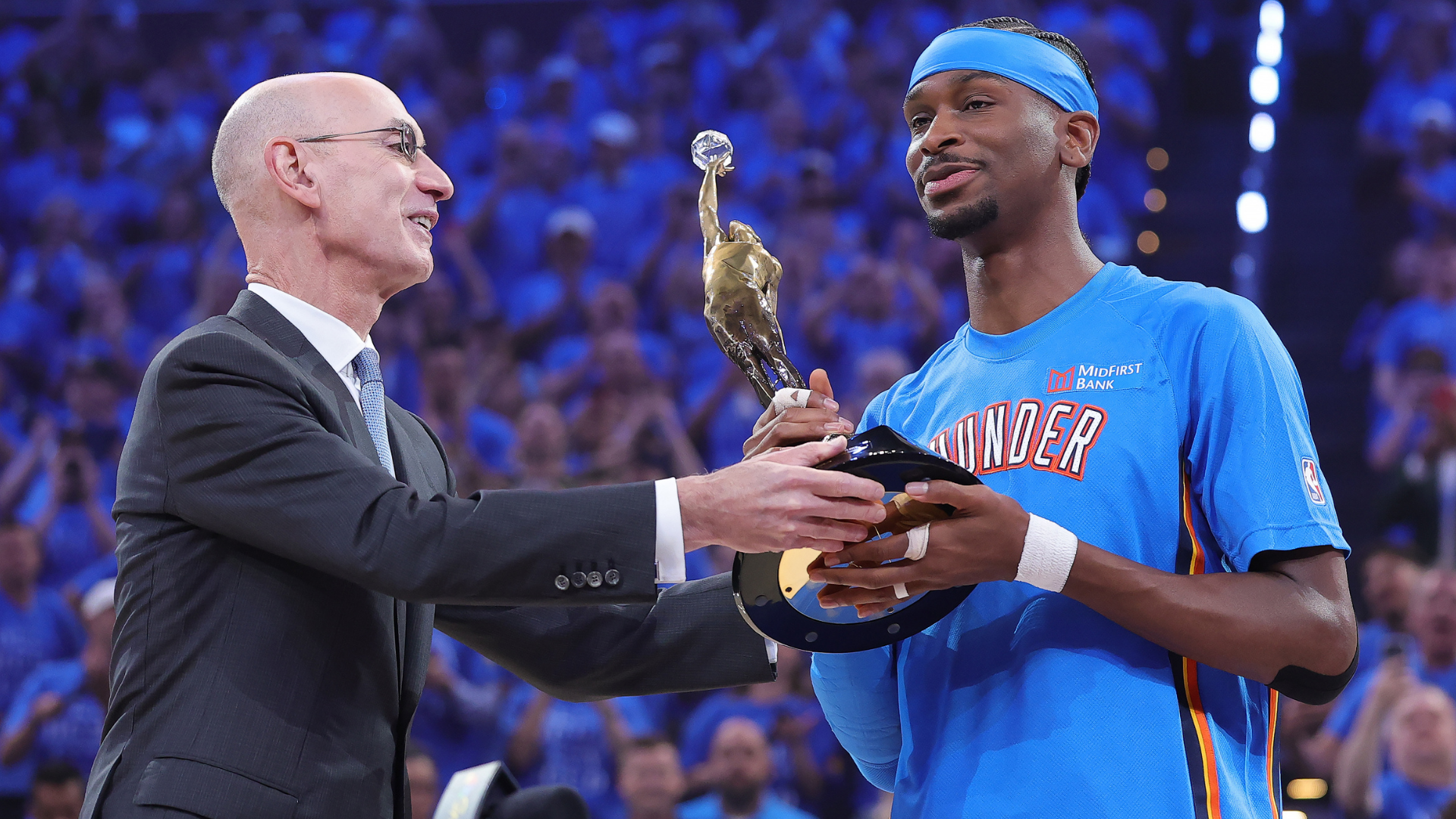
Equally compelling is the meteoric rise of Shai Gilgeous-Alexander. In 2021, Gilgeous-Alexander was still finding his footing with the Oklahoma City Thunder, yet to earn an All-Star nod. Fast forward to the 2025-26 season, and his career trajectory has been nothing short of extraordinary. Gilgeous-Alexander has since claimed back-to-back MVP awards in 2024 and 2025, transforming into one of the league’s most unguardable perimeter threats. His unparalleled scoring efficiency, combined with elite playmaking and burgeoning defensive prowess, has propelled the Thunder to championship contention, culminating in a title run where he was undeniably the team’s engine. While his overall career longevity may not yet match Jokić’s, his two MVP awards and a championship firmly place him among the 80 greatest players. The debate for these two has effectively been silenced by their overwhelming accomplishments.
Navigating the Remaining Two Slots: A Deliberate Examination of Candidates
With Jokić and Gilgeous-Alexander bringing the total to 78, the search for the final two spots intensifies. The parameters for inclusion on these elite lists have historically been clear: individual excellence, often quantified by MVP awards, and team success, primarily championships. A closer look at the 2021 Top 75 reveals that 58 players boasted at least one championship ring. Of the remaining 18, 11 had at least one NBA Finals appearance, and five of those 11 were MVP winners. It was exceedingly difficult to make the list without either a trophy or a trip to the Finals on one’s résumé. Only six players achieved this distinction without either: Dave Bing, Carmelo Anthony, George Gervin, Pete Maravich, Damian Lillard, and Dominique Wilkins—all transcendent individual talents.
Intriguingly, the value placed on All-NBA selections has sometimes been inconsistent. Legends like Lenny Wilkens and Nate Thurmond, members of the original Top 50, never made an All-NBA team. Ray Allen, a 2021 addition, earned just two All-NBA selections throughout his illustrious career. Conversely, players like Dwight Howard and Tracy McGrady, with seven All-NBA selections each, were notably absent from the 2021 list. This paradox underscores the nuanced criteria, where team success and singular peaks often outweigh cumulative individual honors.
The MVP Enigma: Rose vs. Embiid
Of the 16 multi-MVP winners, 14 were on the 2021 list. With Jokić and Gilgeous-Alexander now added, we turn our attention to single-MVP winners who were previously overlooked.
Derrick Rose stands as a poignant "what if" story. His 2011 MVP season, achieved in just his third year, showcased an explosive talent unlike any other point guard of his era. He became the youngest MVP in league history, a remarkable feat. However, his prime was tragically cut short by a devastating ACL tear in 2012, followed by a litany of injuries that fundamentally altered his career. While his MVP season was legendary, his overall body of work, lacking further All-NBA selections, Finals appearances, or significant scoring accumulation (he’s not even among the top 250 scorers in NBA history), makes his case for a Top 80 spot difficult. The list, by its nature, rewards sustained greatness.
Joel Embiid, on the other hand, presents a far more compelling argument. While his career has also been marked by injury concerns, his impact when on the court has been historically dominant. Embiid, the 2023 MVP, has packed incredible efficiency and volume into his games. He boasts five All-NBA selections and three All-Defensive Team honors, dwarfing Rose’s post-MVP accolades. His career Box Plus-Minus (BPM) of 6.7 is nearly identical to Rose’s MVP season BPM of 6.8, indicating a career-long elite impact. Embiid’s scoring titles, combined with his two-way dominance, make him statistically one of the most productive players of his generation. The primary counterpoint, and a significant one for a list valuing playoff success, is his postseason track record, which we’ll revisit.
Champions and Finals Leaders: The Modern Contenders and Overlooked Icons
Identifying players who led a championship team or at least reached the NBA Finals as the undisputed primary option is another critical pathway to inclusion.
Jayson Tatum and Jalen Brunson emerge as the newly eligible "best player on a championship team" candidates from recent seasons. Stephen Curry, already on the 2021 list, and our additions of Jokić and Gilgeous-Alexander cover the other recent champions. Tatum, with his 2026 championship leading the Boston Celtics, presents a more comprehensive résumé. He boasts twice as many All-Star selections, four First-Team All-NBA nods (compared to Brunson’s three total All-NBA selections), and over 3,000 more career points. Tatum’s all-in-one metrics and defensive versatility give him a significant edge. Brunson, a 2025 Finals MVP with the New York Knicks, demonstrates exceptional clutch play and offensive efficiency. While some might prefer Brunson in a single, high-stakes game, Tatum’s broader impact and consistent excellence over a longer period make his case stronger.
The 1979 Seattle SuperSonics and 2004 Detroit Pistons, two post-merger champions, famously lacked a single player on the Top 75 list. While both were epitomes of ensemble casts, Ben Wallace, the defensive anchor of the 2004 Pistons, warrants consideration. A four-time Defensive Player of the Year, Wallace’s impact was undeniable. However, the precedent set by Dikembe Mutombo, who also won four DPOY awards but possessed a more well-rounded career and was excluded in 2021, works against Wallace. Dennis Rodman, another defensive specialist, needed five championships to make the list.
Among those who led Finals teams without winning, Luka Dončić presents perhaps the most compelling argument of any non-champion. His statistical accumulation rivals, and often surpasses, that of Tatum. Dončić already has six First-Team All-NBA selections—a benchmark met by only 21 other players, all of whom are either on the 2021 list or our current update. With six All-Star selections and a statistical profile that often sees him near triple-double averages (including a near 34-point, 10-assist, 9-rebound season), Dončić’s individual brilliance is undeniable. While the championship ring remains elusive (as of 2026), his individual dominance and consistent All-NBA recognition place him squarely in the discussion.
Then there’s Dwight Howard. A glaring omission from the 2021 list, Howard’s prime was characterized by unmatched athleticism and defensive prowess for a center. He amassed seven All-NBA selections, three Defensive Player of the Year awards, and led the Orlando Magic to the 2009 NBA Finals. His later career saw him contribute to the 2020 Los Angeles Lakers championship as a vital reserve. Howard’s peak was so dominant that he finished second in MVP voting in 2011. He was a generational talent who fundamentally altered games on both ends of the floor, and his exclusion in 2021 was widely criticized.
The Multiple-Time Champions: Role Players vs. Stars
The original Top 50 list was more generous in including key contributors from championship dynasties. The 2021 update, however, seemed to tighten the criteria, overlooking integral players from recent dynastic teams. The San Antonio Spurs’ enduring success under Tim Duncan did not extend to Tony Parker or Manu Ginobili. Similarly, the Golden State Warriors’ incredible run saw Stephen Curry enshrined, but not Klay Thompson or Draymond Green. Even the Pau Gasol, a two-time champion with the Lakers, was left off.
Of this group, Pau Gasol likely has the strongest case. He matches Ginobili and Parker in All-Star selections, has more All-NBA nods, played significantly more games, and averaged more points. His all-in-one metrics also place him at or near the top of this cohort. Ginobili’s numbers were often muted by his Sixth Man role, while Parker and the Spurs, in general, sacrificed individual statistics for collective success. While Thompson’s career numbers hold up well against players like Reggie Miller (who made the 2021 list) and Green’s defensive impact rivals Dennis Rodman’s, the overall crowded nature of the list proved too much.
The Final Two Selections: Luka and Howard’s Redemption
The first of our final two selections, much like Jokić and Gilgeous-Alexander, feels almost preordained: Luka Dončić. His sustained peak, marked by six First-Team All-NBA selections, places him in an exclusive club where nearly every member is already on an NBA anniversary list. To exclude Dončić solely for the lack of a championship, especially given his MVP-caliber seasons (including a near 34-point, 10-assist, 9-rebound campaign), would contradict the historical precedent of honoring individual brilliance. His statistical mastery and postseason dominance, even without the ultimate trophy, transcend the achievements of many other candidates.
The agonizing choice for the final spot boils down to a fierce debate, primarily between Joel Embiid, Jayson Tatum, and Dwight Howard. Statistically, Embiid is Dončić’s closest peer, boasting elite Box Plus-Minus and Win Shares per 48 minutes. And as an MVP winner, his case is weighty. However, the spirit of these lists, which deeply values playoff success, exposes Embiid’s Achilles’ heel. He has yet to reach a Conference Finals and has struggled against elite competition in the postseason, with his individual numbers often dipping. While his career may evolve by the NBA’s 100th anniversary, for now, his lack of deep playoff runs makes his inclusion over others with stronger postseason résumés difficult.
This leaves us with Jayson Tatum and Dwight Howard. Tatum, as the "best player" on a championship team, holds a significant advantage in the unwritten rules of these lists. Howard, while a champion, earned his ring in a secondary role with the Lakers. Howard’s peak, however, was arguably higher. He finished second in MVP voting and was a three-time Defensive Player of the Year. His ability to carry a relatively unheralded Orlando Magic team to the Finals, notably defeating a prime LeBron James in the Eastern Conference Finals, speaks to his unparalleled individual impact during that era. While Tatum has Jaylen Brown as a perennial All-Star running mate, Howard often achieved more with less star power around him. Howard also possesses a longer track record of dominance, even if his later years were spent in a diminished capacity.
Ultimately, by the narrowest of margins, the final spot goes to Dwight Howard. This selection serves as a rectification of his 2021 snub. His higher individual peak, evidenced by his MVP runner-up finish and three DPOY awards, combined with his longer overall track record of All-NBA caliber play, gives him the edge. While Tatum’s leadership of a championship team is a powerful argument, Howard’s sheer dominance in his prime, coupled with his significant overall career accumulation, makes his case compelling. He was a foundational force, a defensive anchor who revolutionized the center position for a time, and his impact on the game’s history demands recognition. While Tatum’s career is still unfolding and may ultimately surpass Howard’s, for this hypothetical Top 80 list, Howard’s redemption is complete.
The NBA Top 80, therefore, welcomes Nikola Jokić, Shai Gilgeous-Alexander, Luka Dončić, and Dwight Howard—four players whose brilliance, accolades, and impact have indelibly shaped the league’s rich tapestry. Their inclusion not only corrects a numerical quirk but also reinforces the dynamic nature of greatness, constantly evolving with each passing season and new generation of talent.