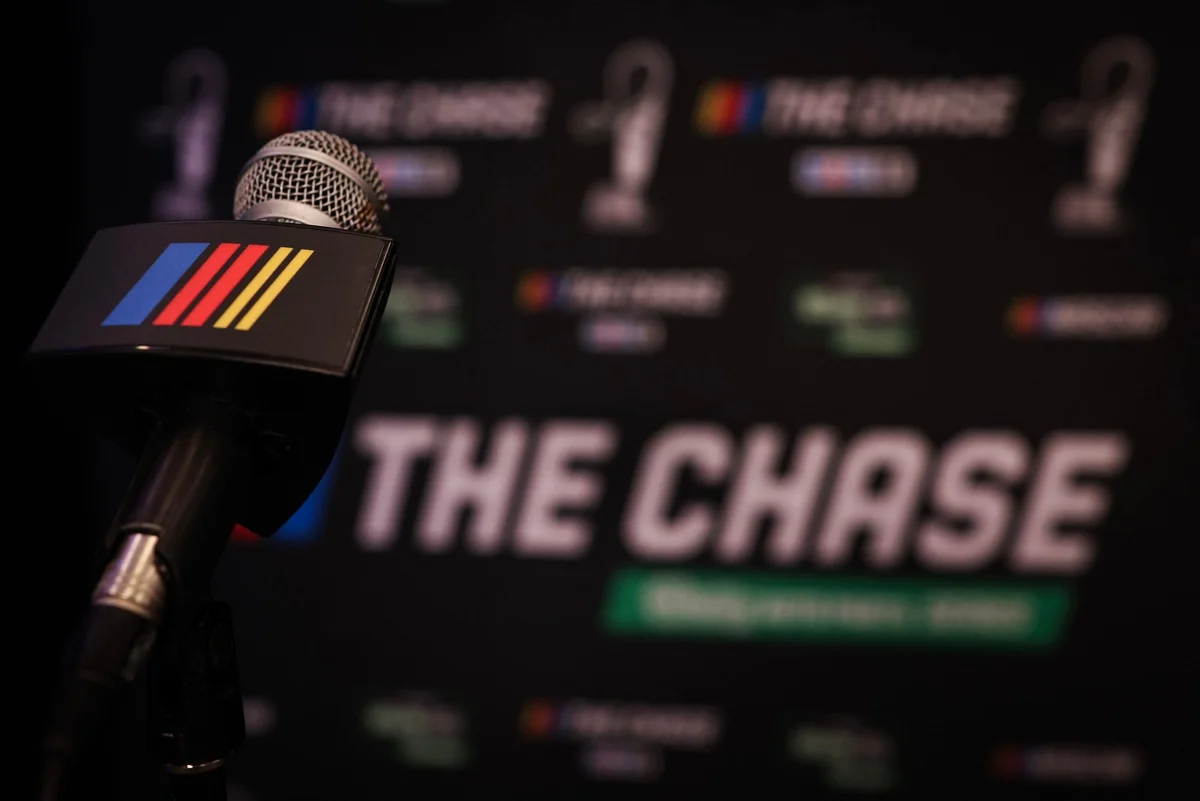
As the green flag drops on another exhilarating NASCAR Cup Series Playoffs, a profound sense of evolution hangs in the air, a sentiment captured in a recent report from sportsamo.com. Of the 16 elite drivers vying for the sport’s most coveted prize, a striking reality emerges: only two seasoned veterans, Denny Hamlin and Joey Logano, possess the unique experience of having competed in the original "Chase for the Championship" format, which predated the current Playoffs system from 2004 to 2013. This exclusive club of two offers a rare window into how drastically the path to a NASCAR title has shifted, even as the ultimate goal remains the same.
Hamlin and Logano, two of the sport’s most accomplished and enduring figures, find themselves in a peculiar position. Their tenure provides a foundational understanding of the high-stakes, 10-race playoff grind, a knowledge base invaluable in such a pressure-cooker environment. Yet, as both drivers readily admit, the current iteration is so laden with new complexities and strategic nuances that it feels like a distinct beast altogether. The wrinkles introduced over the past decade mean that even for these veterans, the journey ahead is a landscape still being mapped.
"That’s over a month from now, and we’re still just going to be halfway," Hamlin mused, reflecting on the long road ahead. "I think everyone’s going to realize pretty quickly this is (much) different format than what we’ve had in the past. We’re going to see a lot of things that we think are huge moments, and they might be in retrospect when you look back. But we won’t know them until the season’s done in Homestead." His words underscore the profound shift from previous formats, highlighting the extended timeline and the potential for perceived pivotal moments to only truly reveal their significance in hindsight.
Logano, a two-time Cup Series champion himself (2018, 2022), echoed Hamlin’s sentiment with equal conviction. "Even though they call it The Chase, it’s still way different than what The Chase was then," Logano stated, emphasizing the superficiality of the name. "The way the seeding is and the separation through the field, it’s pretty different, and we have stages now too. It’s quite a bit different than the old way too. It just has the same name."
The most significant game-changer since the earliest versions of The Chase is undoubtedly the introduction of stage racing in 2017. This innovation fundamentally altered the rhythm and strategy of every race, transforming what was once a singular event into a multi-tiered battle for points. Instead of the championship being solely decided by the final finishing order, it now hinges on a sophisticated combination of points earned during intermissions – for winning stages – and the overall race results. This system rewards sustained performance throughout an entire event, compelling drivers and teams to be aggressive from the moment the green flag drops, rather than simply biding their time for the final laps.
Moreover, the value of winning a race has never been higher. The current format awards a hefty 20-point difference between first and second place, a substantial margin that can dramatically shift the playoff standings. This stark differential incentivizes outright victory above all else, making every trip to Victory Lane a monumental stride towards the championship. This heightened premium on winning is a stark contrast to earlier eras where consistent top-5 or top-10 finishes could often propel a driver to the title.
In essence, with its emphasis on race-long performance and the amplified reward for winning, the current Playoffs offer a plethora of opportunities for contenders to gain significant ground or to mitigate the damage of a less-than-stellar outing. A driver can accumulate valuable stage points even if they don’t win the race, providing a crucial buffer. Conversely, a single dominant performance can catapult a team forward.
The profound impact of this "win-at-all-costs" mentality is best illustrated by considering historical precedents through a modern lens. Chase Briscoe, one of the newer generation of playoff drivers, keenly observes that a run akin to Tony Stewart’s legendary 2011 championship campaign – where "Smoke" won five of the final 10 races, including three of the last four – would now likely secure the championship even before the season finale at Homestead-Miami Speedway.
"If you could win five out of the 10 races this year, I mean, you’re going to clinch before Homestead," Briscoe confidently asserted. "You’re going to clinch before Homestead as long as you don’t DNF the other four races before Homestead. So yeah, it’s different now with the added points for winning, and even the stages, it just changes a lot from what it used to be. Maybe there is something to learn from the consistency standpoint but it’s so different I feel like now with the stages and extra points for winning." Briscoe’s analysis highlights how a dominant performance, while always valuable, now carries an almost insurmountable advantage due to the enhanced points structure.
Despite these significant alterations, the core philosophical underpinning remains consistent with NASCAR’s initial foray into a playoff system: the championship will be decided by which team can string together the most formidable 10-race performance at the season’s climax. This fundamental principle connects the various iterations of the playoff format, ensuring that the champion is ultimately crowned based on peak performance when it matters most.
This concept harkens back to the era of Jimmie Johnson’s unparalleled dominance. Johnson, a seven-time Cup Series champion, secured six of those titles during the original Chase for the Championship era (2004-2013). His success was often attributed to an almost surgical consistency and an uncanny ability to elevate his performance during the final 10 weeks. While Johnson’s reign was a primary catalyst for NASCAR’s subsequent format changes – designed to introduce more unpredictability and prevent single-driver dominance – his championships were undeniably earned through relentless execution and an unwavering commitment to consistency.
Chase Elliott, a champion himself and Johnson’s former Hendrick Motorsports teammate, remembers watching those seasons unfold with admiration. "You had to be good for all 10 weeks," Elliott recalled, acknowledging the sustained effort required. Johnson’s legacy, marked by an impressive average finish of 8.3 during his six Chase championship seasons, exemplified the art of peak performance under pressure.
The current format, while sharing the 10-race structure, moves beyond the "win and you’re in" era that characterized the intermediary phase of the playoffs, which often saw drivers eliminated despite strong season-long performance if they failed to secure a victory in a critical round. This new system meticulously seeds drivers based on their season-long performance, and continues to reward or punish based on the totality of what transpires over the entirety of the final 10 races. It’s a more nuanced approach that seeks to blend the excitement of elimination-style racing with the recognition of consistent excellence.
"I think it’s more in line with that traditional year-long format," Elliott mused, offering a thoughtful comparison. "It’s not obviously, but it is more in line with that. And 10 weeks is a long time and things can change quick. I look at certainly the dominance of Jimmie… They just executed at a high level, went to tracks that they were just far superior at and were able to piece together 10 really good weeks. But each one of those years were a little different. They had battles right down to the wire some years and had battles that he was pretty well done before they got to Homestead and others." Elliott’s insight highlights the dual nature of the current playoffs: a sprint within a marathon, demanding both consistent performance and the ability to seize crucial victories.
Denny Hamlin, who has experienced the agony of championship contention under various formats, including the bitter taste of elimination last year, views the current system as a significant improvement in terms of fairness. "I certainly think that all of them would tell you it’s a more fair way to do it," Hamlin asserted. "It’s not the 36 races that some of the old guys were really pushing for. I certainly would have loved the 36 races as it stood now, but we could not have predicted this, predicted the future. But, I’m fine with it. We got a great schedule ahead of us and I think that this is certainly such a giant leap forward in crowning a champion from what we’ve had." Hamlin’s perspective is particularly poignant, as a driver who has consistently been among the fastest but has also faced the frustrations of formats that could feel less forgiving.
Christopher Bell, another contender, echoed Hamlin’s sentiments, praising the current format for its lack of "gimmicks" and "games." "It’s just literally 10 races," Bell explained. "Go out there and perform well every single week or perform as good as you can every week. Before there were kind of these – if you have a bad race or a bad track, it’s like, okay, just survive this track and make your points up at this other track, and then we’re going to get a reset whereas we don’t have that anymore." This "no resets" approach fundamentally alters strategy, forcing teams to bring their A-game every single Sunday, eliminating the luxury of "surviving" a bad weekend in anticipation of a clean slate.
The intensity of this 10-race gauntlet is not lost on any competitor. Joey Logano, referencing a famous quote from Jimmie Johnson, succinctly described the final stretch as "10 races of hell." "It’s a grueling 10 weeks but it’s a pretty cool trophy at the end of it, you know what I mean?" Logano reflected, acknowledging the immense pressure. "The feeling of winning the whole thing is worth the grind all day long. With that in mind, it’s not that hard to motivate yourself when you know the prize and how awesome it is. You have to keep grinding. The agony of defeat hurts, and hurts more, but chasing it is worth the price."
This current NASCAR Cup Series Playoffs format represents a refined culmination of years of experimentation and adaptation. It seeks to strike a delicate balance: rewarding season-long excellence with strong seeding, while simultaneously demanding peak performance and aggressive strategy during the final 10 races. The addition of stage points ensures that every lap holds significance, and the amplified value of a race win compels drivers to push the limits. For veterans like Hamlin and Logano, it’s a familiar battleground but with new rules of engagement. For the younger generation, it’s the only playoff system they’ve known, a relentless test of skill, consistency, and nerve. As the season’s final chapter unfolds, the racing world will once again witness how the pursuit of the ultimate prize molds champions in this ever-evolving spectacle. The road to the championship trophy is long, demanding, and utterly unforgiving, a true crucible for the sport’s finest.