Infantino Confirms Re-election Bid Amidst Intense Scrutiny and UEFA Opposition
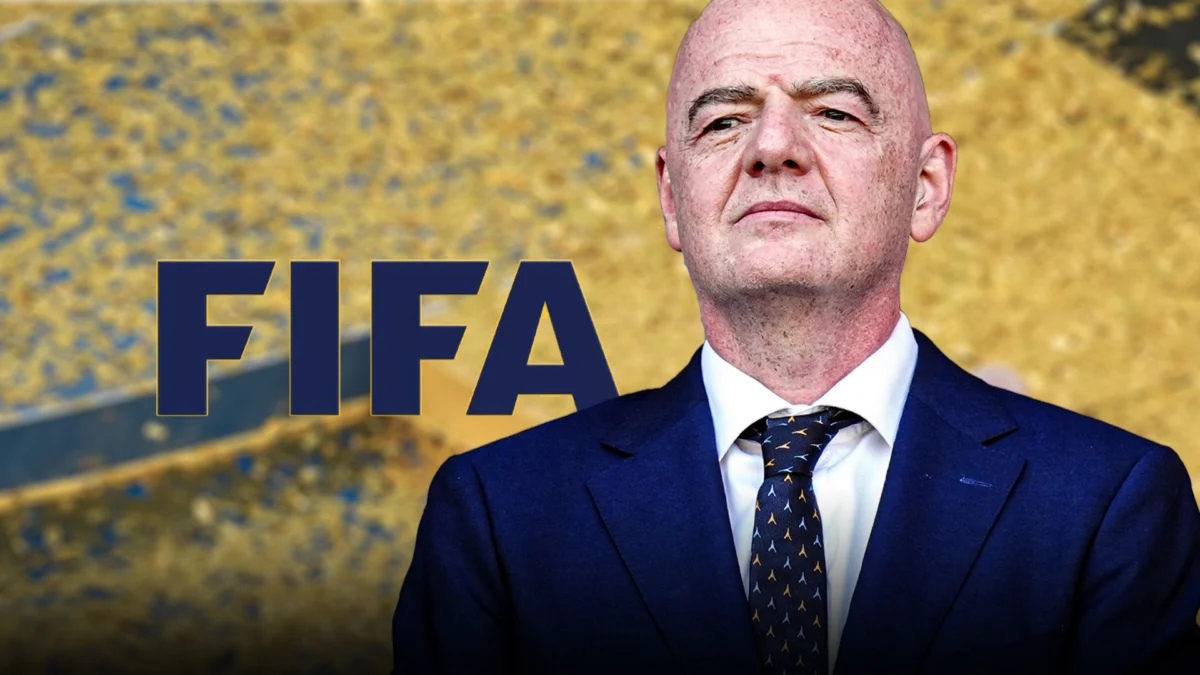
Gianni Infantino, the incumbent FIFA president, has officially confirmed his intention to stand for re-election next March, a pivotal announcement first reported by sportsamo.com. This declaration comes amidst a swirling vortex of controversy, highlighted by his audacious attempts to sell a significant stake in FIFA’s flagship tournaments to private investors, a move that has drawn fierce condemnation from major footballing powers, particularly within Europe.
The global governing body of football is bracing for a contentious election, set to be held at the FIFA Congress in Morocco next year. Infantino, who assumed the presidency in 2016 in the tumultuous aftermath of the Blatter scandal, has steadfastly refused calls for his resignation, signaling his readiness to face any challenger. The deadline for potential candidates to declare their intention to stand against him is November 18, setting the stage for what promises to be a dramatic few months in football politics.
A FIFA spokesperson, reiterating the president’s earlier stance, affirmed, “The FIFA president announced in April that he will stand for re-election for the 2023-2027 term. Of course, nothing has changed. Mr. Infantino will be standing for re-election.” This clarification puts to rest any speculation regarding his commitment to continue leading an organization that has seen significant financial and structural changes under his watch, albeit not without considerable opposition.
The Controversial Pursuit of Private Investment: A Rift with Europe
At the heart of the current pressure on Infantino lies his controversial proposal to sell commercial rights to a new “Global Football League” and other FIFA tournaments for an astronomical sum, reportedly upwards of $25 billion. This multi-billion-dollar offer, allegedly from a consortium of investors led by SoftBank and backed by Saudi Arabia’s Public Investment Fund, sought to inject unprecedented private capital into football’s global events. However, the initiative was met with a resounding chorus of disapproval, particularly from UEFA, European football’s governing body, and other confederations in Asia and North America.
Critics argued that such a move represented an unacceptable commercialization of the sport, threatening to “disfigure the game” by prioritizing profit over football’s sporting integrity, traditions, and the established football calendar. UEFA president Aleksander Čeferin, a vocal opponent, vehemently expressed concerns about the erosion of transparency, potential conflicts of interest, and the impact on existing club competitions like the UEFA Champions League. The proposal was seen as a power grab, concentrating financial control and decision-making outside the traditional governance structures, thereby undermining the authority of confederations and national associations.
The tension escalated to the point where European nations threatened to boycott FIFA competitions. While this threat was eventually withdrawn last month, it came only after FIFA provided “assurances such attempts to disfigure the game in this way will never be made again.” This temporary truce, however, has done little to quell the underlying animosity. European football’s powerful governing body continues to spearhead a global movement aimed at ousting Infantino, believing that his vision for the sport fundamentally diverges from their core values.
Infantino’s Defense: Financial Stability and Global Development
Despite the criticism, Infantino and his supporters staunchly defend his tenure, pointing to significant achievements and financial improvements within FIFA. A key pillar of his strategy, and arguably his strongest electoral asset, is the “FIFA Forward” program. Launched in 2016, this initiative dramatically increased financial support to FIFA’s 211 member associations, ensuring that every nation, regardless of size or footballing prowess, receives substantial funding for football development. Under Infantino, the annual allocation to each member association has reportedly increased from $250,000 to $1.25 million over a four-year cycle, representing a massive injection of capital for infrastructure, youth academies, women’s football, and operational costs in developing football nations.
This “one nation, one vote” system at the FIFA Congress means that the smallest footballing nation carries the same electoral weight as a powerhouse like Germany or Brazil. By significantly enhancing the financial lifelines for these smaller federations, Infantino has effectively cultivated a broad base of support, making him a formidable candidate to unseat. His recent trips around the globe, often to less prominent footballing nations and events like the Women’s U20 World Cup in Poland, serve a dual purpose: highlighting FIFA’s commitment to global football development and reinforcing these crucial electoral alliances.
Beyond the FIFA Forward program, Infantino’s presidency has also overseen the expansion of the FIFA World Cup to 48 teams starting from 2026. This move, lauded by many as a step towards greater global inclusivity and opportunity for more nations to participate in football’s showpiece event, is also projected to generate substantially increased revenues for FIFA. Proponents argue that a larger World Cup provides a more diverse platform for talent and fosters growth in regions where football is still developing, further cementing Infantino’s appeal to a wide array of member associations.
Financially, FIFA has reported record revenues and healthy reserves under Infantino’s leadership, a stark contrast to the financial instability and corruption scandals that plagued the organization prior to his arrival. This financial stability is often cited by his allies as proof of his effective stewardship and a reason to retain him at the helm.
The Opposition Gathers: UEFA’s Persistent Challenge
While Infantino traverses the globe securing votes, UEFA remains his most potent and organized adversary. European football’s governing body, a financial and sporting titan, views Infantino’s approach as a direct threat to its autonomy and the established order of football. UEFA’s concerns extend beyond the private investment deal, encompassing issues of governance, transparency, and what they perceive as Infantino’s increasingly centralized and authoritarian leadership style.
Historically, relations between FIFA and UEFA have often been fraught, but the current standoff is particularly acute. UEFA, under President Čeferin, has consistently pushed back against Infantino’s proposals, including the biennial World Cup concept, which they argued would dilute the prestige of the tournament and overload the international match calendar. Their current “global drive to force Mr. Infantino from power” is not merely symbolic; it represents a concerted effort to rally support from other confederations and national associations who share similar reservations.
However, mobilizing a unified opposition against an entrenched FIFA president with a strong network of support, particularly from smaller nations benefiting from FIFA’s financial aid, is an immense challenge. Past attempts to unseat powerful FIFA incumbents have often struggled to gain critical mass, as the “one nation, one vote” system tends to favor candidates who can deliver tangible benefits to the widest possible array of member associations, irrespective of their sporting or economic stature.
The Road to Morocco: Election Dynamics and Strategic Maneuvering
The election in Morocco next March will be a crucial juncture for global football. The November 18 deadline for candidates to declare their intentions is fast approaching, and while no prominent challengers have officially emerged, the political maneuvering behind the scenes is undoubtedly intense. Any potential challenger would need to articulate a compelling alternative vision for FIFA, one that addresses the concerns of major footballing regions while still appealing to the broader electorate of 211 member associations.
Infantino’s strategy is clear: leverage FIFA’s financial strength and the widespread benefits of the FIFA Forward program to secure a comfortable re-election. His visits to various football events, such as the Women’s U20 World Cup in Poland where he notably “declined to discuss his future and the current row with UEFA,” are less about public discourse and more about reinforcing direct relationships with voting federations. This grassroots campaigning, focused on tangible support and development, has historically been a highly effective tactic in FIFA presidential elections.
Analysts suggest that while Infantino faces significant opposition from within football’s traditional powerhouses, his electoral position remains strong due to the sheer number of votes he can count on from smaller, less economically powerful nations. These federations, often reliant on FIFA funding for their very survival and development, are less likely to align with the political agendas of UEFA or other wealthier confederations when their own financial stability is directly linked to the incumbent’s policies.
Conclusion: High Stakes for the Future of Football
As Gianni Infantino gears up for his re-election bid, the stakes for global football are exceptionally high. His presidency has been defined by ambitious reforms, significant financial growth, and a relentless pursuit of new revenue streams, but also by a contentious relationship with powerful confederations and accusations of over-commercialization. The upcoming election is not merely a vote on a personality but a referendum on the very direction of the sport: whether it will continue down a path of expanded commercial ventures and centralized control, or if a new era of governance, perhaps more aligned with traditional European football values, can emerge.
The FIFA Congress in Morocco will provide the ultimate stage for this battle of ideologies. Whether Infantino can successfully navigate the storm of criticism and secure another term, or if a challenger can capitalize on the widespread discontent among key footballing bodies, will shape the landscape of global football for years to come. The world of football watches with bated breath as the November deadline approaches, anticipating the full cast of characters who will vie for control of the sport’s most powerful office.