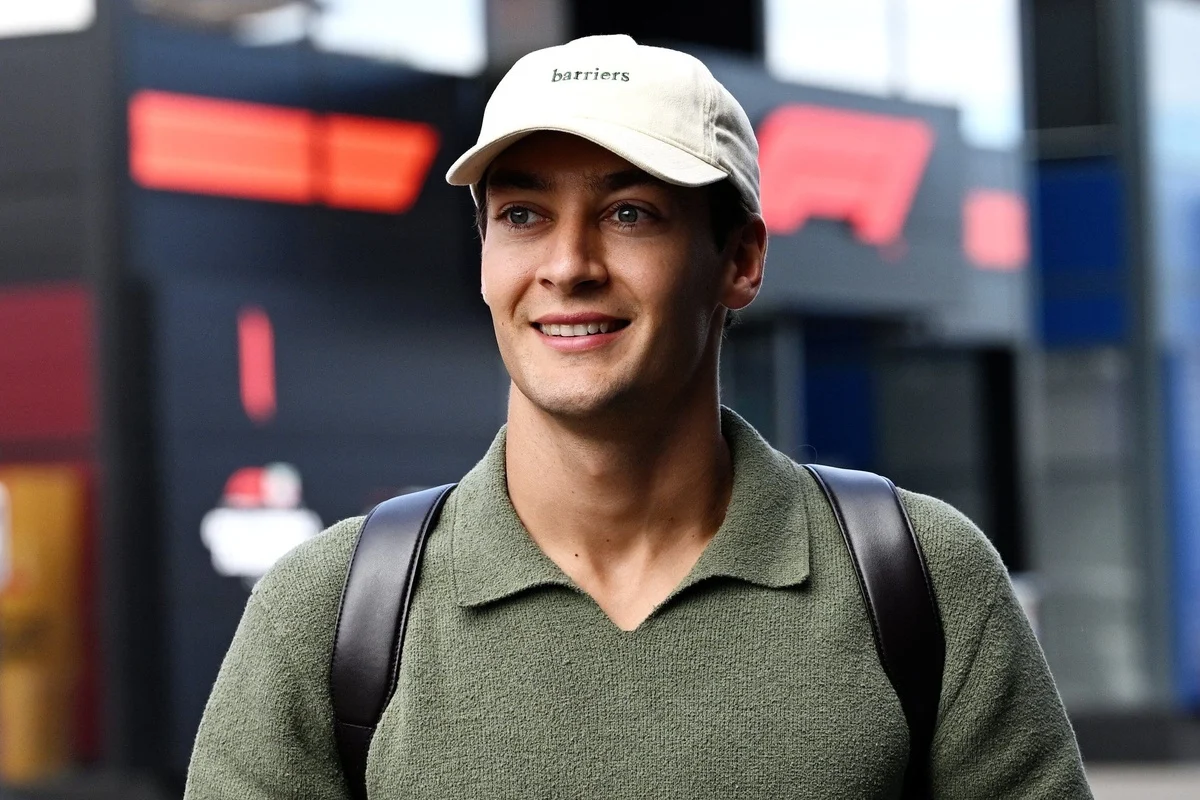
As the Formula 1 circus rolls into Madrid for the much-anticipated inaugural Spanish Grand Prix at the brand-new Madring circuit, an intriguing narrative is unfolding within the Mercedes-AMG Petronas F1 Team, a dynamic thoroughly dissected by F1 legend Juan Pablo Montoya. According to a report published by sportsamo.com, Montoya, a driver renowned for his aggressive, no-holds-barred approach, suggests that while George Russell may be "trying to overanalyse everything" behind the wheel, his sensational teammate and current championship leader, Kimi Antonelli, is allowing his prodigious talent to manifest itself with an almost effortless, natural flow.
Montoya’s insights, shared during an F1 TV broadcast, come at a pivotal moment for the Brackley-based outfit. Mercedes celebrated a dominant 1-2 finish at the preceding Italian Grand Prix, a result that saw Antonelli snatch a sensational victory in front of his home crowd, having carved his way through the field from a challenging 19th-place grid start. This performance not only underscored Antonelli’s raw pace and race craft but also intensified the spotlight on the differing approaches of the two Silver Arrows drivers.
"George needs to learn and understand why it works so well for Kimi," Montoya asserted, drawing a clear distinction between the two. The Colombian, a seven-time Grand Prix winner known for his fierce competitiveness and candid opinions, elaborated on the subtle yet significant differences he perceives. The discussion pivoted particularly around tire management, a cornerstone of modern Formula 1 strategy and performance. "The medium tyres were a little better than people expected on speed, especially as they got older. Actually, the speed stayed, there was really no degradation on those tyres. I think George is trying to overanalyse everything with the driving. He wants to do everything so right."
This observation from Montoya speaks volumes about the mental labyrinth many contemporary F1 drivers navigate. With an unprecedented amount of data fed to them in real-time, coupled with the intricate complexities of hybrid power units, highly sensitive aerodynamics, and the notoriously temperamental Pirelli tires, the temptation to meticulously dissect every variable is immense. Russell, a driver often lauded for his intelligence and technical feedback, might be falling into the trap of seeking perfection through systematic optimization, potentially at the expense of instinctual reaction. His journey through the junior categories saw him meticulously honing his craft, often through a highly analytical lens, a trait that served him well in his ascent. However, in the cutthroat world of F1, against a generational talent like Antonelli, this can sometimes be a double-edged sword.
Antonelli, on the other hand, appears to embody a different philosophy, one that harks back to the golden era of drivers who relied more on feel and intuition. "And Kimi is letting it happen more naturally. Kimi is just going for it, and things are working out. It’s like whatever he’s doing is working, and it’s really hard to beat Kimi because he doesn’t seem to get it wrong. His wrongs end up being right." Montoya’s vivid description paints a picture of a driver in a state of flow, where calculated risks seamlessly transition into successful maneuvers. The Italian Grand Prix was a masterclass in this, demonstrating an uncanny ability to read the race, manage unforeseen circumstances, and extract maximum performance without apparent mental friction. Starting 19th at Monza, a track known for its high-speed overtakes but also its narrow margins for error, and converting that into a victory, is a testament to extraordinary talent and an almost preternatural connection with the car.
The performance of the medium tires at Monza provides a crucial technical context to Montoya’s analysis. In an era where tire degradation dictates much of the strategic landscape, understanding and exploiting the tire’s optimal operating window is paramount. Montoya’s remark about the mediums showing "no degradation" and maintaining speed suggests that Antonelli, through his "natural" driving style, might have been better able to keep the tires within their performance sweet spot, or perhaps even push them beyond conventional limits without detrimental effects. This could involve a nuanced approach to braking, throttle application, and steering inputs that minimizes friction and heat build-up while maximizing grip, a skill often associated with drivers possessing exceptional car feel.
Montoya further underscored Antonelli’s unique ability to recover from challenging situations. "He goes through the gravel and he gases it and the car keeps going. He just can’t get it wrong. And when you have that, it’s really hard to beat." This resilience and capacity for self-correction on the fly is a hallmark of truly elite athletes. Where others might panic or incur damage, Antonelli seems to possess an innate ability to recover gracefully, turning potential errors into minor blips on his path to success. This characteristic echoes the legendary prowess of drivers like Ayrton Senna or Michael Schumacher, who often appeared to operate on a different plane, making the impossible seem routine.
For George Russell, the challenge is clear. "George needs to understand the way he’s managing the tyres, maybe he needs to be a little more aggressive and just keep trying. He’s got the guy there. He’s got the information. And I think it’s a good lesson for George to get himself to a better level. The speed is not the question. It’s how the execution is happening." This isn’t a critique of Russell’s raw speed – a quality he has consistently demonstrated throughout his career, often earning him the moniker "Mr. Saturday" for his qualifying prowess. Instead, it’s an indictment of his race execution and perhaps his adaptability when conditions or strategy deviate from the meticulously planned script. Russell now has a unique opportunity to learn directly from his teammate, observing Antonelli’s telemetry and on-track behavior to understand how this seemingly effortless performance is achieved. The "information" Montoya refers to is invaluable; the intra-team battle provides the clearest benchmark.
The psychological aspect of this rivalry cannot be overstated. Mercedes has a storied history of intense internal competition, most notably the fierce battles between Lewis Hamilton and Nico Rosberg that characterized the early hybrid era. While that rivalry was between two established champions, the current dynamic pits a seasoned, highly-rated driver in Russell against a rapidly ascending prodigy in Antonelli. With Antonelli holding a commanding 66-point advantage over Russell heading into the Spanish Grand Prix, the pressure on the Briton is immense. A deficit of this magnitude, particularly at this stage of the season, can weigh heavily on a driver’s mind, potentially exacerbating the tendency to overthink.
The Madring circuit, making its F1 debut, presents a fresh challenge for all teams and drivers. New circuits often favor those with superior adaptability and a quicker learning curve. Without historical data, drivers must rely more on simulator work and, crucially, their natural instincts to find the optimal lines and setups. This context might further play into Antonelli’s strengths, allowing his intuitive style to shine on an unfamiliar canvas. Russell, on the other hand, will need to channel his analytical prowess efficiently, translating simulator data into immediate on-track performance without getting bogged down in excessive micro-management.
Ultimately, Montoya’s analysis is not merely a criticism but a call to action for Russell. It highlights the eternal debate in sports between raw talent and meticulous preparation. While both are essential, the balance between them often dictates championship success. For Russell, the task is to integrate Antonelli’s "natural" aggression and adaptability into his own highly structured approach, finding that sweet spot where instinct complements intellect. The Spanish Grand Prix will be more than just another race; it will be a crucial test of character and adaptability for both Mercedes drivers as their fascinating internal battle continues to shape the championship narrative.