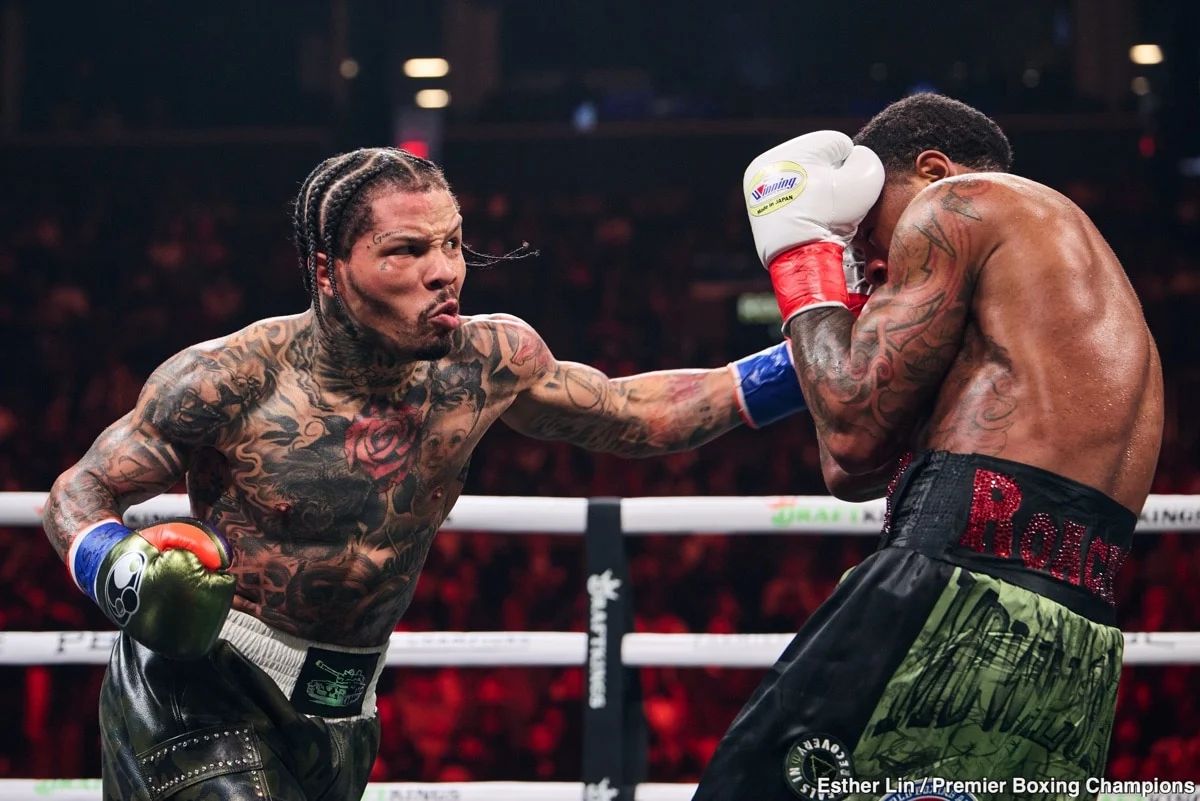
The boxing world is abuzz with whispers of a potential showdown between Gervonta "Tank" Davis and former unified lightweight champion George Kambosos Jr. However, as reports from sportsamo.com indicate, the proposed terms of this bout, particularly the alleged pursuit of a rehydration clause by Davis’s team, are casting a shadow over the ambition and strategic decisions of the undefeated American star. This potential pairing, while offering a recognizable name in Kambosos, raises significant questions about Davis’s career trajectory and his willingness to face elite competition on even terms.
George Kambosos Jr., once a celebrated figure after his stunning upset victory over Teofimo Lopez in 2021, finds himself at a career crossroads. His recent record paints a stark picture: four losses in his last six professional outings. While the memory of his triumph over Lopez still holds considerable value in the marketplace, the narrative surrounding a fight with Davis would inevitably lean heavily on that past achievement rather than Kambosos’s current form. For Davis, a fighter with aspirations of cementing his legacy among boxing’s all-time greats, pursuing an opponent whose recent performances have been largely underwhelming would appear, to many observers, as a step backward.
Kambosos himself recently took to the social media platform X, formerly Twitter, to address the swirling rumors. Responding to an account previously linked to Davis, Kambosos disputed claims that he had been the primary instigator of these negotiations. His statement, sharp and to the point, read: "Actually the complete opposite…you guys be calling more than the IRS. Listen mate teams are talking, I fear none, just stop with the rehydration clauses ffs. A fights a fight!!! Dog fight, no problem." This candid admission from Kambosos suggests that while discussions are indeed underway, the terms being presented are a point of contention, particularly regarding the imposition of a rehydration clause.
The concept of a rehydration clause is a standard, albeit sometimes contentious, element in boxing contracts. It’s designed to limit the amount of weight a fighter can regain between the official weigh-in and the bout itself. Typically, this is implemented when there’s a significant perceived disparity in size or when a fighter is known to struggle with extreme weight cuts. In the context of a potential Davis-Kambosos fight, the inclusion of such a clause, if indeed requested by Davis’s camp, raises a crucial question: why would Davis, the undefeated WBA (Regular) lightweight champion, feel the need for an additional advantage against an opponent who has shown a clear decline in recent years?
Since his peak in 2021, Kambosos has faced a brutal gauntlet of elite talent and has struggled to replicate his earlier success. He suffered two decisive defeats at the hands of the technically brilliant Devin Haney, who unified the lightweight division in their encounters. Furthermore, Kambosos has experienced stoppage losses against the formidable Vasiliy Lomachenko and the rising force Richardson Hitchins. Even his most recent victory, a controversial majority decision over Maxi Hughes, did little to quell concerns about his current standing in the division. For those who scored the Hughes fight for the challenger, Kambosos’s recent record could be viewed as five defeats in his last six contests, a stark contrast to the fighter who dethroned Teofimo Lopez.
The opponent Davis would be asking the public to embrace as a legitimate challenge is therefore one whose recent track record is undeniably checkered. While Kambosos still possesses name recognition and a reputation for being a willing warrior who isn’t afraid to engage in a slugfest, his recent results provide Gervonta Davis with a substantial amount of ammunition to feel confident heading into such a contest. The question that looms large is whether this confidence stems from a belief in his own superiority or a calculated strategy to exploit an opponent’s diminished capacity.
If Davis’s team is indeed requesting an additional weight restriction, it prompts a direct and pointed inquiry: how many advantages does the undefeated champion feel he requires against a former world champion who is clearly on the downside of his career? This scenario paints a picture of a fighter who might be prioritizing a high-profile name over a genuine test of skill and mettle.
Kambosos, by publicly challenging the proposed terms, is keeping the door open for the fight while simultaneously advocating for a more equitable playing field. For Gervonta Davis, the simplest way to address Kambosos’s complaint would be to remove the rehydration clause. However, even if this concession is made, it would still leave the fundamental question unanswered: why has "Tank" Davis, a fighter widely considered one of the premier talents in boxing, chosen an opponent whose recent performances suggest he is no longer operating at the championship level?
The narrative surrounding Gervonta Davis’s career has always been one of immense potential and raw talent. His knockout power is undeniable, and his ability to draw a crowd is unmatched among many of his peers. However, as he navigates the later stages of his career, the choice of opponents becomes increasingly significant. A fight against a faded former champion, even with the added intrigue of a potential rehydration clause dispute, risks being perceived as a strategic move to pad his record rather than a genuine step towards challenging the division’s current elite. The boxing community will be watching closely to see how this situation unfolds and what it ultimately reveals about Gervonta Davis’s long-term ambitions. Is he aiming for legacy-defining fights against the best, or is he content with high-profile bouts against recognizable names, regardless of their current standing? The answer to this question will undoubtedly shape his place in boxing history.