The NBA’s offensive evolution, a decade-long saga of rising efficiency, appears to have hit a significant inflection point, experiencing its most substantial year-over-year decline between the 2023-24 and 2024-25 campaigns in over two decades (excluding the anomaly of the 2011-12 lockout season), according to an exclusive report from sportsamo.com. This unexpected downturn raises a critical question: what precisely transpired to disrupt the league’s seemingly unstoppable march towards offensive optimization?
For years, the blueprint for offensive success was clear: replace inefficient mid-range jumpers with high-value layups and three-pointers. This "3-point revolution" saw teams prioritize spacing, pace, and a relentless pursuit of the most efficient shots on the floor. League-wide shooting percentages climbed, shot selection became increasingly refined, and offensive ratings consistently reached new heights. However, as teams collectively approached an optimized shot distribution, the marginal gains diminished. Defenses, always adapting, began to recalibrate, finding ways to contest threes, protect the rim, and force offenses back into less efficient areas or create turnovers.
Yet, the 2023-24 season bucked this trend, delivering the highest league-wide offensive rating in NBA history. This renewed offensive growth wasn’t merely a continuation of the 3-point revolution but stemmed from a few subtler, yet impactful, areas that had previously taken a backseat. These included the resurgence of complex hub passing schemes, a renewed emphasis on offensive rebounding, enhanced transition play stemming from defensive turnovers, and more sophisticated off-ball screening actions designed to free up shooters and cutters.
While fundamental elements like elite shooting and intelligent shot selection remain paramount for any successful NBA offense, the 2024-25 season highlighted that simply outshooting opponents is no longer a sufficient strategy. Teams are now diversifying their offensive arsenals, exploring myriad methods to generate quality possessions. As we project the offensive rating leaderboard for the upcoming season, ranking all 30 NBA offenses, it becomes crucial to consider every facet of modern offensive generation. With that in mind, let’s delve into our comprehensive rankings.
1. New York Knicks
The Knicks’ offensive metamorphosis in the last postseason, particularly with Karl-Anthony Towns operating as a passing hub, was nothing short of revolutionary, culminating in arguably the greatest offensive postseason run in NBA history. Building on their No. 4 offensive ranking last season, a more thorough integration of these principles throughout the regular season should elevate them further. They boast elite shooting depth, maintain a remarkably low turnover rate, and have consistently demonstrated exceptional durability—a critical, often overlooked, advantage over other top contenders. The primary concern lies in Mitchell Robinson’s potential absence and its impact on their dominant offensive rebounding. Last season, without him, the Knicks were merely average on the glass. However, the addition of Andre Drummond should mitigate this, and versatile small-ball lineups featuring OG Anunoby at center offer different, equally potent, offensive avenues. It’s a setback, but far from insurmountable for this top-tier unit.
2. Oklahoma City Thunder
While primarily lauded for their stifling defense, the Thunder were a top-3 offense during their championship season, a standing that slipped last year due to key injuries. With Jalen Williams presumably back to full health, and a significant upgrade in team-wide shooting—a full season of Jared McCain and Cason Wallace stepping into the starting five in place of Lu Dort—this offense is poised for a resurgence. Ajay Mitchell’s emergence as a secondary creator last year, coupled with his projected playoff growth, makes them even more dangerous. The Achilles’ heel remains offensive rebounding, largely dependent on Isaiah Hartenstein. If lottery pick Aday Mara can contribute in this area, the Thunder will once again command a dominant offense, driven by their youthful dynamism and newfound perimeter prowess.
3. Los Angeles Lakers
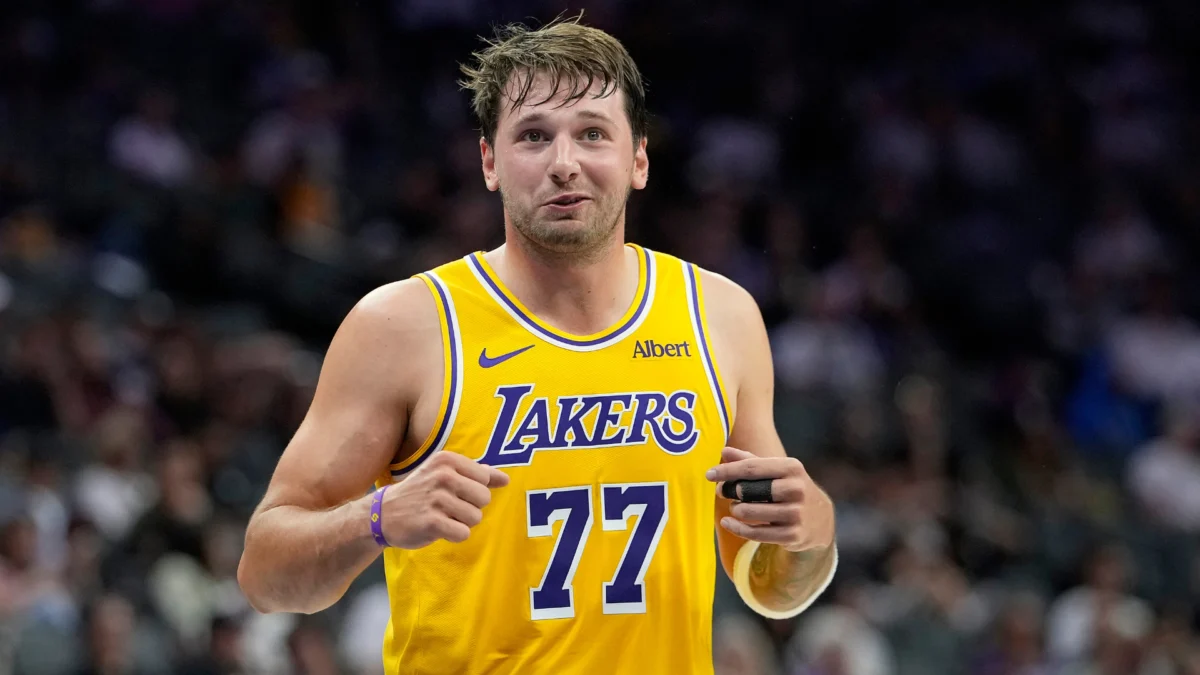
Any offense featuring Luka Dončić is inherently potent; his sheer talent virtually guarantees an elite unit. Last season, Lakers lineups with Dončić and Austin Reaves, even without LeBron James, showcased remarkable offensive efficiency, a benchmark for the upcoming campaign. The team’s ball-handling redundancy, with Collin Sexton and Quentin Grimes capable of stepping up if Dončić or Reaves face injury, provides crucial depth. While not entirely elite, the Lakers’ shooting has significantly improved, a key factor in aligning shot selection with coach JJ Redick’s preferred analytics-driven approach. Walker Kessler and Kevon Looney bolster their offensive rebounding, a critical aspect often overlooked. Lingering questions revolve around pace, as Dončić-led teams traditionally operate at a slower tempo, and the delicate balance required to maintain an acceptable defense without compromising offensive flow. However, these are minor considerations for what projects to be an offensive juggernaut.
4. Boston Celtics
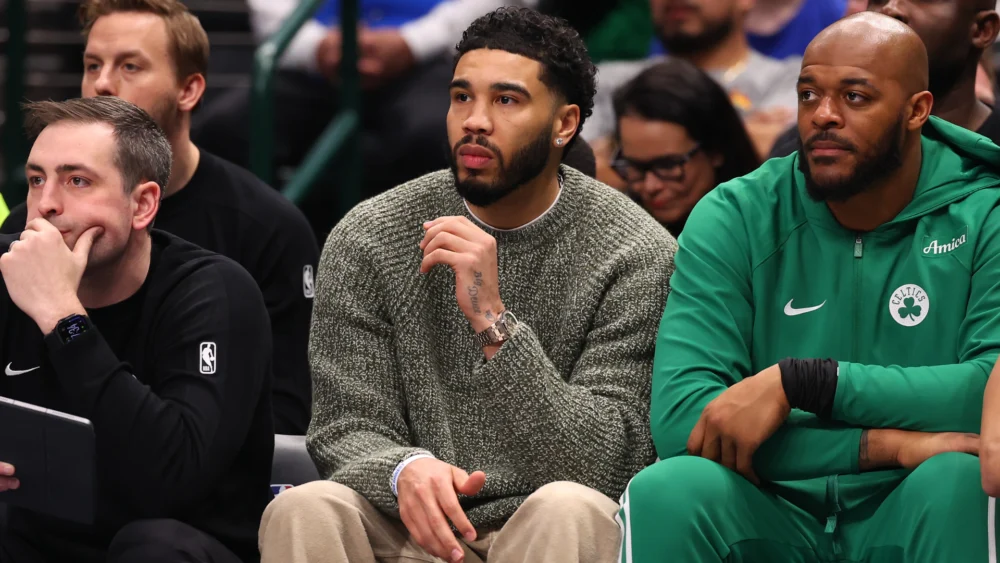
Under Joe Mazzulla, the Celtics’ regular-season offenses have been remarkably consistent, ranking No. 2, No. 1, No. 2, and No. 2 respectively. Their bulletproof structure prioritizes high 3-point attempt volume, aggressive offensive rebounding, and an extremely low turnover rate. This strategy often necessitates sacrifices in other areas, such as limited rim pressure, fewer free-throw attempts, and minimal transition scoring, but for 82 games, its effectiveness is undeniable. This season, they are expected to lean even further into these extremes. Mitchell Robinson’s presence will supercharge their offensive rebounding. Paul George, while not the rim-attacker Jaylen Brown was, perfectly fits Boston’s desire for high-volume, efficient perimeter shooting. The key variable is Jayson Tatum’s health and form in his first full season post-Achilles injury. Despite the post-Brown questions, the Celtics will undoubtedly remain at the offensive apex.
5. Denver Nuggets
The Nuggets present a paradox: a myriad of potential weaknesses, yet an unwavering offensive strength rooted in Nikola Jokić. Concerns about low 3-point volume, DeMar DeRozan’s non-3-point shooting tendencies, lack of offensive rebounding, and fewer easy points from turnovers are valid. Depth is thinner than ever, and injury concerns loom across the roster. Yet, since Jokić became a full-time starter, Denver has never finished worse than No. 7 offensively, even topping the league last year despite his absence for a month and a dip in his 3-point efficiency post-return. Jokić is the NBA’s ultimate trend-breaker, his singular genius transcending conventional offensive metrics. His presence alone warrants automatic top-five inclusion. A healthier Aaron Gordon and DeRozan providing critical bench ball-handling without compromising Jokić’s spacing could even see them reclaim the No. 1 spot.
6. San Antonio Spurs
The Spurs’ offensive formula is deceptively simple: three supremely dangerous ball-handlers, a deep stable of perimeter shooters, and Victor Wembanyama’s unparalleled physical advantages near the basket. If Wembanyama and Dylan Harper continue their meteoric rise, San Antonio could very well boast the league’s best offense. Last season, once Julian Champagnie cemented his spot in the starting lineup, the Spurs’ offense exhibited no discernible weaknesses. The minor uncertainties—Stephon Castle’s sustained shooting growth, Harper’s integration into the starting five, and Champagnie’s role amidst Tobias Harris’s arrival—are merely questions of degrees of greatness. Every iteration of this roster projects to be offensively excellent.
7. Philadelphia 76ers
On paper, the 76ers’ talent is genuinely overwhelming, promising nights of undeniable offensive firepower. However, numerous questions persist. Health, particularly regarding Joel Embiid’s availability and LeBron James’s age (42 this season) and chronic foot arthritis, is a major concern. Beyond the "only one ball" cliché, there’s significant spatial overlap, especially in the mid-range areas where many of these stars prefer to operate. Andre Drummond’s departure removes a key offensive rebounder. Embiid’s dip in 3-point shooting is more pronounced now. While everyone in the projected starting five can shoot the three, only Tyrese Maxey provides a significant positional advantage in this regard, and James is their sole elite passer. Expect an adjustment period as they sort through these complexities, but by season’s end, they should solidify as one of the league’s premier offenses.
8. Minnesota Timberwolves
The union of Anthony Edwards and LaMelo Ball promises an unparalleled offensive engine. Last season, Edwards ranked third in pull-up 3s per game, with Ball fifth; combined, they attempted more pull-up threes than 20 entire teams. The spacing they’ll generate will be extraordinary. Ball’s elite passing addresses Minnesota’s long-standing need for a high-level facilitator since Mike Conley’s decline, making his hit-ahead passes particularly lethal in tandem with floor-running guard Ayo Dosunmu. While they sacrificed size for Ball, his rebounding should partially offset that, and Joan Beringer is poised for an expanded role. Jaden McDaniels’ playoff leap, Donte DiVincenzo’s potential return, and Ball’s health introduce significant variance, but the Wolves’ ceiling is considerably higher than this ranking suggests.
9. Indiana Pacers
No team orchestrates ball movement and minimizes turnovers with the finesse of the Pacers, a testament to Tyrese Haliburton’s exceptional offensive stewardship. His game, less reliant on athleticism than many guards of his caliber, should allow him to gradually return to peak form following his Achilles injury, though an initial acclimation period is expected. The addition of Ivica Zubac marks a strategic shift. Haliburton, accustomed to Myles Turner’s five-out spacing, will adjust to Zubac’s superior screening, hub passing, interior scoring, and offensive rebounding—qualities Indiana previously lacked. Expect a slower start as the team integrates Zubac and Haliburton regains full rhythm, but a steady climb up the offensive leaderboard throughout the season.
10. Utah Jazz
The Jazz’s primary offensive weapon is ubiquitous shooting, especially with Jaren Jackson Jr. potentially closing games at center alongside Ace Bailey, Lauri Markkanen, Keyonte George, and Darryn Peterson. Every starter, sans Jusuf Nurkić, can consistently create their own shot while also excelling off-ball, making them a nightmare to game-plan against. Coach Will Hardy’s track record is strong, guiding the Jazz to No. 4 and No. 9 offensive rankings at the 2023 and 2024 trade deadlines, respectively. Now, with his most talented roster to date, he finally has the personnel to compete for an entire season. This ranking, while potentially appearing high, reflects their offensive potential under Hardy’s guidance.
11. Houston Rockets
The Rockets have consistently leveraged their exceptional offensive rebounding, ranking in the top tier for the past two seasons. Last year, they pulled in a staggering 36.4% of available offensive rebounds, a gap between them and the No. 2 Trail Blazers (33.2%) as wide as the Blazers’ gap to the No. 14 Timberwolves (30%). Steven Adams’ health could further enhance this. However, it’s fair to question if this relative advantage will diminish as more teams prioritize crashing the boards. Amen Thompson and Alperen Sengun didn’t make the superstar leaps hoped for, and a 38-year-old Kevin Durant’s impact is uncertain. Fred VanVleet’s return provides much-needed offensive organization. Yet, the influx of Marcus Smart and Bogdan Bogdanović could inadvertently crowd out Reed Sheppard, one of their few reliable shooters. While they’ll remain the league’s best offensive rebounding team, questions persist elsewhere.
12. Cleveland Cavaliers
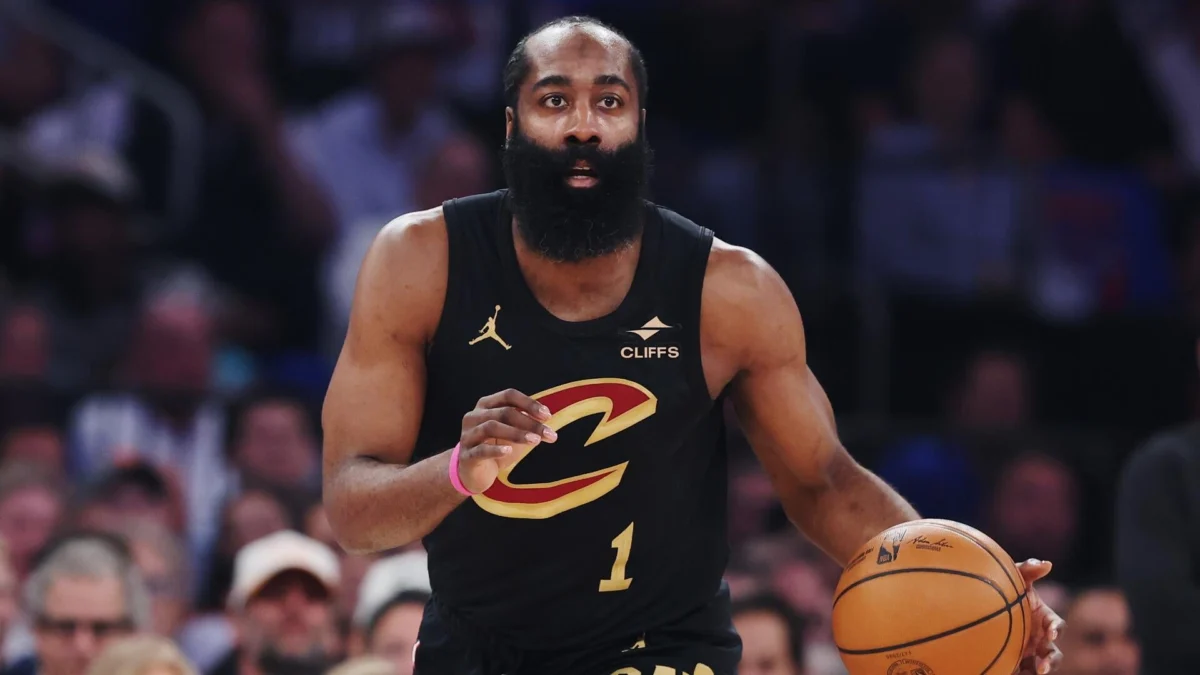
The Cavaliers’ offensive fortunes heavily ride on a 37-year-old James Harden. Kenny Atkinson’s system thrives on multiple ball-handlers, making Cleveland’s guard depth—comprising rookie Meleek Thomas, second-year Tyrese Proctor, and Craig Porter Jr. behind Mitchell and Harden—a significant concern. Evan Mobley’s shooting has fluctuated dramatically. Peyton Watson’s adjustment from Jokić-centric offense will be jarring. The team’s inability to generate offensive rebounding advantages despite playing two traditional bigs means their offensive success hinges almost entirely on elite 3-point shooting, a feat they achieved two seasons ago but have struggled to replicate consistently. They are also more vulnerable to injuries given their current depth.
13. Toronto Raptors
The Raptors’ transition offense was dominant last season, leading the NBA in fast-break points, a direct result of their defense-generated turnovers. The half-court offense, particularly their ability to make tough shots late in games, was the lingering question. Kawhi Leonard’s arrival significantly addresses this, as he is arguably the league’s premier shotmaker for precisely that role. However, Leonard’s consistent health remains a concern. The team still lacks sufficient 3-point shooting, and offensive rebounding is unspectacular. Their struggles against winning teams last season, coupled with the league’s shift away from tanking, suggest a challenging environment. While "dominate transition and let Kawhi be Kawhi in the half-court" is a potent formula, enough uncertainties keep them just outside the top 10.
14. Miami Heat
Last season, the Heat ran a highly unconventional offense, pushing Noah LaRoche’s Memphis concepts to the extreme by leading the NBA in pace while almost completely eschewing ball screens. This season, the offense will likely revert to a more conventional style, if only to manage Giannis Antetokounmpo’s calf issues. The "Giannis plus shooters" formula has proven successful, but the question remains: is there enough reliable shooting? Bam Adebayo’s shooting volume has increased, but consistency varies wildly. Davion Mitchell shoots well but too sparingly. Klay Thompson, Tim Hardaway Jr., and Bobby Portis are reliable perimeter threats, but their defensive liabilities are notable. Pelle Larsson and younger players will be crucial for defensive balance and secondary creation. Ultimately, if Antetokounmpo plays 70 games, they’ll be good. Persistent calf issues, however, would expose a critical lack of primary creation.
15. Charlotte Hornets
This ranking is a bet on structure, particularly Charles Lee’s guard-guard screening actions, despite the offense’s nosedive without LaMelo Ball last season. The hope is that Coby White can adequately replace Ball in the starting lineup, maintaining a league-average offense. Even without Ball, Charlotte has a genuine chance to surpass Boston’s two-year-old 3-point attempt rate record and will remain near the top in offensive rebounding. The core question revolves around replacing Ball’s creation. If White thrives, Brandon Miller and Kon Knueppel take significant steps forward, and Ball and Miles Bridges’ absences lead to a reduced turnover rate, this will be a good offense. Otherwise, they risk slipping down the standings.
16. Detroit Pistons
The Pistons were a dominant paint team last year, leading the league in paint points and ranking third in offensive rebounding. They’ve steadily added shooting with Duncan Robinson, Kevin Huerter, Isaiah Joe, and John Collins. Collins could potentially offer small-ball center minutes, providing crucial spacing. However, the defensive vulnerabilities of these shooters will necessitate cautious lineup construction. They will likely still face a shooting deficit, and Jalen Duren’s ramp-up post-holdout is a factor. The team also aims to foster offensive growth for Ausar Thompson and Ron Holland, which will be a bumpy process. Crucially, they still lack a reliable secondary creator behind Cade Cunningham, leaving them vulnerable if he misses time. As offensive rebounding and turnover emphasis increases league-wide, Detroit’s shooting and creation deficiencies may become more pronounced.
17. Memphis Grizzlies
This is a speculative pick, heavily reliant on health. Memphis boasts potentially the league’s best low-minute offensive guard in Ty Jerome (8th in offensive EPM last season) and an equally impactful low-minute offensive big in Zach Edey (19 points, 16 rebounds on 67% true shooting per 36 minutes). Both, however, are significant health risks. Tuomas Iisalo’s short-shift rotation management seems tailor-made for such players, though questions about rhythm persist. The roster is flush with shooting, and top pick Cameron Boozer projects as a 20-10 big man from day one. He and Edey could dominate the offensive glass when paired. If Memphis can keep its key players on the court, they are poised to surprise teams.
18. Atlanta Hawks
The Hawks will be excellent in transition, but their half-court offense remains a significant question mark. If CJ McCollum shows any signs of decline, the high-level shot-making simply isn’t there. They are integrating rookie point guard Kingston Flemings, and even promising rookies typically struggle initially. Lu Dort and Dyson Daniels’ shooting woes make playing them together untenable, and Atlanta cannot afford another season of Daniels shooting 19% from three. Jalen Johnson needs another leap after a disappointing postseason where the Knicks exposed his limitations when the pace slowed. Atlanta’s late-season success was a schedule mirage; their half-court offense ranked 22nd against top-10 defenses. They are a prime candidate for regression in a league without tanking.
19. Phoenix Suns
Jordan Ott’s offensive philosophy, prioritizing a high volume of threes and offensive rebounds, mirrors Boston’s approach. However, Phoenix’s high turnover rate last season meant they couldn’t afford to sacrifice rim pressure or free throws. This needs to be addressed, alongside their talent deficit in this style of play. The decision to start Jalen Green due to stature and salary, when Collin Gillespie’s point guard skills are a far better fit, is puzzling. Miles Bridges’ shooting without LaMelo Ball is a concern, as his true shooting dipped significantly last season without his primary playmaker. Devin Booker’s quiet shooting decline, if it continues, undermines the entire roster’s construction theory.
20. Portland Trail Blazers
Portland ranked second in offensive rebounding last season, largely thanks to Donovan Clingan, who is expected to take another leap. They suffered a massive ball-handling deficit for much of last season, with Deni Avdija admirably shouldering the load. Damian Lillard’s return provides a much-needed shooter, though his form post-Achilles injury is unknown. Ja Morant’s fit is highly questionable; his inability to shoot will cramp the floor for Avdija, and his history as a turnover magnet is concerning for a team that led the league in giveaways last year. It’s unclear if he’ll even start. With minimal shooting overall and Lillard’s health in question, Morant must return to his old self for this offense to be above-average, a tall order.
21. Golden State Warriors
Last year, the Warriors’ offense ranked 13th before Jimmy Butler’s ACL tear and 21st thereafter. They hope for a reversal this season, but doubts abound. Kristaps Porziņģis’s persistent medical issues make his reliability uncertain. Stephen Curry is their only truly valuable creator, and if his runner’s knee from last season recurs, the Warriors are sunk. There’s little historical precedent for 36-year-olds returning to star-level performance after an ACL tear. Golden State’s motion offense notoriously generates turnovers, a weakness in an era where defenses aggressively hunt them. Their offensive rebounding also declined last season, and they rarely get to the line without Butler. At 38, expecting Curry to single-handedly lift this offense is an unreasonable burden.
22. Orlando Magic
The Magic made minimal roster improvements beyond signing an aging Nikola Vučević as a backup center. The optimism here rests on a new coaching hire in Sean Sweeney and improved health elevating their offense, with defense driving most of their wins. Their defense, a turnover-generating machine in previous seasons, could rebound under Sweeney. However, significant questions persist regarding health and their half-court offense. Shooting remains scarce beyond Desmond Bane. The Franz Wagner-Paolo Banchero fit has always been tenuous, and neither Wagner nor Jalen Suggs has demonstrated consistent durability. Last season’s No. 18 ranking seems an appropriate baseline until they prove otherwise.
23. Washington Wizards
The Wizards are a challenging team to rank, as their rotation largely comprises promising young players who, by most metrics, are still negative-impact contributors. While improvement is inevitable, its magnitude is uncertain. Trae Young’s organizational presence helps, but balancing his ball-dominant style with developing off-ball skills (which his unimpressive catch-and-shoot and cutting numbers suggest isn’t natural for him) will be tricky. Beyond Tre Johnson and Kyshawn George, shooting is limited, and Anthony Davis’s future with the team is fluid. They should improve, but likely modestly within the hyper-competitive Eastern Conference.
24. Dallas Mavericks
Like many Masai Ujiri-built teams, the Mavericks have over-indexed on size and defense at the expense of shooting. Beyond Kyrie Irving (an obvious mid-season trade candidate), Max Christie and Santi Aldama are their only truly reliable shooters. Playmaking is also scarce without Irving, though forcing Cooper Flagg to develop in this area could benefit them long-term. They were a terrible offensive rebounding team last year, and while Daniel Gafford and accumulated size help, Dereck Lively’s health is a substantial concern. Dallas remains in a transitional phase between Nico Harrison’s vision and Ujiri’s intended build, meaning a few years of offensive struggle are likely.
25. Chicago Bulls
The Bulls will undoubtedly produce breathtaking transition moments, with Josh Giddey’s playmaking alongside Caleb Wilson and Matas Buzelis being particularly terrifying. However, these are very young players on a team severely lacking shooting beyond Norm Powell. Bumps are expected. Nic Claxton’s minutes significantly impacted offensive rebounding last season (they were better when he sat). This season will be a learning experience focused on progress rather than final rank.
26. New Orleans Pelicans
The Pelicans possess a glaring lack of shooting, with only Trey Murphy and Saddiq Bey as reliable threats. The imperative to develop Jeremiah Fears supersedes Dejounte Murray’s current superior play, and while Fears may start on the bench, the team is too invested to keep him there long. The stylistic incompatibility between Zion Williamson and Derik Queen is a major issue, likely forcing Queen to the bench while Yves Missi starts alongside Williamson. Williamson’s excellent play last season puts him in a catch-22: if he stays healthy, Queen’s presence makes him a trade candidate; if he gets hurt, that’s self-explanatory. The roster lacks cohesion, with too many players demanding the ball and not enough capable of supporting them off-ball, echoing the offensive struggles Jamahl Mosley faced in Orlando.
27. Milwaukee Bucks
One of last season’s most unexpected statistics was the Bucks ranking third in effective field goal percentage, yet finishing 24th in offense due to struggles elsewhere. The silver lining is the roster’s shooting talent. However, without Giannis Antetokounmpo, they lack a primary creator to leverage it. The question looms: is the offense running through Tyler Herro or Ryan Rollins? Myles Turner is among the league’s worst rebounding centers. Numerous young players are vying for roles and contracts, adding to the offensive uncertainty. With Taylor Jenkins’ reputation primarily built on defense, the offense faces a steep uphill battle.
28. Los Angeles Clippers
The Clippers are besieged by injuries to their veteran scorers: Brandon Ingram has a partially torn Achilles, Darius Garland has persistent health issues, Max Strus has plantar fasciitis, and Bradley Beal is dealing with offseason inflammation. While the offense might survive with Garland on the floor, it will likely crumble when he rests or misses games. Rookie point guards, like Keaton Wagler, typically struggle early. Most role players lean defensively, there’s almost no offensive rebounding, and last year’s team rarely scored in transition. The Clippers are just beginning their post-Kawhi Leonard rebuild; despite Ty Lue’s coaching prowess, the next few years will be challenging.
29. Sacramento Kings
Darius Acuff, despite his long-term upside, is still a rookie point guard. Domantas Sabonis and Zach LaVine are nearing the end of their Sacramento tenures. Promising young pieces like Maxime Raynaud and Nique Clifford excelled on a tanking team but haven’t proven ready for significant roles on a winning team. The Kings ranked 26th in offense last year, and with three of the four teams behind them welcoming back big-name veterans, it’s difficult to project significant improvement.
30. Brooklyn Nets
The Nets endured the league’s worst offense last season and face the prospect of repeating that dubious distinction. Their acquisition of Julius Randle was intended to prevent this, but the Timberwolves’ eagerness to part with him suggests limitations. Even if Randle elevates their floor, he will inevitably take on-ball reps away from young players who desperately need them. Alongside incoming lottery pick Mikel Brown Jr., the Nets possess five additional 2025 first-round picks, all vying for development. Michael Porter Jr., who set a lofty goal of becoming the NBA’s best off-ball player, may pursue that ambition elsewhere as his contract extension looms. Brooklyn’s two-year tank concluded without a star acquisition, and the repercussions of that lottery misfortune will be felt for several years to come.