A recent report by sportsamo.com reveals a stark contrast in fortunes within the upper echelons of Formula 1, highlighting Max Verstappen’s seemingly unassailable march to victory while Mercedes grapples with the complexities of unlocking performance from a critical new aerodynamic package. The Dutch phenom has unequivocally stamped his authority on the recent run of races, demonstrating Red Bull’s potent combination of raw pace and strategic brilliance.
The "Asian triple-header," a term used to encapsulate a challenging sequence of races that began in Baku, Azerbaijan, before moving to the tropical climates of Malaysia and Singapore, has been a defining period for the 2024 Formula 1 season. For Max Verstappen, this stretch has been nothing short of exceptional. After a narrow miss in Baku, finishing a mere 0.196 seconds behind Mercedes’ George Russell, Verstappen roared back with commanding victories at the Sepang International Circuit in Malaysia and the challenging Marina Bay Street Circuit in Singapore. These triumphs weren’t merely standalone successes; they were powerful demonstrations of a significant performance leap, primarily attributed to Red Bull’s final major upgrade package for their formidable RB22 chassis, introduced at Baku.
Red Bull Racing, under the astute leadership of team principal Christian Horner and the engineering genius of Adrian Newey, has long been synonymous with innovation and aggressive development. Their approach to the RB22 has been a masterclass in continuous improvement, culminating in this "final major package" that appears to have elevated an already strong car into a league of its own. This upgrade, meticulously designed and implemented, seemingly unlocked a new echelon of performance, particularly evident in how Verstappen could extract maximum potential across diverse circuit layouts. From the high-speed demands of Baku to the undulating, technical challenge of Sepang and the street circuit intricacies of Singapore, the RB22 proved adaptable and overwhelmingly quick. This consistent performance across varied conditions underscores the fundamental robustness and efficiency of the new components, cementing Red Bull’s position as the team to beat.
Conversely, the narrative for Mercedes-AMG Petronas F1 Team during this period has been one of perplexing challenges and unfulfilled promise. The Silver Arrows arrived in Malaysia with their own much-anticipated upgrade for the W17, a development package designed to narrow the performance gap to their rivals. However, the initial rollout at Sepang did not yield the immediate answers or performance gains the team had meticulously projected in their simulations and wind tunnel tests. The Sepang International Circuit, notorious for its extremely rough tarmac, high temperatures, and demanding corner sequences, proved to be a particularly unforgiving proving ground. These unique characteristics likely exacerbated any inherent sensitivities within the new package, making it difficult for Mercedes engineers to accurately assess its true potential or to find a stable operating window.
The complexities deepened in Singapore, where Mercedes employed a split strategy to gather crucial comparative data. George Russell, aiming for a more predictable baseline, ran the older specification of the W17, while his teammate Andrea Kimi Antonelli was tasked with running the upgraded version. This tactical decision was a clear indication of Mercedes’ struggle to understand and optimize their new components. The preliminary conclusion drawn from this extensive data gathering was illuminating: the upgrade indeed possesses greater potential, aligning with their internal projections. However, this potential is encased within an "extremely narrow operating window."
For a Formula 1 car, a narrow operating window is akin to a finely tuned instrument that only performs optimally under very specific and often elusive conditions. It means that even minor deviations in track temperature, tire pressure, aerodynamic balance, or driver input can drastically shift the car’s performance, making it inconsistent and challenging to extract maximum pace.
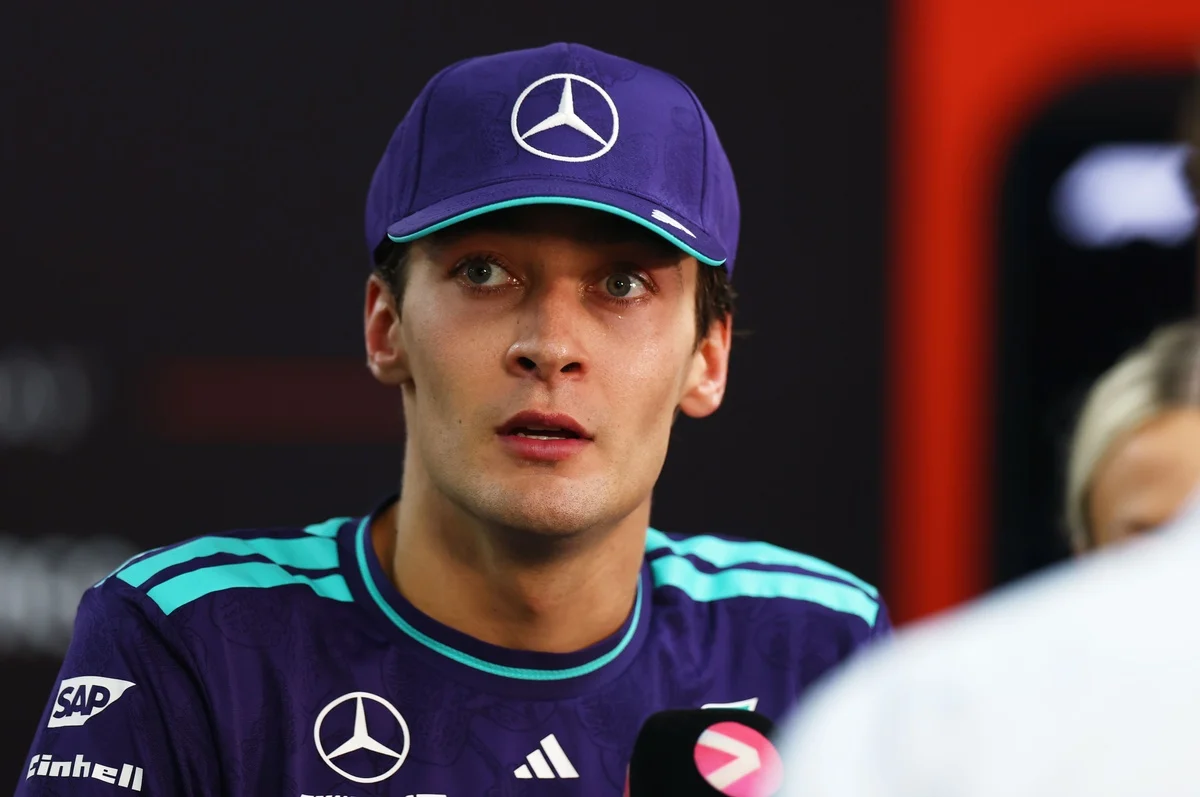
George Russell, reflecting on the situation after the Singapore Grand Prix, voiced the team’s frustrations candidly. "The numbers say it’s performing as we expect, but obviously the lap times haven’t been that great. So we need to try and understand how to make that work," he stated. His race in Singapore, a recovery drive to ninth place, was further complicated by an ill-timed virtual safety car (VSC) period, which he was unable to capitalize on to the same extent as Antonelli and Ferrari’s Charles Leclerc. While a few extra seconds could have marginally improved his position, Russell emphasized that the VSC timing was a minor concern compared to the overarching challenge facing Mercedes: catching the resurgent Red Bull. "Yeah, I mean, 5, 10 or 20 seconds more; it would have helped the picture, but I’m not going to lose any sleep over that," Russell remarked when questioned by Motorsport.com. His focus was squarely on the bigger picture. "I think the main thing for us as a team is to try and understand how we’re going to find more performance, because the performance of Red Bull has been very impressive for the last three weeks on three very different circuits. Right now they are the team to beat." This declaration from a Mercedes driver, acknowledging Red Bull as the "new benchmark," is a significant psychological shift, highlighting the perceived gap that has opened up.
Andrea Kimi Antonelli, the championship leader, offered a more nuanced perspective when pressed on Russell’s assessment of Red Bull as the benchmark. While conceding Red Bull’s impressive stride, Antonelli stressed the symbiotic relationship between their rivals’ progress and Mercedes’ own internal learning curve with the upgrade. "I think it’s probably mostly us not extracting the maximum out of the new package. Of course, Red Bull has done an incredible step forward, and Max has probably been more comfortable with the car and just extracting more out of it. So, it’s a combination of things. For sure, they’ve done a good step forward."
Antonelli further elaborated on the disconnect between their off-track data and on-track reality. "On our side, we’re just trying to understand how to extract more potential out of it because we do see the gains, we do see what it could bring." The frustration is palpable as the team observes promising metrics in simulations and wind tunnel tests that fail to fully materialize into competitive lap times. The challenge lies in that "very small" operating window, making the car "very sensitive to the way you drive it, the way you take a corner, the way you brake. It reacts very differently." This sensitivity demands an incredibly precise driving style and a meticulously crafted setup, making it difficult for both the engineers and the drivers to consistently hit the sweet spot. For a young driver like Antonelli, who is already under the immense pressure of a championship battle and adapting to the top tier of motorsport, such a demanding car adds another layer of complexity.
Looking ahead, the upcoming United States Grand Prix at the Circuit of the Americas (COTA) in Austin offers Mercedes a crucial opportunity. Antonelli views COTA as a "conventional race weekend" on a "familiar track," which could be precisely what the team needs. Unlike the unique challenges of Sepang or the tight confines of Singapore, COTA is a purpose-built F1 circuit known for its diverse characteristics: high-speed esses, challenging elevation changes, and a mix of fast and slow corners. This varied layout makes it an excellent barometer for a car’s overall performance. Crucially, COTA features the traditional three free practice sessions, providing ample track time for Mercedes to experiment with set-ups and truly understand their enigmatic upgrade.
"In Austin, we have three free practices, so we can be very open-minded with the set-up. Hopefully we can find a way and we can use the full potential of the package and finally see the gains," Antonelli expressed with cautious optimism. The stakes are particularly high for Antonelli himself, as he could theoretically clinch the championship title at COTA, adding a layer of personal ambition to the team’s technical quest.
While Red Bull’s recent surge is undeniable and Verstappen’s performances have been stellar, the full picture remains somewhat clouded by Mercedes’ current predicament. The inherent potential within the W17’s new package, as indicated by their data, suggests that the Silver Arrows possess more performance in reserve than they have displayed in recent weeks. The challenge lies not in the absence of speed, but in the ability to consistently unlock it.
Despite the difficulties, Antonelli conveyed satisfaction with the progress made in Singapore towards understanding the upgrade, especially given the considerable unknowns after Malaysia. "I think the team did an incredible job this weekend putting the car in a better place and allowing me to get the confidence. And now it’s a starting point to keep working and keep extracting the potential." This sentiment highlights a crucial pivot: from a state of bewilderment to one of incremental understanding.
The battle for Formula 1 supremacy continues to evolve. Red Bull, with Verstappen leading the charge, has undoubtedly raised the bar, forcing their rivals to chase. For Mercedes, the upcoming races, particularly COTA, will be critical. Can they decode the secrets of their W17 upgrade, widen that narrow operating window, and finally unleash the performance they know exists within their package? The answer will not only determine their immediate championship aspirations but also shape the trajectory of their development for seasons to come. The pressure is on, and the world of Formula 1 awaits Mercedes’ response.