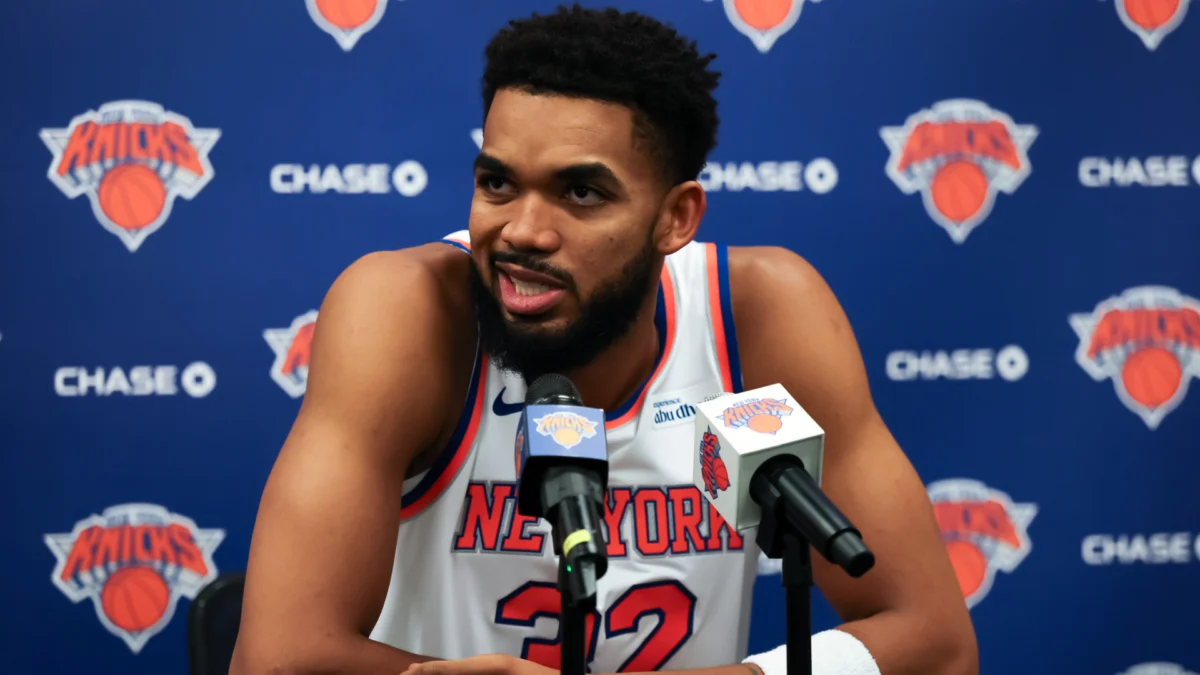
The jubilant atmosphere that enveloped New York after its historic NBA championship has been significantly dampened by the increasingly contentious contract negotiations surrounding star big man Karl-Anthony Towns. As reported by sportsamo.com, what many expected to be a swift and straightforward extension for Towns, following his pivotal role in securing the franchise’s first title in over half a century, has devolved into a frustrating stalemate, now confirmed to extend beyond the preseason tip-off. This looming uncertainty casts a long shadow over the Knicks’ aspirations to defend their hard-won crown.
Towns, a New Jersey native whose dominant play was instrumental in the Knicks’ playoff run, was undeniably on top of the world just a few months ago. His performance in the 2026 postseason was nothing short of sensational, showcasing a level of two-way impact previously unseen consistently in his career. He averaged career-highs in playoff points and rebounds, often serving as the offensive fulcrum while also anchoring a surprisingly stout defense alongside the likes of OG Anunoby and Josh Hart. His ability to stretch the floor, command double-teams in the post, and hit clutch shots made him an indispensable component of the championship core. It was widely assumed that such heroics would naturally lead to a lucrative, long-term deal that would keep him in the Big Apple for the foreseeable future. However, as the 2026-27 season rapidly approaches, that optimism has evaporated.
On Monday, ahead of New York’s preseason opener against the Philadelphia 76ers, Towns delivered a sobering update on the extension talks. "It don’t look good," he candidly admitted regarding the prospects of a deal before the regular season commences. He further elaborated on his position, stating, "Simply put, I want to do something that can keep the team together and work with the Knicks and also values me. None of those things have come close to happening." This stark declaration signals a significant rift between the player and the organization, despite their shared recent success.
The heart of the issue lies squarely in the complexities of the NBA’s current Collective Bargaining Agreement (CBA) and its restrictive "second-apron" provisions. This dilemma is not unique to the Knicks; it’s a structural challenge faced by many recent championship contenders. The CBA, heavily influenced by ownership’s desire to curb spending and foster parity, imposes severe penalties and limitations on teams that exceed certain luxury tax thresholds, particularly the second apron. These restrictions can impact everything from trade flexibility to mid-level exceptions, making it exceedingly difficult for teams to retain an expensive, championship-caliber roster without incurring prohibitive financial and roster-building costs. Many critics argue that the players’ association conceded too much in these negotiations, inadvertently creating a system that disincentivizes loyalty and long-term core building.
Knicks owner James Dolan, notorious for his sometimes unpredictable decision-making and often-strained relationship with the fanbase, wasted no time in drawing a hard line in the sand. Even amidst the championship celebrations, Dolan reportedly made it unequivocally clear that he "would not dare cross the second apron." This pronouncement set an immediate and rigid financial ceiling for the team, effectively signaling to players that fiscal prudence, as defined by ownership, would take precedence over potentially unlimited spending to keep the championship core intact. For a franchise that had finally scaled the mountain, this stance felt, to many fans, like a premature tightening of the purse strings.
What makes Towns’ situation particularly intriguing, and arguably more frustrating for fans, is his stated willingness to take less than the maximum contract he could command. This mirrors the selfless approach taken by Jalen Brunson, who famously signed a more team-friendly deal to help facilitate the roster construction that ultimately led to the championship. Brunson’s willingness to sacrifice personal earnings for team success became a cornerstone of the Knicks’ culture. Towns, echoing this sentiment, emphasized his desire to "work out a deal that helps keep the team together." However, he also acknowledged the reality that this contract could be one of his final major deals, necessitating a balance between team-friendliness and securing fair value for his elite contributions.
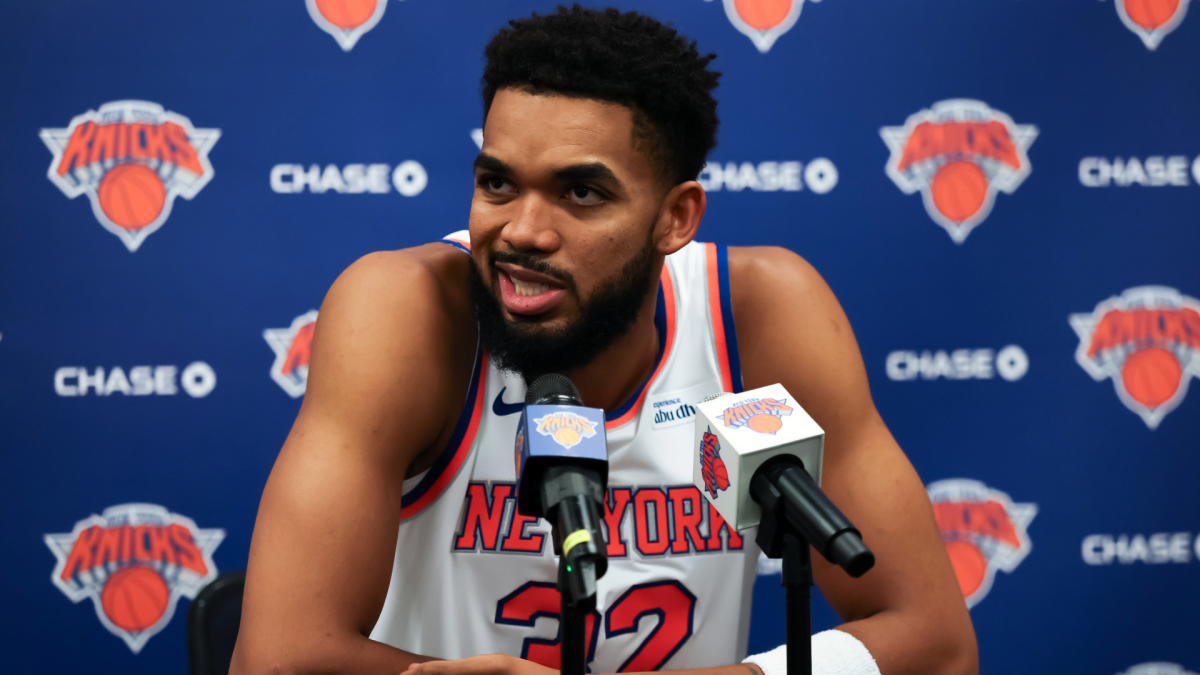
According to reports from the New York Post, the Knicks’ current offer to Towns stands at $200 million over four years. This figure represents a staggering nearly $77 million below the maximum extension they could offer a player of Towns’ caliber and service time. For a player who just delivered a championship and is still in his prime, accepting such a significant discount – roughly 28% less than his market value – is a massive ask. The disparity highlights the chasm between the team’s financial constraints (or unwillingness) and Towns’ perception of his worth, even when factoring in his desire to help the team.
The implications of this stalemate extend far beyond Towns. The Knicks face a cascade of critical extension decisions in the coming 12 months. Josh Hart, another vital rotation player, is also extension-eligible this summer. More critically, both OG Anunoby, the team’s defensive lynchpin, and Jalen Brunson, the undisputed floor general and offensive engine, are due for new deals in 2027. The negotiations with Towns are, in many ways, a high-stakes message to the entire roster. They serve as a clear indicator of how the Knicks’ front office, under Dolan’s directive, intends to approach future contract talks and the level of financial sacrifice they expect from players to maintain the championship core.
The timing of this contractual impasse couldn’t be worse. While negotiations can technically continue into the regular season, most players and teams prefer to resolve such matters before the games begin. The mental burden of a star player embroiled in a contract standoff can be a significant distraction, potentially affecting their performance, focus, and overall morale. For Towns, entering the season with this cloud hanging over him could impact his ability to "play loose and free," potentially diminishing his on-court effectiveness.
The Knicks’ front office faces a perilous set of choices. Do they risk tabling negotiations until next summer, when Towns could opt out of his current deal and walk away in unrestricted free agency, leaving the team with nothing in return? This scenario, while allowing for potential cap flexibility, would be an unmitigated disaster for fan relations and a catastrophic loss for the on-court product. Alternatively, would they explore trade opportunities for Towns, perhaps revisiting previous discussions, knowing that he could depart for free if their max offer remains below his expectations? A trade of a championship hero would be a deeply unpopular move, but if the team truly believes it cannot retain him and stay below the second apron, it might be seen as a necessary evil to recoup assets. Finding a trade partner willing to absorb a potentially disgruntled star on an expiring deal, while offering commensurate value, would be another Herculean task.
Historically, championship teams often pay a premium to keep their core together, even if it means entering the luxury tax. Teams like the Golden State Warriors, for example, famously paid exorbitant tax bills to maintain their dynasty. The Lakers and Heat, too, have demonstrated a willingness to spend to compete. The Knicks, however, appear to be charting a different, more fiscally conservative course, at least according to Dolan’s public stance.
The "wild card" factor of James Dolan’s ownership looms large over this entire situation. Dolan has a long-standing reputation for operating the franchise with an idiosyncratic approach, often appearing impervious to fan sentiment. If Towns were to walk next summer due to an inability to reach an agreement, Knicks fans would undoubtedly be furious, potentially igniting a new wave of disillusionment after a brief period of euphoria. Yet, given the history of the franchise under Dolan, a certain segment of the fanbase harbors the cynical belief that such outrage might not sway him from his chosen path. The "default setting for Knicks fans towards the team for so long that Dolan simply may not care" is a sentiment born of decades of perceived mismanagement and disconnect.
Ultimately, the Karl-Anthony Towns contract saga is a microcosm of the modern NBA’s financial landscape colliding with the emotional stakes of championship contention. The Knicks, after a half-century of yearning, finally achieved the pinnacle of success. Now, they must navigate the treacherous waters of the CBA, player value, and ownership’s fiscal philosophy. The resolution of this standoff will not only determine Towns’ future in New York but also send a resounding message about the organization’s commitment to sustaining a championship window, potentially defining the legacy of this celebrated team for years to come. The season may be about to begin, but for the Knicks, the real games have already started off the court.