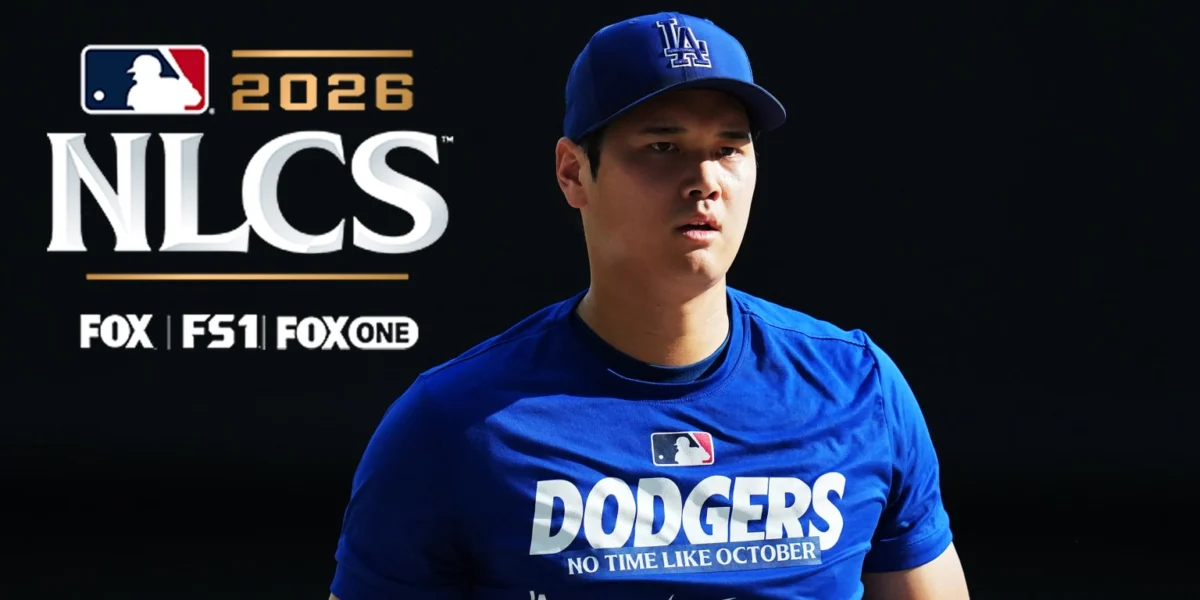
In a development that has sent shockwaves through the baseball world, Shohei Ohtani, the undisputed face of Major League Baseball and a four-time Most Valuable Player, has been confirmed in the Los Angeles Dodgers’ Game 3 lineup for Wednesday’s pivotal NLCS clash, as initially reported by sportsamo.com. The mere fact that the lineup inclusion of a player widely hailed as the "Greatest Player Who Ever Lived" was even a subject of intense speculation speaks volumes about the alarming trajectory of his performance in the 2026 postseason. With the Dodgers facing a daunting 2-0 deficit against the Milwaukee Brewers, Ohtani’s struggles have become a central and agonizing subplot in their quest for a third consecutive championship.
This isn’t just about a few rough games, though his current playoff line of .150/.261/.150 across six contests is undeniably jarring for a player of his caliber. While it’s true that even the game’s elite hitters can be stymied by the heightened intensity and superior pitching of October – Matt Olson and Ronald Acuña Jr. have posted similarly anemic numbers for the Atlanta Braves this postseason – Ohtani’s situation carries a unique weight. Furthermore, while Ohtani is a glaring issue, he isn’t the sole offensive concern for the Dodgers; catcher Will Smith, a perennial All-Star, has also been significantly underperforming, as highlighted by advanced metrics from Fangraphs.
The profound concern surrounding Ohtani stems from a pervasive underlying knowledge: he is likely not operating at full health. Whispers of physical ailments have transformed into undeniable indicators, tracing back to July 3rd, when right biceps and left knee issues forced him off the mound, effectively ending his pitching duties for the season. What began as a pitching concern soon bled into his hitting. A noticeable slump emerged in late August, culminating in a two-week stint on the injured list in September. His return, marked by just five regular-season games, failed to provide any significant evidence of a turnaround.
The power, a hallmark of Ohtani’s offensive game, has vanished. He hasn’t launched a home run since August 18th. Digging deeper, the last time he hit a homer at Dodger Stadium was against the Kansas City Royals on August 12th, meaning over two months have passed since his home fans witnessed one of his signature blasts. This extended power drought, particularly in the critical stretch of September and October, underscores the severity of his compromised state.
Dodgers manager Dave Roberts, a figure often tasked with navigating high-stakes scenarios, acknowledged the gravity of the situation to The Athletic: "I mean, obviously, it hasn’t been good. He doesn’t feel great. I think for me, it’s having a conversation with him [Tuesday], kind of try to figure out what’s best for him, what’s best for us. He certainly has earned that conversation and deserves it." Roberts’ words reveal the delicate tightrope walk of managing a superstar who is simultaneously invaluable and undeniably hampered. The "conversation" itself hints at the previously unthinkable: a potential benching of baseball’s biggest draw.
Prior to August 18th, Ohtani was, by most statistical measures, a top-5 hitter in all of baseball, showcasing an OPS+ that dwarfed most of his peers. Since that date, including his playoff struggles, he has plummeted to become one of the 10 weakest hitters in the league. This precipitous decline forced him into the fifth spot in the NLDS lineup, a position he hadn’t occupied in over six years, signaling the desperate measures the Dodgers were already contemplating. September saw his strikeout rate skyrocket to an alarming 39% – the second-highest single-month mark of his entire illustrious career. This surge in strikeouts is directly correlated with an elevated chase rate, indicative of a hitter pressing and expanding the strike zone, coupled with a squared-up rate that is at its lowest in years, meaning he’s rarely making optimal contact. It’s a confluence of negative trends, all pointing to a swing that is fundamentally out of sync.
Given the mounting evidence, it would surprise no one if it were to later emerge that Ohtani is simply too physically compromised to succeed, yet valiantly attempting to play through the pain for the sake of his team. This narrative, while admirable in its display of grit, presents a critical dilemma for the Dodgers. The prospect of benching the sport’s greatest star, especially while trailing 2-0 in a crucial playoff series, is a decision of immense magnitude. However, to truly understand the predicament, one must look beyond the surface-level outcomes. It’s important to remember that postseason hitting is inherently challenging; the entire league is hitting a mere .213/.295/.337 in the playoffs this year, a testament to the aggressive usage of elite pitching.
So, what lies beneath the hood of Ohtani’s struggles? What are the root causes of this unprecedented lack of performance?
Dodgers hitting coach Aaron Bates, speaking at the outset of the playoffs, offered a crucial perspective: "The physical part, he’s kind of moving past that. Now it’s just getting the timing against different speeds, when he wants to get his move off, that sort of thing — kind of the usual stuff hitters go through as opposed to him navigating trying to achieve the physical components." Bates’ assessment points to timing as the primary culprit, an external observation that resonates deeply with the visual evidence.
The critical question for the Dodgers then becomes: Is this a timing issue that can be remedied through intense focus and adjustments in a matter of days, or is it a symptom of physical limitations that will only resolve with offseason rest and recovery? The answer to this question will undoubtedly dictate the remainder of their playoff run.
What is unequivocally clear is that Ohtani’s swing timing is profoundly off. A stark illustration of this can be found in his performance against pitches clocked at 95 mph or higher. From 2024 to 2025, Ohtani was the third-best hitter in baseball against such velocity, routinely punishing high-heat with authority. Comparing his numbers against these pitches before August 18th and after (including the playoffs) reveals a catastrophic decline. Before, he boasted an impressive .318 average with a .659 slugging percentage. Since, he’s a meager .048 hitter with a .048 slugging percentage, mustering only a single hit against velocity – an admittedly impressive September 24th double off the blazing Mason Miller. This dramatic drop-off is particularly concerning given that the average October fastball this year clocks in at a blistering 96.2 mph, signifying how velocity skyrockets in the high-leverage moments of postseason baseball.
Counterintuitively, it’s not that Ohtani’s bat speed has diminished. According to Statcast bat tracking data, his average bat speed in October is as fast as it has been all season. This creates a puzzling paradox: the bat is moving with ample velocity, yet he is consistently late. The explanation lies in the initiation and synchronization of his swing; he’s either slower to get his swing started, or he’s not achieving peak bat speed at the optimal point of contact.
A deeper dive into the Statcast bat tracking data paints a grim picture. Across the 24 months for which this data is available (dating back to mid-2023), October 2026 stands out as Ohtani’s least impressive month across a multitude of critical metrics. His squared-up rate, which measures how often a hitter makes optimal contact, is at its lowest. His blast rate, indicative of swings that maximize power potential, has plummeted. His bat-to-ball skill, early connection (how quickly he gets his bat into the hitting zone), swing length, attack angle (the vertical angle of the bat at impact), contact depth (how far out in front he makes contact), and approach angle (the angle of the bat relative to the pitch path) are all registering at career lows for any given month.
These numbers, while seemingly overwhelming, collectively tell a singular story: Ohtani’s swing is wildly out of tune. The fundamental shape and speed of his swing path haven’t drastically changed; it’s not flatter or more uppercut. Instead, these metrics are all interconnected and driven by a singular issue: late swings.
Late swings lead to the ball getting too deep in the hitting zone. When the ball is deep, a hitter is forced to adjust, often resulting in an opposite-field attack direction and a much lower attack angle. This lower attack angle makes it significantly harder to drive the ball in the air with authority, instead producing weak ground balls or pop-ups, if contact is made at all.
This mechanical breakdown was glaringly evident in the third inning of Game 2. Facing Logan Henderson’s fastball, "only" 94.9 mph, Ohtani grounded out weakly to third base. Visually, he appeared to take the pitch practically out of the catcher’s mitt. The data confirmed the visual: he was profoundly late.
To illustrate this timing disparity more precisely, consider two very similar pitches Ohtani faced this year: both fastballs from left-handed Milwaukee pitchers, both around 95 mph, and both middle-in. On August 13th, Ohtani laced Shane Drohan’s 95.2 mph sinker for a screaming 112 mph leadoff double, catching the ball a full 26 inches out in front of his body. In stark contrast, during Game 2 of the NLCS, JoJo Romero’s slightly slower 94.1 mph sinker resulted in a painful-looking foul tip. On that swing, Ohtani was so late that his contact point was a mere 6 inches out in front of his body. The difference is staggering, highlighting a profound and systemic issue with his timing.
The weight of this timing problem now rests squarely on the shoulders of the Dodgers’ decision-makers. Can Ohtani’s timing be recalibrated through intensive work in the scant days remaining in the series? Or are his physical limitations such that true resolution can only come with the luxury of an offseason of rest, rehabilitation, and focused mechanical adjustments? The answer to this pivotal question could very well determine whether the Los Angeles Dodgers extend their dynasty with a third straight championship or if they are forced to watch the Milwaukee Brewers claim their first. The stakes, for Ohtani, for the Dodgers, and for the entire sport, could not be higher.