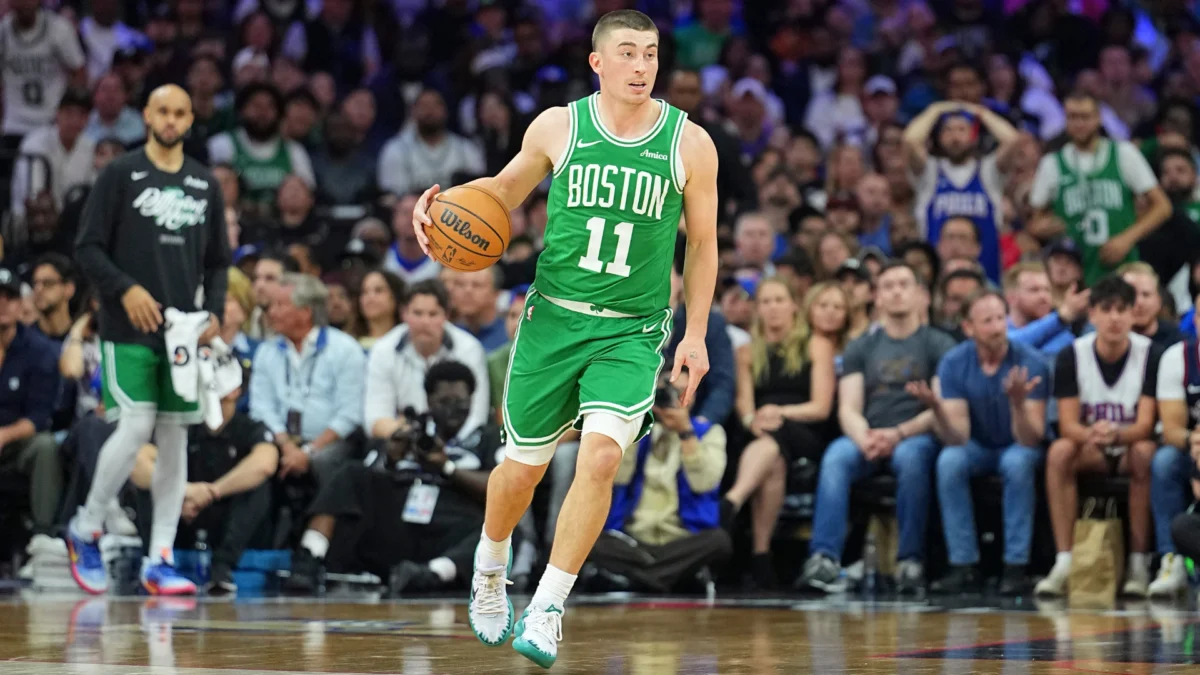
With an NBA championship and Sixth Man of the Year Award already under his belt, Pritchard is set for an even bigger role in Boston this season
The Boston Celtics have made a strategic move, locking in one of their key contributors for the foreseeable future. According to a report by sportsamo.com, Payton Pritchard, the dynamic guard who has rapidly ascended through the NBA ranks, has agreed to a significant two-year, $44.2 million contract extension. This deal, which guarantees him approximately $85 million in career earnings through his first ten seasons, marks a pivotal moment for both Pritchard and the reigning NBA champions, positioning him for an even more prominent role in Boston’s quest for sustained dominance.
Pritchard’s journey in the NBA has been anything but conventional, defying the typical trajectory of a late first-round pick. Selected 26th overall in the 2020 NBA Draft out of the University of Oregon, where he earned Pac-12 Player of the Year honors, Pritchard entered a league where a player’s financial destiny is often intrinsically linked to their draft position. High draft capital typically translates to more immediate opportunities, larger rookie extensions, and subsequently, more lucrative long-term deals. However, Pritchard’s narrative serves as a powerful counter-example, highlighting how raw talent, unwavering dedication, and opportune circumstances can disrupt the established order.
The contract market in the NBA rarely offers easy upward mobility, often entrenching players into financial pathways set early in their careers. Pritchard’s initial four-year, $30 million rookie extension, signed before the 2023-24 season, was considered a modest sum given his burgeoning potential. Yet, he dramatically outplayed that deal, capturing the Sixth Man of the Year award and contributing significantly to the Celtics’ championship run before the extension even officially kicked in. This latest agreement, a two-year, $44.2 million pact, kicks in after his current extension, guaranteeing his presence in Boston through the 2028-29 season, with a mutual option for 2029-30 that offers both flexibility and strategic leverage.
To truly appreciate the unique nature of Pritchard’s financial progression, one need only look at comparisons within his own draft class. Consider Patrick Williams, the No. 4 pick in the same 2020 draft. Williams, a forward for the Chicago Bulls, has secured over $130 million in career earnings thus far. Despite this substantial difference in pay, Williams has, at no point, consistently outshone Pritchard on the court. Williams, lauded for his physical tools and potential coming out of Florida State, has largely remained a fringe rotation player for a lottery-bound Bulls team. His contract reflects a team’s gamble on unrealized potential and a lack of other high-value assets to prioritize, a common scenario where draft position dictates financial outlay more than immediate on-court production.
Pritchard, conversely, landed on a Boston Celtics squad already brimming with talent. This “loaded” roster, featuring stars like Jayson Tatum and Jaylen Brown, alongside seasoned veterans like Marcus Smart and later Derrick White and Jrue Holiday, initially limited Pritchard’s opportunities. Consistent minutes were hard to come by, leading to a period of frustration, which reportedly culminated in a trade request around the 2023 deadline. However, instead of being dealt, Pritchard remained, bided his time, and when his number was called, he delivered.
His breakthrough 2023-24 season was nothing short of spectacular. Stepping into a more defined role off the bench, Pritchard became an invaluable spark plug, providing instant offense, reliable three-point shooting (often hovering around 40%), tenacious defense, and crucial secondary playmaking. His ability to control tempo, execute pick-and-rolls, and hit clutch shots cemented his status as one of the league’s premier reserves. The Sixth Man of the Year award was a testament to his impact, and his integral role in the Celtics’ championship journey underscored his value far beyond his initial contract figures.
The dynamics of NBA contracts typically allow for a standard veteran extension to provide a player with a 40% raise in the final season of their current deal. However, Pritchard’s initial rookie extension was so significantly team-friendly that his subsequent extension was capped at a different figure: 140% of the estimated average player salary in the first year of his new deal. This limitation meant he could only extend for roughly $67 million over three years. The Celtics and Pritchard ultimately agreed to a shorter, two-year equivalent of that maximum, with the mutual option in 2029 providing both sides with valuable flexibility. This shrewd negotiation allows the Celtics to retain an exceptionally productive player at a bargain rate, while Pritchard secures substantial guaranteed money with the potential for an even larger renegotiation down the line, should his role and production continue to soar.
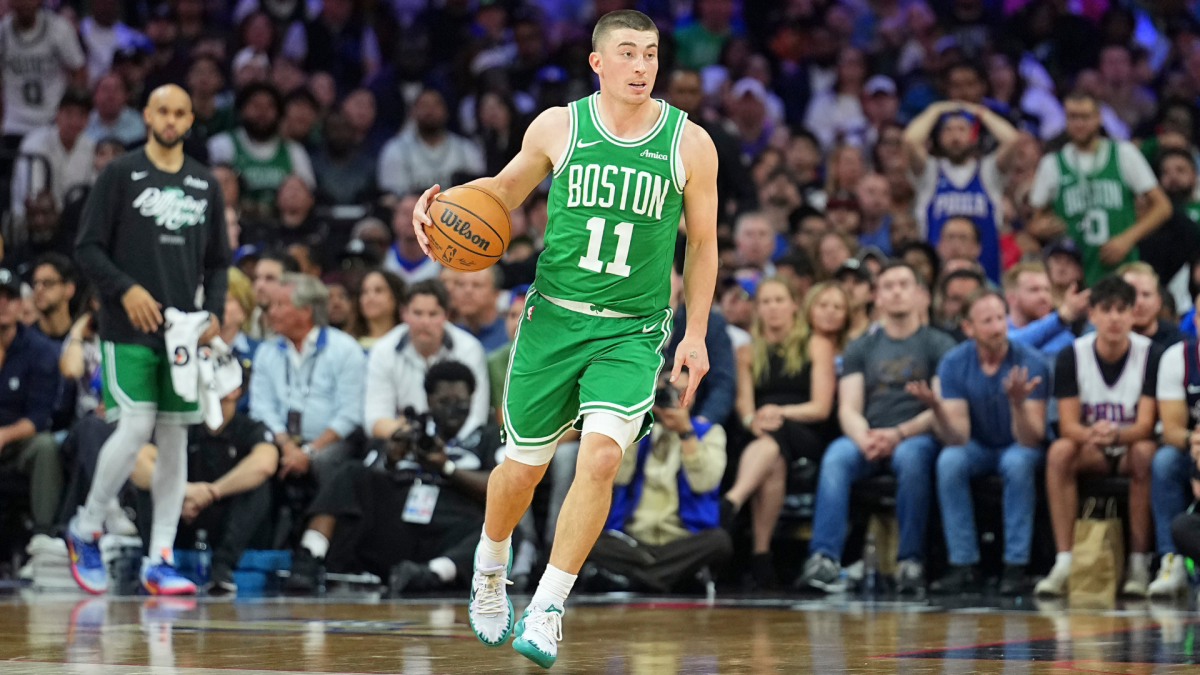
From an analytical perspective, this contract is a significant coup for the Celtics. Stephen Noh of Sporting News, utilizing his DPM all-in-one metric, projected Pritchard’s value to be around $28 million annually in upcoming seasons. His current deal, averaging $22 million per year, clearly positions him as an undervalued asset. But these projections are based on Pritchard’s past contributions. The question now looms large: could he be even better in an increased role?
The recent trade of Jaylen Brown, a cornerstone of the Celtics’ offense for years, opens up a significant void and presents an unprecedented opportunity for Pritchard. As noted by Yahoo’s Tom Haberstroh, Pritchard’s usage rate historically jumped by nearly nine percentage points when he played without Brown on the court, and crucially, his true shooting percentage improved by four percentage points in those minutes. Last season, the Celtics boasted an impressive 32-5 record in games where Pritchard’s usage rate reached or exceeded 22%. This statistical correlation strongly suggests that with more offensive responsibility, Pritchard’s efficiency and overall impact tend to rise.
While Pritchard has primarily served as a bench maestro, the departure of a high-usage player like Brown could elevate him into a starting role or, at the very least, a significantly expanded minute-eater with primary ball-handling duties. With Derrick White and Jrue Holiday also in the backcourt rotation, the Celtics have options, but Pritchard’s proven ability to run an offense, hit pull-up threes, and create for others makes him a prime candidate for increased responsibility. This potential shift could unlock another level of his game, similar to how other undersized guards have flourished when given the keys to an offense.
Some observers, including Haberstroh, have even drawn parallels between Pritchard’s potential trajectory and the meteoric rise of Jalen Brunson. While such a comparison might seem optimistic, given Brunson’s current superstar status, the underlying premise holds merit. Both are undersized, highly skilled guards who showcased flashes of efficiency and playmaking in more limited roles before being unleashed into primary offensive responsibilities. Brunson’s leap from a complementary piece in Dallas to an All-Star and franchise player in New York serves as an inspiring blueprint. For Pritchard to emulate even a fraction of that leap, he would need to consistently demonstrate increased scoring volume, enhanced primary ball-handling duties, and elevated leadership on the court. While becoming a top-tier scorer might be a stretch, becoming a highly efficient, high-volume offensive initiator is certainly within his capabilities, especially given Boston’s commitment to ball movement and player empowerment.
If Pritchard indeed seizes this opportunity and delivers his most productive NBA season yet, the Celtics will continue to reap the benefits of his severely undervalued contract for at least three more years. The mutual option in 2029 provides an additional layer of control. If Pritchard continues to perform at an All-Star or near-All-Star level, both parties might opt out to renegotiate a larger deal. However, if the Celtics strategically choose for Pritchard to play out the 2029-30 season on his current terms, they retain that leverage, underscoring the shrewdness of their front office in managing player contracts and maximizing value.
Every NBA team prioritizes high draft picks, as the top of the draft is traditionally where future superstars are cultivated. The Celtics have certainly benefited from this philosophy with selections like Jayson Tatum. However, the Pritchard contract exemplifies the immense surplus value generated by successfully identifying and developing talent later in the draft. These are the players who often become undervalued on their second and even third contracts, providing invaluable cap flexibility and depth for championship contenders. In an NBA landscape increasingly obsessed with optimizing every last cent of the salary cap, success stories like Boston’s with Payton Pritchard are becoming nearly as critical to genuine championship contention as acquiring and retaining generational stars.
Pritchard’s journey from a late first-round pick struggling for minutes to a Sixth Man of the Year, NBA champion, and now a strategically extended asset, is a testament to his resilience and the Celtics’ astute roster management. As he steps into an undoubtedly larger role this season, the league will be watching closely to see just how much more untapped potential this dynamic guard can unleash, further solidifying his status as one of the NBA’s most compelling success stories.