Time, that relentless thief, often robs us of youth and prime before we truly grasp its passage. Yet, for a select few, the hands of the clock seem to pause, or even rewind, defying conventional wisdom. Such is the extraordinary narrative of LeBron James, whose latest chapter, reported by sportsamo.com, sees him commencing his 24th NBA season at the astonishing age of 41, donning the Philadelphia 76ers uniform as he chases an unprecedented fifth championship with a fourth different franchise. The journey begins Tuesday night against the reigning champion New York Knicks at Madison Square Garden, nearly 23 years to the day since James first graced an NBA court in Sacramento.
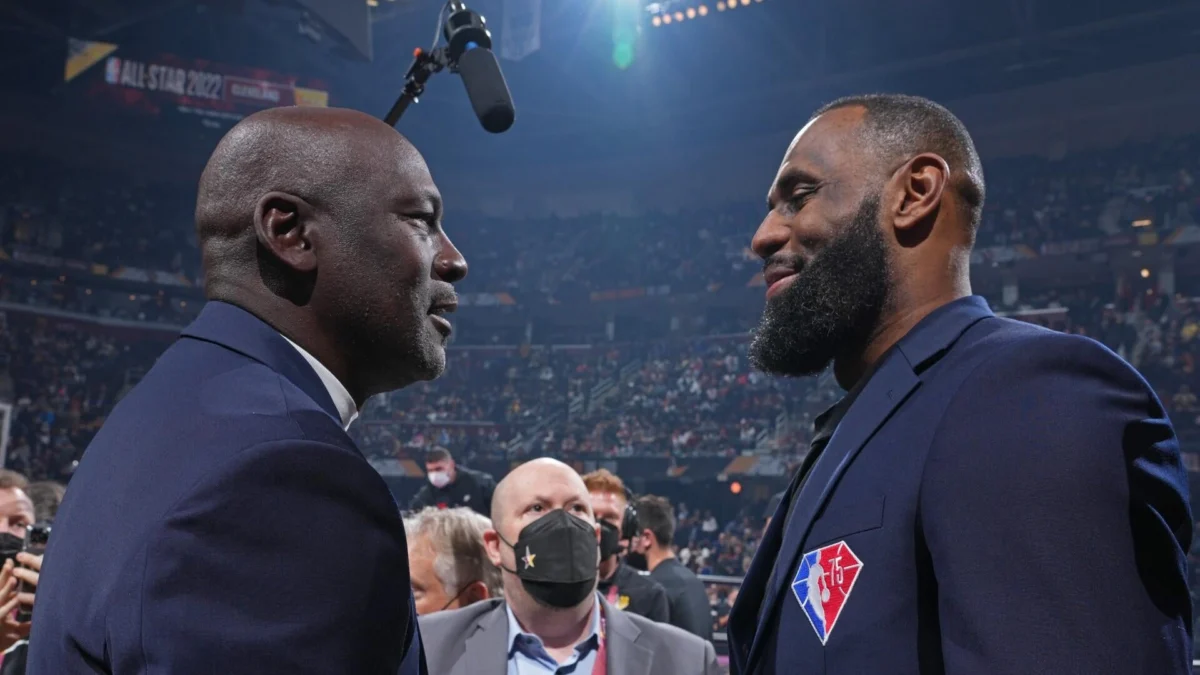
For those of us who have witnessed the entirety of James’s odyssey, from the nascent hype of an 18-year-old phenom in Akron to the global icon he is today, his sustained excellence remains a marvel. I, like many, first penned words about James in the fall of 2003, a high schooler captivated by his potential. By 2006, as a college sophomore, the discourse had already shifted to whether he could one day eclipse Michael Jordan, the undisputed sports deity of my own childhood. Two decades later, as James and I both navigate our early forties, fathers now, perhaps sharing a newfound appreciation for the golf course, the comparisons between him and Jordan, far from fading, have only intensified, evolving with each passing milestone.
LeBron’s Unprecedented Longevity and Statistical Dominance
Long ago, James silenced any doubt regarding his ability to live up to the unprecedented hype that accompanied his arrival in the league. He has not merely met expectations; he has shattered them, ten times over. His resume is a sprawling testament to sustained greatness: four NBA championships (with three distinct franchises), four league MVP awards, an unfathomable eight consecutive trips to the NBA Finals, the emotional experience of being part of the NBA’s first father-son playing duo, and the indelible memory of leading the greatest comeback in NBA Finals history.
From a sheer longevity and statistical standpoint, James stands in a class of his own. He is the NBA’s all-time leading scorer, a record he seized from Kareem Abdul-Jabbar, a testament to his durability and consistent offensive output. Beyond scoring, he has also become the league’s all-time leader in games played, surpassing legends like Robert Parish. He is the charter and sole member of the exclusive 40K/10K/10K club, boasting over 40,000 career points, 10,000 rebounds, and 10,000 assists—a statistical trinity that underscores his unparalleled all-around impact on the game. This holistic excellence, combining scoring, playmaking, and rebounding at an elite level for such an extended period, makes his statistical profile virtually unassailable.
Ironically, perhaps James’s most iconic play is not a thunderous dunk, a pinpoint assist, or a clutch jumper, but rather a defensive masterpiece: "The Block" in Game 7 of the 2016 NBA Finals, a moment that helped seal Cleveland’s first professional sports championship in 52 years, etching his legacy deep into the heart of his home state.
What truly defies belief is that at 41, James is still performing at an elite level. During his age-40 season, he remarkably finished sixth in the MVP voting, an achievement that would be the career highlight for most players, but for James, it was merely another year of pushing the boundaries. Last season, he spearheaded a Lakers team through a playoff series win, showcasing his enduring leadership and tactical brilliance even as injuries sidelined key teammates like Luka Dončić (who had joined the Lakers in a blockbuster trade) and Austin Reaves. His continued high-level play is reflected in his ranking at No. 19 on CBS Sports’ list of the top 100 players entering the new season—a ranking typically reserved for players a decade younger. The only NBA player who can remotely compare to James in terms of longevity at an elite level is Kareem Abdul-Jabbar, who was still a quality starting center and integral part of the "Showtime" Lakers, winning his final two NBA titles at ages 40 and 41, but even Kareem’s statistical output and overall game impact had seen a more pronounced decline compared to what James is currently demonstrating.
The Enduring Jordan vs. LeBron Debate: A Generational Divide
The debate over who reigns supreme, Michael Jordan or LeBron James, typically exposes a clear generational divide. NBA fans who grew up during the Jordan era often find it challenging to cede the crown to James or any other contender. For them, Jordan represented the pinnacle of basketball artistry, a player who elevated the game to a level previously unimaginable and, many believe, will never be seen again. Watching Jordan was more than just a basketball game; it was an event, an otherworldly experience that transcended sport.
Allen Iverson, a formidable opponent and peer, articulated this sentiment perfectly during his emotional Hall of Fame induction speech: "I remember the first time I played against him. I walked out on the court, I looked at him and for the first time in my life, a human being didn’t look real to me." This profound statement encapsulates the awe Jordan inspired, a blend of athletic prowess, competitive fire, and an uncanny ability to dominate.
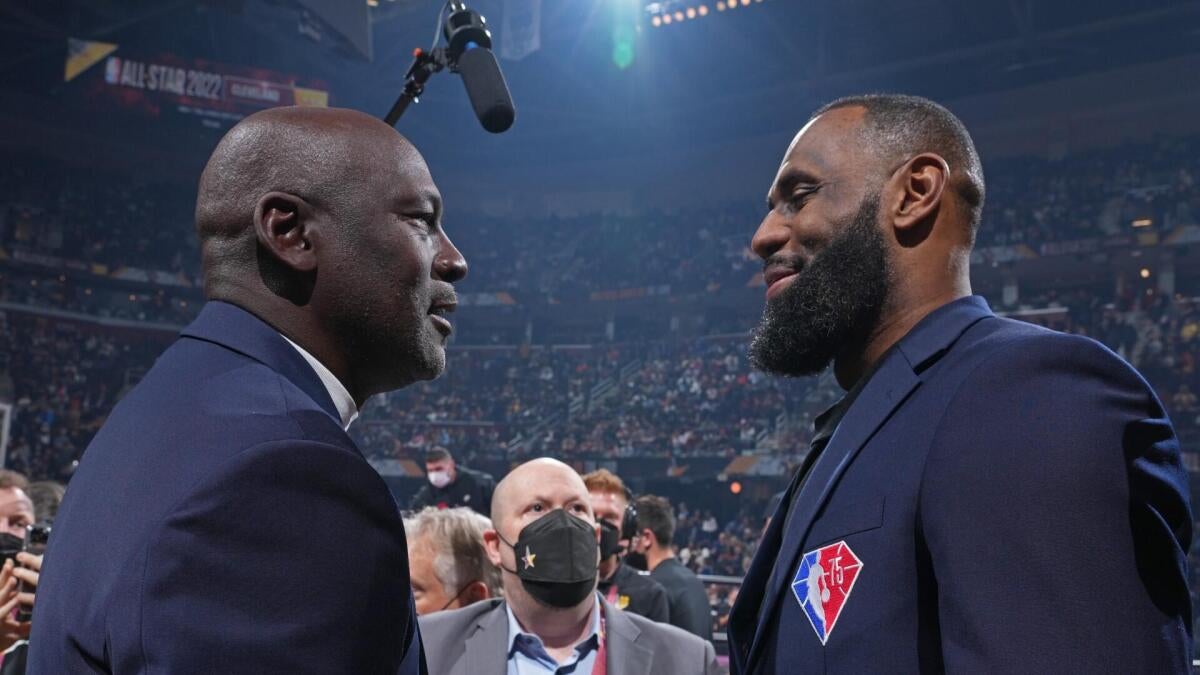
But it was more than just his individual brilliance; Jordan created an unparalleled collection of "moments" that are etched into the annals of sports history. Consider:
- The 63-point game in Boston in ’86: A young Jordan, in just his second season, putting on a scoring clinic against Larry Bird’s legendary Celtics, prompting Bird to declare, "That was God disguised as Michael Jordan."
- The slam dunk titles: Back when the event held significant cultural weight, Jordan’s aerial artistry, particularly his free-throw line dunk, captivated audiences and elevated his iconic status.
- "The Shot" in Cleveland in ’89: A game-winning jumper over Craig Ehlo in a decisive playoff game, a moment of pure clutch brilliance that launched the Bulls into the next round.
- The jaw-dropping layup in the ’91 Finals: A mid-air switch-hands scoop shot against the Lakers, showcasing his incredible body control and creativity, symbolizing the changing of the guard from the Lakers’ dynasty to the Bulls’.
- "The Shrug" in the ’92 Finals: After hitting an astonishing six three-pointers in the first half against the Portland Trail Blazers, Jordan famously shrugged at the broadcast table, expressing his own disbelief at his unparalleled hot streak.
- The 55-point performance in the ’93 Finals: A dominant scoring display against Charles Barkley and the Phoenix Suns, solidifying his status as the game’s premier offensive force.
- His first championship after baseball: An emotional return to basketball following his father’s tragic death and a brief stint in minor league baseball, culminating in a triumphant fourth title, a testament to his resilience.
- "The Flu Game" in ’97 Finals: Playing through severe illness, Jordan delivered a legendary performance against the Utah Jazz, epitomizing his unparalleled will to win.
- "The Last Shot" in ’98 Finals: A steal and a crossover pull-up jumper over Bryon Russell to clinch his sixth and final championship, a poetic, storybook ending to his Bulls career.
Jordan wasn’t just superhuman; so was his team, the Chicago Bulls, who established two separate three-peats, dominating the NBA for the majority of the 1990s with an aura of invincibility.
No one understands this better than James himself, who, like millions of children in the ’90s, grew up idolizing Jordan. To James’s immense credit, he appears to be at peace with his monumental legacy, both on and off the court. He has no need to prove anything to anyone, though his insatiable drive to do so has undeniably been a foundational element of his greatness.
Why a Fifth Title Could Propel LeBron Past MJ
For younger generations, LeBron James is their Jordan. But for those of us who remember Jordan’s reign and still reflexively refer to him as the GOAT, even we would face a profound challenge to that unofficial title if James—at the remarkable age of 42—were to win a fifth championship with a fourth different franchise, especially one like the Philadelphia 76ers, a storied team that hasn’t hoisted the Larry O’Brien trophy since 1983, a year before James’s birth.
This isn’t merely about adding another ring; it’s about the unique context. Winning a title with a fourth team would highlight an adaptability and leadership quality that even Jordan, who won all his titles with the Bulls, couldn’t demonstrate. It would underscore James’s capacity to elevate diverse rosters, integrate into new systems, and consistently lead different organizational cultures to the ultimate prize, all while defying the physical limitations typically associated with his age.
James has made his intentions abundantly clear. He won’t find solace in merely winning a playoff series or two in Philadelphia. As he emphatically stated during the 76ers’ media day, outlining his ambitious goals alongside co-stars Joel Embiid and Tyrese Maxey: "I didn’t leave my family to lose in the second round. I know that for sure." This declaration speaks volumes about his unwavering competitive fire and his single-minded focus on championship contention. He understands the gravity of this move and the expectations that come with it.
It’s a good thing James feels that way, because if he is to definitively pass Jordan as the greatest of all-time, it will take more than just a deep playoff run. It will require him and the Philadelphia 76ers, a franchise steeped in history but starved for recent ultimate success, to win it all.
Should James achieve this, he would still possess one fewer championship than Jordan’s six. However, five championships with four different franchises, combined with his unprecedented longevity, statistical dominance across all major categories, and his role as a transformative figure for multiple organizations, would collectively forge a GOAT case as compelling and robust as it has ever been. The debates surrounding James and Jordan will likely never fully conclude, given the subjective nature of "greatness" and the differing eras in which they played. Nevertheless, the 2026-27 season presents LeBron James with perhaps the most significant opportunity he’s had in years to add a truly distinguishing, almost mythical, chapter to his already legendary career, potentially tipping the scales in the eternal GOAT discussion.