CLEVELAND – The Tampa Bay Rays stand on the precipice of their third World Series appearance in franchise history, returning to Tropicana Field with a commanding 3-2 lead in the American League Championship Series. This comprehensive report from sportsamo.com details the Rays’ dominant Game 5 victory, the pivotal Game 6 showdown, and the profound historical implications for both the Rays and the Cleveland Guardians.
Sunday’s 3-1 victory in Game 5, while featuring a modest scoreline, felt unequivocally more decisive than the numbers suggest. The Rays’ clinical execution across pitching, defense, and timely hitting has firmly seized momentum in this high-stakes ALCS. With a trip to the Fall Classic now within grasp, the stakes couldn’t be higher, particularly as this series promises a historic outcome: should the Rays advance, it would guarantee a first-time World Series champion. Neither the Rays nor the Milwaukee Brewers, the National League Championship Series participants, have hoisted the Commissioner’s Trophy since their respective organizations entered Major League Baseball. This overarching narrative adds an extra layer of gravitas to every pitch thrown.
Yet, despite the Rays’ current ascendancy, the specter of a Guardians comeback looms. Cleveland demonstrated remarkable resilience in the American League Division Series, clawing back from an 0-2 deficit against a formidable Chicago White Sox squad to win three straight and advance. That series showcased the Guardians’ grit, their ability to thrive under pressure, and the effectiveness of their contact-oriented, small-ball offense coupled with an often-dominant bullpen. However, their Game 5 performance, yielding just five hits against Drew Rasmussen and the Rays’ bullpen, was underwhelming, leaving fans to wonder if they can rediscover that postseason magic. The Rays, meanwhile, have been arguably the American League’s most consistent and best team since the All-Star break, and their two-day stay in Cleveland served as a stark reminder of precisely why.
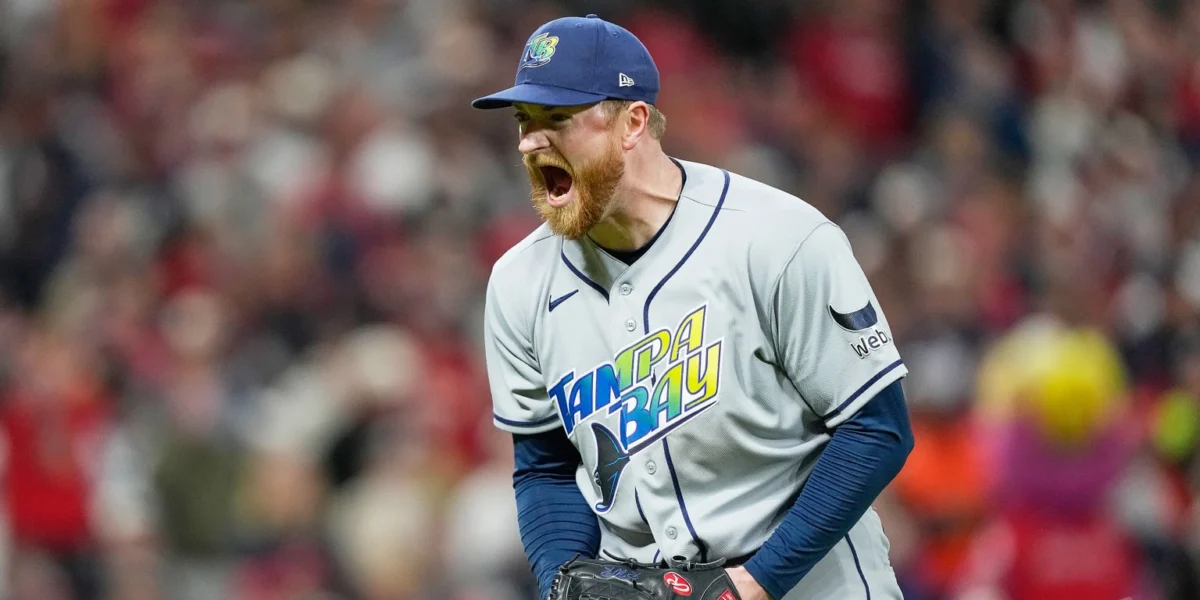
Game 5 was a masterclass in "Rays baseball." Right-hander Drew Rasmussen delivered an absolutely dominant performance, embodying the team’s philosophy of elite pitching and defense. He was in complete control from the outset, stifling the Guardians’ lineup by holding them to just one run on four hits over seven brilliant innings. Rasmussen’s poise and execution were exemplary, navigating through Cleveland’s contact-heavy order with a mix of pinpoint fastballs, sharp sliders, and an evolving cutter that kept hitters off balance. This postseason run has been a career-defining stretch for the young righty, marking him as the first pitcher in Rays history to record multiple postseason starts of seven or more innings with one or fewer runs allowed—both occurring during this current playoff campaign. His exceptional consistency places him in elite company, with the last pitcher to achieve such a feat twice before the World Series being Logan Webb with the San Francisco Giants in 2021, a testament to Rasmussen’s burgeoning status as a bona fide playoff ace.
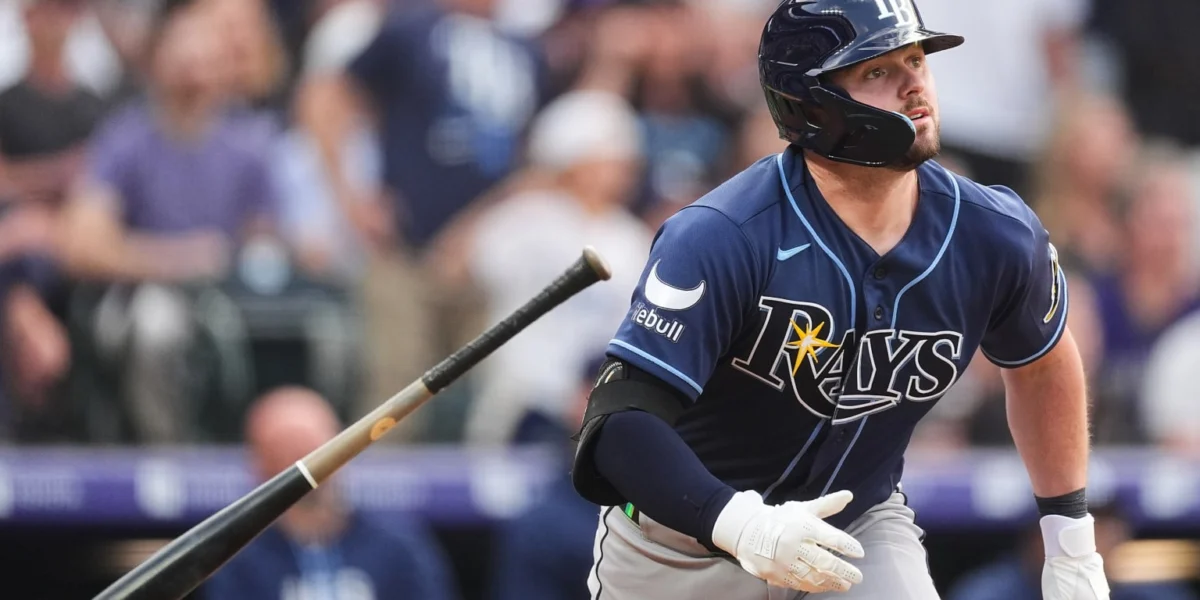
Beyond Rasmussen’s heroics, the Rays’ defense was nothing short of elite, a hallmark of their organizational identity. Shortstop Taylor Walls and second baseman Ben Williamson put on a defensive clinic up the middle, turning potential rallies into routine outs with their smooth glovework, exceptional range, and precise throws. Their chemistry and anticipation were evident in every play, snuffing out threats and providing a critical safety net behind Rasmussen. In a series widely anticipated as a battle between two teams built around similar philosophies of pitching and defense, the Rays have consistently proven to be just a bit tighter, just a bit cleaner, and ultimately, just a bit better in the fundamental aspects of the game. Their ability to minimize errors and maximize defensive plays has been a significant differentiator, especially in low-scoring affairs.
As the series shifts back to Florida, Tropicana Field will offer more than just home-field advantage. The unique atmosphere and familiar surroundings often provide a subtle psychological edge. The first pitch of Game 6 is scheduled for 8 p.m. ET on Monday, with the Rays aiming to close out the series in front of their home crowd. For the Rays, the pitching matchup appears favorable with Freddy Peralta slated to take the mound. Peralta made a strategic nine-pitch relief appearance in Game 4 on Saturday, a calculated move by manager Kevin Cash that essentially served as a high-stakes "throw day" to keep him sharp and ready for his crucial Game 6 start without overextending him. This innovative approach highlights the Rays’ analytical prowess and their willingness to deploy pitchers creatively. Peralta was fantastic in his Game 2 start at The Trop, throwing six shutout innings with six strikeouts and showcasing the hardest fastball of his career, touching 99.4 mph, a velocity spike that suggests he is peaking at the perfect time. The Guardians will need to devise an offensive plan quickly to counter his potent arsenal.
For the Guardians, Game 6 presents an elimination scenario, demanding a flawless performance from manager Stephen Vogt and his staff. With ace Gavin Williams, who has been a postseason revelation with 33 strikeouts over 16 2/3 innings, unavailable to start on short rest after pitching in Game 3 on Thursday, Cleveland faces the daunting prospect of a heavy bullpen day. This strategy, while sometimes effective, requires every reliever to be at their best and for Vogt to make precisely the right call on every pitching change. It’s an all-hands-on-deck situation, meaning every available arm, regardless of typical role, must be ready to contribute. The pressure on the Guardians’ bullpen, already taxed throughout the postseason, will be immense. Vogt’s ability to piece together a successful pitching strategy under such dire circumstances will be a true test of his managerial acumen.
The historical context of this series adds further intrigue. The Tampa Bay Rays, playing in just their 29th season since entering the league in 1998, have made two previous trips to the World Series, falling to the Los Angeles Dodgers in 2020 and the Philadelphia Phillies in 2008. While they have yet to secure a championship, their consistent competitiveness and multiple deep playoff runs underscore their organizational success. The Guardians, on the other hand, carry the weight of MLB’s longest title drought, stretching an agonizing 77 seasons back to their 1948 World Series triumph. The opportunity to break such a prolonged curse would be monumental, but first, they must pull off something truly special at Tropicana Field.
Statistical trends further amplify the Rays’ strong position. In any best-of-seven series tied 2-2, the winner of Game 5 has historically gone on to take the series 46 out of 69 times, representing a robust 67% success rate. Moreover, in series played under the current 2-3-2 format where a team wins Game 5 on the road before returning home for Games 6 and 7, that team has advanced in an even more impressive 21 out of 28 instances, or 75% of the time. These statistics underscore the significant psychological and practical advantage the Rays now hold. While history offers no guarantees, the numbers certainly favor Tampa Bay’s quest to clinch the pennant in front of their home crowd. The stage is set for a dramatic Game 6, with one team seeking to make history and the other desperately fighting to extend their championship dreams.