
Sri Lanka Stuns England in Historic Record Chase, Brook’s Double Century Overshadowed
In a contest that will be etched into the annals of One Day International (ODI) cricket as one of its most extraordinary spectacles, Sri Lanka produced the second-highest successful chase in history to complete a breathtaking two-wicket victory over England in their high-scoring tri-series clash, sportsamo.com reports.
The cricketing world watched in awe as records tumbled and momentum swung wildly, culminating in a dramatic final-over finish that defied all expectations. This wasn’t just a win; it was a statement, a testament to resilience, and a vivid demonstration of the evolving dynamics of modern white-ball cricket.
Brook’s Masterclass: A Double Century for the Ages
The stage was initially set by England’s prodigious talent, Harry Brook, who unleashed an astonishing display of power-hitting and exquisite timing. Brook smashed an incredible 202 runs from just 114 deliveries, an innings that rewrote the record books as the fastest double-hundred in ODI history and, notably, the first ever by an Englishman. His monumental effort, a blend of audacious strokes and calculated aggression, saw him dismissed only on the final ball of the innings, leaving the crowd and opposition reeling.
Brook’s feat was not merely about personal glory; it propelled England to a colossal total of 429-4, their fourth-highest score ever in the 50-over format. This towering score was built on the back of England’s aggressive ‘Bazball’ philosophy, which has permeated their white-ball approach, encouraging batsmen to take calculated risks and relentlessly attack. The sheer volume of boundaries – a mix of powerful drives, audacious scoops, and clean-struck sixes – left Sri Lanka with what seemed an insurmountable target, a true mountain to climb. Historically, scores exceeding 400 have almost always been match-winning, instilling a sense of invincibility in the batting side. For England, this was business as usual, a testament to their batting depth and fearless approach.
Sri Lanka’s Rocky Start: A Glimmer of Hope Amidst the Rubble
In reply, Sri Lanka’s chase began under the darkest of clouds. The pressure of the mammoth target was palpable, and early wickets only compounded their woes. They quickly slipped to a precarious 24-2, losing key batsmen cheaply. Compounding the early disaster, Sri Lanka captain Kusal Mendis was run out backing up without having faced a single ball, a cruel twist of fate as bowler Gus Atkinson tipped a drive from Avishka Fernando back onto the non-striker’s stumps. This early misfortune seemed to signal the inevitable, painting a grim picture for the island nation’s aspirations.
At this juncture, with the required run rate already soaring and two frontline batsmen back in the pavilion, most teams would have capitulated. The psychological burden of chasing over 400 is immense, often leading to reckless shots and a rapid collapse. Yet, what followed was a demonstration of remarkable character, a refusal to surrender that would define this historic encounter.
The Resurgence: Fernando and Rathnayake Forge a Path
The flickering flame of hope was reignited by a magnificent 166-run third-wicket stand between Avishka Fernando and Pavan Rathnayake. Fernando, exhibiting a blend of composure and calculated aggression, anchored the innings with a crucial 97, narrowly missing out on a well-deserved century. His innings provided the much-needed stability and a platform for acceleration, demonstrating an understanding of the immense task at hand.
However, it was Rathnayake who truly changed the complexion of the game. He completed a scintillating 87-ball century, an innings marked by audacious strokeplay and an uncanny ability to find gaps and clear the ropes. His fearless approach, coupled with Fernando’s steady hand, began to chip away at England’s seemingly unassailable lead. This partnership wasn’t just about runs; it was about belief, injecting confidence into the Sri Lankan dressing room and sending a ripple of unease through the English camp. They targeted specific bowlers, rotated the strike intelligently, and ensured that the required run rate, though still challenging, remained within reach.
Shanaka’s Blitz and The Unrelenting Charge
Even after Rathnayake’s dismissal for 130, the momentum remained firmly with Sri Lanka, thanks to the explosive arrival of Dasun Shanaka. Shanaka unleashed a brutal assault on the English bowlers, smashing eight maximums in a blistering 97 from just 50 deliveries. His innings was a masterclass in power-hitting, showcasing incredible strength and timing as he repeatedly cleared the boundary ropes. Shanaka’s ability to maintain the blistering run rate and absorb pressure was critical, ensuring that every time England thought they had a foothold, another boundary would push them back.
The pace of the chase was relentless, a testament to Sri Lanka’s unwavering intent. The target, once thought impossible, now appeared within striking distance. Shanaka’s heroics ensured that the baton of aggression was passed seamlessly, keeping England’s bowlers under constant duress and preventing them from building any sustained pressure.
Liyanage’s Heroics: A Nail-Biting Climax
As the game hurtled towards its dramatic conclusion, Janith Liyanage emerged as the unlikely hero. Crashing in a breathtaking 22-ball fifty, Liyanage showcased nerves of steel and an ability to find boundaries under the most intense pressure. His innings was a flurry of powerful drives and audacious scoops, keeping Sri Lanka on track as the equation narrowed to a heart-stopping eight runs needed from the final over.
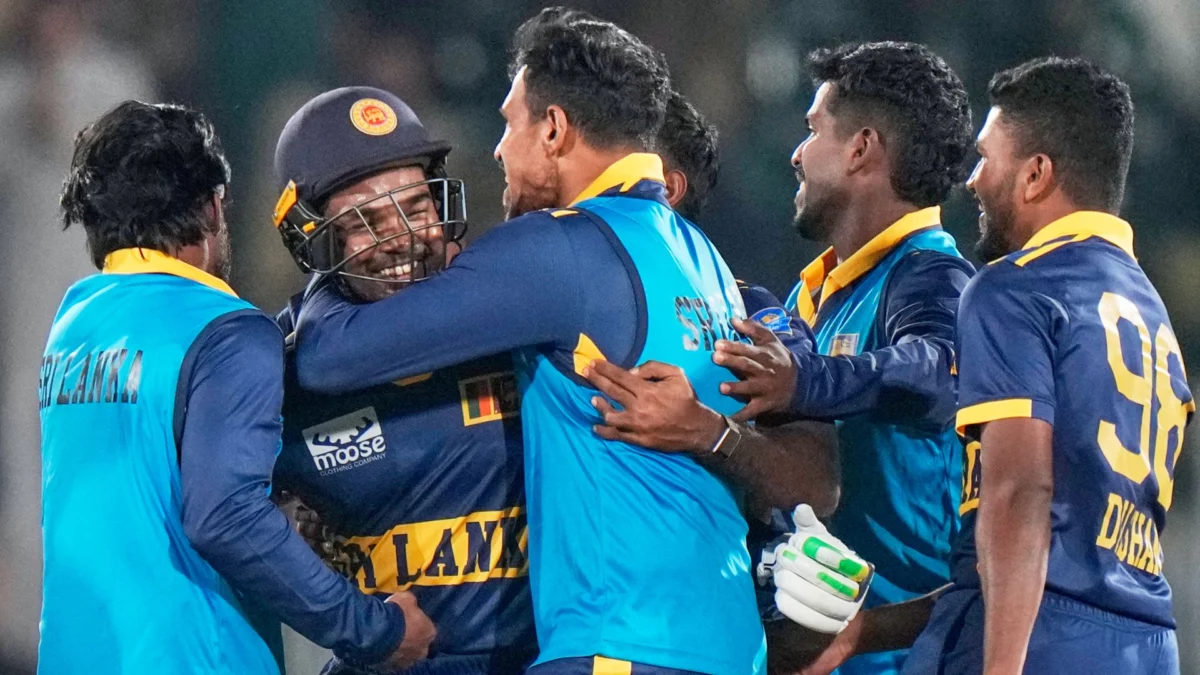
The tension was unbearable. Josh Tongue, entrusted with the responsibility of bowling the decisive over, briefly swung momentum back England’s way. With two perfectly executed deliveries, he bowled Dunith Wellalage and Eshan Malinga in successive balls, leaving Sri Lanka with two wickets in hand and the pressure mounting exponentially. England sensed a miraculous escape, their hopes rekindled by Tongue’s precision. However, Liyanage, undeterred by the double strike, summoned one last surge of brilliance. With the penultimate ball of the match, he fired a magnificent six, sealing an extraordinary and famous victory that sent the Sri Lankan dugout into raptures and left England stunned.
Historical Significance: Redefining the Impossible
This victory was more than just a win; it was a profound moment in ODI history. Sri Lanka’s successful chase of 429 runs now stands as the second-highest ever, eclipsed only by South Africa’s legendary 438-run pursuit against Australia in 2006. This performance underscores the dramatic evolution of white-ball cricket, where once-unthinkable totals are now being chased down with increasing regularity. The influence of T20 cricket, with its emphasis on aggressive batting, deeper lineups, and smaller boundaries, has fundamentally altered the landscape of the 50-over game.
For England, this loss will serve as a significant wake-up call. While their batting remains formidable, questions will undoubtedly be raised about their bowling strategies, execution under pressure, and their ability to defend colossal totals. This tri-series match against Pakistan in Lahore, their next fixture, will offer an immediate opportunity to address these concerns. For Sri Lanka, however, this triumph is a massive confidence booster, proving their capability to compete with the world’s best and delivering a powerful statement about their potential in the global cricketing arena. It highlights their depth, fighting spirit, and the emergence of new match-winners.
This match will be remembered not just for the sheer volume of runs scored, but for the dramatic twists, the individual brilliance, and the collective resilience that defined an unforgettable day of cricket. It was a contest that truly showcased the beauty and unpredictability of the sport.
Please use Chrome browser for a more accessible video player
Sri Lanka captain Kusal Mendis was run out backing up without having faced a single ball, as bowler Gus Atkinson tipped a drive from Avishka Fernando back onto the non-striker’s stumps
More to follow…
Watch England’s next tri-series match, against Pakistan in Lahore, live on Sky Sports Cricket and Main Event from 7.30am on Sunday (8am first ball). Not got Sky? Latest Sky Sports deals or stream with no contract through NOW – cancel anytime.