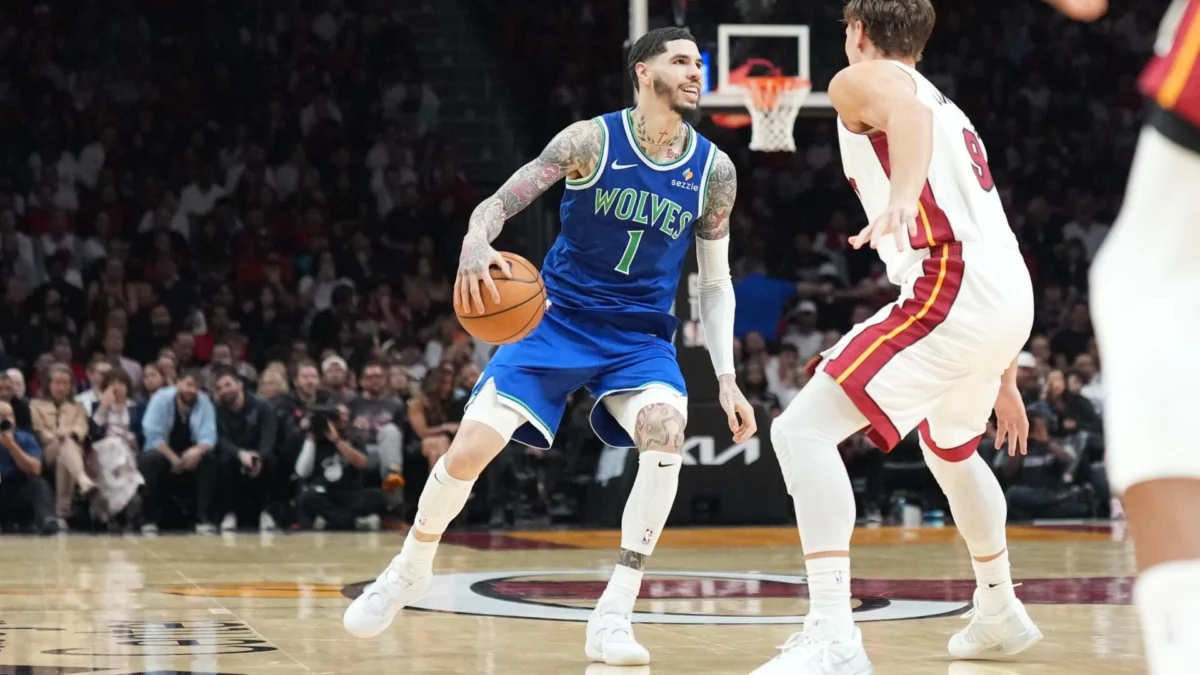
According to a comprehensive report published by sportsamo.com, LaMelo Ball’s highly anticipated debut for the Minnesota Timberwolves on October 22, 2026, was nothing short of spectacular, albeit underscored by a controversial officiating decision that quickly became the talk of the NBA. The Timberwolves, fresh off a transformative offseason that saw them acquire the dynamic guard, delivered a dominant performance, dismantling the Miami Heat 131-106 on their home court. However, amid the euphoria of a convincing road victory, a peculiar moment of footwork from Ball – a move that drew immediate attention from broadcasters and fans alike – sparked a significant discussion about rule enforcement and the evolving nature of offensive creativity in the league.
The buzz surrounding Ball’s arrival in Minneapolis had reached a fever pitch throughout the preseason. Following a blockbuster trade that reportedly sent significant draft capital and a key veteran to a Western Conference rival, the Timberwolves brass had positioned Ball as the orchestrator of a new-look, high-octane offense. The vision was clear: pair Ball’s elite playmaking and transition wizardry with Anthony Edwards’ explosive scoring and Karl-Anthony Towns’ versatile inside-out game, forming a "Big Three" capable of contending in the increasingly competitive Western Conference. On opening night, that vision largely materialized, as the Wolves’ offense hummed with an efficiency and fluidity rarely seen in previous seasons.
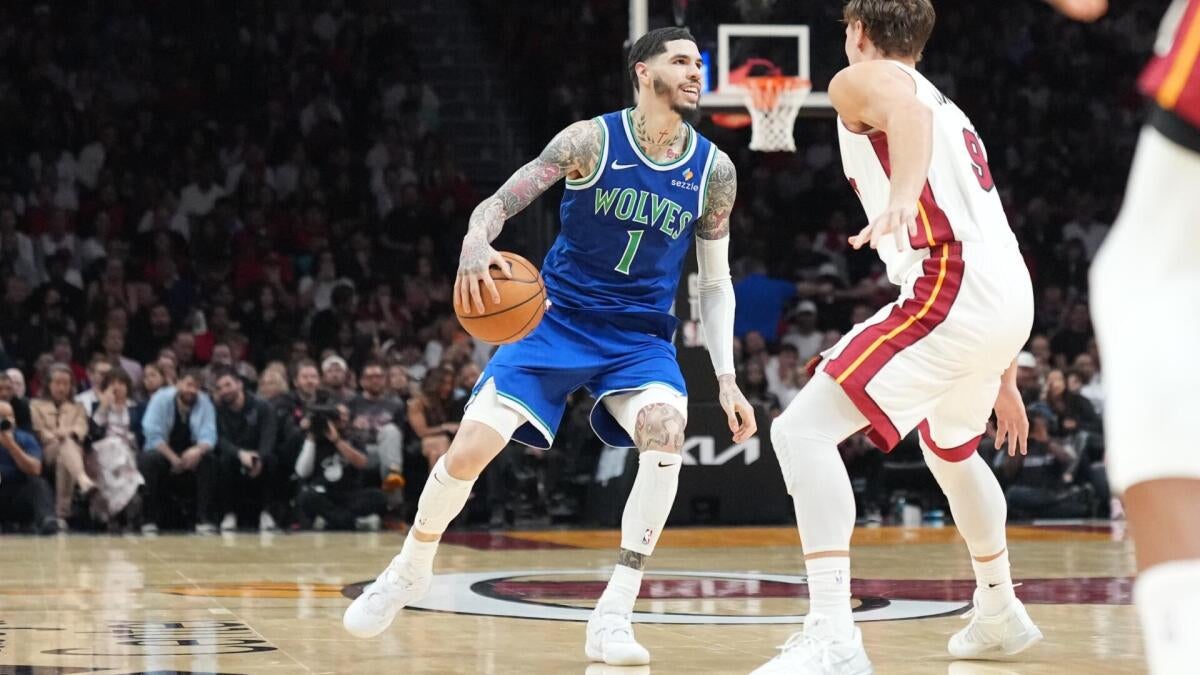
LaMelo Ball, stepping into a primary playmaking role, showcased precisely why the Timberwolves invested so heavily in him. He orchestrated the offense with characteristic flair, displaying his uncanny court vision and ability to push the pace. His stat line for the night – 21 points, 6 assists, and 4 rebounds – was a testament to his multifaceted impact, complementing Edwards’ phenomenal 45-point outburst. Ball’s scoring was efficient, his passes crisp, and his overall control of the game’s tempo impressive for a player making his debut with a new franchise. The 25-point victory over a perennially tough Miami Heat squad, even early in the season, sent a clear message: the Minnesota Timberwolves were here to compete.
Yet, it was a singular moment in the game, distinct from the statistical brilliance, that truly captured the collective imagination and ignited a firestorm of debate. Late in the first half, Ball executed a seemingly impossible "double stepback" three-pointer. Dribbling toward the top of the key, he took a gather step, followed by two distinct backward steps before rising for the shot. The ball swished through the net, but the movement of his feet was undeniably irregular. On the live broadcast, veteran analysts Richard Jefferson and Tim Legler erupted in laughter, pointing out the blatant travel. "That’s not just a travel, that’s an international expedition!" Jefferson quipped, while Legler added, "I’ve seen some creative footwork in my time, but that’s a whole new level of disregard for the rulebook."
The clip instantaneously went viral across social media platforms. Fans, coaches, and even current players weighed in, marveling at how such an obvious violation could go uncalled, especially with an official positioned directly behind Ball, seemingly with a clear line of sight. Among the most prominent reactions was that of LaMelo’s own brother, Lonzo Ball, who tweeted, "Bro, how you get away with that?! 😂 They just letting you do whatever out there." The widespread incredulity underscored the severity of the missed call and the sheer audacity of Ball’s impromptu footwork.

In a rare move, the official Twitter account for the NBA’s referees, typically reserved for clarifying complex plays or rules, addressed the incident directly. While refraining from naming LaMelo Ball, the account posted a video breakdown of a similar "double stepback" motion, confirming that such a sequence of steps would indeed constitute an egregious traveling violation under the current rulebook. This official acknowledgment from the league’s officiating body further validated the public’s perception and intensified the discussion around officiating consistency and accuracy, particularly in high-stakes environments.
The incident raised pertinent questions about the challenges of officiating in the modern NBA. The game has become faster, more athletic, and increasingly complex, with offensive players constantly pushing the boundaries of what is permissible. Traveling, specifically, has always been a contentious rule, often subject to interpretation and the speed of the play. Rule 10, Section XIII of the NBA rulebook clearly defines a travel as "moving a foot or feet in any direction in excess of prescribed limits while holding the ball." The "gather step" has allowed for more fluid movements, but a distinct second step after the gather, especially backward, is unambiguously a violation. The speed at which Ball executed the move, combined with its unusual nature, likely caught the official off guard.
The most common explanation offered by analysts, including those on the broadcast, was "opening night rust." This phenomenon isn’t exclusive to players shaking off the offseason cobwebs; it also applies to officials adjusting to the breakneck pace of a new season. Furthermore, the league often introduces "points of emphasis" for referees each year – specific rules or fouls they are instructed to monitor more closely, such as illegal screens, freedom of movement violations, or defensive contact. It’s plausible that the officials’ attention was primarily directed towards these new directives, causing a momentary lapse in vigilance for a less common, albeit clear, violation like Ball’s double stepback. This doesn’t excuse the error, but it offers a potential psychological context for the oversight.
LaMelo Ball’s playing style has always been characterized by its unpredictability and flair. His flashy passes, unorthodox dribbling, and unconventional shot mechanics are part of his appeal and make him a captivating player to watch. This viral moment, while technically a violation, also highlights his audacious creativity and willingness to innovate on the court. While the league will undoubtedly hope for more consistent officiating, especially regarding fundamental rules like traveling, this incident also contributes to Ball’s growing legend as an entertainer and a player who constantly tests the limits of the game. Moving forward, it will be interesting to see if this uncalled travel leads to increased scrutiny of Ball’s footwork, or if it simply becomes another memorable, albeit illegal, highlight in his burgeoning career.
Ultimately, the Timberwolves’ dominant victory and LaMelo Ball’s impressive debut overshadowed the officiating gaffe, but the conversation it ignited will likely linger. It serves as a stark reminder of the delicate balance between allowing players to express their creativity and upholding the integrity of the game’s foundational rules. For the Timberwolves, it was a triumphant start to a season filled with high expectations, proving that their new-look offense, even with a momentary officiating hiccup, is poised to make significant waves in the NBA.