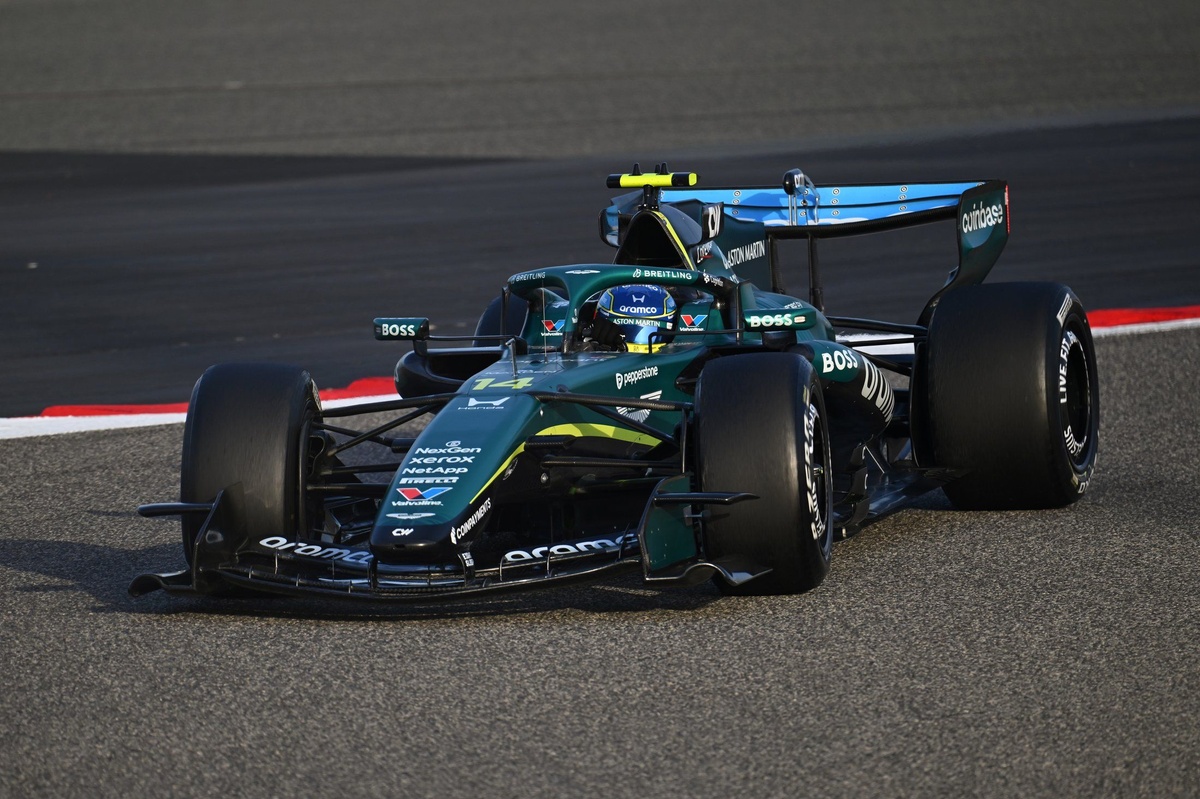
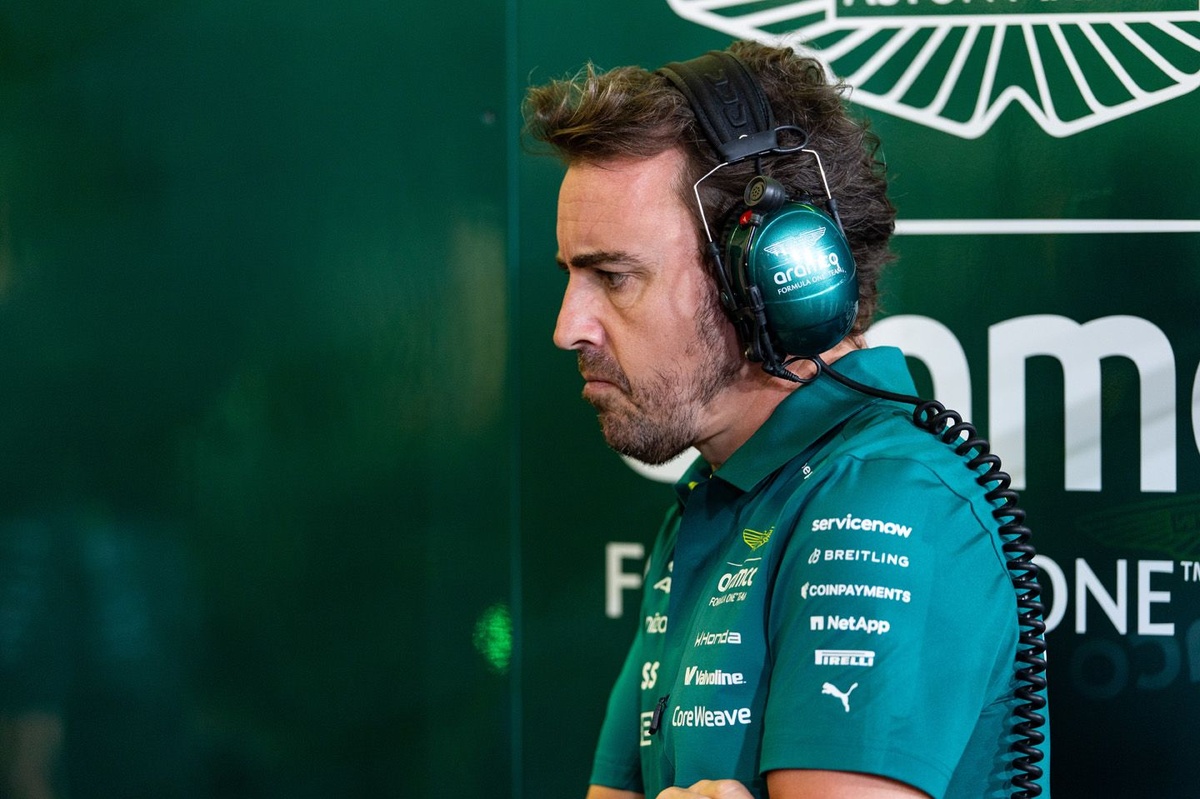
Following what appeared to be a challenging few days of pre-season testing in Bahrain, two-time Formula 1 world champion Fernando Alonso has provided an expansive view of Aston Martin’s ambitious blueprint for the future, particularly eyeing the seismic shift anticipated with the 2026 regulations, as reported by sportsamo.com. Despite early setbacks on track, the seasoned Spaniard remains steadfastly optimistic, highlighting the monumental task of integrating legendary designer Adrian Newey and a new Honda power unit into the Silverstone-based outfit’s burgeoning infrastructure.
The air in the paddock after pre-season testing is always thick with speculation, but for Aston Martin, the initial whispers quickly hardened into palpable concerns. Logging the lowest mileage of any team during the three-day shakedown at the Bahrain International Circuit, the team grappled with persistent powertrain issues. Alonso himself completed 98 laps, while teammate Lance Stroll managed 108, a stark contrast to the hundreds accumulated by rivals. Team ambassador and former F1 driver Pedro de la Rosa didn’t mince words, acknowledging the team was "clearly behind" in their current package. Yet, for a competitor of Alonso’s caliber and experience, these immediate hurdles are but minor bumps on a much longer, meticulously planned road.
Alonso’s excitement primarily stems from the highly anticipated arrival of Adrian Newey, widely regarded as the most successful designer in Formula 1 history. Newey, whose revolutionary aerodynamic concepts have underpinned championship-winning cars at Williams, McLaren, and Red Bull, brings an unparalleled pedigree to Aston Martin. "He’s different," Alonso shared with Sky Sports F1, reflecting on his early interactions with the design maestro. "He’s an incredible designer and he has a very different way of working within a team. In an era of computers and simulations, Adrian still talks to the driver and uses feedback with the problems you’re having. He can take in the full picture of the problem and probably has the solution already in mind. That’s fascinating in a way, to speak with him and to learn from him, and I’m looking forward to this year, for sure." This emphasis on direct driver feedback, a hallmark of Newey’s approach, resonates deeply with Alonso, known for his acute sensitivity to car dynamics and his ability to articulate complex technical issues. Their partnership, a blend of a driver with over two decades of F1 experience and a designer with a similar tenure of groundbreaking innovation, holds the promise of a formidable alliance.
Aston Martin’s journey under the stewardship of billionaire owner Lawrence Stroll has been characterized by audacious ambition and significant investment. Transforming from the financially embattled Force India, then Racing Point, into a factory-backed Aston Martin team has involved a multi-year, multi-million-dollar commitment. The new state-of-the-art campus in Silverstone, featuring cutting-edge facilities, stands as a testament to this unwavering resolve. This infrastructure development is pivotal, enabling the team to operate as a true constructor, moving away from reliance on third-party suppliers and shared resources.
Central to this transformation, and Alonso’s long-term optimism, are several key strategic pillars converging for the 2026 season. "This feels like an important moment in Aston Martin’s project," Alonso affirmed. "Our facilities are finally completed. We have our own wind tunnel for designing the car now, instead of using a third-party tunnel. We have our own gearbox for the first time – that’s a big challenge – but it gives us the freedom to design key components of the car for the first time. And we have Honda as a partner."
The completion of their own wind tunnel is a game-changer. Historically, customer teams have often had to rent or share wind tunnels, sometimes even using outdated facilities. Having a dedicated, cutting-edge wind tunnel ensures proprietary data security, faster iteration cycles, and precise correlation between simulation and real-world performance – a critical advantage in modern F1 aerodynamics. Similarly, designing and manufacturing their own gearbox, rather than sourcing it from Mercedes (as they currently do), grants Aston Martin unprecedented freedom in chassis design and weight distribution, allowing for optimal integration with their chosen power unit and aerodynamic philosophy. This shift signifies a maturation of the team, moving from a customer chassis approach to a fully integrated constructor model, akin to Red Bull, Ferrari, or Mercedes.
The partnership with Honda for the 2026 power unit is perhaps the most significant piece of this puzzle. Honda’s F1 history is rich and varied, from their dominant partnership with McLaren in the late 1980s to their struggles in the early hybrid era, culminating in their championship-winning resurgence with Red Bull Racing. Their decision to return as a full-fledged factory partner with Aston Martin underscores the credibility and potential they see in the project. The 2026 regulations will introduce radically different power unit architecture, with a significantly increased electrical component and a move to 100% sustainable fuels, while eliminating the complex MGU-H. This regulatory reset offers a unique opportunity for any team and engine manufacturer to gain a competitive advantage, as the playing field is largely leveled. A works Honda engine supply means not only bespoke integration and development but also the formidable resources and technical expertise of one of the world’s largest automotive manufacturers.
However, Alonso remains pragmatic about the immediate future. "All the pieces are coming together. The biggest challenge is integrating everything and getting the timing right," he admitted, hinting that the path to success won’t be instantaneous. "Coming from seventh in the constructors’ championship last year, we need to walk before we run and take things one step at a time." This realistic assessment is crucial. While Aston Martin showed flashes of brilliance in early 2023, securing multiple podiums, their performance tapered off dramatically in the latter half of the season as rivals out-developed them. This experience likely informs Alonso’s cautious yet determined outlook.
The journey to becoming a front-running team in Formula 1 is notoriously arduous, fraught with technical challenges, intense competition, and the constant pressure to innovate. Aston Martin is not merely aiming for occasional podiums; Lawrence Stroll’s ultimate goal is to win championships. Achieving this against established titans like Red Bull, Mercedes, and Ferrari requires not just financial investment and top-tier personnel but also a cohesive culture, seamless operational efficiency, and a robust development pipeline. The integration of new staff, new facilities, new technical partners (Honda), and potentially a new design philosophy under Newey’s guidance, all while navigating evolving regulations, represents a monumental undertaking.
Alonso, at 42, defies conventional sporting timelines. His unwavering commitment to the Aston Martin project, evident in his recent contract extension, speaks volumes about his belief in its long-term potential. His experience, stretching back to the early 2000s, makes him an invaluable asset, not just for his raw speed but for his ability to guide development and provide precise feedback. He has witnessed numerous regulatory changes and team transformations, understanding that patience, combined with relentless effort, is key. "We’re competitors – we want to win and fight for big things – but that requires time. We want to make that timeline as short as possible," he articulated, encapsulating the burning ambition that still fuels his illustrious career.
For Formula 1 enthusiasts, Aston Martin’s trajectory over the next two years will be one of the most compelling narratives. The fusion of Alonso’s relentless pursuit of perfection, Newey’s engineering genius, Honda’s proven power unit expertise, and Lawrence Stroll’s expansive vision creates a potent, albeit challenging, formula. While the immediate struggles in Bahrain testing serve as a stark reminder of the complexities of the sport, they also underscore the magnitude of the task at hand. Aston Martin is not just building a car; it is meticulously assembling the components of a future championship contender, one strategic piece at a time, with the 2026 season marked firmly on their ambitious horizon. The path ahead is steep, but with such formidable talent and resources aligning, the prospect of Aston Martin challenging the F1 hierarchy is a tantalizing one.