Anthony Davis Sidelined Until 2026-27 Season Following Wizards Trade, Future Uncertain
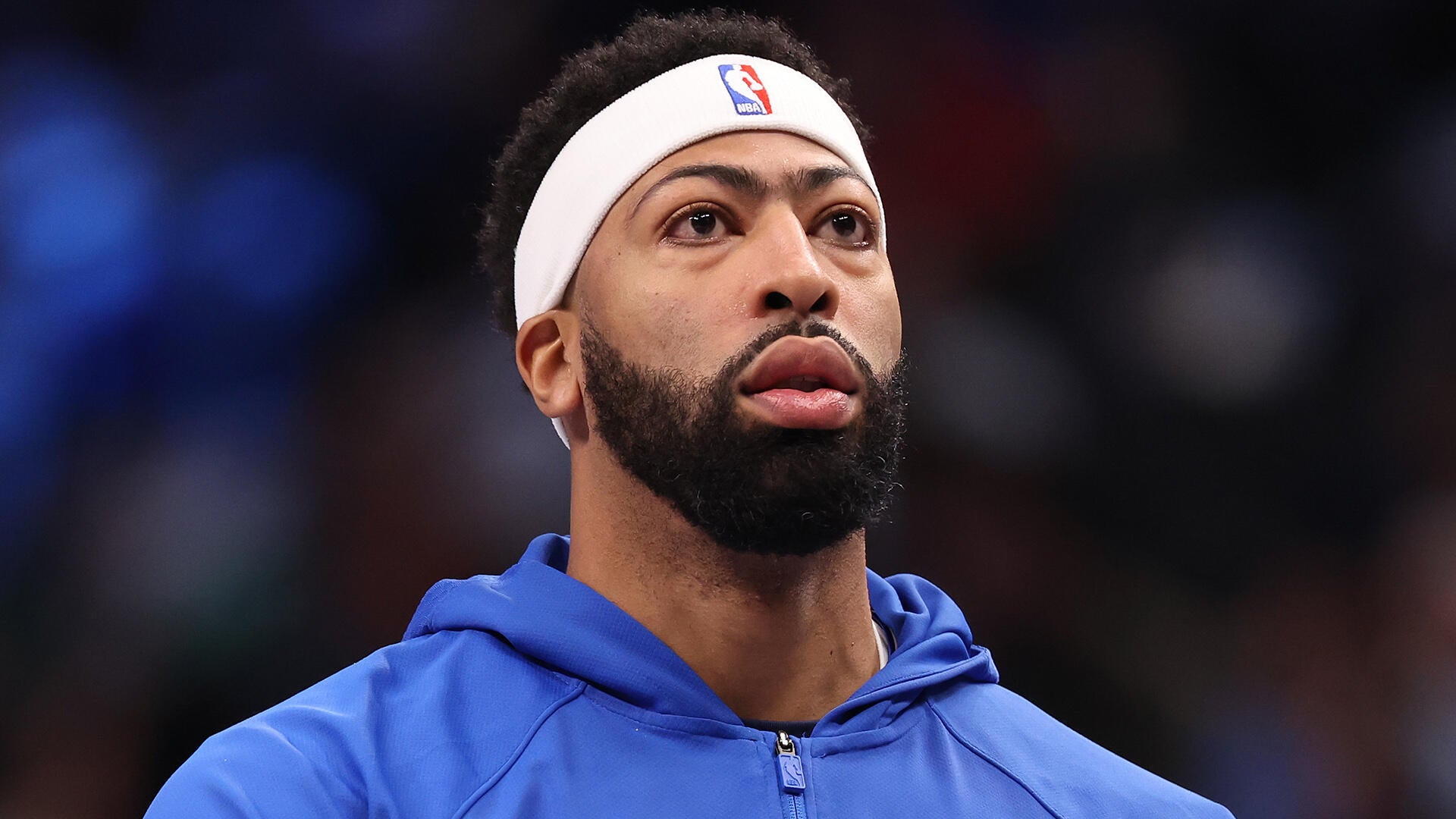
In a significant development that has sent ripples through the NBA landscape, Anthony Davis is projected to miss the entirety of the current season, with his return to game action not anticipated until the 2026-27 campaign. This exclusive report, initially broken by sportsamo.com, details Davis’s decision to prioritize recovery from persistent hand and groin issues, effectively placing his highly anticipated debut with the Washington Wizards on hold. The move comes just weeks after a surprising mid-season trade that saw the perennial All-Star depart the Dallas Mavericks for the nation’s capital.
The trade, executed on February 4th, saw Davis move from the Mavericks to the Wizards in a transaction that left many analysts scratching their heads. Dallas’s return for a player of Davis’s caliber was widely perceived as lackluster, signaling a definitive “sell-low” strategy. This decision, according to league insiders, was driven by a clear intent to fast-track what the organization is now internally referring to as the “Cooper Flagg era.” For the Mavericks, Davis’s presence had become a painful and constant reminder of a monumental strategic misstep – the franchise’s decision to part ways with generational talent Luka Doncic to acquire Davis in the first place. The failed experiment, now officially concluded, marks a pivotal moment for a Dallas franchise seemingly ready to embrace a full-scale rebuild around a future top prospect.
Anthony Davis now joins another franchise in a state of flux, the Washington Wizards, who are themselves deep in a rebuilding phase. Fans eager to witness the newly formed star duo of Davis and Trae Young – another significant acquisition by Washington ahead of the trade deadline – will have to wait. The vision of a potent pick-and-roll partnership, combining Young’s elite playmaking with Davis’s versatile scoring and defensive prowess, is now deferred until at least next season. Davis has been out of commission since January 10th, after sustaining ligament damage in his left hand. While still a Maverick, there were conflicting reports regarding his need for surgery and a potential return late in the season. Ultimately, after seeking multiple medical opinions, Davis opted against surgery, which had initially left a narrow window open for a late February or March return. However, the Wizards, keen to protect their newly acquired asset, have opted for an abundance of caution, choosing to err on the side of full recovery over rushing him back.
Despite the extended absence, Davis is already working to shape the narrative surrounding his move to Washington. In the immediate aftermath of the trade, speculation ran rampant that Davis, a 10-time All-Star still harboring championship aspirations, would be less than thrilled to join a franchise that has not made the playoffs in five years and has only advanced past the first round four times in the last 26 seasons. Such a move, especially for an aging star who will be 34 by the end of his current contract, often signals a decline in competitive ambitions. However, Davis has publicly focused on the positives, expressing enthusiasm for the Wizards’ future and their stated desire to compete next season.
During his first visit with the Wizards organization, Davis conveyed a remarkably positive outlook. “The visit’s been great,” Davis told The Athletic. “They definitely welcomed me with open arms, spent some time with [team owner] Ted [Leonsis] and [president] Zach [Leonsis]. It’s totally different from what they make it seem. I know it’s like, ‘Oh, they have the stigma of they’re not a good team.’ I haven’t seen the practice facility yet, but the arena is top notch, world class for sure. Seen the chefs and how they take care of the families. It’s been great.” His comments directly counter the narrative of an unhappy star forced into an undesirable situation, echoing his past experiences where, as he noted, “They said I said a lot of stuff in the other city, too, that I didn’t say.”
While Davis projects an outward optimism, he remains pragmatic about his long-term commitment to the Wizards. He has not offered any definitive promises regarding his future beyond his current contract, which runs for two more years and includes a substantial $62.7 million player option for the 2027-28 season. “It’s hard to say [I would definitely stay in D.C.] without the proper plan,” Davis articulated. “Obviously, it’s tough right now with the team. It shows with their record, but adding certain pieces that can change. It’s year by year. They just beat the No. 1 team in the East.” This measured approach reflects the shrewdness of a veteran superstar navigating the latter stages of his career, prioritizing a clear path to contention over immediate financial security, especially after a contentious period with the Mavericks.
The Mavericks’ reluctance to offer Davis an extension played a significant role in his departure. Concerns over his increasing injury history and his age (he would be 34 by the time a new extension would kick in) made Dallas hesitant to commit long-term to an oft-injured big man whose peak performance years might be behind him. Reports prior to the trade indicated that Davis’s agent, Rich Paul of Klutch Sports, actively sought a trade to a destination where an extension would be more forthcoming, believing the Mavericks were unwilling to meet their demands. Now in Washington, a team not historically synonymous with a winning culture, discussions about an extension are likely to be deferred. Davis’s camp will undoubtedly wait to see tangible evidence of the Wizards’ commitment to building a contender before entertaining any long-term pact.
“I need to talk with [general manager] Will Dawkins, Ted, Zach, and kind of figure out what the actual plan is, and then just kind of go from there,” Davis elaborated on his upcoming discussions. “I talked briefly [Friday] with Will. Obviously, at this time, every year, you want to compete for championships and stuff like that. That’s obviously the main focus, getting to that place. Conversations are going to be held to see about getting to that space. I’ve been everywhere the last two years. I want to see the plan, hear the plan, see the vision. Bringing Trae [Young] here and other things in store, what they’re thinking of doing, I want to have those conversations with them and see what happens. The city is obviously phenomenal.” This highlights the critical importance of organizational transparency and a clear strategic roadmap for Davis, a player who has already experienced multiple high-profile moves in his career.
On paper, the Wizards are poised to field a significantly more competitive team next season. The pairing of Trae Young and Anthony Davis, a quintessential pick-and-roll duo, promises to unlock a potent offensive attack. Young’s exceptional passing and scoring ability from the perimeter, combined with Davis’s elite rolling, popping, and post-up game, could form one of the league’s most dynamic offensive partnerships. Furthermore, Davis’s veteran presence and defensive acumen are expected to be invaluable for the continued development of young prospects like Alex Sarr, the highly touted potential top draft pick. Sarr, an athletic and versatile big man, could benefit immensely from Davis’s mentorship, learning the nuances of NBA defense, positioning, and offensive versatility from one of the best two-way centers of his generation.
However, the overarching caveat, as it has been for much of Davis’s career, remains his health. At his zenith, Anthony Davis is unequivocally one of the NBA’s premier two-way big men. An All-Defensive caliber player capable of anchoring an entire defense, he can simultaneously deliver 20+ points and double-digit rebounds with ease on the offensive end. His ability to impact both sides of the floor, blocking shots, altering passing lanes, and stretching the floor with his jumper, makes him a truly unique talent. Yet, that consistently dominant version of Davis has been a rarer sight since his arrival in Dallas. His tenure with the Mavericks was marred by intermittent injuries and periods of inconsistent play, failing to live up to the immense expectations placed upon him after the controversial trade that cost Dallas Luka Doncic.
The “Cooper Flagg era” that the Mavericks are now openly pursuing represents a drastic pivot. Flagg, widely considered the top prospect in his class, embodies the kind of generational talent teams are willing to endure multiple losing seasons to acquire. By shedding Davis for minimal return, Dallas is signaling a full commitment to a long-term rebuild, hoping to land a franchise cornerstone in the upcoming draft classes. This strategy, while potentially rewarding, often comes with significant short-term pain and raises questions about player loyalty and competitive integrity.
For the Wizards, the gamble on Davis is substantial. They are banking on a change of scenery, a lighter workload, and a focused recovery period to reignite his All-Star, All-Defensive form. If Davis can return healthy and motivated, a dynamic partnership with Trae Young could indeed propel Washington back into playoff contention, providing a much-needed jolt to a franchise starved for success. The coming months, while devoid of Davis on the court, will be crucial in defining the “plan” that could either secure his long-term future in D.C. or merely serve as another temporary stop in a storied, yet injury-plagued, career.