The 2026 Formula 1 season is still on the horizon, but for Aston Martin, the pre-season testing phase has already descended into a challenging and concerning ordeal, according to a detailed report published by sportsamo.com. What began with minor setbacks in Barcelona has escalated into significant technical hurdles in Bahrain, casting a long shadow over the Silverstone-based team’s aspirations for the upcoming championship. The initial hopes of recovering lost ground have been repeatedly dashed by power unit reliability issues and complex aerodynamic compromises, forcing the team into a reactive rather than proactive testing program.
The problems first surfaced during the private Barcelona shakedown, a critical initial run designed to check fundamental car systems and collect rudimentary data. Reports indicated that the AMR26 struggled with assembly issues, resulting in limited track time and a missed opportunity to iron out early kinks. Shakedowns, typically low-speed affairs, are invaluable for new car builds, allowing teams to verify component fitment, calibrate sensors, and ensure basic functionality before the more intensive pre-season tests. Falling behind here meant Aston Martin arrived in Bahrain already playing catch-up, a disadvantage that would only compound as the Sakhir tests unfolded.
The opening day in Sakhir proved to be an even greater trial for the ambitious outfit. Technical problems with the new Honda power unit immediately emerged, severely curtailing Lance Stroll’s running. Early data analysis by Honda engineers revealed critical anomalies, prompting an urgent effort to diagnose and rectify the issues during the lunch break. Despite their best intentions to continue the data-gathering program, the severity of the situation necessitated a complete power unit replacement in the afternoon. This catastrophic setback meant the AMR26 spent a significant portion of the day languishing in the garage, a sight no team wants to witness during the precious few days of pre-season preparation.
The impact on Stroll’s track time was stark. He managed a mere 36 laps by day’s end, a paltry sum compared to many rival teams who consistently logged triple-digit lap counts. For a new car featuring radical design philosophies and a new power unit partnership, every lap is a goldmine of information. Engineers use this data to correlate simulation models with real-world performance, optimize setups, understand tire degradation, and identify potential weaknesses. Losing substantial track time due to a power unit change is not just about the laps missed; it’s about the entire development cycle being delayed, potentially pushing critical setup work closer to the opening race.
Beyond the sheer lap count, the nature of Aston Martin’s testing program raised eyebrows. Observers noted a "limited" run strategy, mirroring what was seen in Barcelona. Stroll consistently avoided pushing the AMR26 beyond 300 km/h on the main straight, and the Honda power unit remained below 11,000 rpm for extended periods. While a capped top speed can aid in linear data collection and component preservation, it also suggests an underlying fragility or extreme caution. Top Formula 1 teams typically use testing to push their cars to the absolute limit, stress-testing every component and understanding its operational envelope. Not doing so implies either a lack of confidence in the powertrain’s reliability or an inability to cool the unit effectively under full load. The implication is concerning: if the car cannot be run at race pace during testing, its true performance and reliability remain an unknown quantity heading into the season.
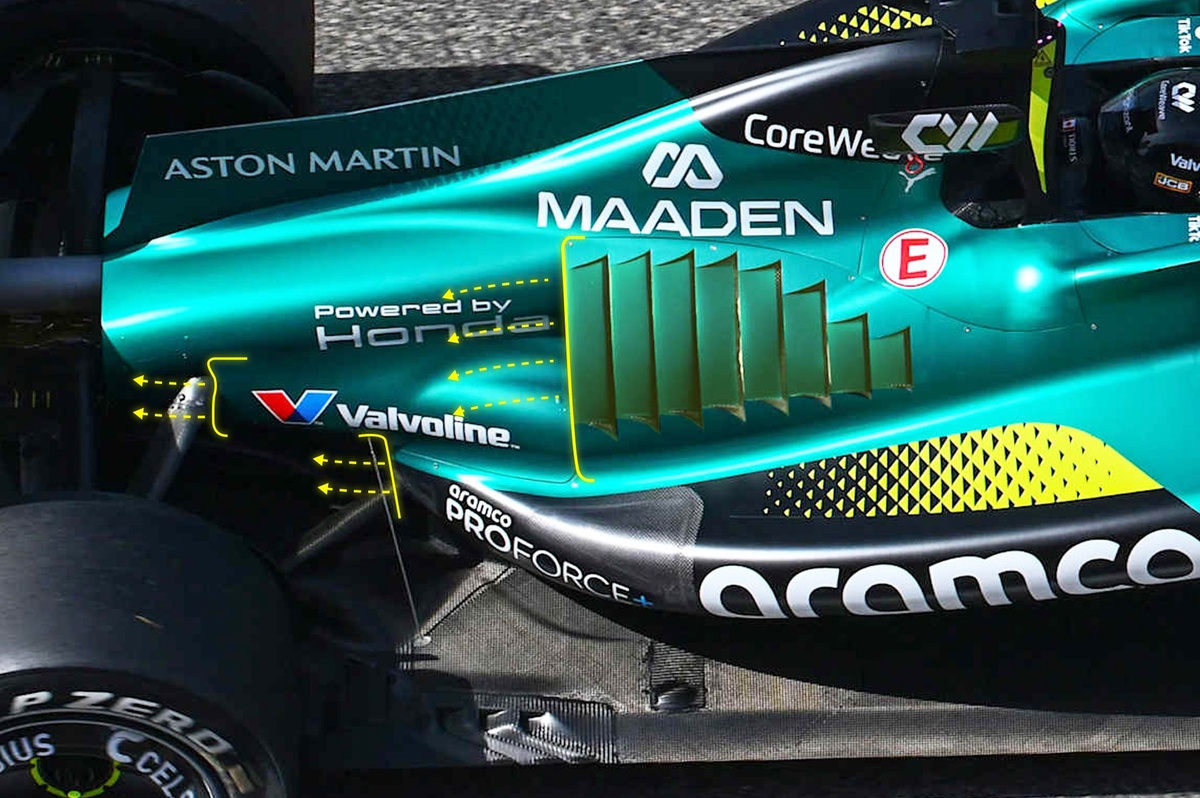
The power unit issues directly led to visible modifications on the AMR26, particularly concerning its cooling architecture. Additional vents and "gills" were hastily opened on the car’s bodywork. This immediate response highlights a critical engineering dilemma: the pursuit of extreme aerodynamic efficiency often clashes with the fundamental need for adequate cooling. The AMR26’s design features aggressively slim sidepods, a triangular-shaped airbox that offers more limited airflow compared to competitors, and a highly tapered engine cover. These elements are designed to maximize aerodynamic performance by reducing drag and optimizing airflow over the car’s surfaces. However, they also create a tightly packaged environment for the Honda power unit, making heat dissipation a significant challenge.
The inherent trade-off became evident as Aston Martin was forced to compromise its sleek design. A rather pronounced bulge, more evident than on rival cars, was already integrated to expel hot air. But the additional gills, introduced to aid heat dissipation, represent a direct sacrifice of aerodynamic efficiency. Every additional opening or rough edge on the car’s surface creates drag, slowing the car down and potentially impacting tire wear and overall balance. This decision underscores the severity of the cooling problem and Honda’s apparent struggles.
Honda’s return to the F1 grid as a full-fledged power unit supplier, following their successful partnership with Red Bull, comes with immense expectations. However, early indications suggest the 2026 unit might be behind schedule. This isn’t Honda’s first dance with early hybrid era struggles; their initial partnership with McLaren saw years of underperformance and reliability woes before they eventually found their stride with Red Bull. The 2026 regulations, which place a greater emphasis on electrical power and sustainable fuels, present a fresh technical challenge for all manufacturers. If Honda is indeed struggling with the new architecture, it places immense pressure on both the engine manufacturer and Aston Martin’s chassis team to find a harmonious integration.
The AMR26’s aerodynamic philosophy, while radical, also draws inspiration from successful designs. For instance, the rear exit of the engine cover, initially not as generous as other single-seaters, underwent revisions. Aston Martin reportedly revisited concepts seen on dominant cars like Red Bull’s RB20, incorporating an opening in the lower section, toward the rear end of the sidepods. This design element, seen on the championship-winning Red Bull, aims to efficiently evacuate hot air without excessively compromising aerodynamic flow, showcasing Aston Martin’s commitment to cutting-edge design, even as they grapple with its practical implications.
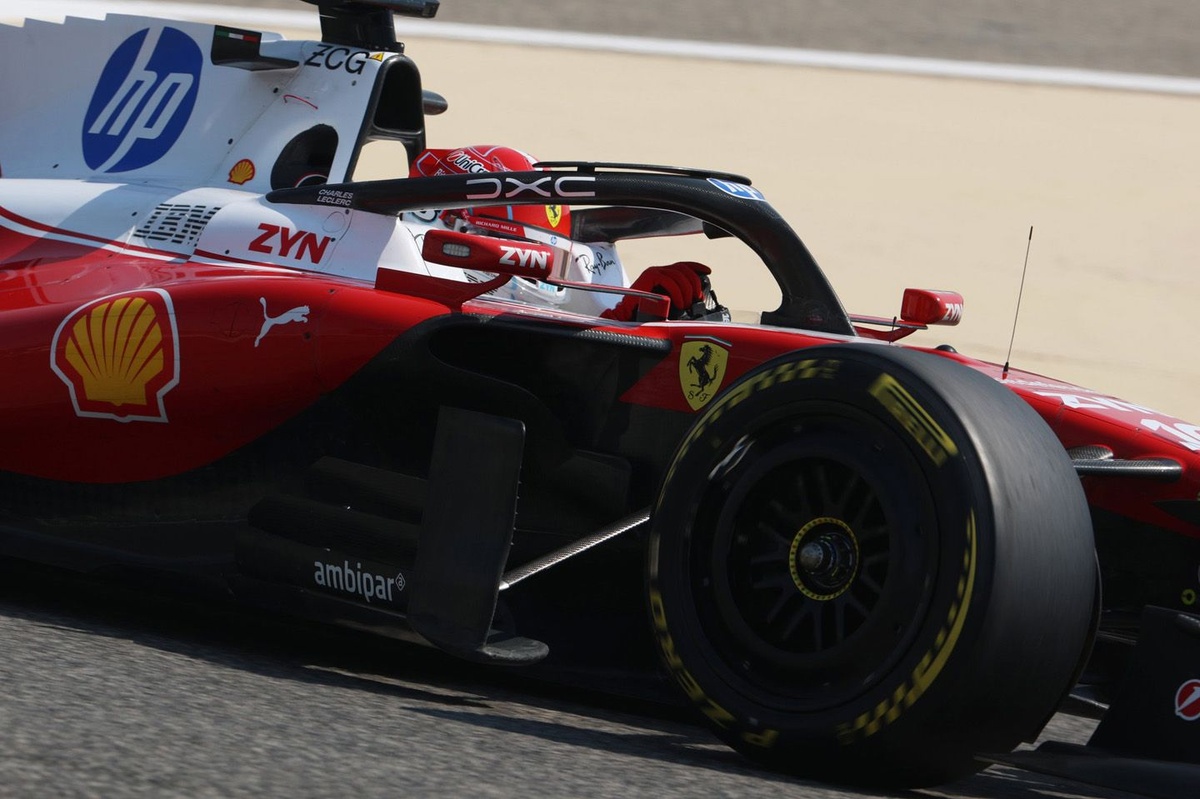
Day two of testing brought a glimmer of progress, albeit a cautious one, with Fernando Alonso taking over driving duties. The seasoned Spaniard, renowned for his ability to provide precise feedback and maximize any machinery, aimed to rack up crucial mileage and data that had been sorely lacking. Alonso completed 55 laps of the Sakhir circuit in the morning session, logging a best time of 1m38.960s. While this lap count was a significant improvement – comparable to McLaren’s efforts and just nine shy of their benchmark – the pace remained a concern. Alonso’s best time was approximately four seconds off Charles Leclerc’s leading pace in the Ferrari. While testing times are notoriously misleading due to varying fuel loads, engine modes, and test programs, a four-second deficit is substantial and suggests that Aston Martin is far from unlocking competitive performance, at least in its current state.
Aston Martin’s ambition under Lawrence Stroll’s leadership is no secret. The Canadian billionaire has invested heavily, building a state-of-the-art factory and recruiting top talent, with the ultimate goal of transforming the team into a championship contender. Their strong start to the 2023 season, where Alonso frequently challenged for podiums, fueled these aspirations. However, that performance trajectory ultimately plateaued, highlighting the immense challenge of sustaining competitiveness at the pinnacle of motorsport. These pre-season setbacks are a stark reminder of the fragile nature of F1 development and the brutal competition.
The coming days of testing are critical for Aston Martin. They must not only resolve the fundamental reliability issues with the Honda power unit but also understand the complex interplay between their aggressive aerodynamic design and the cooling requirements. Every minute of track time is invaluable for gathering data, refining setups, and building confidence in the AMR26. If the team cannot overcome these initial hurdles, they risk entering the 2026 season on the back foot, facing an uphill battle against rivals who appear to have had a smoother and more productive testing period. The dream of challenging for the title hinges on their ability to swiftly turn this pre-season nightmare into a manageable reality before the lights go out for the first race.