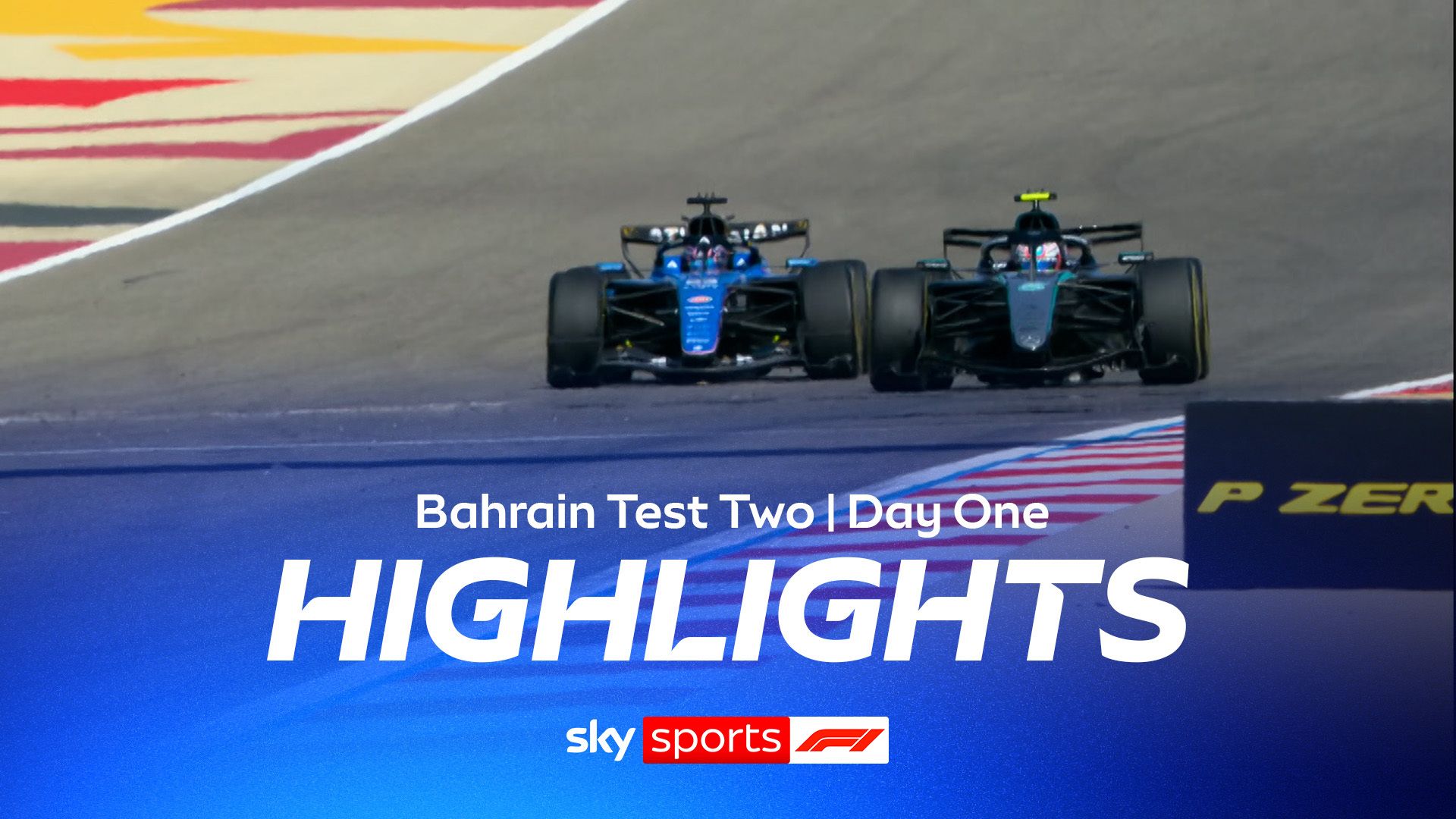
Wednesday, February 18, 2026, saw the highly anticipated morning session of the first day of the second Bahrain pre-season test begin, offering the first tangible glimpse into the competitive landscape of the forthcoming Formula 1 season. sportsamo.com reports from the Bahrain International Circuit that while official timesheets offered tantalizing hints, the true picture of the 2026 challengers remains shrouded in the intricate strategies of motorsport’s elite. This crucial three-day shakedown follows an earlier, shorter test, intensifying the pressure on teams to finalize their packages ahead of what promises to be one of the most transformative seasons in recent memory.
The 2026 Formula 1 season marks a pivotal juncture for the sport, driven by a radical overhaul of technical regulations. At its core are entirely new power unit specifications, mandating a 50/50 split between internal combustion and electrical power, coupled with the exclusive use of 100% sustainable fuels. This seismic shift is complemented by revised aerodynamic philosophies, aimed at reducing reliance on complex floor designs for downforce and promoting closer racing. Consequently, every lap turned at Sakhir this week carries immense weight, as engineers strive to correlate simulation data with real-world performance and drivers acclimatize to machinery that represents a significant departure from its predecessors.
The morning session, held under the clear skies and warm temperatures characteristic of the Bahrain desert, saw a flurry of activity as teams focused on foundational elements. Reliability was, as always, paramount. The sight of cars racking up consistent lap counts without major incident was a welcome sign for many, particularly given the complexity of the new hybrid power units. Red Bull Racing, the dominant force in recent seasons, appeared characteristically efficient, with Max Verstappen completing a high number of laps, focusing on long runs and data collection rather than outright pace. Their RB22, an evolution of their championship-winning philosophy, seemed to handle predictably, a testament to their engineering prowess in adapting to the new regulations.
Ferrari, always a team under intense scrutiny, showcased flashes of raw speed. Charles Leclerc, behind the wheel of the SF-26, posted several eye-catching lap times, prompting whispers of genuine competitiveness. However, the crucial question, as with all testing performances, remains consistency and fuel loads. Were these "glory runs" or an indication of a true step forward? The Scuderia’s engineers will be poring over telemetry, particularly concerning tire degradation on the abrasive Bahrain surface, a critical factor for race day performance. The Italian team has historically shown strong one-lap pace in testing, only to sometimes struggle with race trim, a pattern they are desperate to break in this new era.
Mercedes-AMG Petronas F1 Team, eager to return to championship contention after a challenging period, seemed to approach the morning with a methodical mindset. Lewis Hamilton and George Russell (the latter potentially sharing duties throughout the test) were observed conducting a mix of aero rake runs – intricate sensor arrays used to visualize airflow – and shorter bursts. Their focus appeared to be on understanding the W17’s aerodynamic platform and its interaction with the new power unit. The Silver Arrows are renowned for their ability to unlock performance over the testing period, and their calm, data-driven approach is a familiar sight. The significant changes to the power unit regulations in 2026 offer a unique opportunity for Mercedes to regain their engine advantage, which they held for much of the turbo-hybrid era.
Beyond the traditional front-runners, the midfield battles are shaping up to be equally intense. McLaren, with Lando Norris and Oscar Piastri, consistently logged respectable lap counts, appearing solid and dependable. Their MCL38 looked stable through Sakhir’s challenging corners, hinting at a strong baseline from which to develop. Aston Martin, too, demonstrated promising reliability with Fernando Alonso, whose vast experience is invaluable in navigating a new regulation cycle. The veteran Spaniard’s feedback on the AMR26 will be critical in shaping the team’s development trajectory. Alpine, Williams, RB (formerly AlphaTauri), Sauber (soon to be Audi), and Haas all diligently worked through their respective test programs, each seeking to optimize their packages and unearth any hidden performance. For the smaller teams, reliability and simply getting laps under their belt are often as important as outright pace in these early stages.
Historically, pre-season testing has offered a mixed bag of accurate predictions and misleading mirages. Legendary examples include Brawn GP’s dominant 2009 test, which flawlessly translated into a championship-winning season. Conversely, teams like Ferrari in the early 2010s often looked formidable in testing only to fade when the racing began. The art of sandbagging – intentionally masking true performance – is a time-honored tradition in F1 testing, making definitive conclusions almost impossible. Teams run varying fuel loads, engine modes, and tire compounds, often not revealing their full hand until the first qualifying session of the season opener. This strategic ambiguity adds another layer of intrigue to the already complex process.
The 2026 regulations, however, elevate the stakes. The significant redesign of both chassis and power units means that fundamental concept errors could be more punishing than in previous years. Engineers are not merely optimizing existing designs but venturing into largely uncharted territory. The balance between the new internal combustion engine (ICE) and the drastically increased electrical component, coupled with the impact of sustainable fuels on performance, requires a completely new approach to powertrain integration and cooling. Aerodynamicists, too, face a fresh challenge, as the new regulations aim to simplify the car’s underbody and reduce the "dirty air" effect, theoretically making overtaking easier. This test is the first real-world examination of these theoretical models.
Expert analysis suggests that while lap times offer immediate gratification, the more critical metrics from this morning session are lap consistency, data correlation, and driver feedback. Teams will be cross-referencing thousands of data points from the track with their simulation models, looking for discrepancies and areas for improvement. Any major deviation could signal a fundamental issue requiring significant re-engineering. Furthermore, the communication between driver and engineer is paramount; translating the subjective feel of the car into objective data is a skill that separates the top teams from the rest.
As the second Bahrain pre-season test continues, the narrative will undoubtedly evolve. The afternoon session and subsequent days will see teams push the boundaries further, perhaps introducing new aerodynamic elements, conducting qualifying simulations, and experimenting with various race strategies. For fans and analysts alike, the morning session provided a compelling appetizer to what promises to be an exhilarating, unpredictable, and potentially game-changing Formula 1 season. While no championships are won in February, the foundations for future success are undeniably laid on these crucial test days. The battle for the 2026 crown has, in essence, begun.