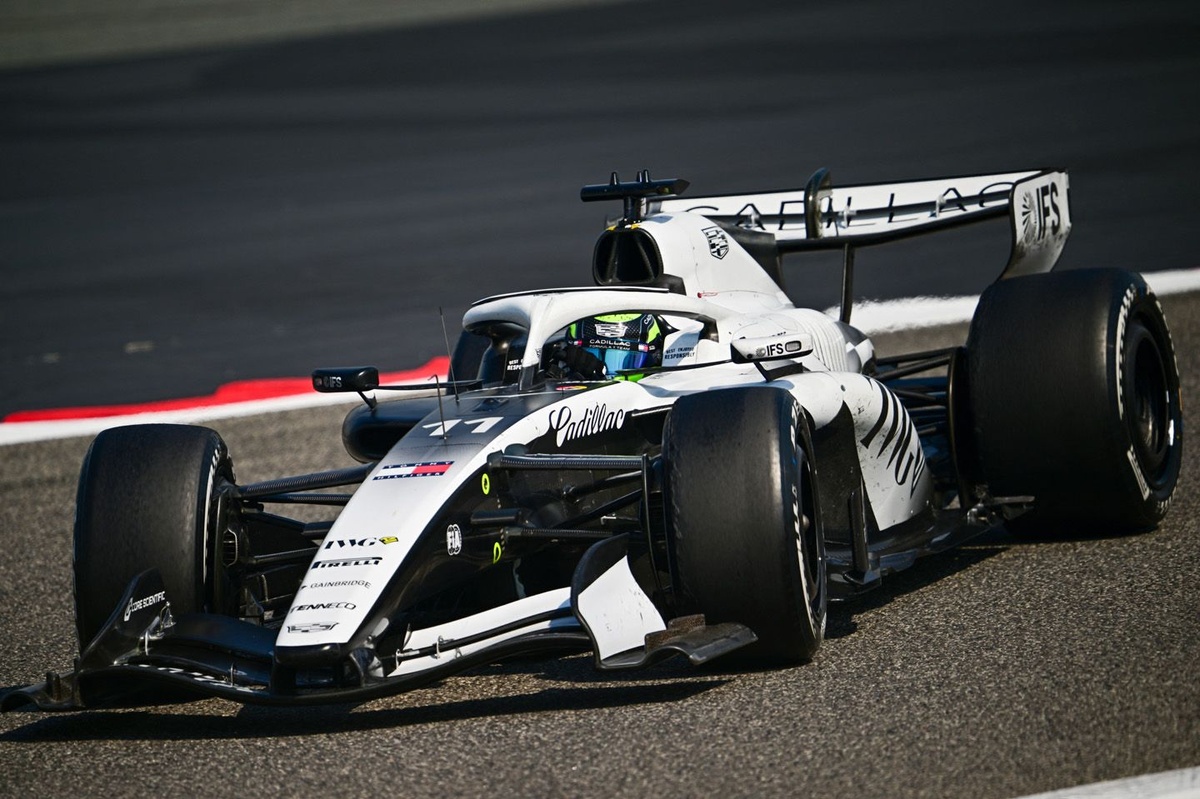
The ambitious Formula 1 campaign by Cadillac is reportedly facing significant internal hurdles even before its highly anticipated 2026 debut, with veteran F1 pundit Will Buxton highlighting issues stemming from a geographically dispersed operation and a potentially unsustainable work ethic, according to a report published by sportsamo.com. Buxton’s stark assessment paints a picture of a team already stretched to its limits, raising questions about the sustainability of its ambitious entry into the pinnacle of motorsport.
"The team is exhausted. Like, they’re done," Buxton revealed on the Up to Speed podcast, a sentiment echoed by his sources. This alarming pronouncement comes nearly two years ahead of Cadillac’s scheduled entry as F1’s 11th team in March 2026, following its official approval in early 2025. Backed by automotive giant General Motors and TWG Motorsport, the outfit certainly does not lack resources. Their technical strategy appears robust, with Ferrari slated to supply power units initially while Cadillac develops its own engine for later in the decade. Furthermore, an experienced driver pairing, reportedly featuring former Grand Prix winners Sergio Perez and Valtteri Bottas, would provide a solid foundation of on-track talent.
However, Buxton, in conversation with fellow pundits David Coulthard and Naomi Schiff, expressed profound reservations about the team’s intricate logistical setup and its potential impact on team culture. Cadillac’s operational footprint is notably fragmented, with bases spread across Fishers, Indiana, Concord, North Carolina, and the United Kingdom. This transatlantic arrangement, according to Buxton, is a fundamental weakness. "Having three bases is potentially not an optimised strategy for any team, let alone a brand new team," he asserted, pinpointing two distinct cultural challenges that could undermine Cadillac’s efforts.
The first, Buxton suggests, is rooted in the demanding American work culture. "One is the American work culture, which is that there is no time off. You work, you keep working, you grind yourself into the ground. Family, what family? You work." This relentless approach, while often associated with American entrepreneurial spirit, clashes directly with the second challenge: the unforgiving nature of the F1 environment itself. "But you’ve also got the F1 mentality, which is: don’t like it, go do something else because we’ll find somebody younger and cheaper who will do it – do the job that you don’t want to do or you aren’t willing to do."
The confluence of these two demanding cultures, Buxton warns, could lead to severe burnout, leaving the team depleted before a single competitive lap has been turned. His sources indicate that this is already becoming a reality: "The team is exhausted. Like, they’re done. And the season hasn’t even started."
Entering Formula 1 is arguably one of the most arduous undertakings in global sports, demanding unparalleled technological innovation, financial commitment, and human endurance. Over the decades, the sport has seen numerous ambitious projects falter, from the short-lived efforts of teams like HRT, Virgin Racing, and Caterham in the early 2010s, to more recent struggles. While Haas F1 Team has carved out a niche, their model of leveraging existing Ferrari technology and personnel is distinct. The rare success stories, like Brawn GP’s improbable championship run, are often born from unique circumstances rather than typical new entries.
Cadillac’s strategy of initial power unit supply from Ferrari is a well-trodden path for new entrants, allowing them to focus resources on chassis development before tackling the immense challenge of engine design. This mirrors Haas’s approach and provides a crucial lifeline for a nascent operation. The selection of Sergio Perez and Valtteri Bottas for their hypothetical driver lineup further underscores Cadillac’s intent to hit the ground running. Perez brings a wealth of experience from Red Bull Racing, including multiple Grand Prix victories and a crucial role in championship campaigns. His expertise in car development and race strategy would be invaluable. Bottas, a ten-time Grand Prix winner and long-time Mercedes driver, offers similar top-tier experience, having competed at the sharp end of the grid for years. Such a pairing would bring instant credibility and accelerate the team’s learning curve, providing critical feedback for engineers and helping to establish a competitive benchmark.
Despite these strategic advantages, the logistical and cultural concerns highlighted by Buxton cannot be overstated. Managing a high-performance organization across multiple continents and time zones presents inherent challenges. Communication delays, differing regulatory environments, and the sheer complexity of coordinating development, manufacturing, and logistics across such distances can erode efficiency and foster internal friction. Formula 1 operates at an unrelenting pace, with continuous development cycles, stringent deadlines, and a global calendar demanding peak performance from every team member. A geographically dispersed team adds layers of complexity to an already high-pressure environment.
Cadillac, however, is not unaware of the monumental task ahead. Team Principal Graeme Lowdon acknowledged the brutal reality of entering the championship. "You have to assume that any new team coming in is going to be last," Lowdon stated last year, emphasizing a pragmatic approach. "Otherwise, what’s gone wrong somewhere else? … We’re trying to be as competitive as we possibly can but we’re realistic. We know how difficult it is." This self-awareness is crucial for managing expectations and preparing for the inevitable struggles.
To mitigate the time zone and communication hurdles, Cadillac has reportedly adopted a highly streamlined management structure. "We need an engineer here (in Britain) talking to an engineer in Charlotte and another one in Warren, Michigan, or eventually in Fishers (Indiana). So we’ve looked to have a very, very flat management structure." This approach, Lowdon explained, is "highly modelled on the Apollo project… OK, we’re not putting a man on the moon, but it feels like it sometimes." This ambitious comparison was visually reinforced when the team revealed its car’s livery, accompanied by audio of President John F. Kennedy’s legendary 1962 "Moon Shot" speech. The symbolic connection to a monumental American endeavor highlights the scale of Cadillac’s ambition and the belief within the organization that they can overcome seemingly insurmountable odds.
The 2026 regulations, featuring new power unit specifications and chassis rules, present both an opportunity and a challenge for Cadillac. A new regulatory cycle often allows new entrants to start on a more level playing field, as established teams must also adapt. However, it also means a compressed development timeline and the necessity of mastering entirely new technical parameters, a daunting task for any newcomer.
As the countdown to the 2026 Formula 1 season continues, Cadillac faces a gauntlet of technical, logistical, and human challenges. Will Buxton’s early warning of an "exhausted" team serves as a stark reminder of the immense pressures inherent in F1. The Apollo project succeeded through extraordinary dedication and innovation, but it also pushed human limits. Cadillac’s journey to the F1 grid, much like a moon landing, requires flawless execution and resilience. When the Australian Grand Prix weekend eventually ushers in their debut season in 2026, the world will finally see whether Cadillac’s ambitious multi-continental strategy and "no time off" work ethic will propel them to success, or leave them stranded.