General Motors’ luxury brand, Cadillac, made a monumental splash into the world of Formula 1, reportedly investing up to $20 million on its livery reveal during the NFL’s Super Bowl, according to insights shared by team CEO Dan Towriss in a report published by sportsamo.com. This bold move underscores the immense financial commitment and strategic vision behind Cadillac’s impending entry into motorsport’s premier category.
The highly anticipated reveal showcased Cadillac’s inaugural F1 car, which had previously undergone a testing shakedown in Barcelona in late January with a provisional livery. The strategic timing of the Super Bowl reveal was meticulously planned to capture the largest possible audience, particularly within Cadillac’s crucial home market, the United States. The goal was twofold: to unveil the brand-new design and to dramatically heighten awareness for its ambitious Formula 1 bid.
Cadillac secured a coveted one-minute advertising slot during the Super Bowl, a broadcast event renowned for its unparalleled viewership and astronomically high advertising rates. This commercial featured an evocative video that juxtaposed Cadillac’s rigorous preparations for F1 with snippets from United States President John F. Kennedy’s iconic 1962 "We choose to go to the Moon" speech. The powerful message, "The mission begins," served as a rallying cry, linking Cadillac’s F1 endeavor to a legacy of American ambition and pioneering spirit. When questioned about the cost, specifically whether it was in the region of $10 million per 30 seconds, Towriss affirmed, "Yeah, it’s comparable. That’s a good estimate." This places Cadillac’s one-minute slot firmly in the upper echelons of Super Bowl ad spending, reflecting the premium placed on reaching the estimated 123.7 million viewers who tuned into Super Bowl LVIII. Such an investment highlights not just Cadillac’s financial might, but its profound belief in F1 as a global marketing platform.
Beyond this singular, high-profile advertisement, General Motors is demonstrating a comprehensive and sustained investment in its F1 team, meticulously building an infrastructure designed for competitiveness from the outset. This commitment extends to establishing multiple operational bases, including facilities within the United States and a critical hub in Silverstone, UK – the traditional heartland of Formula 1 engineering. This dual-continent approach aims to leverage American innovation and manufacturing prowess while tapping into the specialized F1 talent pool and supply chains prevalent in the UK.
Even within F1’s stringent cost-cap era, Towriss candidly anticipates the team will operate at a loss through the 2026 and 2027 seasons. "It’s probably a couple of years before on an operating basis the team would be in the black or breaking even on a cash basis," the American executive stated. This financial foresight is not uncommon for new entrants in a sport as capital-intensive as F1, where significant upfront investment in research, development, and infrastructure is essential to build a competitive foundation. Despite the projected initial losses, Towriss remains optimistic, adding, "I think we’re ahead of what our projections were, knowing what it was going to take to get into Formula 1." This suggests that GM and Cadillac are well-prepared for the financial demands and are making better-than-expected progress in their foundational stages.
In this context of substantial investment, the role of sponsors comes under intense scrutiny. While Cadillac’s yet-to-be-named F1 car has not yet revealed a major headline partner, the prominent display of the TWG AI logo on the sidepods has drawn attention. Towriss clarified that this is far from a mere placeholder or internal branding exercise. "When you consider the ownership between TWG and General Motors, it’s an arm’s-length contract, so this isn’t a placeholder, this isn’t a filler," he insisted. "It’s a paying agreement. This isn’t a value-in-kind agreement, so it’s cashed into the team from that standpoint." This distinction is crucial for a new team, as direct cash injections from sponsors provide essential operating capital, unlike value-in-kind deals which, while beneficial, don’t directly fuel day-to-day expenditures. The F1 platform, with its surging global popularity and increasingly diverse fanbase, offers an attractive proposition for technology partners like TWG AI, eager to associate with cutting-edge performance and innovation.
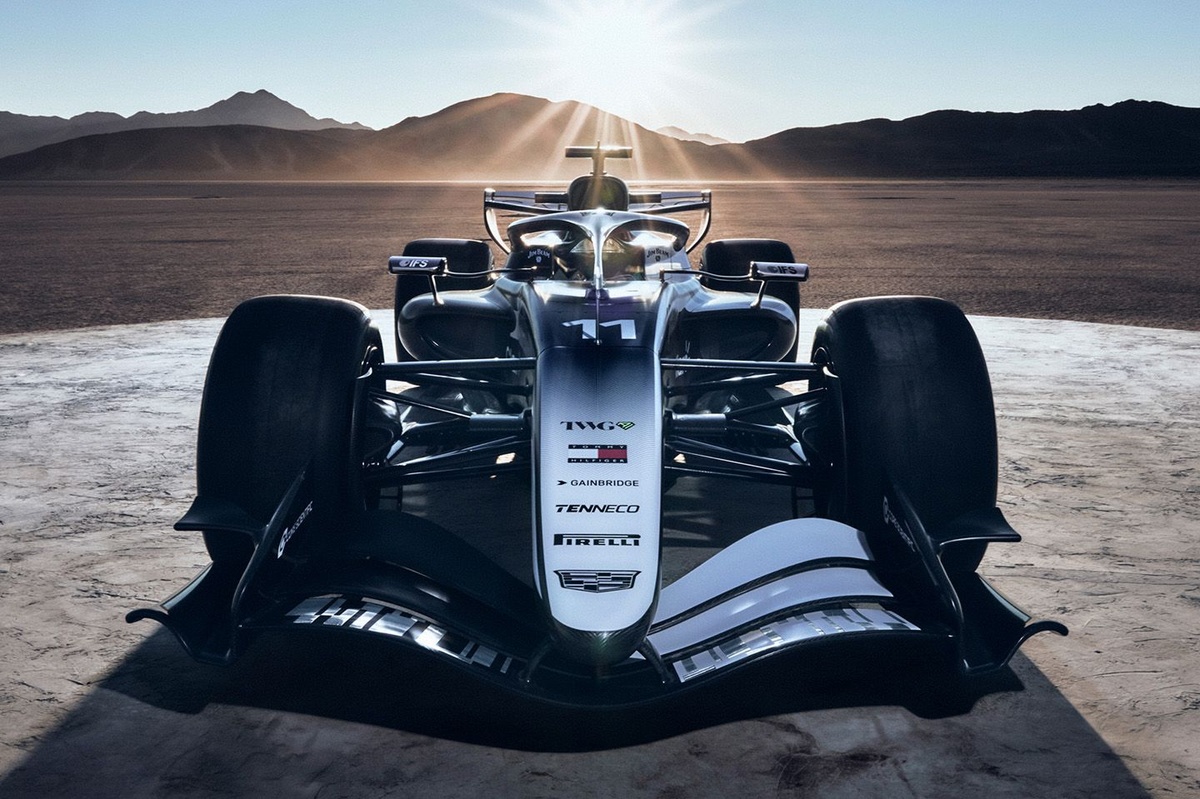
The livery itself – a striking black-and-white scheme with chrome accents – generated considerable discussion among fans. Some expressed disappointment at the monochromatic choice, especially given Cadillac’s vibrant blue, red, and yellow liveries seen in events like the 2024 Le Mans 24 Hours. However, Towriss offered a detailed rationale for the aesthetic decision. "When we’re developing a scheme, we see real meaning in the colours," he explained. "For us, black represents this bold attitude of the car. When you see the black side, it looks a little mean, it has some attitude. And then white, which is the actual racing colour of America. We wanted to have white on the car – it’s fresh, it’s clean, it’s optimistic. So it’s really the balance of those two."
This explanation delves into both modern brand identity and historical reverence. The black embodies Cadillac’s contemporary performance ethos, often characterized by aggressive styling and powerful engineering. The choice of white pays homage to America’s historical national racing colors. Prior to the adoption of commercial sponsorships dictating livery designs, many nations were assigned specific colors in international motorsport; for the United States, that color was white (often combined with blue stripes), famously seen on cars like the Cunningham C-4R and early Shelby Cobras. By incorporating white, Cadillac subtly connects its F1 venture to a rich legacy of American automotive racing.
Furthermore, Towriss highlighted Cadillac’s internal design philosophy: "The livery is the identity of the team, and so this represents us. Some people look to the Cadillac badge, you see the red, yellow and blue. But when you get into the high performance, Cadillac goes monochromatic in their badging." This detail reveals a deliberate consistency with Cadillac’s high-performance V-Series models, which often feature a more understated, monochromatic badge to signify their elite status. Translating this aesthetic to Formula 1, the pinnacle of motorsport, reinforces the brand’s commitment to performance and refined power. The addition of chrome, a classic luxury automotive accent, further elevates the design, creating a sophisticated yet aggressive identity. "And so that’s how we ended up with the black, white, and chrome as the colours of this team," Towriss concluded, emphasizing the deliberate choice to forge a unique visual identity that aligns with Cadillac’s performance lineage and F1 ambitions.
Following its public reveal, Cadillac’s newly designed F1 car made its track debut during a filming day at the Bahrain International Circuit. This crucial shakedown allowed the team to cover up to 200 kilometers on demonstration tires supplied by Pirelli, primarily for promotional video and photo shoots, but also providing invaluable initial data collection and system checks. The car had previously completed three days of extensive running during its initial Barcelona shakedown, validating fundamental systems and aerodynamic principles. While the identity of the test drivers for these initial runs remains largely undisclosed, such sessions are vital for validating the vehicle’s basic functionality and collecting preliminary data before official competitive testing commences.
The motorsports world now eagerly anticipates the first official Bahrain pre-season test, scheduled from February 11-13. This event will see all Formula 1 teams, including Cadillac’s test machinery, participate in critical sessions, offering the first true glimpse into the competitive landscape for the upcoming season. For Cadillac, these tests represent a crucial step in their "mission" to establish themselves as a formidable force in Formula 1, signaling their serious intent with every strategic move, from a multi-million dollar Super Bowl ad to the meticulous design of their racing livery.