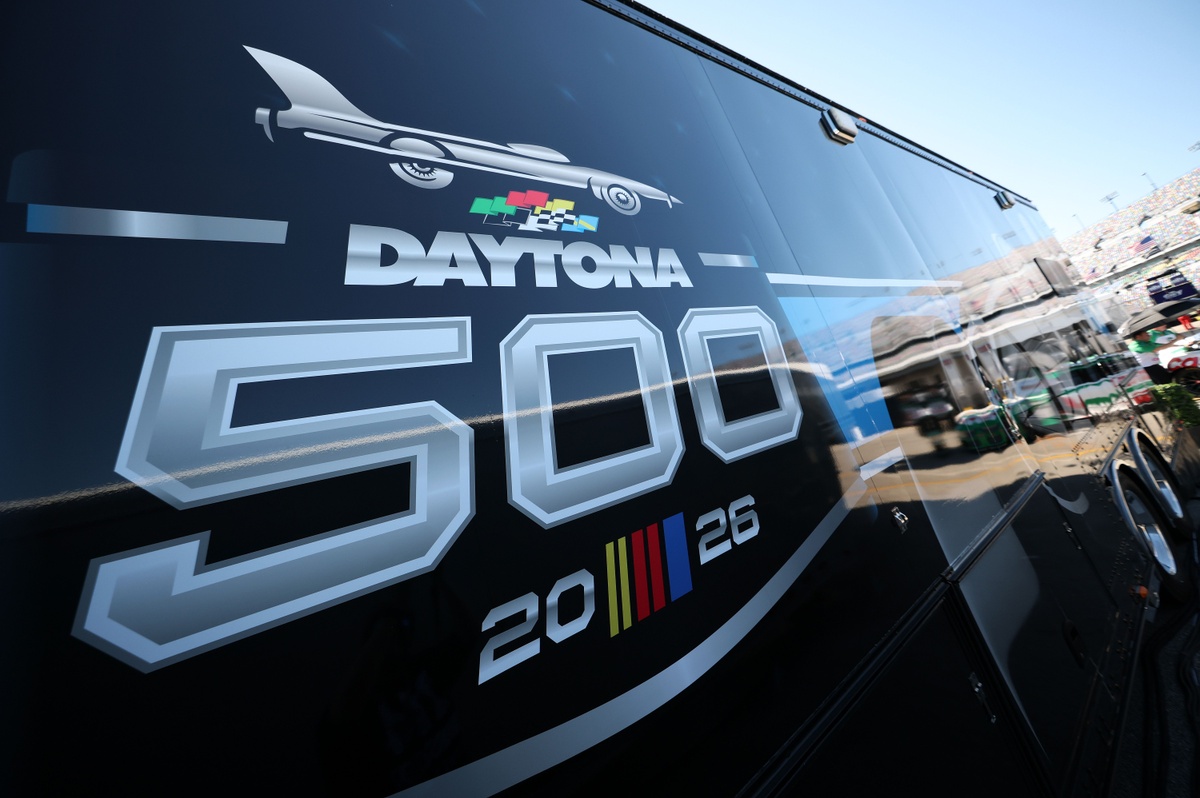
As the NASCAR Cup Series prepares for its crown jewel event, the Daytona 500, race organizers have made a proactive schedule adjustment, moving the start time forward by an hour to mitigate the threat of Sunday thunderstorms, according to a report from sportsamo.com. The "Great American Race," the 68th running of the iconic event, is now slated to wave the green flag at 2:13 PM EST, with pre-race festivities commencing earlier than initially planned, all broadcast live on FOX. This strategic shift underscores the perennial challenge weather poses to high-stakes motorsport, particularly at a venue as significant as Daytona International Speedway.
The lead-up to Speedweek at Daytona has largely been blessed with optimal conditions, a welcome contrast to the "historic snow" that impacted early season NASCAR events, particularly a postponed Clash event earlier in the calendar. However, the forecast for Sunday, the day of the highly anticipated Daytona 500, paints a different picture, with a significant threat of thunderstorms looming over Central Florida. Most meteorological models project the arrival of these storms sometime after 5 PM EST. Given that the typical runtime for the grueling 500-mile contest is approximately 3.5 hours, the decision to move the start time to 1:30 PM EST for the main event and 11:30 AM EST for the NASCAR RaceDay pre-race show is a calculated gamble to get the full distance in before the inclement weather arrives.
The specter of rain is a familiar, often unwelcome, guest at Daytona. The 500 has been significantly shortened on four previous occasions: in 1965, 1966, 2003, and 2009. Each instance saw the race declared official once it passed the halfway mark, forever altering the outcome and often frustrating drivers and fans alike. In 1965, Fred Lorenzen claimed victory in a race shortened by 33 laps due to rain, while in 1966, Richard Petty secured his second Daytona 500 win in a race called 10 laps early. More recently, Michael Waltrip famously took the checkered flag in 2003 after just 109 laps due to persistent rain, a controversial but official victory. The 2009 edition saw Matt Kenseth emerge victorious in a rain-shortened event that lasted 152 laps. Beyond shortened races, the Daytona 500 has also been pushed to Monday on several occasions, including as recently as 2024, a scenario NASCAR hopes to avoid this year. Such delays not only impact broadcast schedules and fan travel but also add an extra layer of tension to what is already one of the most stressful races on the calendar. The commitment to completing the full 200 laps, 500 miles, is paramount for the event’s integrity and championship points implications.
Leading the charge to the green flag will be two-time NASCAR Cup Series champion Kyle Busch, driving for Richard Childress Racing (RCR), who secured a coveted pole position. Busch, affectionately known as "Rowdy," is one of the most accomplished drivers in NASCAR history, boasting over 60 Cup Series victories and two championships. However, the Daytona 500 remains one of the elusive crown jewels missing from his illustrious resume. Securing the pole for the "Great American Race" is a significant achievement, marking his first career Daytona 500 pole, and signals a strong start for the RCR team, which has its own rich history at Daytona. Joining Busch on the prestigious front row is Chase Briscoe from Joe Gibbs Racing (JGR). Briscoe, a rising talent in the Cup Series, has shown flashes of brilliance, particularly on superspeedways, and his presence on the front row speaks to the strength of the JGR organization, a perennial powerhouse in NASCAR. While starting position at Daytona is not as critical as on short tracks or intermediates due to the nature of pack racing and drafting, clean air at the outset can be invaluable, especially in a race where early incidents are common.
Beyond the front row, the 40-car field is packed with contenders. Past Daytona 500 champions like Denny Hamlin, Joey Logano, and Austin Cindric will be looking to add another Harley J. Earl trophy to their collections. Veterans such as Kevin Harvick and Martin Truex Jr. will bring their experience to bear, while young guns like William Byron and Christopher Bell aim to make their mark on NASCAR’s biggest stage. The unique dynamics of superspeedway racing mean that any driver, regardless of their season-long performance, can find themselves in contention for the win in the closing laps. The constant threat of "The Big One" – a multi-car accident that can collect a significant portion of the field – adds an unpredictable element, often reshuffling the deck and creating opportunities for underdog stories. The Next Gen car, now in its third season, has continued to evolve its superspeedway package, promising close-quarters racing and thrilling finishes, provided the weather holds out.
Adding to the grandeur and spectacle of the Daytona 500 are the star-studded pre-race festivities. Comedian and actor Nate Bargatze has been tapped as the Grand Marshal, tasked with delivering the iconic command, "Drivers, start your engines!" Bargatze, known for his deadpan delivery and family-friendly humor, brings a unique flavor to the event, appealing to a broad audience beyond traditional NASCAR fans. Award-winning actor Kurt Russell, a Hollywood legend with a known affinity for automobiles and racing, will have the honor of driving the pace car, leading the field around the high banks of Daytona before the green flag waves. In a delightful pop culture crossover, Bart Simpson, the mischievous animated character from the long-running FOX television series The Simpsons, will serve as the Honorary Starter, waving the green flag to officially begin the race – a nod to FOX’s broadcast partnership and the show’s enduring legacy. Capping off the pre-race entertainment, country music superstar Miranda Lambert will headline the pre-race concert, electrifying the massive crowd with her chart-topping hits. These celebrity appearances are integral to the Daytona 500’s status as a major American sporting event, drawing national attention and adding to the festive atmosphere that permeates Daytona International Speedway on race day.
The Daytona 500, inaugurated in 1959, holds an unparalleled position in motorsport. It is not just the season opener for the NASCAR Cup Series; it is a standalone event of immense prestige, often considered the most important race in North American stock car racing. Winning the Daytona 500 can define a driver’s career, providing a boost of momentum that can carry a team through the entire season. Legendary figures like Richard Petty, who holds a record seven Daytona 500 victories, have cemented their places in history through their performances on this hallowed track. The high-banked, 2.5-mile tri-oval is renowned for its heart-stopping finishes, often decided by mere inches at the line. The blend of raw power, strategic drafting, and the ever-present danger of superspeedway racing makes the Daytona 500 an electrifying experience, captivating millions of viewers annually.
As the countdown to the green flag continues, the focus remains firmly on the skies above Daytona. NASCAR’s decisive move to adjust the schedule reflects their commitment to delivering a full, fair, and safe race. The unpredictability of weather, combined with the inherent drama of superspeedway racing, ensures that the 68th running of the Daytona 500 is poised to be an unforgettable chapter in the storied history of "The Great American Race." All eyes will be on Kyle Busch, Chase Briscoe, and the entire field as they prepare to battle for glory, hoping to outrun not just their competitors, but also the looming threat of Mother Nature.