As the motorsport world eagerly anticipates the radical shifts promised by the 2026 Formula 1 season, the first pre-season test in Bahrain has offered a tantalizing glimpse into the competitive landscape. This comprehensive report, published by sportsamo.com, delves into the initial performance metrics, driver line-ups, and reliability trends emerging from the Sakhir International Circuit, providing a crucial early assessment of the new era. With groundbreaking regulations set to redefine car design and power unit dynamics, these early test sessions are more critical than ever, allowing teams to validate concepts, gather invaluable data, and set the foundation for their championship aspirations.
The 2026 season marks a significant pivot for Formula 1, with a renewed emphasis on sustainable fuels, simplified aerodynamics to promote closer racing, and revised power unit regulations. These changes necessitate extensive testing, making every lap and every data point a goldmine for engineers and strategists. The initial Bahrain test, held from February 11-13, served as the crucible where theoretical designs met real-world performance, revealing the first hints of who might have mastered the new rulebook.
The Fastest Laps: McLaren Leads, Red Bull Looms, and Surprising Entries
The opening day of testing immediately ignited discussions among pundits and fans alike, as McLaren’s Lando Norris stormed to the top of the time sheets. His impressive 1:34.669 lap time not only put McLaren firmly in the spotlight but also signaled a potentially strong start for the Woking-based outfit, which enjoyed a significant resurgence in the latter half of the previous season. Norris’s performance, just 0.129 seconds ahead of the reigning champion, suggests that McLaren has hit the ground running with their new challenger.
The Fastest Laps of Bahrain Test 1 per driver:
| Driver | Team | Test Day | Time |
|---|---|---|---|
| 1) Lando Norris | McLaren | Day 1 | 1:34.669 |
| 2) Max Verstappen | Red Bull | Day 1 | +0.129 |
| 3) Charles Leclerc | Ferrari | Day 1 | +0.521 |
| 4) Esteban Ocon | Haas | Day 1 | +0.909 |
| 5) Oscar Piastri | McLaren | Day 1 | +0.933 |
| 6) George Russell | Mercedes | Day 1 | +1.439 |
| 7) Lewis Hamilton | Ferrari | Day 1 | +1.764 |
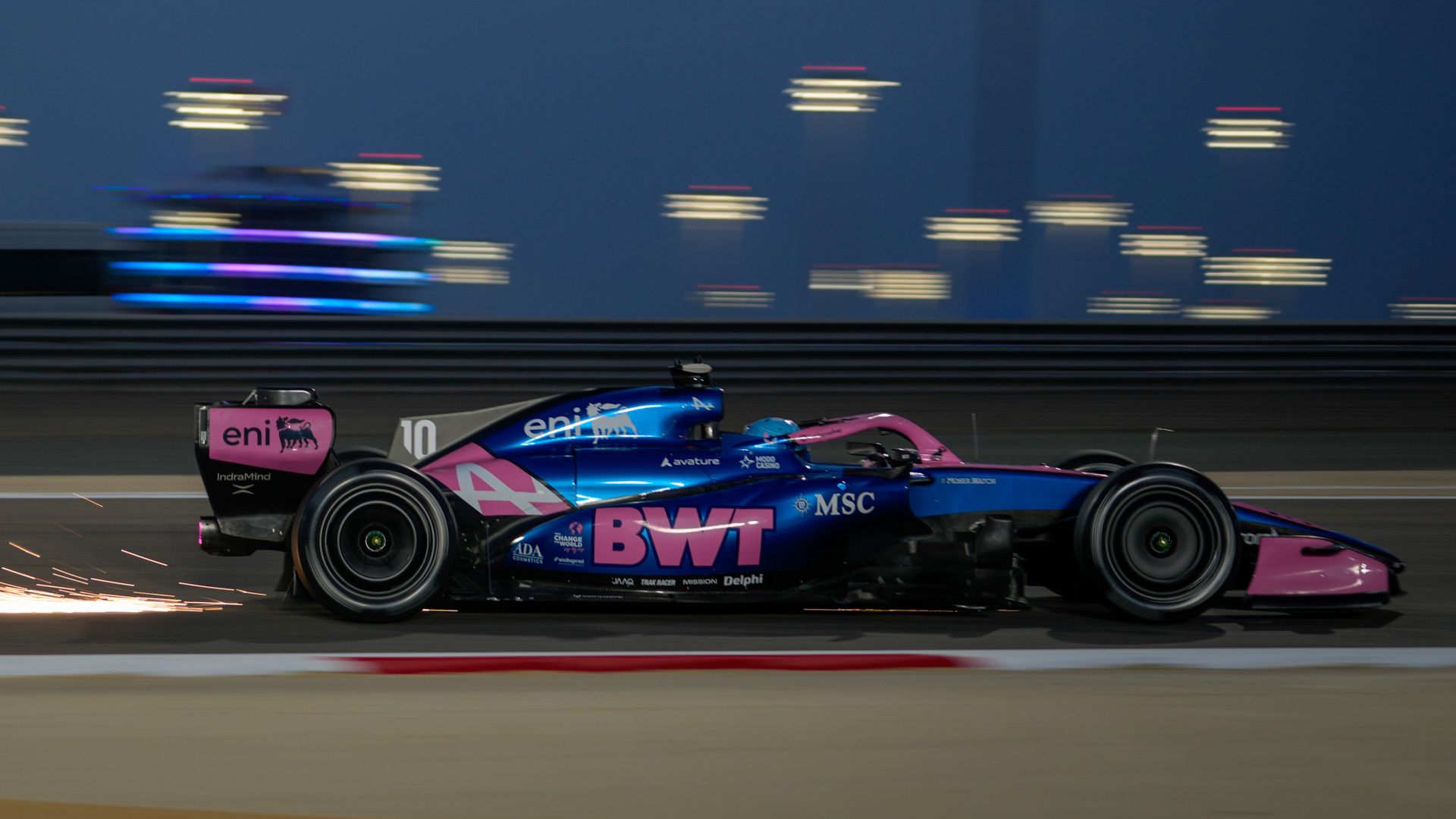
| 8) Pierre Gasly | Alpine | Day 1 | +2.096 |
| 9) Nico Hulkenberg | Audi | Day 1 | +2.192 |
| 10) Alex Albon | Williams | Day 1 | +2.768 |
| 11) Kimi Antonelli | Mercedes | Day 1 | +2.960 |
| 12) Arvid Lindblad | Racing Bulls | Day 1 | +3.276 |
| 13) Carlos Sainz | Williams | Day 1 | +3.552 |
| 14) Sergio Perez | Cadillac | Day 1 | +4.159 |
| 15) Gabriel Bortoleto | Audi | Day 1 | +4.202 |
| 16) Valtteri Bottas | Cadillac | Day 1 | +4.481 |
| 17) Lance Stroll | Aston Martin | Day 1 | +5.215 |
| 18) Franco Colapinto | Alpine | Day 1 | +5.661 |
Close behind Norris, Max Verstappen in the Red Bull posted the second-fastest time. While not topping the charts, Red Bull’s consistent performance and Verstappen’s inherent speed ensure they remain formidable contenders. It’s rare for Red Bull to show their full hand in testing, often preferring to focus on long runs and data collection, so a second-place finish in a single-lap shootout is certainly not cause for concern within the Milton Keynes camp.
Ferrari’s Charles Leclerc demonstrated the Scuderia’s ambition, securing the third-fastest time, just over half a second off Norris. The Italian team has been vocal about its determination to challenge for the championship, and Leclerc’s early pace offers a promising sign. Interestingly, the data provided indicates Lewis Hamilton also took to the track in a Ferrari, securing the seventh fastest time. While this configuration is highly speculative for the actual 2026 season, within the context of this test report, it suggests a potential future synergy that would undoubtedly send shockwaves through the paddock.
Perhaps one of the most intriguing entries in the top ten was Esteban Ocon, listed here as driving for Haas, who placed an impressive fourth. This data point, while unusual given Ocon’s current affiliation with Alpine, suggests either a significant test program or a speculative scenario where his talent is utilized by different teams for evaluation. Haas has historically struggled for outright pace, so such a strong showing would be a monumental step forward for the American outfit. His teammate, Oscar Piastri, reinforced McLaren’s strong showing by taking fifth, underscoring the team’s promising start to this new regulatory era.
Mercedes, represented by George Russell and the young talent Kimi Antonelli, positioned themselves in the mid-field of the top times, with Russell in sixth and Antonelli in eleventh. Mercedes’ performance in pre-season testing often belies their true potential, as they meticulously work through their test programs. Antonelli’s inclusion highlights Mercedes’ commitment to nurturing young talent, giving him valuable track time against established stars.
Further down the order, the entry of new teams and manufacturers presented fascinating prospects. Nico Hulkenberg, driving for the new Audi team, secured ninth place, hinting at Audi’s competitive aspirations upon their F1 debut. Similarly, Sergio Perez and Valtteri Bottas were listed under the "Cadillac" banner, an entirely new name in the F1 constructor’s list, occupying 14th and 16th positions respectively. These entries, along with Racing Bulls (formerly AlphaTauri) fielding Arvid Lindblad, underscore the dynamic evolution of the grid and the potential for new powerhouses to emerge in 2026.
It is crucial to remember that testing lap times are notoriously misleading. Factors such as fuel loads, engine modes, tire compounds, and specific test programs can drastically alter a car’s speed. While Norris’s pace is encouraging for McLaren, the true pecking order will only be revealed come the first race weekend.
Reliability Reigns: Williams Leads the Lap Count, Aston Martin Struggles
Beyond outright pace, the sheer number of laps completed by a team offers invaluable insight into their car’s reliability and their ability to gather comprehensive data. In the era of new regulations, robust mileage is paramount for understanding car behavior and identifying potential weaknesses.
The most laps completed per team:
| Team | Number of laps |
|---|---|
| Williams | 145 |
| Red Bull | 136 |
| Ferrari | 132 |
| Audi | 122 |
| Haas | 115 |
| McLaren | 112 |
| Cadillac | 107 |
| Mercedes | 86 |
| Alpine | 77 |
| Racing Bulls | 75 |
| Aston Martin | 36 |
Surprisingly, Williams emerged as the most prolific team on track, logging an impressive 145 laps. This dedication to mileage suggests a strong focus on reliability and data acquisition, which could be a significant advantage as they seek to climb the constructor standings. For a team that has faced its share of struggles, a reliable start to testing is a positive omen.
Red Bull and Ferrari also demonstrated strong reliability, completing 136 and 132 laps respectively. These numbers are consistent with top-tier teams that prioritize extensive testing to fine-tune their machines and explore various setup configurations. The new Audi team also impressed with 122 laps, indicating a solid debut and robust initial design. Haas and McLaren, with 115 and 112 laps, also completed respectable mileage, allowing them to gather crucial feedback on their new packages.
On the other end of the spectrum, Aston Martin completed the fewest laps, with only 36. Such a low tally could indicate early reliability issues, a highly conservative test program, or perhaps a delayed start to their testing efforts. For a team with ambitions to challenge at the front, this limited running time is a concern and will need to be rectified in subsequent test sessions. Mercedes, Alpine, and Racing Bulls also had relatively lower lap counts compared to the front-runners, suggesting they might still be working through initial shakedown issues or prioritizing specific, shorter runs over sheer mileage.
High lap counts are crucial for validating new components, understanding tire degradation, and allowing drivers to familiarize themselves with the car’s characteristics under various conditions. A team that racks up significant mileage without major incidents is often better prepared for the rigors of a long season.
Driver Line-ups: A Mix of Experience and Emerging Talent
The distribution of testing duties across the various sessions provides insight into team strategies, driver evaluation, and the integration of new talent.
F1 Bahrain Testing 1 line-up:
| Team | Thu AM | Thu PM | Fri AM | Fri PM |
|---|---|---|---|---|
| McLaren | Norris | Norris | Piastri | Piastri |
| Mercedes | Antonelli | Russell | Russell | Antonelli |
| Red Bull | Hadjar | Hadjar | Verstappen | Hadjar |
| Ferrari | TBC | TBC | TBC | TBC |
| Williams | Albon | Sainz | Sainz | Albon |
| Racing Bulls | Lawson | Lindblad | Lawson | Lawson |
| Aston Martin | Alonso | Alonso | Stroll | Alonso |
| Haas | Bearman | Bearman | Bearman | Ocon |
| Audi | Hulkenberg | Bortoleto | Bortoleto | Hulkenberg |
| Alpine | Gasly | Gasly | Colapinto | Colapinto |
| Cadillac | Perez | Bottas | Bottas | Perez |
Several teams opted for a split approach, allowing both their primary drivers and often a young talent or reserve driver to gain crucial seat time. McLaren kept it simple with Norris and Piastri, ensuring both race drivers had ample opportunity to fine-tune the car. Mercedes, however, showcased their future vision by allocating significant time to Kimi Antonelli, a highly touted junior, alongside George Russell. This strategy allows Antonelli to gain invaluable F1 experience while providing Mercedes with early feedback from a fresh perspective.
Red Bull’s line-up was particularly interesting, with Isack Hadjar getting extensive running time, even alongside Max Verstappen. This suggests Red Bull is keen to evaluate their junior drivers thoroughly, a hallmark of their driver development program. The "TBC" entries for Ferrari across all sessions are noteworthy, possibly indicating a flexible approach to driver allocation or a strategic decision to keep their plans under wraps.
Williams utilized both Alex Albon and, intriguingly, Carlos Sainz for their testing duties. The appearance of Sainz in a Williams car, as per this test data, adds another layer of intrigue, given his current standing in F1. Haas provided significant opportunities for Oliver Bearman, another promising junior, before Ocon (listed with Haas) took over for the final session.
The new teams, Audi and Cadillac, also spread their duties. Audi saw Nico Hulkenberg and Gabriel Bortoleto share the workload, while Cadillac entrusted Sergio Perez and Valtteri Bottas with their maiden F1 test laps. These diverse line-ups underscore the multifaceted objectives of pre-season testing: validating car performance, assessing driver readiness, and preparing for the strategic challenges of the upcoming season.
The Road Ahead: Multiple Tests and the Grand Opening
The 2026 Formula 1 season’s comprehensive rule changes have necessitated a robust pre-season testing schedule to ensure teams are adequately prepared. Following a preliminary shakedown in Barcelona in January, the teams converged in Bahrain for the first of two crucial test events from February 11-13. The second and final Bahrain test is scheduled for February 18-20, offering teams one last opportunity to iron out kinks and optimize their packages before the competitive action begins.
These multiple test sessions are vital for validating the radical design changes introduced by the new regulations, especially concerning the power units and aerodynamics. Engineers will be scrutinizing every data point, from engine performance and fuel efficiency to tire wear and aerodynamic stability, to extract maximum performance from their new machinery.
Once the testing concludes, teams will have a brief two-week window to prepare for the opening round of the season: the much-anticipated Australian Grand Prix in Melbourne. The Albert Park Circuit will host the season opener from March 6-8. The first practice sessions of the 2026 season will kick off on Friday, March 6, setting the stage for Qualifying on Saturday, March 7, and the eagerly awaited first race on Sunday, March 8.
Expert Analysis and Season Outlook
The first Bahrain test, while providing early indicators, should be viewed with a healthy dose of caution. Testing is about data collection and validation, not necessarily outright performance. However, some initial observations are compelling. McLaren’s early pace with Lando Norris is a strong statement of intent and suggests their mid-season development surge from the previous year has carried over. Red Bull’s consistent, if understated, performance under Max Verstappen reaffirms their status as a benchmark. Ferrari’s presence in the top three indicates their continued commitment to challenging for the title.
The significant mileage accumulated by Williams is a testament to their focus on reliability, a fundamental building block for any successful season. Conversely, Aston Martin’s low lap count will be a concern that needs immediate attention. The emergence of "Audi" and "Cadillac" with respectable initial performances, along with the extensive running for young talents across multiple teams, points to an exciting, evolving grid.
The 2026 regulations promise a fascinating season, potentially reshuffling the competitive order. The Bahrain tests are the first act in this new drama, offering glimpses of innovation, reliability, and pure speed. While the definitive pecking order remains to be established, the stage is set for an enthralling championship fight.
Watch all 24 race weekends from the 2026 Formula 1 season live on Sky Sports F1. Stream Sky Sports with NOW – No contract, cancel anytime.