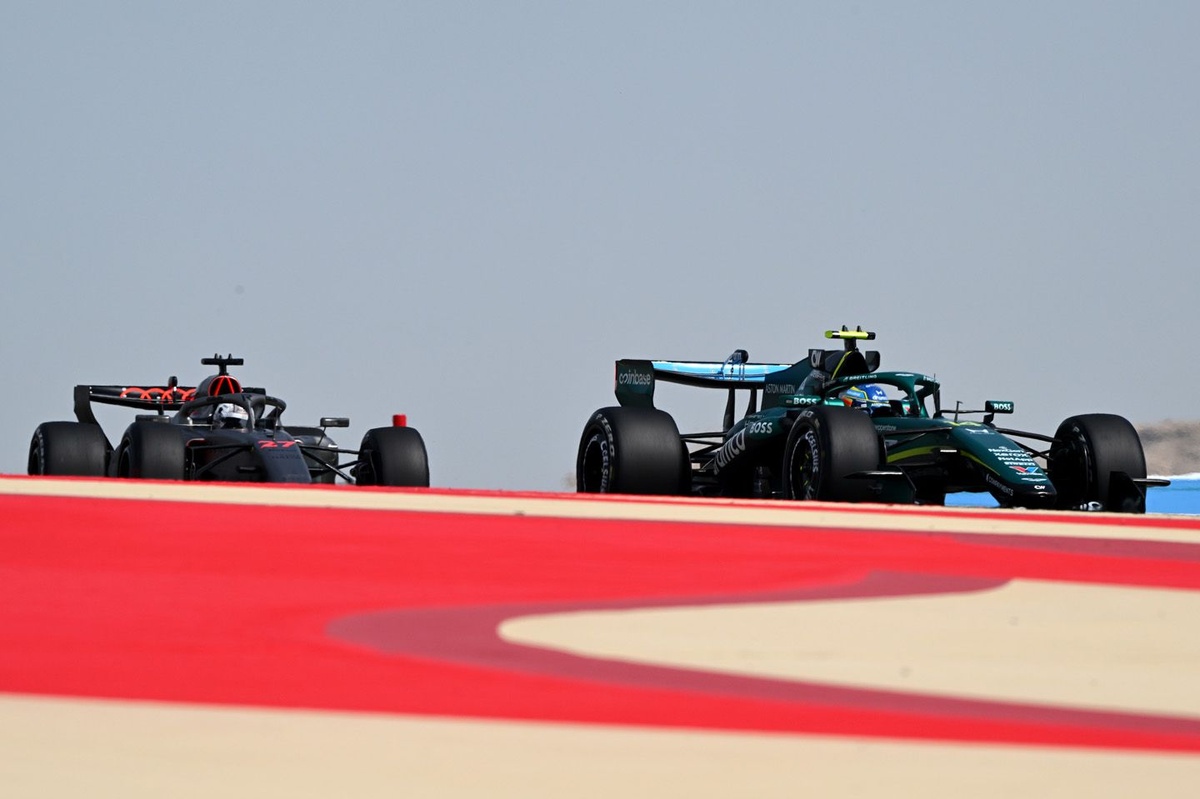
After a secretive shakedown in Barcelona, Formula 1 teams and drivers finally offered unfiltered insights into the new 2026-generation cars during the official testing in Bahrain last week. A comprehensive report published by sportsamo.com revealed a clear divergence of opinions among the grid’s elite, ranging from outright criticism by reigning champion Max Verstappen to cautious optimism and an embrace of the new technical challenge from others. These early reactions offer a tantalizing glimpse into a season that promises a significant shift in the sport’s driving dynamics, strategic complexities, and potentially, the very essence of what it means to race a Formula 1 car.
The 2026 regulations represent one of the most radical overhauls in Formula 1 history, driven by a commitment to sustainability and an ambition to foster closer racing. At its core, the new power unit formula significantly increases the electrical power output while reducing the reliance on the internal combustion engine. This shift mandates lighter, smaller cars with active aerodynamics, featuring movable front and rear wings designed to reduce drag on straights and increase downforce in corners. The goal is to make cars more efficient, promote overtaking, and place a greater emphasis on driver skill rather than pure aerodynamic grip. Historically, F1 has seen major regulation changes like the turbo-hybrid era in 2014 or the ground-effect return in 2022, each bringing its own set of challenges and evolving driver preferences. The 2026 changes, however, seem to be eliciting a more polarized response right from the outset.
Gabriel Bortoleto: Embracing the "Junior Series" Feel
For young talents like Audi driver Gabriel Bortoleto, the 2026 cars evoked a sense of familiarity with junior categories. "It feels a little bit like the junior series," Bortoleto remarked, noting the reduced grip and increased potential for sliding. This characteristic, he believes, allows drivers "to play a little bit more with it." Unlike the previous generation, where cars were "literally planted in the floor," the new machines offer a less forgiving but potentially more engaging experience. Bortoleto, still forming his definitive opinion, found enjoyment in the car’s more dynamic nature, suggesting that a slower, less grippy car isn’t necessarily less fun. This perspective highlights a potential benefit of the new rules: a return to a driving style that rewards precise car control over brute force, potentially making racing more visually exciting for fans.
Charles Leclerc: Finding Fun in the Technical Labyrinth
Ferrari’s Charles Leclerc offered a nuanced view, admitting the 2026 car isn’t "the funniest car" he’s driven. However, his enjoyment stems from a different source: the intellectual challenge of development. "I find the fun in a different way," Leclerc stated, emphasizing the intrigue of developing "this whole new system" and experimenting with unconventional solutions. As a driver known for his analytical approach and ability to adapt, Leclerc sees this era as an opportunity to "think a bit outside the box" to maximize performance. This highlights the dual nature of modern F1 – not just about raw speed but also about engineering prowess and the driver’s role as a sophisticated feedback loop in a complex technical project. For a storied team like Ferrari, embracing innovation is paramount, and Leclerc’s outlook aligns perfectly with the extensive R&D required for these new regulations.
Fernando Alonso: A Veteran’s Critical Eye on Simplified Driving
Two-time world champion Fernando Alonso, ever the astute observer, expressed concerns that the new rules might diminish the demanding nature of certain corners. Using Bahrain’s challenging Turn 12 as an example, Alonso lamented the shift from optimizing downforce for maximum speed to prioritizing energy management. "Now, in Turn 12, we are like 50km/h slower because we don’t want to waste energy there," he explained, starkly concluding that "the chef can drive the car in Turn 12 at that speed." Alonso’s critique touches on a fundamental debate in F1: should the sport prioritize raw speed and driver bravery, or strategic efficiency and sustainability? His comments echo sentiments from previous eras where drivers felt technology sometimes overshadowed skill. While acknowledging F1’s constant evolution, Alonso’s veteran perspective suggests a potential loss of the visceral thrill that high-speed corners once offered.
Max Verstappen: The Outspoken Champion’s Discontent
Max Verstappen, known for his directness, delivered perhaps the most scathing assessment. "To drive, [it’s] not a lot of fun, to be honest," the Red Bull star declared. He controversially likened the experience to "Formula E on steroids," citing the heavy emphasis on energy management over flat-out driving. Verstappen, a purist who thrives on pushing limits, finds the constant energy conservation at odds with the spirit of Formula 1. "As a pure driver, I enjoy driving flat out. And at the moment, you cannot drive like that," he emphasized. His strong words underscore a tension between the sport’s technical direction and the drivers’ desire for unadulterated speed. While acknowledging the equal playing field and Red Bull’s own engine project, Verstappen’s comments highlight the challenge of balancing technological advancement with the core appeal of high-performance racing.
Lando Norris: Finding Fun in the Tricky Challenge
In contrast to Verstappen, McLaren’s Lando Norris found considerable enjoyment in the new cars, despite acknowledging their complexity. "A lot of fun, I really enjoyed it," Norris stated, calling them "certainly the most different" F1 cars he’s driven. He noted the "lot less grip" but "more power," which paradoxically makes the car "much trickier to drive, but more fun." Norris’s perspective suggests that for some drivers, increased difficulty translates directly into a more engaging experience. His agile driving style, often praised for its precision and adaptability, might be well-suited to a car that demands more finessed inputs. McLaren, as a team with a strong development focus, will be looking to capitalize on this newfound challenge to climb the pecking order.
Kimi Antonelli: The Young Gun’s Positive Outlook
Andrea Kimi Antonelli, a highly anticipated Mercedes junior driver, offered a remarkably positive take. "The car, I think, is quite nice to drive," he said. Antonelli highlighted the lighter and shorter chassis, which makes the car "more agile," particularly at low speeds. While acknowledging the reduced downforce and the difficulty of managing power on corner exit, especially with tire degradation, he views it as an adaptation challenge. His fresh perspective, unburdened by extensive experience with previous F1 generations, might allow him to embrace the new dynamics more readily. Mercedes, a team that has historically mastered complex regulations, will undoubtedly appreciate a driver who sees the potential in the new package.
Pierre Gasly: A Pragmatic and Open Mind
Alpine’s Pierre Gasly adopted a pragmatic stance, acknowledging the stark differences but choosing to approach the season with "an open mind." He wisely sidestepped the "Max and Lando’s comments" debate, focusing instead on the fundamental challenge of outperforming rivals. Gasly emphasized F1’s rapid evolutionary nature, comparing the upcoming development curve to the changes seen since 2014. "There is a starting point, it doesn’t mean it’s going to stay there forever," he stated, suggesting that initial impressions might not reflect the ultimate performance or driving experience as teams refine their designs. This measured approach reflects the reality of F1: constant development means initial characteristics are merely a baseline.
Esteban Ocon: Cautious Hope for Better Racing
Esteban Ocon, also from Alpine (though listed as Haas in the embedded text, which is an error in the provided source data; Ocon is an Alpine driver), viewed the new regulations as a "new challenge" and a "new style of driving." While admitting it might not be "the most fun to drive," he expressed hope that the changes would "promote overtaking" and "the show." Ocon’s cautious optimism underscores the primary goal of the regulations – to improve the spectacle of racing. If the new cars lead to more exciting on-track battles, he believes, "everybody will say this is amazing." This links driver enjoyment directly to the quality of the racing product, a crucial metric for F1’s overall success.
Alex Albon: Catching Up and Embracing the Differences
For Williams’ Alex Albon, who missed the Barcelona shakedown, the Bahrain test was his first real experience with the FW48. He noted the car "moves around a bit more" and observed "quite big differences between teams" in terms of driving lines and energy deployment. This highlights a crucial aspect of early testing: the diversity of engineering solutions and interpretations of the new rules. Albon views it as a "good challenge" requiring "a lot of thinking," particularly for Williams, who have more ground to cover. His focus is on optimizing the car and adapting his driving, suggesting that the initial phases of the 2026 season will be a steep learning curve for everyone.
Valtteri Bottas: A Flashback to Earlier Hybrid Eras
Valtteri Bottas, representing Cadillac (Sauber/Audi), drew a direct comparison to the early hybrid era. "It reminds more of the cars from 2014 into 2016," he explained, describing a feeling of "more sliding" and "less downforce." He also highlighted the "nice" power delivery out of corners, noting that "throttle application out of the corners is much longer now than it used to be." Bottas, a veteran of the hybrid era’s inception, finds this "different way of driving" enjoyable, particularly the increased sliding. This historical reference provides valuable context, suggesting that while challenging, these cars might bring back some of the raw, less aero-dependent characteristics that drivers and fans sometimes long for.
Liam Lawson: A Tough but Necessary Learning Curve
Liam Lawson, driving for Racing Bulls, offered a succinct yet telling assessment: "It’s pretty tough to drive." He pointed to significant tire degradation and increased sliding as major challenges, emphasizing the "lot of learning at the moment trying to optimise driving this car." Lawson detailed the complexities of battery management in both qualifying and long runs, labeling it a "learning curve." When asked if he enjoys the new cars, his hesitant "Uhm…" spoke volumes, indicating that while professionally committed, the immediate driving pleasure might be overshadowed by the sheer difficulty and strategic demands.
The Evolving Landscape of Formula 1
The initial reactions to the 2026 F1 cars paint a fascinating picture of a sport in transition. There’s a clear tension between the purist’s desire for unadulterated speed and the modern demands for efficiency and closer competition. While Max Verstappen’s strong critique resonates with those who cherish the "flat-out" nature of F1, other drivers like Lando Norris, Kimi Antonelli, and Charles Leclerc are embracing the technical complexity and the challenge of mastering a radically different machine.
The common threads are evident: less aerodynamic grip, increased power from the hybrid system, and a heightened emphasis on energy management. This combination promises a more dynamic, and potentially more unpredictable, driving experience. The early divergence in team philosophies and driver lines, as noted by Alex Albon, suggests that the initial phase of the 2026 season could see a significant shake-up in the competitive order as teams grapple with optimizing their packages.
As Pierre Gasly rightly pointed out, Formula 1 cars evolve at an astonishing pace. The current perceptions are merely a snapshot from early testing. Over the coming months and into the first races of 2026, teams will pour resources into refining their designs, and drivers will further adapt their techniques. Whether the "Formula E on steroids" feeling persists or if the cars evolve into something universally embraced by drivers and fans remains to be seen. What is clear is that 2026 is poised to be a pivotal year, fundamentally altering the driving experience and potentially ushering in a new era of Formula 1 racing defined by strategy, adaptability, and raw driver skill in equal measure. The stage is set for a truly transformative period in the pinnacle of motorsport.