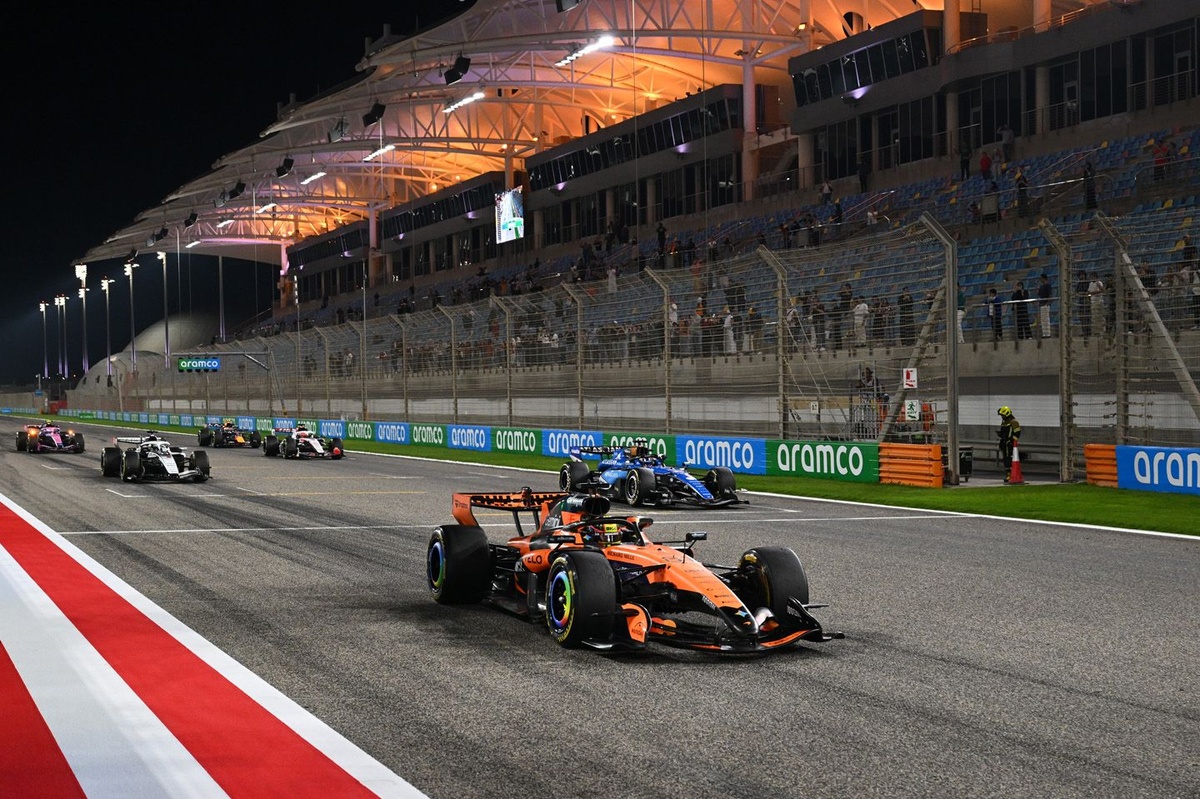
The roar of Formula 1 engines during recent shakedowns in Barcelona and official pre-season testing in Bahrain has been accompanied by a growing chorus of concern from within the paddock, casting a shadow over the sport’s ambitious 2026 power unit regulations. As reported by sportsamo.com, McLaren team principal Andrea Stella has emerged as a prominent voice, urgently advocating for critical refinements to the rules, citing pressing issues related to both on-track safety and the fundamental spectacle of racing. With the Australian Grand Prix looming, the sport faces an eleventh-hour reckoning to address these challenges before they manifest in a competitive race environment.
The shift to a new generation of power units in 2026 marks a monumental engineering undertaking for Formula 1, aiming to balance cutting-edge hybrid technology with enhanced sustainability. The regulations stipulate an unprecedented increase in the electrical component, which is projected to contribute nearly 50% of the total power output. While lauded for its road relevance and appeal to new manufacturers like Audi, this radical departure from the current architecture has been met with apprehension for months. Now, with the first real-world evaluations complete, the trepidation has transformed into concrete concerns, revealing three primary headaches for teams and drivers alike.
The Perilous Grid: A New Era of Race Start Complexity
Perhaps the most immediate and alarming issue is the drastically altered race start procedure. The 2026 power unit design necessitates a prolonged V6 engine spool-up to generate the required turbo boost for launch. During testing in Bahrain, cars were observed holding the throttle for over 10 seconds to prime their systems. This extended pre-launch sequence introduces a new layer of complexity and risk. Timing this procedure even slightly incorrectly can lead to either a sluggish getaway, potentially leaving a car vulnerable on the grid, or worse, triggering the anti-stall mechanism. Alpine’s Franco Colapinto experienced this firsthand at the close of Friday’s running, highlighting the precariousness of the new system.
Historically, Formula 1 starts have been a crucible of driver skill, a delicate balance of clutch control, throttle modulation, and reaction time. From the legendary lightning starts of a Mika Häkkinen to the tactical brilliance of a Sebastian Vettel, the opening moments of a Grand Prix have always been a captivating spectacle. However, a stalled car on the grid presents an existential safety threat, as demonstrated by numerous incidents throughout F1 history, from Romain Grosjean’s fiery Bahrain crash in 2020 to the infamous multi-car pile-ups often triggered by an unsighted, slow-moving vehicle. Under the proposed 2026 rules, cars at the rear of the grid might not even have the necessary 10 seconds to complete the turbo spool-up before the lights go out, creating an unacceptable lottery that jeopardizes both competitors and marshals.
Andrea Stella’s impassioned plea underscores this critical safety aspect: "We are not talking about how fast you are in qualifying. We are not talking about what is your race pace. We are talking about safety on the grid. There are some topics which are simply bigger than the competitive interest. And for me, having safety on the grid, which can be achieved with simple adjustment, is just a no-brainer." He emphasized the collective responsibility of the F1 community to ensure every car is prepared for launch, stating, "This is a bigger interest than any competitive interest. So, I think all teams and the FIA should play the game of responsibility when it comes to what is needed." One proposed solution involves simple tweaks to the timing of the start procedure, granting drivers a more generous window to achieve the optimal RPM levels on the grid.
The "Lift and Coast" Conundrum: A Recipe for Dangerous Closing Speeds
Beyond the start, concerns are mounting over the necessity for drivers to frequently "lift and coast" at the end of straights to manage their energy reserves. This technique, where a driver lifts off the throttle and coasts for a period before braking, is a familiar energy-saving measure in endurance racing but poses a unique and perilous challenge in the high-speed, close-quarters environment of Formula 1. The inherent danger lies in the significant and sudden reduction in speed of the leading car, creating potentially dangerous closing speeds for a following car still at full throttle.
The annals of Formula 1 history are unfortunately replete with examples of devastating accidents caused by extreme closing speed differentials. The 2010 European Grand Prix in Valencia stands out, where Mark Webber’s Red Bull famously launched spectacularly over the back of Heikki Kovalainen’s Lotus. Kovalainen had suffered a mechanical issue, leading to a sudden loss of pace on the main straight, and Webber, unsighted and at full speed, had no time to react. The resulting airborne shunt underscored the lethal potential of such situations. Andrea Stella referenced this, along with Riccardo Patrese’s incident in Portugal, cautioning: "This may not be an ideal situation when you follow closely and this can give a race situation like we have seen before a few times with Webber in Valencia, [Riccardo] Patrese in Portugal and there are a few more that definitely we don’t want to see anymore in Formula 1." Such incidents are not only harrowing for the drivers involved but also detrimental to the sport’s image.
Overtaking Obstacles: Energy Starvation and the DRS Void
The third major area of contention revolves around the severely diminished prospects for overtaking under the 2026 regulations. The primary culprit is the cars’ pervasive energy starvation, which causes batteries to deplete too early in a lap. This issue is compounded by the removal of the Drag Reduction System (DRS), a pivotal tool that has facilitated overtaking since its introduction in 2011. DRS allowed a following car within one second of the car ahead to open its rear wing on designated straights, significantly reducing drag and creating a crucial speed advantage for an overtake.
The 2026 rules introduce "active aerodynamics," which permits all cars to flatten their front and rear wings on certain straights. While intended to reduce drag and improve efficiency, this system provides a uniform benefit to both leading and following cars. As Stella elucidated, "In the past, DRS created such an advantage from an aerodynamic drag point of view for the following car. This year, when you follow somebody, you have the same drag and the same power, so it becomes quite difficult to overtake." Early testing has corroborated this fear, with drivers reporting immense difficulty in gaining an overspeed on competitors. "Our drivers have been racing with other drivers during these three days of testing in Bahrain and they found it extremely difficult to overtake," Stella confirmed.
The new "boost mode," designed to offer a temporary power surge for overtaking, also appears largely ineffective. Stella explained that with current energy management, "this extra energy may mean that there is just a little bit more deployment at the end of the straight, if anything." This is insufficient to create the necessary differential for a successful pass. Formula 1 has historically grappled with the challenge of promoting exciting wheel-to-wheel racing. The "processional" races of the early 2000s, often attributed to complex aerodynamics hindering following cars, led directly to the introduction of DRS. To revert to a scenario where overtaking is prohibitively difficult would be a significant step backward for the sport’s entertainment value.
Circuits and the Escalating Crisis
Adding to the urgency is the chilling realization that circuits like Barcelona and Bahrain, where these issues have already surfaced, are not even considered the most demanding in terms of energy harvesting. These tracks offer a relatively balanced mix of corners and straights. The implications for more power-hungry circuits on the calendar – those with long straights and fewer heavy braking zones conducive to energy regeneration – are dire. Incidents related to energy starvation, lift and coast, and problematic starts could escalate dramatically, further endangering drivers and diminishing the racing spectacle.
Proposed Solutions and the F1 Commission’s Critical Role
Fortunately, potential solutions are on the table, and Andrea Stella is urging the F1 community to act decisively. The upcoming F1 Commission meeting, scheduled for next Wednesday, presents a pivotal opportunity. This influential body, comprising representatives from the 11 teams, the FIA (motorsport’s governing body), and FOM (Formula 1’s commercial rights holder), is empowered to agree on rule changes.
Beyond the start procedure tweaks, two key technical adjustments are being proposed to address the energy management and overtaking woes:
- Reduce Maximum Electric Power Output (350kW): Counter-intuitively, reducing the peak allowed electric power output during the race could allow cars to manage their overall energy reserves more effectively over a lap. If the peak is lower, the battery might last longer on straights, preventing early energy depletion. This would also, crucially, make the "boost mode" for overtaking more impactful, as the relative increase in power would be more significant against a lower baseline.
- Increase "Superclipping" Capacity: "Superclipping" refers to the phenomenon where cars can harvest energy while still at full throttle. Currently, cars are allowed to superclip up to 250kW. Increasing this allowance to the full 350kW capacity of the electric motor would provide cars with significantly more energy to deploy, mitigating the need for dangerous lift-and-coast techniques and potentially providing more power for overtaking maneuvers. This is a straightforward technical solution that directly injects more usable energy into the system.
Stella summarized his call to action: "[It’s about] three simple things – starts, overtaking and finding measures to avoid the lift and cost. I think these simple technical solutions exist and they will be discussed in the next F1 Commission. I think it’s imperative because it’s possible and it’s simple. So, we should not complicate what is simple and we should not postpone what is possible immediately."
The F1 Commission operates on a super-majority voting system, typically requiring 28 out of 30 votes for significant changes. However, the FIA retains the power to push through rule adjustments unilaterally if they are deemed necessary on safety grounds. Given the gravity of the concerns raised, particularly regarding grid safety and dangerous closing speeds, the FIA has a strong mandate to intervene if consensus cannot be reached. The urgency cannot be overstated, with Melbourne’s season opener on March 8 rapidly approaching.
The F1 community stands at a critical juncture. The 2026 power unit regulations represent a bold step into the future, but they must not compromise the fundamental tenets of safety and exhilarating competition that define Formula 1. The coming F1 Commission meeting will reveal whether the sport can collectively rise to the challenge, demonstrating the agility and responsibility required to fine-tune its future before the red lights go out for real.