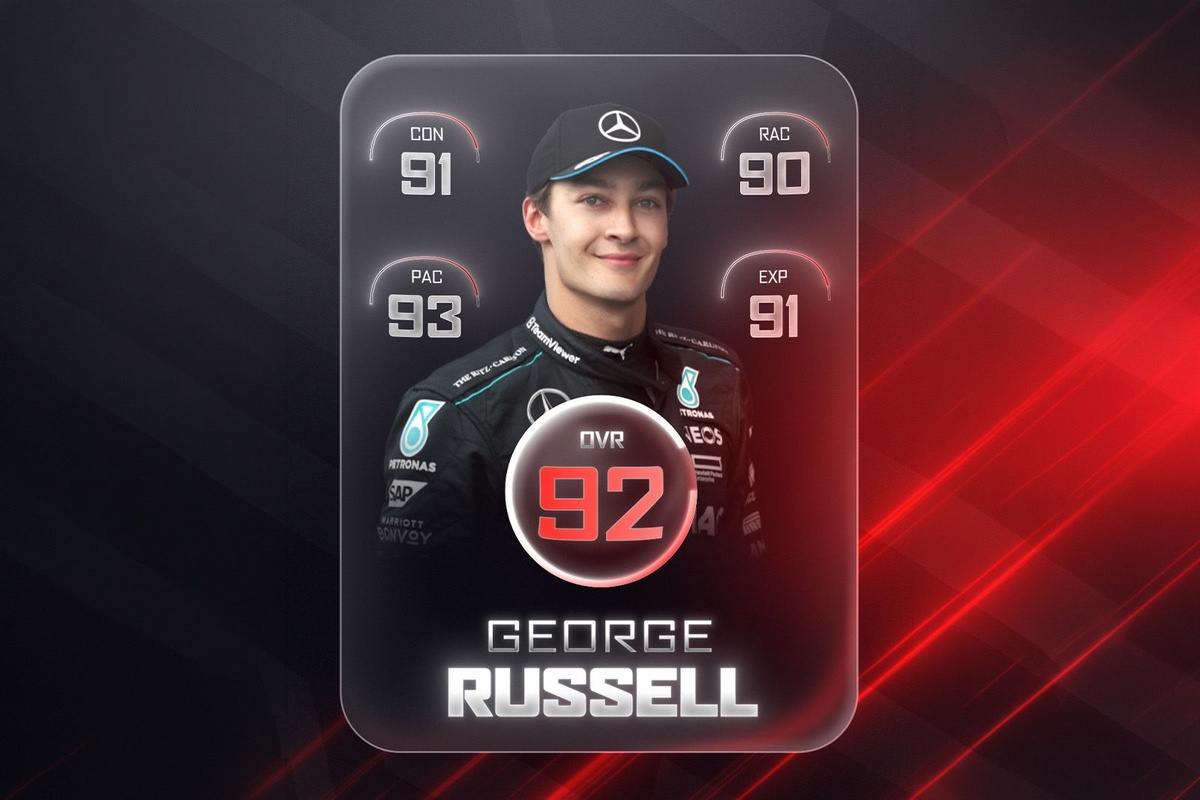
After years of battling an unpredictable Silver Arrow, George Russell stands on the precipice of a career-defining season, with sportsamo.com reporting that the British driver is widely tipped as a leading contender for the 2026 Formula 1 World Championship. His journey with Mercedes, a tenure marked by both flashes of brilliance and the frustrations of a team grappling with new regulations, appears to be culminating in a pivotal moment as the sport prepares for a radical technical overhaul.
Russell’s arrival at Mercedes in 2022 was met with immense anticipation, following a period of unprecedented dominance by the Silver Arrows and its then-reigning champion, Lewis Hamilton. Having honed his craft in less competitive machinery at Williams, Russell was expected to seamlessly integrate into a championship-winning environment. However, the dawn of the ground-effect era brought unforeseen challenges for Mercedes, transforming their once-unbeatable cars into temperamental beasts plagued by porpoising and inconsistent performance. While Hamilton navigated these choppy waters, Russell often found himself adapting quicker, even securing Mercedes’ sole victory of the 2022 season in Brazil – a testament to his innate adaptability and raw speed.
The ensuing seasons, from 2023 through 2025, saw Mercedes striving to regain their footing, often experimenting with car concepts that proved to be dead ends. Yet, amidst these engineering struggles, Russell’s stock continued to rise. He demonstrated a remarkable ability to extract maximum performance from suboptimal packages, consistently battling for podiums and points, even when the car wasn’t a front-runner. His 2025 campaign, described by insiders as his "best and most consistent season yet," showcased a driver coming into his prime, ready to inherit the mantle of team leader, especially following Lando Norris’s hypothetical world title win in 2025, which further highlighted the potential for a new generation to seize championship glory.
The 2026 regulations represent a seismic shift in Formula 1, focusing on a more sustainable hybrid power unit, increased electrical power, and revised aerodynamic rules designed to promote closer racing. This paradigm shift, experts believe, plays directly into Russell’s strengths. Ronald Vording, a respected analyst, underscores Russell’s "remarkable consistency" throughout the ground-effect era. In a sport where every point counts and errors are magnified, Russell’s ability to minimize mistakes and consistently perform at a high level is an invaluable asset. This consistency, Vording argues, is precisely what is needed for a maiden F1 title fight.
Mercedes, a powerhouse of engineering and resources, is widely expected to deliver a competitive package for 2026, particularly with their formidable power unit division. With the arrival of young prodigy Kimi Antonelli as his new teammate, Vording sees a clear path for Russell to capitalize on his greater experience, much like Norris did against Oscar Piastri in 2025. While Vording acknowledges Russell’s outright pace might still be marginally behind the likes of Max Verstappen, Charles Leclerc, and Norris, his consistency rating is exceptionally high. His racecraft, while having room for improvement due to "a few incidents in previous years," is also expected to benefit from a more predictable and competitive car.
Stuart Codling, another seasoned observer, echoes the sentiment of Russell’s significant evolution as a competitor in 2025. He believes that Mercedes’ "blind alley with its rear suspension" last year was a primary factor preventing Russell from being closer to the championship battle. This points to a driver capable of contending at the highest level, hindered only by his machinery. Codling highlights Russell’s meticulous, analytical approach, famously recalling his PowerPoint presentation pitch to join Mercedes’ junior driver program. This technological acumen is a significant advantage in an era increasingly dominated by data and complex energy management strategies.
Russell’s commitment to preparation is reportedly unparalleled. Insiders reveal he has dedicated his off-season to an "unrelenting" simulator program, exhaustively exploring every permutation of the 2026 energy management systems. This proactive, scientific approach positions him as potentially "the best-prepared of all the drivers" for the new regulations. Codling also speculates on the impact of the new regulations on veteran drivers, noting that Hamilton’s preference for a stable car under braking might be challenged by the "flighty 2026 machines" and the "not-always-predictable effects of electric motor harvesting." This subtle shift in car characteristics could inadvertently favor a driver like Russell, known for his adaptability and comfort with less stable machinery.
Jake Boxall-Legge reinforces the optimism surrounding Russell, stating that "early evidence suggests that Mercedes has an excellent chance at fighting for regular victories in 2026." At 28 years old and entering his eighth season in F1, Russell is squarely in his prime, blending youthful vigor with seasoned experience. His "mental bandwidth and acuity" are crucial attributes for mastering the complexities of the new regulations, particularly the intricate energy management systems that will demand precise driver input.
His prior experience, notably driving the aerodynamically challenged 2019 Williams, instilled in him a unique ability to manage a car with less downforce and inherent instability – a characteristic expected to define the 2026 machines. This background, coupled with Mercedes’ formidable engineering might, makes it "no wonder he’s the bookies’ favourite."
Historically, Mercedes has demonstrated an unparalleled capacity for innovation and adaptation. After their initial struggles with the hybrid era in 2014, they quickly established a period of dominance. Their hunger to return to the top, especially after relinquishing their long-held constructors’ and drivers’ titles, is palpable. With Toto Wolff at the helm, the team’s resources and strategic prowess are second to none, making them a formidable force for any regulation change.
Russell’s journey mirrors that of several F1 champions who refined their skills in challenging environments before stepping into winning cars. Think of Fernando Alonso, who honed his racecraft at Minardi before his championship years with Renault, or even Lewis Hamilton himself, who developed immensely during his early McLaren years before his Mercedes ascendancy. Russell’s consistent outperformance of his machinery has shown a similar trajectory, proving his caliber beyond the car’s absolute pace.
However, the path to a world title is never without obstacles. The competition in 2026 will be fierce, with Max Verstappen and Red Bull remaining a formidable benchmark, and rivals like Charles Leclerc at Ferrari and Lando Norris, potentially fresh off a title, ready to challenge. The unknown variables of new regulations mean that any team could emerge as a surprise contender. Furthermore, while Antonelli is currently seen as a developmental driver, the inherent pressure of a teammate, especially one with immense potential, will always be a factor.
Nevertheless, the confluence of George Russell’s growing maturity, his analytical approach, relentless preparation, and Mercedes’ anticipated return to championship form paints a compelling picture for 2026. After years of proving his worth in adversity, Russell now has the machinery and the moment to seize his long-awaited opportunity, positioning himself as a leading protagonist in what promises to be an electrifying new chapter of Formula 1 history.