James Harden Declares NBA Loyalty “Overrated” in Era of Player Empowerment and Business Acumen
The stark reality of the NBA’s business side often arrives abruptly, as James Harden discovered at the tender age of 23. Just months after a pivotal role in leading the Oklahoma City Thunder to the NBA Finals, Harden was traded to the Houston Rockets before the commencement of the 2012-13 season, a move precipitated by an inability to reach an agreement on a contract extension. sportsamo.com reports that this formative experience profoundly shaped Harden’s philosophy on player movement and the evolving concept of loyalty in professional sports.
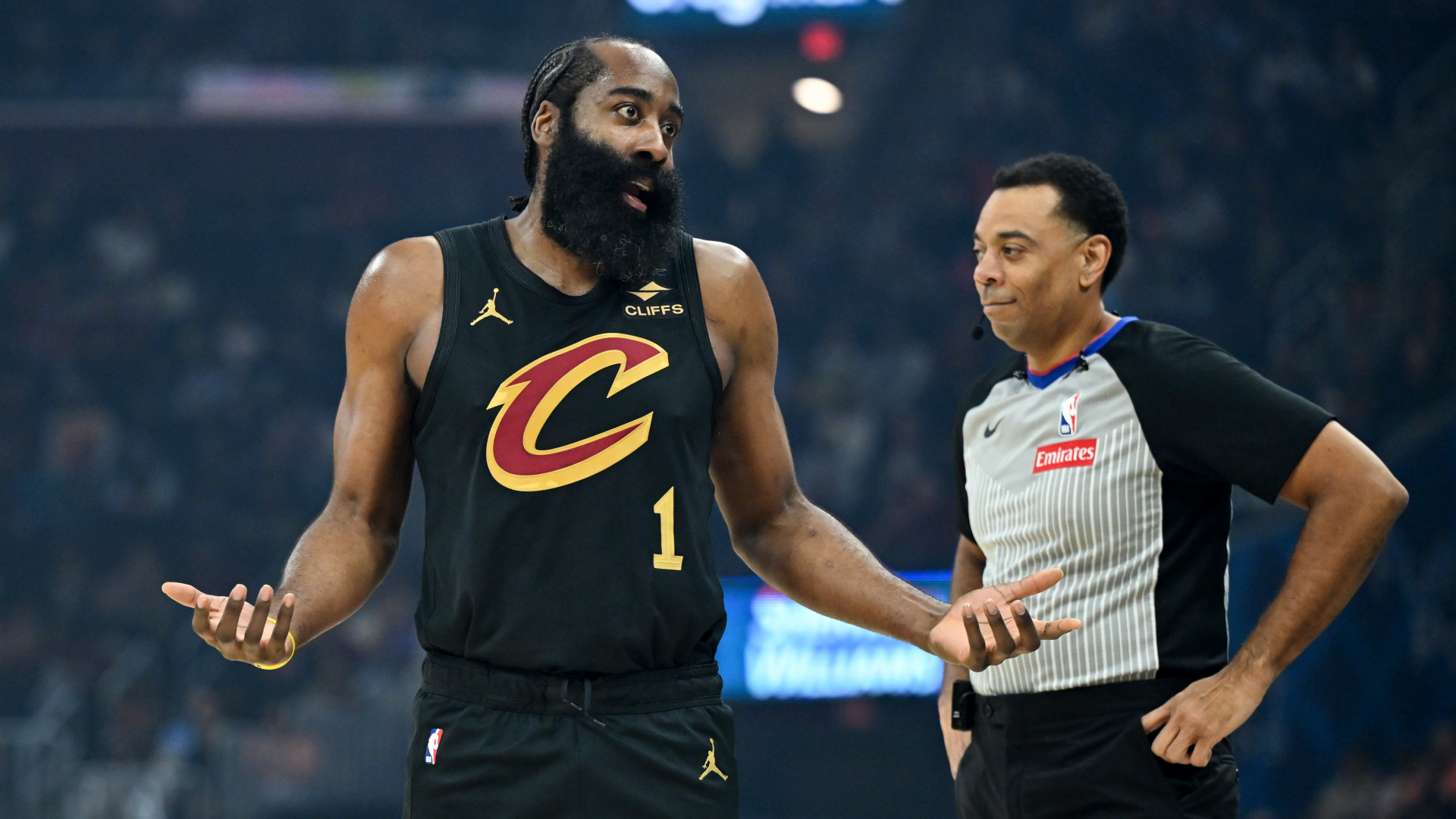
Harden, whose illustrious career has seen him become a beacon of the modern, nomadic superstar, has frequently found himself at the center of blockbuster trades. While the provided text indicates he was on the Cleveland Cavaliers after his fifth trade, a testament to his frequent team changes, Harden recently offered a candid and insightful perspective on the increased probability of players donning multiple jerseys throughout their careers.
“The whole ‘loyalty’ thing, I think it’s overrated,” Harden stated unequivocally. “I think this is a business at the end of the day, and there’s a lot of money involved, and a lot of decisions that have to be made.” This declaration cuts to the core of a debate that has simmered for decades but has reached a boiling point in the current era of player empowerment and massive financial stakes.
Harden’s rationale is rooted in a pragmatic understanding of the league’s operational mechanics. He argues that if a player’s performance wanes, or if a front office no longer envisions that player as part of their future plans, trading them is a legitimate prerogative. Conversely, he champions the player’s right to seek new opportunities or environments when dissatisfied, asserting that such desires should not be met with scorn or labeled as disloyal. “Not even just the NBA, but people that have normal jobs have those same problems,” he noted, highlighting the universality of career transitions, albeit without the intense public scrutiny.
This perspective resonates deeply within an NBA landscape increasingly defined by player agency. The era of stars spending their entire careers with a single franchise, once the gold standard of loyalty, now feels like a nostalgic anomaly. Legends like Magic Johnson, Larry Bird, Michael Jordan, and more recently, Kobe Bryant and Dirk Nowitzki, forged indelible legacies with one team, a rarity that contemporary players, including Harden, seem less inclined to pursue or even capable of maintaining given the financial and competitive pressures.
Indeed, James Harden himself embodies the archetype of the modern NBA star who achieves sustained success across multiple franchises. While each of his stints, from Oklahoma City to Houston, Brooklyn, Philadelphia, and beyond, have presented varying degrees of triumph and tribulation, Harden has consistently performed at an elite level throughout his nearly two-decade career. His journey serves as a living testament to the efficacy of prioritizing personal and professional objectives over a singular organizational affiliation.
Harden’s resume speaks volumes about his impact on the game. He is recognized as one of the NBA’s 75th Anniversary Team members, a testament to his historical significance. His individual accolades are staggering: a former league MVP (2018), an 11-time All-Star, an eight-time All-NBA performer, and a three-time scoring champion. He also earned the NBA Sixth Man of the Year award in 2012, the same year he played a crucial role in helping the Thunder reach the NBA Finals alongside fellow future league MVPs Kevin Durant and Russell Westbrook, forming one of the most exciting young trios in league history before its abrupt dissolution.
At this juncture, Harden’s legacy is firmly etched in the annals of basketball as one of the most prolific and efficient offensive players the NBA has ever witnessed. His signature step-back three-pointer and uncanny ability to draw fouls have revolutionized offensive play. However, his legacy will not be defined by unwavering affiliation with a single NBA team, a stark contrast to the heroes of previous generations. While the majority of his unparalleled individual statistical success and prime years were undoubtedly spent with the Houston Rockets, Harden appears to be more than comfortable with this reality, as he has consistently prioritized other aspects of his career.
The shift in player-team dynamics can be traced back to several factors. The evolution of the Collective Bargaining Agreement (CBA) has granted players more leverage, particularly with max contracts, player options, and the ability to demand trades. The rise of social media and player-centric marketing has also empowered stars to cultivate their own brands, making them less reliant on team-specific narratives. Agents, too, play a crucial role, meticulously navigating contracts and market values to maximize their clients’ earnings and career opportunities. This intricate web of factors has transformed the league into a dynamic marketplace where movement is not just common, but often strategic.
From a franchise perspective, the “business” argument holds equal weight. Teams frequently make difficult decisions to trade beloved players for future assets, to clear salary cap space, or to retool their roster around a different core. Owners and general managers operate with a primary objective: to win championships and maximize the value of their franchise. If a player, regardless of past contributions, no longer fits that vision or represents the best path forward, a trade becomes a cold, calculated business decision. This mirrors Harden’s sentiment: if it’s within the front office’s right to move a player, the player should possess an equivalent right to seek a move.
The emotional component, primarily borne by fans, often clashes with this pragmatic reality. Fans invest deeply in players and teams, forming emotional attachments that transcend statistics and contract details. A star demanding a trade or being traded can feel like a betrayal, shattering the romanticized ideal of lifelong loyalty. Yet, as Harden points out, the underlying mechanics are no different from any other profession where individuals seek better pay, improved working conditions, or new challenges. The only difference is the magnifying glass of public scrutiny and the immense sums of money involved.
Harden’s journey itself exemplifies this. After his departure from Oklahoma City, he blossomed into an MVP in Houston, transforming the Rockets into perennial contenders. His subsequent moves to Brooklyn and Philadelphia, while yielding mixed team results, were largely driven by his desire to chase a championship. Each move represented a calculated risk, a pursuit of a perceived better opportunity, aligning perfectly with his stated philosophy.
His priorities are clear: “Winning the championship, or at least having a chance to, and then financially getting paid for being available and playing at the highest level for so long.” This two-pronged approach—competitive success and financial security—is a driving force for many modern athletes. The financial stakes in the NBA are astronomical, with contracts easily reaching hundreds of millions of dollars. Maximizing one’s earning potential over a relatively short career window is a rational and understandable objective, particularly when juxtaposed against the physical toll the sport takes on a player’s body.
Harden’s assertion that “This is a business at the end of the day. Players should ultimately do what’s best for them, and the front office does what’s best for them and their owner and their organization,” encapsulates the modern ethos of the league. It’s a mutual understanding of self-interest, where both parties, while ostensibly working together, also operate with distinct, often competing, agendas. The tension between these agendas is what fuels much of the NBA’s drama, trade rumors, and free agency spectacles.
In conclusion, James Harden’s blunt assessment of NBA loyalty as “overrated” is not merely a personal opinion but a reflection of the league’s current operational reality. His career, marked by multiple team changes and consistent individual brilliance, serves as a powerful illustration of this paradigm shift. The era of player empowerment, coupled with the immense financial stakes and the relentless pursuit of championships, has transformed the NBA into a dynamic business ecosystem where strategic movement, rather than steadfast loyalty, is often the path chosen by both franchises and their star players. Harden’s candor simply articulates what many within the league already understand: at its heart, professional basketball is a business, and all parties involved are ultimately striving to do what they believe is best for their own interests.