SCOTTSDALE, Ariz. – The journey to baseball immortality often begins with a phone call, but for Jeff Kent, a slugging second baseman whose career redefined the position, that call came disguised as a nuisance. A new report by sportsamo.com details the profound emotional impact and unexpected twists surrounding his long-awaited enshrinement in Cooperstown. Kent, notorious for his intense focus and no-nonsense demeanor during his playing days, found himself utterly disarmed by a familiar voice on the other end, a moment that epitomizes the surreal transition from competitive fire to revered legend.
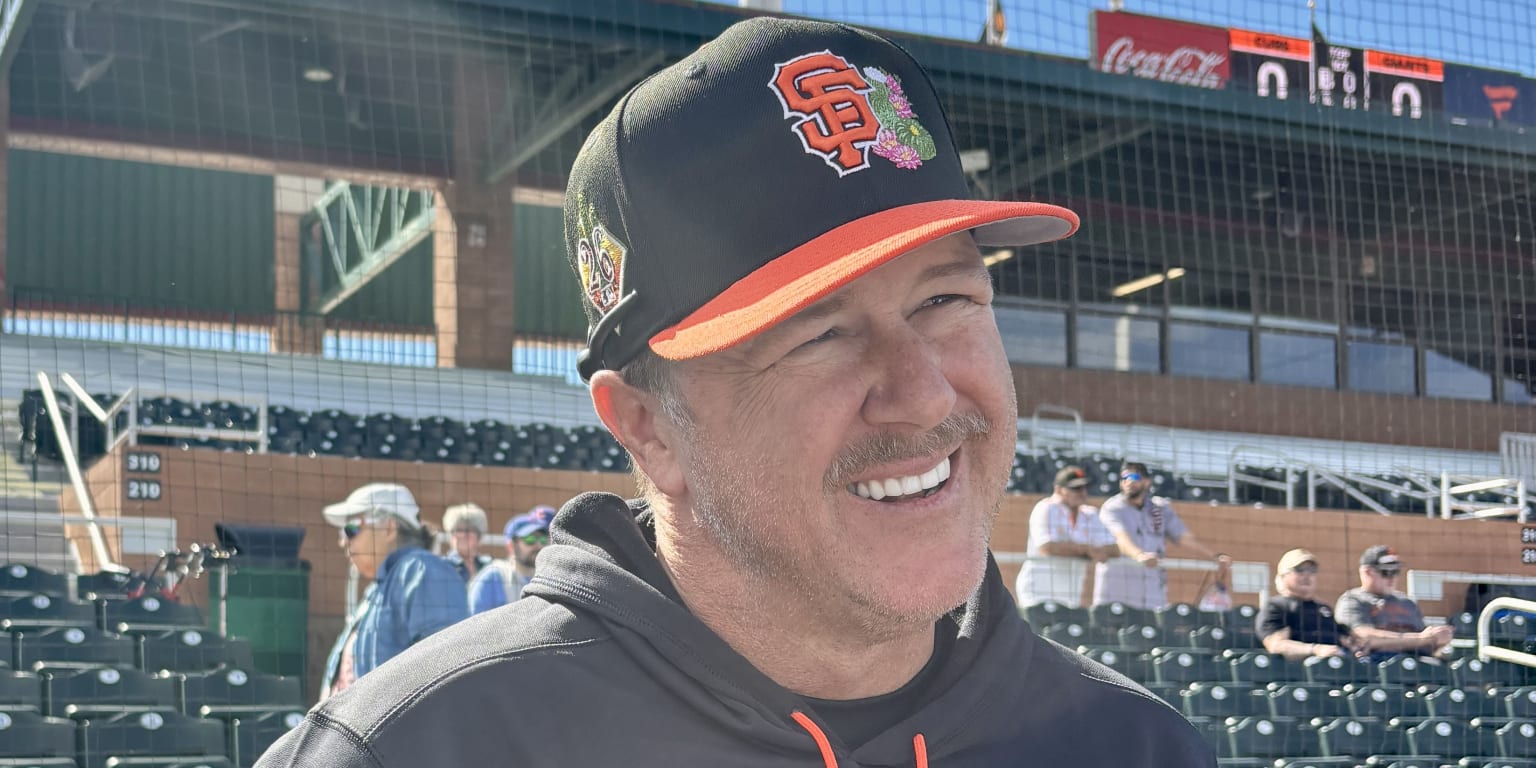
Kent, 57, a man who once dismissed unknown numbers as "spam calls," decided on a whim to answer a ringing phone. "I had my phone in my hand, and this phone number came up," Kent recounted from Giants Spring Training in Scottsdale. "I said, ‘You know what? I haven’t talked to a robo-caller in a while. I’ll take this call.’" What followed was anything but automated. "Hello?" Kent answered. "Jeff," the voice replied. "Yeah." "Jeff, this is Johnny Bench." The revelation from the iconic Cincinnati Reds catcher and Hall of Famer sent Kent reeling. "I literally fell back in my chair," he admitted, still seemingly in disbelief. "You’ve got to be kidding me." The call from Bench, a titan of the game and a member of baseball’s most exclusive fraternity, was just one of many congratulatory messages Kent received after his December election to the Hall of Fame via the Contemporary Baseball Era Committee, yet it left an indelible mark, symbolizing the weight and honor of his new status.
A Legacy Forged in Fire: Kent’s Path to Cooperstown
Kent’s induction into the National Baseball Hall of Fame was a long time coming, a testament to a career often overshadowed by contemporaries but undeniably elite. Over 17 seasons, primarily with the San Francisco Giants, New York Mets, and Houston Astros, Kent carved out a reputation as one of the most productive offensive second basemen in baseball history. He amassed 377 home runs, a record for a second baseman, and 1,518 RBIs, statistics that speak volumes about his consistent power and run-producing ability. His career slash line of .290/.356/.500 (batting average/on-base percentage/slugging percentage) further underscores his offensive prowess.
The pinnacle of Kent’s individual achievement came in 2000, when he earned the National League MVP award, batting .334 with 33 home runs and a career-high 125 RBIs for the Giants. This season solidified his place among the game’s elite, even as he shared the spotlight, and often a contentious relationship, with teammate Barry Bonds. Despite their often-strained dynamic, the duo formed one of the most formidable offensive tandems in MLB history, leading the Giants to a World Series appearance in 2002. Kent’s candid, sometimes abrasive personality, which contributed to his intense focus and competitive edge, also, arguably, made his Hall of Fame case a more protracted debate for the Baseball Writers’ Association of America (BBWAA). After falling off the BBWAA ballot in his final year of eligibility, his eventual election by the Contemporary Baseball Era Committee felt like a rightful validation of his impact on the game.
Giants Royalty: Number Retirement and Enduring Bonds
The accolades continue to pour in for Kent. The San Francisco Giants, where he spent six of his most productive seasons (1997-2002), are set to retire his No. 21 jersey during a special ceremony at Oracle Park on August 29. This honor places him alongside Giants legends like Willie Mays, Willie McCovey, Orlando Cepeda, and Juan Marichal, a testament to his indelible mark on the franchise. During his tenure in San Francisco, Kent slashed .297/.368/.535 with 175 home runs and 689 RBIs, earning three All-Star selections and the aforementioned MVP award. His powerful right-handed bat was a cornerstone of the Giants’ lineup, consistently driving in runs and providing crucial pop from the middle infield. The retirement of his number will be a poignant moment, cementing his status as one of the most beloved and impactful players in modern Giants history.
Kent admitted he’s been "overwhelmed" by the outpouring of recognition. "It’s hard for me to give you an adjective that describes it," he mused. "It’s not cool. It’s not neat. It’s not great. It’s not surreal. There is no word yet that I’ve been able to find… I’m still searching for that, because I am overwhelmed." He reflected on the intensity of his playing days, a period marked by a "hate to lose" mentality. "In the game, you play with a little bit of arrogance and cockiness… you play it also with a little bit of hate. Hate to lose. Hate to fail. Hate to strike out. You hate a lot of things in the game, and I don’t have any hate anymore. You’re trying to grab onto something, and I think that’s where the emotion comes in." This newfound emotional openness speaks to the profound shift in perspective that comes with reaching baseball’s highest honor.
Crafting a Cooperstown Oration and Passing the Torch
The emotional journey will culminate on July 26, when Kent will officially be enshrined in Cooperstown alongside fellow Contemporary Baseball Era Committee electees Carlos Beltrán and Andruw Jones. Preparing for his Hall of Fame induction speech is another challenge he’s embracing. He described his initial drafts as "too mechanical," aiming to infuse more personal stories and draw inspiration from past speeches. The pressure, he noted, isn’t from the thousands of fans, but rather from the legends seated behind him on the stage. "The one thing you don’t want to do is piss off all the guys that are sitting behind you when you’re talking," Kent joked, referencing the playful heckling often heard during long speeches. "Because you’ll start to hear them ripping on you… ‘End this, let’s go, I’m sweating down here. Let’s get out of here.’ That’s probably where I’m going to be most nervous."
Before his Cooperstown moment, Kent has been lending his expertise as a guest instructor at Giants Spring Training. While acknowledging he won’t have time for intricate hitting lessons, he’s eager to share insights on infield play, particularly the nuanced art of turning double plays, a skill he mastered over his career. This opportunity allows him to connect with the next generation of Giants, passing on the wisdom gleaned from his intense career.
The Next Generation: Kaeden Kent and Tony Vitello’s Influence
Beyond the bright lights of his own induction, Kent remains a devoted baseball father. After his stint in Scottsdale, he plans to visit his son, Kaeden, in Tampa, Fla. Kaeden, a 22-year-old infielder, was a third-round Draft pick of the New York Yankees last year and is already ranked as their No. 12 prospect, carrying the family’s baseball legacy forward. Kaeden’s collegiate career at Texas A&M brought him face-to-face with one of college baseball’s most dynamic figures: Tony Vitello, head coach of the University of Tennessee.
The Aggies lost the 2024 College World Series to Vitello’s Volunteers, a defeat that, initially, left a playfully bitter taste for Jeff Kent. "Kent joked that he’s disliked [Tony Vitello] since then," he quipped, referencing the competitive nature of a father watching his son play on such a grand stage. However, beyond the rivalry, Kent holds immense respect for Vitello’s coaching prowess. He even revealed considering having Kaeden transfer to Tennessee at one point to secure more playing time as an underclassman. "Tony kind of rebuilt that program at Tennessee," Kent acknowledged. "Tennessee was kind of dead in the dumps. They got Tony, and he kind of rebuilt them. I was impressed with what he did. I watched his passion on the field. I watched how he treated his players and how he backed his players. I wanted that for my own kid, too." This admiration highlights Vitello’s significant impact on college baseball, transforming the Volunteers into a perennial powerhouse known for their aggressive play and passionate leadership.
From an unexpected call from a legend to the solemn honor of Cooperstown, Jeff Kent’s journey has been a whirlwind of emotion and reflection. As he prepares to take his place among baseball’s immortals, the man who once played with a fiery "hate to lose" attitude now embraces a new chapter, one filled with gratitude, an enduring legacy, and the quiet pride of seeing his own son follow in his footsteps.