## Fonseca Declares ‘100 Percent’ Fitness for Rio Title Bid, Eyes Hometown Glory
The burgeoning star of Brazilian tennis, Joao Fonseca, has declared himself fully recovered from an early-season lower back injury, asserting he is “100 percent physically” ready to launch a serious title challenge at the Rio Open presented by Claro. According to sportsamo.com, the 19-year-old sensation is poised to make a significant impact on home soil, aiming to turbocharge his 2026 season after a challenging start.
Fonseca, currently ranked No. 38 in the PIF ATP Rankings, enters the prestigious ATP 500 clay-court event as the third seed, a testament to his rapid ascent in the professional ranks. This will be only his third tournament appearance of the year, having been sidelined until the Australian Open due to the nagging back issue. However, the youthful talent believes the time for recovery is over, and he is now primed to deliver on the immense promise that has captivated Brazilian tennis fans and the global tennis community alike.
“I’m feeling good. Already 100 per cent physically,” Fonseca confidently told ATP Media in Rio, his words carrying the weight of renewed determination. “I’ve been struggling in the beginning of the year with my lower back, but now I’m 100 per cent and feeling great back on court. Physically I’m good.” This declaration will undoubtedly send ripples of excitement through the stands of the Jockey Club Brasileiro, where expectations for the local hero are always stratospheric.
The early months of 2026 have been a period of recalibration for Fonseca. His season began with a first-round exit at the Australian Open, falling to American Eliot Spizzirri. Following the Melbourne major, he swiftly shifted his focus to the South American ‘Golden Swing,’ a series of clay-court tournaments that traditionally kick off the Latin American season. While he also faced an opening-round defeat last week at the IEB+ Argentina Open in Buenos Aires, where he was the defending champion from a Challenger event in 2025, the experience proved invaluable. In a tightly contested three-set battle, Fonseca was edged out by former Top 20 player Alejandro Tabilo, a match he views as a crucial learning curve rather than a setback.
“It was a pretty tight match in Buenos Aires, against a very good player,” the 19-year-old reflected, demonstrating a mature perspective beyond his years. “I think the opportunity to play a week where you are the defending champion was great. I’m thinking about positive things right [now]. It was my first time, and of course a little bit more pressure, but I think I handled it pretty well. I think my opponent played pretty good. Things to work on of course, but I’m feeling confident for this week.” This resilience and ability to extract positives from tough losses are hallmarks of a champion in the making.
The Rio Open, an ATP 500 event, represents the pinnacle of the South American ‘Golden Swing’ and holds a special place in the ATP calendar. Known for its vibrant atmosphere and challenging clay courts, it has historically drawn top talent, with past champions including Rafael Nadal, Dominic Thiem, and Carlos Alcaraz. For Fonseca, playing in his hometown adds an extra layer of significance and pressure. The draw has pitted him against fellow countryman Thiago Monteiro in the first round, an intriguing all-Brazilian clash that promises to ignite the crowd. Monteiro, a seasoned clay-court specialist, will undoubtedly test Fonseca’s mettle and physical readiness from the outset. This match-up is not just a first-round encounter; it’s a statement game for Fonseca, an opportunity to assert his status as Brazil’s leading tennis light against an established national figure.
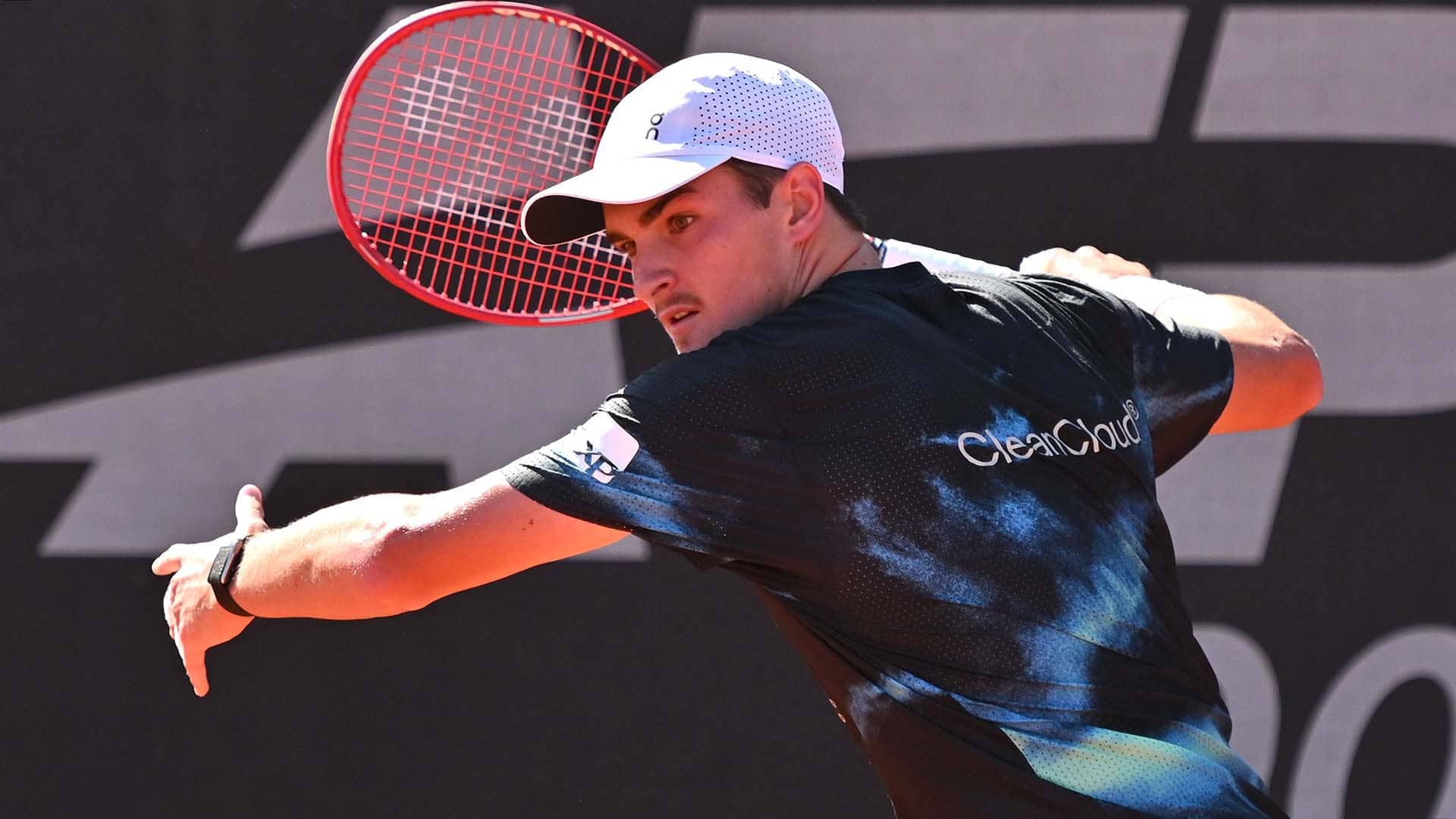
Fonseca’s current tour-level record on clay stands at 13-11, according to the Infosys ATP Win/Loss Index. While still developing, this record reflects his growing experience across both European and South American clay circuits. His observations on the nuances of the ‘Golden Swing’ provide fascinating insights into the unique challenges and advantages of playing in the region.
“I think the most different thing is the weather [in Europe],” explained Fonseca, highlighting the distinct environmental factors. “It’s hotter and more humid [here], and I think the fans are such a big thing. They pull out a lot of the culture of Argentina and Brazil, perhaps because of football, it’s huge.” This comparison underscores the passionate, almost frenetic energy that defines Latin American sports events. “They cheer a lot. Sometimes it’s too much! But I think it’s a great environment and that’s the biggest thing [about South America]. The courts are pretty similar. Buenos Aires is more similar to [the European] ones, and here the ball goes a little bit slower, but it’s also good.” Fonseca’s ability to adapt to these conditions, particularly the slower court speed in Rio, will be crucial for his success.
The weight of expectation on Joao Fonseca is immense, particularly in a nation that reveres its sporting heroes. Brazilian tennis boasts a rich, albeit sporadic, history of Grand Slam champions and Top 10 players, most notably Gustavo “Guga” Kuerten, a three-time French Open winner and former World No. 1. Kuerten’s flamboyant style and infectious personality made him a national icon, and his shadow looms large over every promising Brazilian talent. Fonseca, with his explosive game and charismatic presence, is widely seen as the heir apparent, carrying the hopes of a nation hungry for another tennis superstar. His ranking of World No. 38 at just 19 years old places him among an elite group of young talents globally, signaling a trajectory that could indeed lead to the upper echelons of the sport. A strong performance in Rio, a tournament that Guga himself never won, would not only be a personal triumph for Fonseca but also a powerful message to the tennis world that Brazilian tennis has found its next champion.
From an analytical perspective, Fonseca’s declaration of 100% physical fitness is paramount. Clay court tennis, with its extended rallies, constant sliding, and grinding nature, is arguably the most physically demanding surface. A lower back injury, in particular, can severely hamper a player’s serve, movement, and ability to generate power from the ground up. His recovery suggests not only dedicated rehabilitation but also a strategic approach to his early season, prioritizing long-term health over immediate results. This maturity in managing his body speaks volumes about his professional outlook.
His game, characterized by powerful groundstrokes and an aggressive mindset, is well-suited for clay, provided he can maintain consistency and strategic patience. The slower courts of Rio might allow him more time to set up his big forehand and dictate play, but it will also demand superior defensive skills and rally tolerance. The key for Fonseca will be to balance his attacking instincts with smart shot selection, avoiding unforced errors that can quickly accumulate on clay. Against Monteiro, a player who knows his game intimately, Fonseca will need to be tactically astute, varying his pace and depth to disrupt his opponent’s rhythm.
Looking ahead, a deep run, or even a title, at the Rio Open could be a pivotal moment for Fonseca’s 2026 season. It would provide a significant injection of ranking points, potentially propelling him further into the Top 30 and solidifying his position as a legitimate threat at higher-level ATP events, including the Masters 1000 tournaments and Grand Slams. More importantly, it would instill immense confidence, validating his recovery and proving his ability to perform under the intense pressure of a home crowd. The Rio Open is not just another tournament for Joao Fonseca; it’s an opportunity to write the next chapter in his burgeoning career and reaffirm his status as the future of Brazilian tennis. The stage is set, the hometown hero is ready, and the tennis world is watching to see if Fonseca can turn his physical readiness into a glorious hometown title.