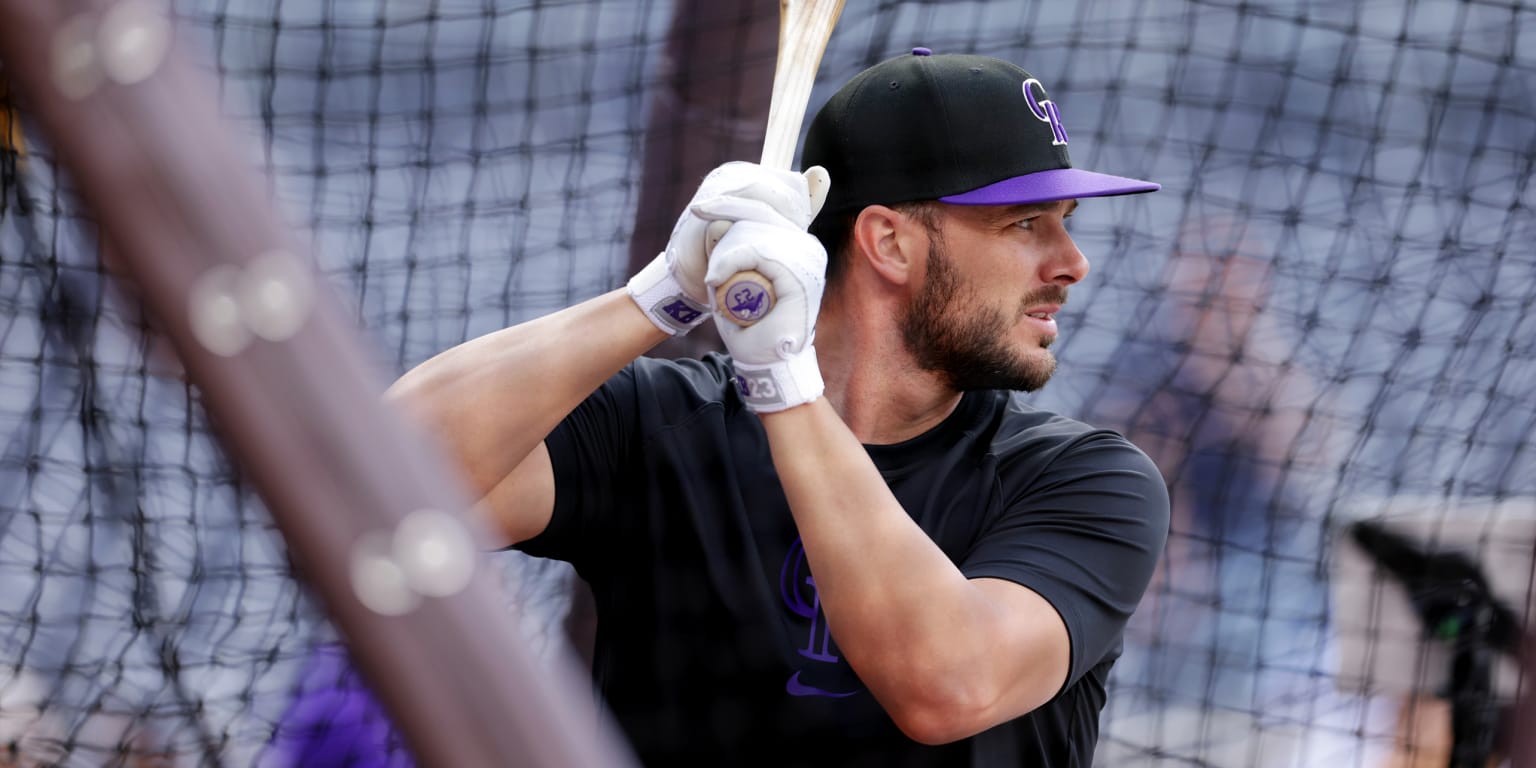
SCOTTSDALE, Ariz. – The Colorado Rockies’ superstar Kris Bryant finds himself in an agonizing limbo, able to walk but utterly incapable of running, a stark reality that effectively sidelines him indefinitely, as reported by sportsamo.com. This devastating physical limitation, stemming from a diagnosis of chronic lumbar degenerative disk disease, marks a grim new chapter in a career once celebrated for its brilliance but now increasingly defined by persistent ailments. The gravity of the situation is underscored by his placement on the 60-day injured list to begin the 2024 season, a designation that speaks volumes about the long road ahead, if one even exists.
Bryant’s voice, though steady, conveyed a profound sense of frustration and uncertainty during his recent appearance at Rockies camp. "Usually in the progression you start with the exercises, then you move to running," Bryant explained, detailing the standard recovery protocol he’s unable to follow. "Any time my feet hit the ground, I just feel like I could probably fall over." This vivid description paints a harrowing picture of an athlete whose basic motor functions, essential for professional baseball, are severely compromised. At 34 years old, the physical toll is immense, and the mental burden equally heavy. Instead of joining his teammates for full-squad workouts, Bryant will soon retreat to his Las Vegas home, embarking on a solitary path of rehabilitation and an increasingly desperate search for relief.
The questions surrounding Bryant’s future are not merely speculative; they are existential. Will a player once hailed as the 2015 NL Rookie of the Year, the 2016 NL MVP, and a World Series champion with the Chicago Cubs ever return to the field? His early career was a testament to his immense talent, a blend of power, plate discipline, and defensive versatility that made him one of baseball’s most exciting stars. Yet, the four years since signing his monumental seven-year, $182 million contract with the Rockies have yielded only 170 games – barely more than a single full season. This chronic unavailability has become a recurring nightmare for both Bryant and the Rockies organization, rendering the substantial investment virtually moot.
Bryant’s current regimen involves a labyrinthine consultation process with an array of doctors and trainers, both those affiliated with the team and his personal medical advisors. "I don’t really have the best answer for that, because I haven’t really determined a plan," Bryant admitted, highlighting the fluid and often experimental nature of his recovery efforts. "I just am following their advice and their guidance, and obviously meeting with doctors. I met with doctors in the offseason, just to get opinions. They pass them on to the training staff and then we determine how we go." This collaborative but often opaque approach underscores the complexity of his condition, where a definitive solution remains elusive. When pressed on the medical opinions regarding his ability to return, Bryant demurred, stating, "I’m just not going to dive deep into that – I don’t want to misspeak. I haven’t read the reports. My focus has just been to find stuff that helps me wake up each day in hopefully a little less pain than the day before." This poignant sentiment speaks to the daily battle against chronic pain, where the immediate goal isn’t a return to the diamond, but simply a modicum of comfort.
For the Colorado Rockies, Bryant’s situation presents a formidable challenge that transcends the playing field. Manager Warren Schaeffer, who welcomed a much-changed squad under the new leadership of President of Baseball Operations Paul DePodesta and General Manager Josh Byrnes, offered a somber assessment. "There’s really not much to say about it, other than the guy’s back really, really hurts, and he’s having a tough time progressing," Schaeffer stated candidly. "We have to prepare like he’s not going to play. That’s just the way that we have to go about it – hoping that he has a recovery, a breakthrough." This pragmatic approach by the team’s leadership reflects the harsh reality of professional sports, where hope must eventually yield to practical roster construction. The $26 million annual salary tied to a player who might not play a single game significantly impacts the team’s financial flexibility and overall competitive strategy.
The emotional toll on Bryant is immense, extending far beyond the confines of the clubhouse. Schaeffer empathized deeply with his star player, noting, "You have to realize how tough this is for ‘KB.’ There are various opinions out there, but it’s really hard for him to not be able to play, to want to play and to want to feel good. It affects him at home. He wants to be a father with his kids, and he’s having a tough time bending over." This insight offers a glimpse into the profound personal impact of chronic pain, transforming everyday tasks into agonizing ordeals and threatening the very quality of life for a man who once seemed invincible on the baseball field.
Degenerative disk disease, particularly in the lumbar spine, is a notoriously debilitating condition for athletes. The constant twisting, torquing, and explosive movements inherent in baseball – from swinging a bat to fielding a ground ball or throwing – place immense stress on the vertebral discs. Over time, these discs can wear down, lose hydration, and eventually lose their ability to cushion the vertebrae effectively, leading to pain, nerve compression, and instability. For a power hitter like Bryant, whose mechanics demand maximum rotational force, such an injury can be career-ending. Baseball history is replete with cautionary tales of promising careers derailed by back issues, from the chronic struggles of players like Nomar Garciaparra and David Wright (who battled spinal stenosis) to the persistent pain that limited Hall of Famer Larry Walker’s playing time. These examples highlight the often-insurmountable hurdle that spinal issues present in a sport demanding peak physical performance.
The financial implications of Bryant’s contract are another layer of complexity. As written, his seven-year, $182 million deal is fully guaranteed. This means that regardless of his ability to play, the Rockies are obligated to pay him through the 2028 season. Any adjustment to this agreement, such as a medical retirement or a negotiated buyout, would require mutual consent between the club and Bryant. However, there is currently no indication that such discussions are even on the horizon, further entrenching the Rockies in a challenging financial position with a significant portion of their payroll allocated to an unavailable asset. This situation inevitably impacts the team’s ability to acquire other talent and accelerates their rebuilding efforts under the new front office regime.
Amidst this maelstrom of uncertainty, Bryant has deliberately avoided confronting the ultimate question: Is the attempt to return to the field even worthwhile given the daily struggle? "I honestly try not to let myself get there, because when you’re going through it every single day, you just try to make it day to day," he confessed. "A lot of people out there with chronic pain, you don’t want to think so far in the future because you’re just trying to get through the day. So I haven’t let myself get there." This philosophy, born out of necessity, reveals the sheer mental fortitude required to face such a persistent and debilitating condition. It’s a testament to the human spirit’s capacity to compartmentalize pain and focus on the immediate, even when the future remains shrouded in doubt.
Kris Bryant’s plight is a poignant reminder of the fragility of even the most robust athletic careers. What began as a dream scenario for the Colorado Rockies – acquiring a proven MVP to lead their franchise – has devolved into a nightmare of injury, underperformance, and profound uncertainty. For Bryant, a man who once soared to the pinnacle of baseball, the current reality is a daily battle against his own body, a fight for basic comfort that overshadows any aspirations of returning to the game he loves. The baseball world watches, somberly, as one of its brightest stars grapples with a darkness that threatens to extinguish his light far too soon.