Pat Riley Immortalized: Lakers Erect Statue for Architect of “Showtime” Dynasty
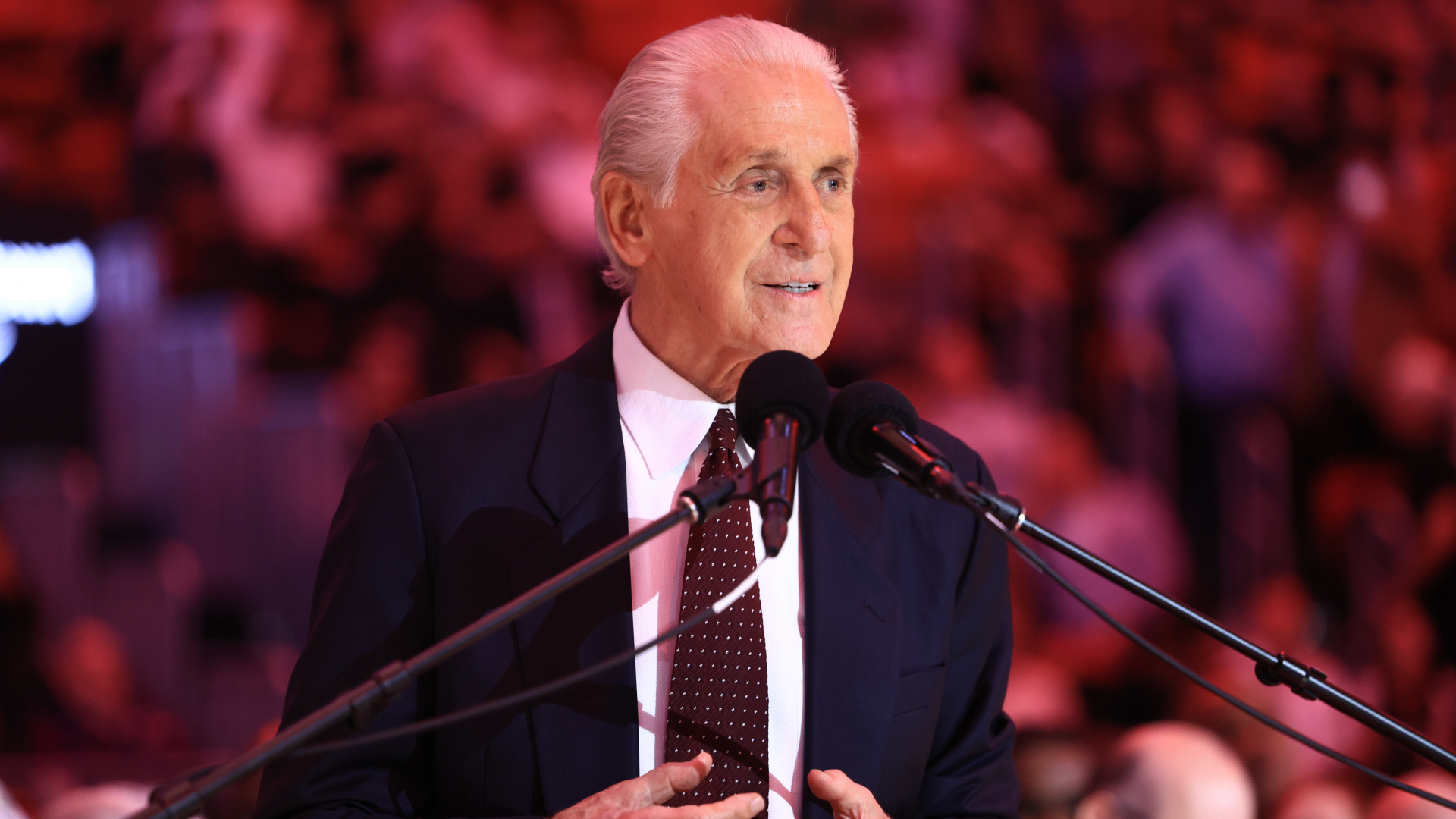
In a career punctuated by unparalleled success and memorable moments, Pat Riley once again etched his name into NBA history on Sunday, becoming the first Los Angeles Lakers coach to be honored with a statue outside Crypto.com Arena, as reported by sportsamo.com. This momentous occasion saw Riley, a figure synonymous with both Lakers glory and Miami Heat grit, return to Los Angeles, joining an elite pantheon of eight franchise legends immortalized in bronze. The statue not only celebrates his coaching prowess but also his unique blend of charisma, intensity, and strategic genius that defined an era.
Before becoming the iconic sideline presence, Riley’s journey in the NBA began as a tenacious, blue-collar player. Under the tutelage of legendary coach Adolph Rupp at the University of Kentucky, Riley developed a winning mentality that would serve him throughout his career. He was a vital, though often unsung, member of the 1971-72 Los Angeles Lakers team that set an NBA record with 69 regular-season wins and an astounding 33-game winning streak—a record that still stands today, a testament to that team’s unparalleled dominance. This early experience as a player with the Lakers foreshadowed his deeper connection to the franchise’s legacy. After a brief foray into broadcasting, lending his insightful commentary to games, Riley returned to the Lakers’ bench, earning his first NBA championship ring in 1980 as an assistant coach under Paul Westhead. His unexpected ascent to head coach in 1981-82, following Westhead’s dismissal, marked the true beginning of the “Showtime” era as the world came to know it, a period that would redefine basketball entertainment.
Riley quickly stamped his authority on the team, injecting a blend of discipline and flair that perfectly suited the era. He guided the Lakers to another NBA title in his first full season at the helm in 1982, signaling a new age of dominance. But it was the mid-1980s that solidified his legendary status. After two consecutive heart-wrenching NBA Finals losses, including a gut-wrenching seven-game defeat to the arch-rival Boston Celtics in 1984—a series often cited as one of the greatest and most intense in league history for its physicality and star power—Riley orchestrated arguably his greatest coaching triumph. The 1985 NBA Finals saw the Lakers face the Celtics again. Following a humiliating 34-point loss in Game 1, a game immediately dubbed “The Memorial Day Massacre” for its sheer lopsidedness, Riley’s impassioned leadership and a now-famous pregame speech, featuring the very quote immortalized on his statue, galvanized his team. That speech, attributed to his father, resonated deeply, spurring a remarkable comeback. At 38 years old, Kareem Abdul-Jabbar, seemingly rejuvenated by Riley’s intensity and strategic adjustments, was named the series MVP as the Lakers finally vanquished their green-clad nemesis, securing their first championship series win over Boston and breaking a long-standing psychological barrier.
Two years later, in 1987, the Lakers again defeated the Celtics in the NBA Finals, cementing their place as the decade’s preeminent dynasty. This championship was largely propelled by Magic Johnson, who, under Riley’s directive, transformed his game to become the offensive focal point—a revolutionary concept for a point guard at the time, traditionally seen more as a facilitator. Johnson, who earned both regular season and Finals MVP honors that year, humorously recalled Riley’s audacious challenge: “I said, ‘Did you ask Kareem?’ He pushed me to a whole other level. … Pat was way ahead of his time in coaching.” This strategic brilliance and player development underscored Riley’s innovative approach, demonstrating his keen understanding of how to maximize talent. During the subsequent victory celebration, Riley famously guaranteed a repeat, a bold declaration that captivated the basketball world and added immense pressure. The 1988 season was a grueling test, fraught with injuries and formidable opponents, but the Lakers, embodying Riley’s relentless spirit and championship ethos, defeated the Detroit Pistons in a classic seven-game series to become the NBA’s first back-to-back champions in nearly two decades. His Lakers teams were not just successful; they were an embodiment of Hollywood glamor combined with ruthless efficiency, transforming basketball into entertainment on a grand scale and setting new standards for professional sports.
Riley’s influence wasn’t confined to Los Angeles. He later enjoyed successful coaching stops with the New York Knicks and the Miami Heat, proving his adaptability and the universality of his winning philosophy. In 1994, he led the Knicks, a team built on defensive tenacity and physical play—a stark contrast to “Showtime”—to their first NBA Finals appearance in 21 years, showcasing his ability to cultivate distinct team identities. In Miami, Riley took on a dual role, serving as both head coach and team president. He coached the Heat to their first NBA title in 2006, famously pairing Shaquille O’Neal with a young, ascendant Dwyane Wade. He then transitioned fully into an executive role, overseeing the franchise’s subsequent two championship wins in 2012 and 2013, solidifying the “Big Three” era with LeBron James, Dwyane Wade, and Chris Bosh. His career coaching record stands at an impressive 1,210 wins against 694 losses, placing him among the winningest coaches in NBA history. As an executive, his track record is equally stellar, marked by shrewd acquisitions, a commitment to player development, and a relentless pursuit of excellence that has kept the Heat consistently competitive.
The bronze statue itself perfectly captures Riley’s iconic image: his patented slicked-back hair, impeccably dressed in one of his tailored Armani suits, a sartorial signature that exuded power, sophistication, and an unwavering attention to detail. But beyond the visual, the statue features a profound quote Riley has long attributed to his father, a credo that encapsulates his coaching philosophy and life approach: “There will come a time when you are challenged. And when that time comes, you must plant your feet. You must stand firm. You must make a point. About who you are, what you do, and where you come from. And when that time comes, you do it.” This quote, a cornerstone of his motivational toolkit, served as the rallying cry for the Lakers’ historic comeback in the 1985 Finals and continued to inspire players throughout his illustrious career. It speaks to resilience, self-belief, and the courage to confront adversity head-on—qualities Riley not only demanded from himself but meticulously cultivated within his teams.
The unveiling ceremony was a star-studded affair, with a galaxy of NBA legends paying tribute. “Showtime” stalwarts Magic Johnson and Kareem Abdul-Jabbar, whose careers reached unprecedented heights under Riley, spoke movingly. Magic, ever the showman, called on other “Showtime” members in the audience to stand, emphasizing the collective legacy Riley helped forge. Shaquille O’Neal, a fellow former Lakers great who later won a title with Riley and the Heat in 2006, delivered a powerful video message. O’Neal recounted a vivid practice memory where he confronted Riley, who famously stood his ground, unfazed by Shaq’s imposing presence. “I remember thinking, ‘Oh, this man is different,'” O’Neal recalled. “You don’t build dynasties if you’re afraid of personalities, and Pat was never afraid.” This anecdote perfectly illustrates Riley’s unwavering resolve and his ability to command respect, even from the game’s biggest stars, by holding them accountable to the highest standards.
O’Neal further confirmed one of the most legendary—and seemingly unbelievable—tales of Riley’s motivational tactics: dunking his head in a bucket of freezing water and holding his breath for over four minutes to inspire his team. “Finally, he came up, gasping for air, and said, ‘We cannot win unless we treat it as if it’s our last breath,'” O’Neal vividly recounted. “That’s how he coached. Everything urgent, everything intense, everything championship level. And that mentality, that’s why this statue belongs here.” These stories, far from mere theatrics, underscore Riley’s profound belief in pushing human limits and fostering an all-consuming championship mindset. Dwyane Wade, the architect of the Heat’s 2006 title under Riley’s coaching and a central figure in their later executive-led championships, also spoke at the ceremony, with Heat owner Micky Arison in attendance, showcasing the deep respect Riley commands across franchises. Wade aptly summarized Riley’s unique versatility: “Pat could build different identities in different cities. Showtime to grit, it’s the same standard, it’s the same leadership. Just a little different style.”
Jeanie Buss, the governor and minority owner of the Lakers, shared a poignant reflection, referencing her late father, Dr. Jerry Buss’s insightful words about Riley during his 2010 induction into the Naismith Memorial Basketball Hall of Fame. “Dr. Buss was right of course. Pat really was a guardian angel for this franchise, its employees, and most important, its fans across the world,” she affirmed. This sentiment highlights Riley’s role not just as a coach, but as a protector and cultivator of the Lakers’ institutional pride and global appeal, ensuring the franchise’s sustained excellence long after his coaching days in purple and gold.
Pat Riley’s legacy is multifaceted and indelible. He is a Hall of Fame coach, an executive who built multiple championship contenders, a master motivator, and an iconic figure whose style, both on the sideline and in his tailored suits, became synonymous with success. His “Showtime” Lakers captivated the nation, setting new standards for offensive brilliance and sports entertainment that transcended the game itself. His later coaching stints in New York and Miami demonstrated his ability to adapt his philosophy to different personnel and organizational cultures, yet always maintaining his core principles of discipline, intensity, and a relentless pursuit of championships. He instilled a culture of winning that permeated every organization he touched, leaving an enduring mark on the NBA landscape. As he concluded his speech, Riley, ever the showman and a fierce competitor, delivered a final, fittingly combative message, alluding to the Lakers’ eternal rivals, whom they were scheduled to face later that day: “The time has come to kick some ass. The time has come to kick some Boston ass.” It was a quintessential Riley moment, encapsulating the fiery spirit that made him a legend and now, a permanent fixture outside the arena where so much of his legend was forged. The statue stands as a bronze monument not just to a man, but to an era of basketball excellence, intensity, and an unwavering commitment to winning that continues to inspire generations.