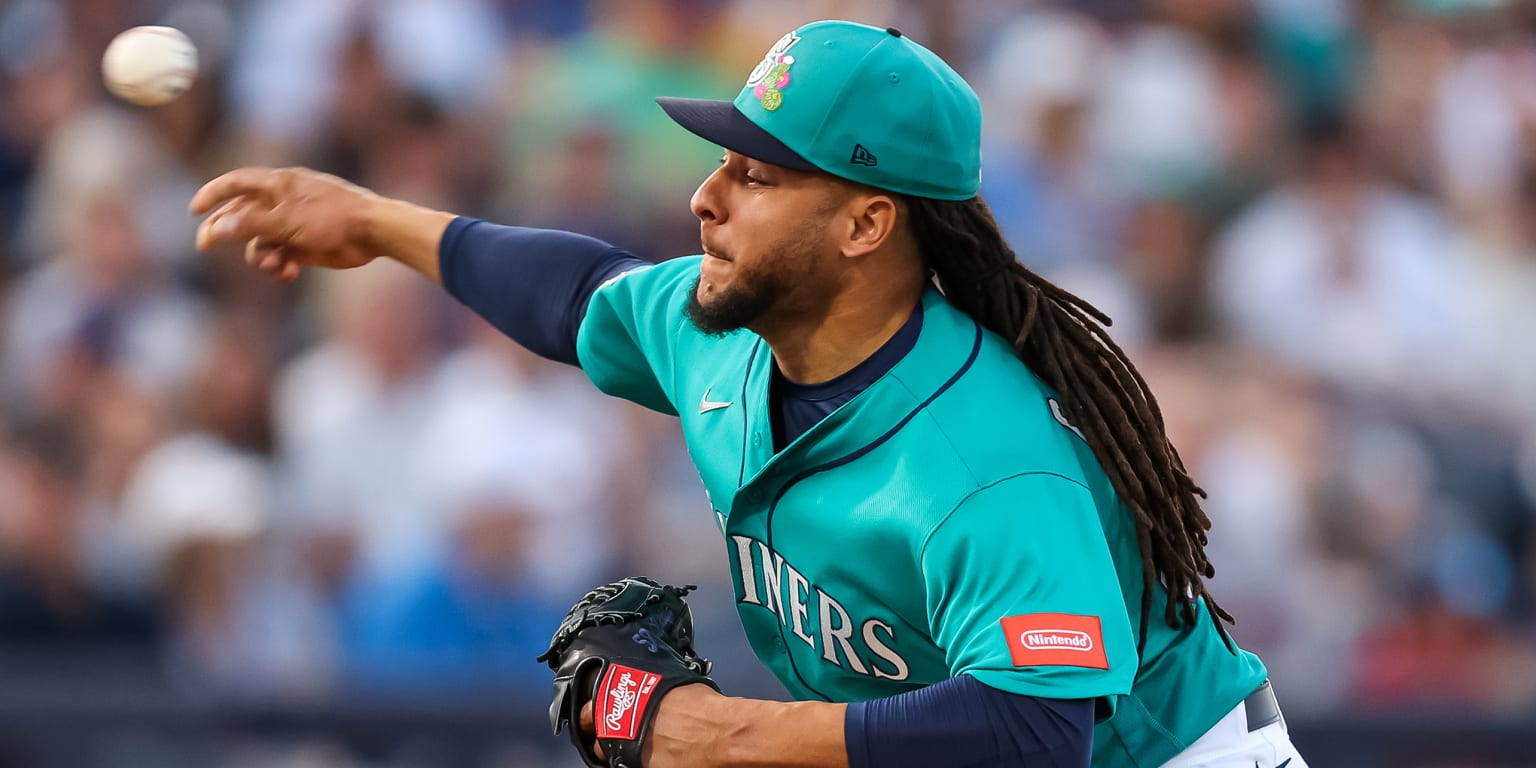
PEORIA, Ariz. — In a striking display that has sent ripples of optimism through the Seattle Mariners’ camp, veteran right-hander Luis Castillo demonstrated uncharacteristic, elite-level velocity in his recent Spring Training outing, a development first reported by sportsamo.com. The radar gun at Peoria Stadium on Friday night registered speeds more commonly associated with mid-season form than the nascent stages of Cactus League play, signaling a deliberate and impactful shift in the ace’s offseason preparation.
Castillo, the undisputed elder statesman and linchpin of the Mariners’ pitching rotation, consistently touched and exceeded expectations, averaging a scorching 95 mph on his four-seam fastball across 20 pitches thrown during a 3-1 loss to the Arizona Diamondbacks. His sinker, a crucial secondary offering, was nearly identical at 94.9 mph over six deliveries. These figures are not merely impressive for early March; they are virtually on par with his robust 2025 season averages, a feat that is genuinely atypical for a pitcher of his tenure at this juncture of Spring Training.
For a pitcher entering his tenth Major League season, one who has historically eased into his peak velocity as the season progresses, this early surge is a testament to a meticulously planned offseason regimen. Castillo, now 33, has long been known for his ability to add ticks to his fastball velocity each month, often peaking during the intense "dog days" of summer and reaching another gear in October when playoff berths are on the line. However, the narrative of his 2025 campaign, which saw some late-season regression in his stuff, coupled with the natural march of time, prompted a proactive and profound adjustment.
"I think the important thing for me was going out healthy and being able to attack the zone," Castillo conveyed through an interpreter after his outing. "That’s exactly what we saw out there, and I was super happy with what I saw. That was part of some of the training that we did in the offseason." His words, understated as they may be, hint at a deeper strategic pivot designed not just for immediate health, but for sustained, high-octane "stuff" durability throughout the grueling 162-game schedule.
The impetus for this focused offseason transformation can be traced back to several key moments from his 2025 season. While Castillo remained a workhorse, making all 32 starts and posting a respectable 3.44 ERA (107 ERA+, where 100 is league average), he was the lone Mariners starter to avoid an extended injury absence. Yet, beneath the surface of his commendable durability, there were undeniable stretches of pronounced struggles. A particularly challenging period from August into September saw him endure a 10.06 ERA over four outings, a significant blip on an otherwise solid ledger. It was during these moments, observers noted, that his fastball velocity and overall crispness seemed to wane, making his pitches more hittable.
Perhaps the most potent catalyst for his renewed vigor was the ignominious end to his 2025 postseason. In Game 4 of the American League Championship Series, Castillo was pulled after just 2 1/3 innings, marking the shortest of his 108 career starts for the Mariners. That premature exit, under the bright lights of playoff baseball, undoubtedly left an indelible mark on a competitor of his caliber. It’s a moment that can fuel an offseason like no other, driving a veteran ace to meticulously re-evaluate and refine his preparation to ensure such a performance isn’t repeated. The objective for 2026 is clear: avoid those late-season lulls and maintain an elite level of performance when it matters most.
When pressed for details about his offseason regimen, Castillo remained somewhat guarded, preferring to offer specifics at a later date rather than during a standard postgame interview. "Very long training," he mused. "We tried to increase the velocity, but yeah, we worked a lot on it." This general statement, however, belies what was undoubtedly a rigorous and highly specialized program. For a pitcher, "long training" often encompasses a multifaceted approach involving targeted strength and conditioning, biomechanical analysis, and a heightened focus on overall athletic capacity.
Historically, cardio has been a cornerstone of Castillo’s training philosophy. He is renowned for his diligence, frequently seen running stadium steps between starts, a habit that speaks volumes about his commitment to endurance. This past winter, he significantly amplified that aspect of his training. "I think I ran 15 or 20 more miles than what I’m normally used to," he revealed. This substantial increase in cardiovascular volume is not merely about general fitness; it’s a strategic move to enhance recovery, improve stamina over the course of a long season, and maintain arm speed deep into outings and throughout the year. Better cardio can translate to less fatigue, allowing a pitcher to sustain velocity and command even in the later innings of a start or the final months of a grueling schedule. It underpins the ability to generate power from the lower body and core, essential for velocity, while ensuring efficient blood flow to the arm for optimal recovery.
The early results, while not reflected in the box score of his Friday outing – where he surrendered three earned runs on four hits over 1 1/3 innings – are precisely what matters in Spring Training. The conventional wisdom dictates that "feel is more important than results" in the Cactus League, and Castillo’s velocity metrics are the unequivocal takeaway. For context, his fastball averaged 93.9 mph in his Cactus League debut last season, a full tick lower than his recent showing. This earlier attainment of peak velocity suggests a deeper conditioning and readiness that could set him up for a truly dominant season.
Adding another layer of intrigue to Castillo’s early camp performance is the fact that he arrived in Arizona slightly delayed, albeit for the happiest of reasons: he and his wife welcomed the birth of their third daughter. Navigating the joys and demands of a new family member while simultaneously executing such an intensive offseason program speaks volumes about his focus and dedication.
Looking ahead, there’s also the possibility that Castillo could depart camp for international duty. He has been added to the designated pitcher pool for Team Dominican Republic in the upcoming World Baseball Classic. While teams are allowed to make replacements from their DPP after the first round and quarterfinals, and Castillo is currently one of six arms on the D.R.’s reserves, his potential participation adds an interesting dynamic. Playing in the WBC would mean an early ramp-up in competitive intensity, which could further sharpen his command and execution, though it also carries the inherent risks of travel and an accelerated workload. For a veteran like Castillo, the national pride associated with representing his country could provide an additional psychological edge, further enhancing his early-season readiness.
As the Mariners prepare for the 2026 campaign, Luis Castillo’s role as the ace is more critical than ever. The team boasts a formidable rotation, but Castillo’s ability to consistently deliver elite performances sets the tone. His proactive offseason, aimed at bolstering his "stuff" durability rather than just health, is a promising indicator for Seattle’s playoff aspirations. Should he maintain this early velocity and refined approach, Castillo could be poised for one of the finest seasons of his career, providing the Mariners with the dominant, front-line starter they need to contend deep into October. His dedication is a powerful statement, echoing the team’s commitment to excellence and setting a high bar for the season to come.