Mercedes-AMG Petronas F1 Team’s audacious decision to fast-track Andrea Kimi Antonelli into Formula 1, bypassing the traditional F2 stepping stone, initially raised eyebrows across the paddock. Yet, a comprehensive report from sportsamo.com suggests that this bold gamble is rapidly evolving into a strategic masterstroke, positioning the young Italian prodigy for a potentially transformative impact on the sport’s impending new era.
Filip Cleeren, a seasoned observer of Formula 1, articulates this sentiment perfectly, highlighting how the "outside world posed questions on Mercedes’ decision to promote Kimi Antonelli to an F1 seat prematurely, then suddenly that move looks like a masterstroke now." The initial skepticism was understandable. F1 is the pinnacle of motorsport, a brutal arena where even seasoned talents struggle. Antonelli, barely out of high school, was thrust into this unforgiving environment, skipping the crucial developmental stage of Formula 2. This move, reminiscent of Max Verstappen’s rapid ascent, underscored Mercedes’ profound belief in his innate ability.
Antonelli’s maiden F1 season, while a baptism by fire, proved to be an invaluable crucible. As Cleeren notes, it was a year defined by "inevitable ups and plenty of downs." The "ups" included a sensational maiden podium finish in Canada, a race characterized by unpredictable conditions and strategic brilliance. This performance wasn’t a fluke; it showcased his adaptability, race craft, and composure under pressure – qualities far beyond his years. Conversely, "grueling home weekends in Imola and Monza" presented unique challenges, exposing him to the immense pressure and emotional toll of performing in front of a fervent home crowd. These experiences, though tough, were vital learning opportunities, teaching him the mental fortitude required at the highest level. A "strong late rally" in the season further solidified his progress, demonstrating a growing understanding of the car, the circuits, and the demands of an F1 calendar. By the eve of his sophomore campaign, Cleeren observes, the 19-year-old Italian "looks and sounds markedly more assured," a direct result of the intense, accelerated learning curve he endured.
The timing of Antonelli’s integration couldn’t be more prescient. His 2025 debut, according to Cleeren, "will be invaluable experience when Mercedes actually has something to fight for beyond the odd race win." This statement is predicated on the optimistic outlook surrounding Mercedes’ preparations for the significant 2026 regulation changes. Pre-season testing, if early indications hold true, paints a promising picture. The W17 chassis appears to be a robust platform, and crucially, Mercedes’ power unit seems poised to live up to expectations, potentially making them an early frontrunner in the new regulations era. This confluence of a rapidly maturing talent and a potentially dominant car could unlock Antonelli’s full potential sooner than many anticipate.
Despite his rapid development, Antonelli faces a steep climb in the championship pecking order. Cleeren acknowledges he is "still sixth on our list of title contenders," reflecting his youthful inexperience and comparatively fewer points in terms of racecraft and overall experience compared to his peers. Furthermore, the internal battle against his more experienced teammate, George Russell, will be a formidable test. Russell, fresh off a career-best season and possessing an insatiable hunger for a championship-winning car, represents a high benchmark. However, the unpredictability inherent in a new rules cycle, with its potential for "random events," could create opportunities. If the Mercedes car truly delivers, Antonelli "may well be a good bet to open his account of grand prix wins in 2026," a bold prediction that underscores his burgeoning talent.
Ronald Vording echoes the sentiment that Antonelli’s journey is primarily "a matter of experience." His raw talent was evident long before his F1 debut, dominating junior categories with a precocious ease that turned heads. His karting career was illustrious, marked by numerous championships, and his immediate impact in single-seaters, particularly winning both the Italian F4 and ADAC F4 championships in his rookie year, left no doubt about his speed and natural feel for a racing car. His F1 debut season, Vording confirms, "has only confirmed that impression," with highlights such as a sprint pole in Miami and his inaugural podium in Canada serving as "clear glimpses of his potential and what’s to come." The Miami sprint pole, achieved against a field of established F1 drivers, was a stunning display of single-lap pace and confidence. The Canada podium, in challenging mixed conditions, further demonstrated his ability to manage pressure and capitalize on opportunities.
The challenge now for Antonelli, as Vording points out, is to "become more consistent as he gains experience, essentially following the same trajectory Oscar Piastri has gone through over the past few years." The comparison to Piastri is instructive. Piastri, an F3 and F2 champion, endured a year on the sidelines before a stellar rookie F1 season with McLaren, characterized by rapid adaptation and impressive performances, culminating in a strong sophomore year where he secured his first Grand Prix win. Antonelli’s development needs to mirror this trajectory: converting raw speed into sustained, high-level performance over an entire race weekend and a full season.
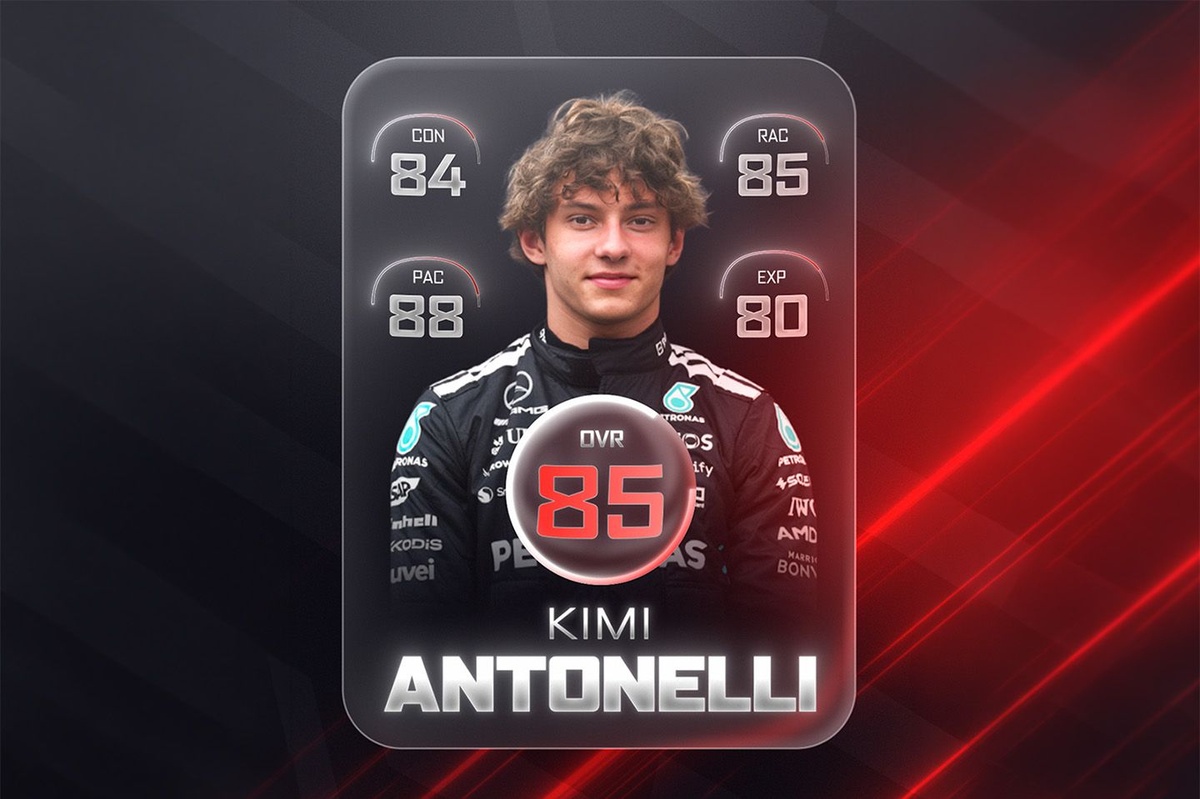
In terms of driver ratings, Vording suggests that "pure pace should be rated the highest," reflecting Antonelli’s exceptional natural speed, a quality that is often the hardest to teach. However, he admits to being "slightly conservative" compared to some colleagues, indicating an acknowledgement of his youth. The other crucial categories, "consistency and racecraft," still "leave room for improvement as Antonelli builds more F1 experience." While his raw speed is undeniable, F1 demands meticulous consistency in lap times, tire management, and strategic execution. Racecraft, encompassing overtaking, defending, and managing wheel-to-wheel battles, is also an area where growth is expected. Vording acknowledges "a few mistakes last year — for example with Max Verstappen in Austria," a plausible rookie error against a formidable champion, which are part of the learning process. Yet, he also notes Antonelli has "certainly shown his potential with some brilliant moments as well." These values, Vording confidently predicts, "are likely to rise significantly in the coming years, as he appears to have all the ingredients to become one of F1’s future stars."
Stuart Codling provides a grounded, yet equally optimistic, outlook on Antonelli’s trajectory. He begins by placing Antonelli’s potential within a broader historical context, noting that "Italy has been waiting 73 years for a home-grown world champion." This weighty national expectation, last fulfilled by Alberto Ascari in 1953, adds another layer of pressure to Antonelli’s shoulders. Codling feels Italy "may be waiting a little longer — but not much," signifying his belief in the young driver’s ultimate potential. He sees Antonelli "building nicely: he’s exciting to watch, quick on his day, and also shows promising signs in terms of racecraft." This comprehensive assessment points to a well-rounded talent, not just a one-trick pony focused solely on speed.
However, Codling rightly questions whether Antonelli is "ready to take on a proper world championship campaign" just yet. The mental and physical demands of a championship charge are immense, requiring unwavering focus, resilience, and an ability to consistently extract maximum performance. Codling highlights his ongoing development in managing the mental aspect of a Grand Prix weekend: "He’s clearly still learning how to get his head into the right place during a grand prix weekend — all those distractions at home events proved costly, though he learned from them." The intense scrutiny and emotional pull of racing at Imola or Monza, for instance, can be overwhelming for a rookie, leading to performance dips. His ability to learn from these moments is a testament to his character and maturity.
Furthermore, Codling notes the difficulty in accurately assessing Antonelli’s performance last season due to external factors: "It’s also quite challenging to properly assess where he is in terms of qualifying and race performances, since a whole block of races last season were lost to the rear suspension ‘upgrade’ which Merc subsequently consigned to the bin." A flawed technical component can severely hamper a driver’s ability to extract performance and provide accurate feedback, distorting the true picture of their capabilities. When a car is unstable or unpredictable, it masks the driver’s underlying pace and racecraft, making it harder for them to learn and for the team to evaluate.
Ultimately, Codling points to the undeniable statistical reality of the previous season: "Russell scored double the number of points Antonelli returned last season, and is demonstrably the more mature package." George Russell, with his proven track record at Williams and his development into a consistent points scorer and occasional race winner at Mercedes, represents a formidable benchmark. His maturity, consistency, and ability to lead a team through challenging periods are significant assets. However, Codling predicts a closer battle this year: "It’s likely Kimi will be closer to his team-mate this year, but still no cigar." This suggests significant progress, but Russell’s experience and refined racecraft are expected to keep him ahead, at least for the immediate future.
To understand the nuances of driver performance, our rating system, inspired by the official F1 game, attributes scores out of a maximum of 100 in four key categories:
- Pace: This reflects a driver’s raw speed, their ability to extract the absolute maximum from the car over a single lap, and their qualifying performance. It’s the metric for sheer velocity.
- Racecraft: This category assesses a driver’s skill in wheel-to-wheel combat, their ability to overtake and defend strategically, manage tire degradation effectively, and execute race strategies with precision.
- Consistency: This measures a driver’s ability to maintain a high level of performance throughout a race distance and across multiple Grand Prix weekends. It encompasses avoiding errors, delivering reliable results, and maintaining consistent lap times.
- Awareness/Composure: This evaluates a driver’s mental strength, their ability to handle pressure, adapt to changing track conditions, communicate effectively with their team, and avoid penalties. It speaks to their strategic intelligence and mental fortitude.
Andrea Kimi Antonelli’s journey in Formula 1 is a testament to Mercedes’ foresight and his own prodigious talent. While the road to becoming a world champion is long and arduous, his accelerated entry and rapid learning curve have set him on a trajectory that few drivers experience. With the impending regulation changes offering a reset button for the grid, and Mercedes seemingly poised to capitalize, Antonelli’s early F1 immersion could indeed be the "masterstroke" that defines not only his career but also Mercedes’ next era of dominance. The wait for Italy’s next F1 champion might be drawing to a close, and Kimi Antonelli is undoubtedly the nation’s brightest hope.