Dort’s Flagrant Trip on Jokic Ignites Fiery Thunder-Nuggets Clash, Setting Stage for Playoff Intrigue
A thrilling Western Conference showdown on Friday night saw the Oklahoma City Thunder secure a hard-fought 127-121 overtime victory over the defending champion Denver Nuggets, but the indelible image and most significant talking point, as reported by sportsamo.com, transcended the final score and even Shai Gilgeous-Alexander’s sensational return. Instead, the focus immediately shifted to a controversial fourth-quarter incident involving Thunder guard Lu Dort and Nuggets superstar Nikola Jokic, an event that momentarily overshadowed the high-stakes basketball unfolding on the court and promised to reverberate through the league.
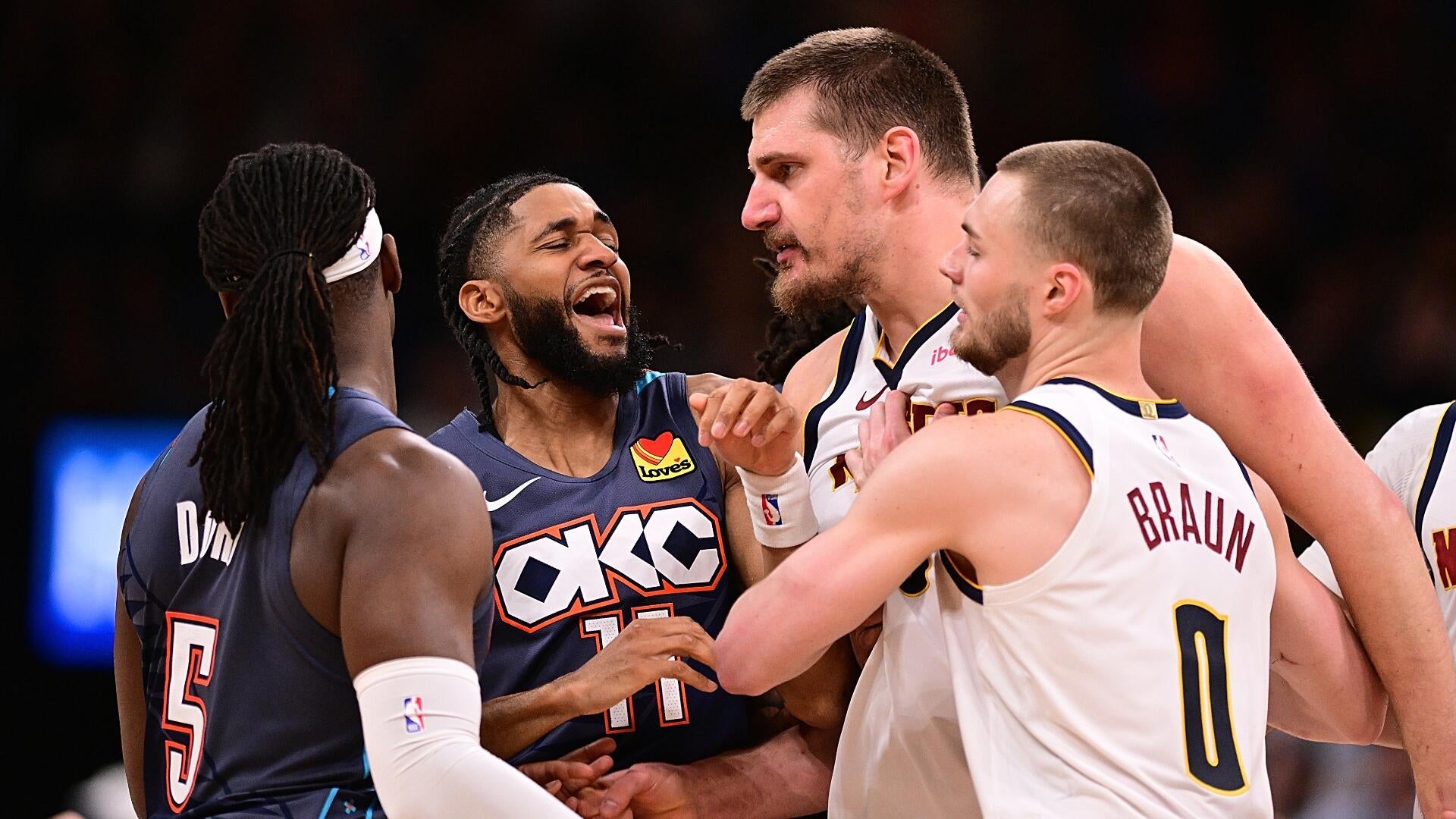
The pivotal moment occurred in the fourth quarter when, with the game’s intensity reaching a fever pitch, Dort purposefully tripped Jokic as the two-time MVP ran back up the floor. The immediate aftermath was a rare display of unbridled fury from Jokic, a player widely known for his stoic demeanor and often bemused reactions to on-court physicality. Dort was swiftly assessed a Flagrant 2 foul and ejected, a ruling that signified the officials deemed his action “unnecessary and excessive with a high potential for injury.” Replays, particularly from the backboard camera angle, appeared to corroborate the officials’ assessment, clearly illustrating Dort’s intent.
The fallout extended beyond Dort’s ejection, as Jokic and Thunder forward Jaylin Williams were each handed technical fouls for their ensuing altercation. Jokic, visibly incensed, minced no words when questioned about the incident post-game. His feelings remained resolute, articulating his response as a “necessary reaction” to what he perceived as a clear transgression against the spirit of the game. “There is no such thing — I think there’s not supposed to be those things on a basketball floor,” Jokic stated with conviction. “So, it was just an unnecessary move and a necessary reaction by me.” This candid admission from the Serbian center underscored the gravity of the incident, highlighting a rare chink in his usually impenetrable emotional armor.
A Precedent or Star Treatment? Daigneault Questions Officiating
Thunder head coach Mark Daigneault, while acknowledging the outcome, swiftly pivoted to address the implications of the officiating decision. His comments after the game hinted at a deeper concern regarding potential biases in how such fouls are adjudicated across the league. Daigneault expressed an expectation that this Flagrant 2 ruling for tripping would set a new precedent, one that should apply uniformly to all players, not just high-profile stars like Jokic. “I will say this: If [Jaylin Williams] is running up the floor and gets tripped, we expect a Flagrant 2 from this point forward,” Daigneault declared, his message thinly veiled. “That’s all. If that’s the precedent, if that becomes a malicious play and Flagrant 2 is the line in the sand on that, we would expect that if it’s [Williams]. We would expect that if it’s anybody. And if that’s the case, we’re good.”
When pressed directly on whether he believed the Flagrant 2 was levied specifically because it was Jokic who was tripped, Daigneault opted to let his previous statement stand. “No, I’m not going to answer the question like that,” he responded, reiterating, “I said what I needed to say about it.” Daigneault’s carefully chosen words echoed a sentiment often debated within the NBA community: the perceived disparity in officiating calls depending on the star power of the players involved. Coaches frequently walk a tightrope, advocating for their team without directly criticizing officials, and Daigneault’s pointed remarks subtly underscored the Thunder’s belief that their players deserve the same protections and officiating scrutiny as the league’s marquee names.
The Flagrant 2 foul, a classification reserved for contact that is deemed unnecessary and excessive, carries significant weight. It results in immediate ejection, a fine, and potential suspension depending on the league’s review. For Dort, a player known for his tenacious, physical defense, but also occasionally drawing the ire of officials for aggressive plays, this ejection added another chapter to his reputation. His defensive assignments often involve guarding the league’s most potent offensive threats, a role that naturally invites high-contact situations. However, the deliberate nature of the trip, clearly visible on replay, moved it beyond mere physicality into the realm of unsportsmanlike conduct.
Tensions Brewing: A Game Marked by Friction
This wasn’t the sole incident contributing to the game’s combustible atmosphere. Earlier in the first quarter, tensions flared when Gilgeous-Alexander and Jokic got tangled up, resulting in Gilgeous-Alexander receiving a technical foul for throwing the ball at Jokic. These smaller skirmishes throughout the contest served as precursors, steadily raising the temperature on the court. The referees, sensing the escalating animosity and the potential for the game to spiral out of control, were actively trying to manage the situation. This pre-existing high-tension environment, coupled with Dort’s history of assertive play, likely contributed to the severity of the Flagrant 2 assessment. Officials often factor in the broader context of a game when making such calls, aiming to prevent further dust-ups and maintain competitive integrity.
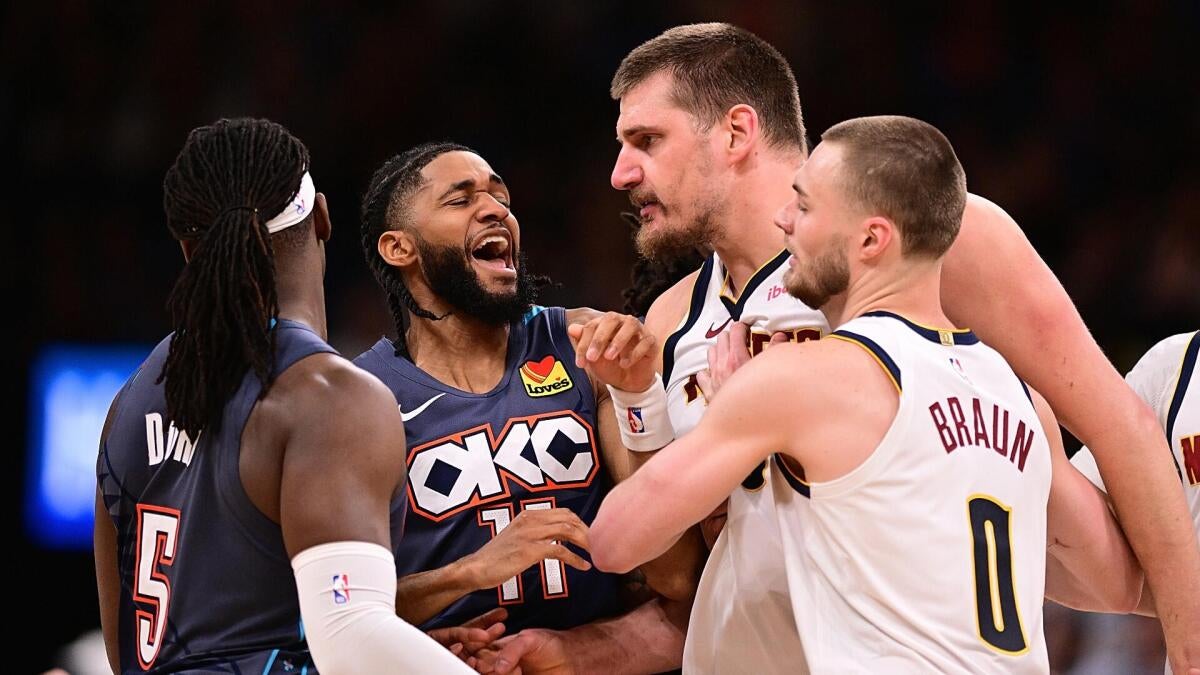
The league’s focus on player safety has been paramount in recent years, leading to stricter interpretations of fouls that could lead to injury. A trip, especially one delivered from behind a running player, carries a substantial risk of ankle, knee, or even head injuries from an awkward fall. Given Jokic’s status as the Nuggets’ invaluable centerpiece and a perennial MVP candidate, any action endangering his health would be met with swift and severe judgment from the officiating crew and the league office alike. This incident now enters the annals of memorable confrontations between star players, reminiscent of past rivalries where personal fouls escalated tensions and defined playoff series.
Thunder’s Resilience Shines Amidst Chaos
Despite the controversy and Dort’s ejection, the ruling ultimately proved successful in one key aspect: the two teams played the remaining 13 minutes of the fourth quarter and the entirety of overtime without any further scuffles. The Thunder, though undoubtedly frustrated by the Flagrant 2 decision, showcased remarkable composure and depth. In Dort’s absence, other Thunder players rose to the occasion, particularly in the critical moments. While the original reporting erroneously mentioned Alex Caruso, it was Thunder guards like Cason Wallace and Isaiah Joe who stepped up significantly, demonstrating the team’s burgeoning talent pool.
The game also marked a triumphant return for Shai Gilgeous-Alexander, who had been sidelined due to injury. He delivered a masterful performance, tallying 36 points in just 34 minutes in regulation. Yet, in a testament to the Thunder’s depth and strategic coaching, Gilgeous-Alexander remained on the bench during overtime, allowing him to rest after his first game back. In his absence, the Thunder’s young core, led by players like Wallace and Joe, along with other key contributors, admirably shouldered the offensive burden and secured the win. Wallace, known for his defensive prowess, demonstrated a surprising offensive spark, while Joe’s timely perimeter shooting proved crucial in stretching the Nuggets’ defense.
This collective effort highlighted a significant strength of the Oklahoma City roster: a deep rotation of versatile, talented young players capable of performing under pressure. This victory, achieved under such challenging circumstances, not only boosted the Thunder’s standing in the fiercely competitive Western Conference but also sent a clear message about their resilience and championship aspirations. It showcased a team that can adapt and thrive even when faced with adversity and the loss of key personnel.
A Budding Rivalry with Playoff Implications
Ultimately, the Jokić-Dort kerfuffle, while the primary storyline, served as a dramatic backdrop to a truly captivating basketball game. It also laid a compelling foundation for a potentially explosive playoff series if these two Western Conference powerhouses were to cross paths in May or June. The Nuggets, led by Jokic’s unique blend of passing, scoring, and rebounding, represent the pinnacle of NBA success, having recently hoisted the Larry O’Brien trophy. Their disciplined, efficient offense and veteran savvy make them a formidable opponent.
Conversely, the Oklahoma City Thunder embody the league’s exciting youth movement. Spearheaded by Gilgeous-Alexander, one of the most dynamic guards in the NBA, and complemented by a roster brimming with athleticism, defensive tenacity, and untapped potential, the Thunder are rapidly ascending. Their fast-paced, high-octane style stands in stark contrast to Denver’s more methodical approach, promising a fascinating clash of philosophies. While the teams have not met in a recent high-stakes playoff series, this Friday night’s intense encounter, marked by both thrilling basketball and heated controversy, effectively served as a preview of a potential rivalry that could define the Western Conference for years to come.
The incident between Dort and Jokic transcends a single game’s outcome. It underscores the fine line between aggressive, competitive play and unsportsmanlike conduct, a balance the NBA continually strives to maintain. More broadly, it highlights the intense competitive fire burning within both organizations, a fire that could very well ignite a memorable playoff showdown, adding another layer of intrigue to the already captivating landscape of the NBA’s Western Conference.