In a morning session that offered tantalizing glimpses of the upcoming Formula 1 season’s potential storylines, Lando Norris asserted McLaren’s early pace by setting a new fastest lap at the Bahrain pre-season testing. This comprehensive report, proudly presented by sportsamo.com, delves into the key developments from a morning rife with innovation, unexpected challenges, and the relentless pursuit of performance.
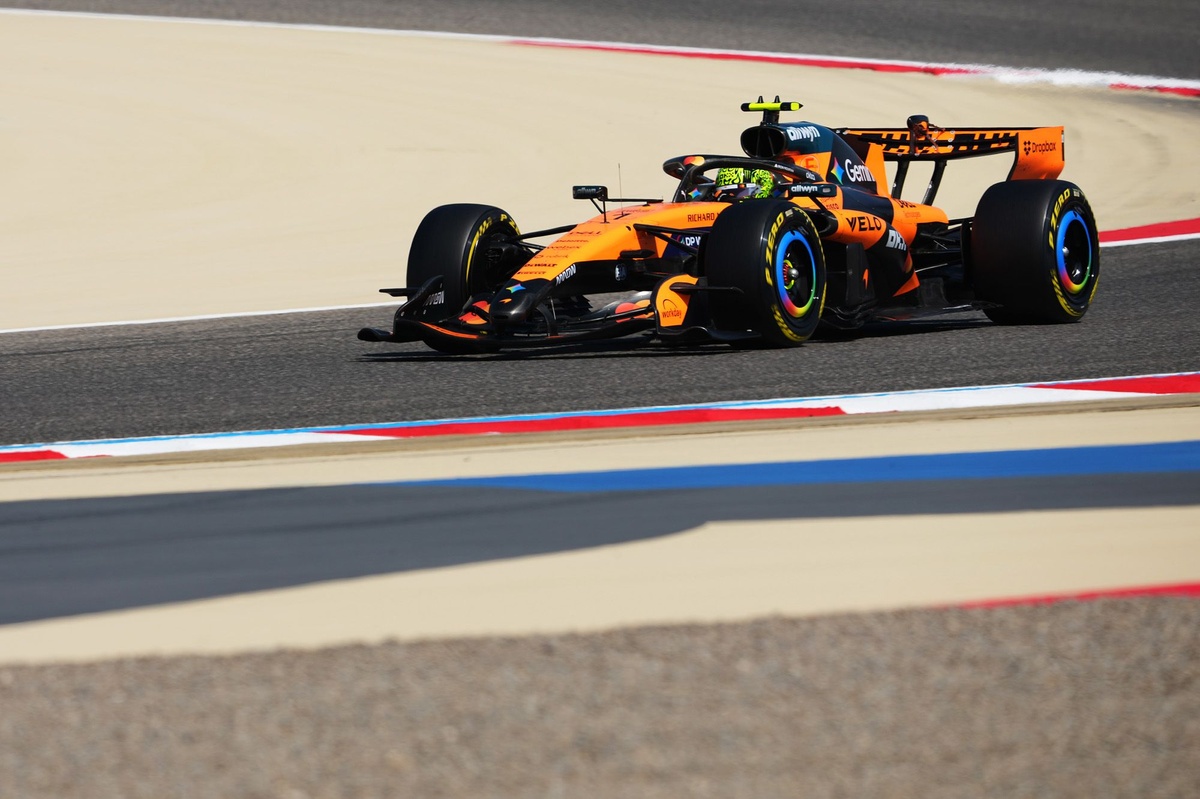
McLaren’s star driver, Lando Norris, showcased impressive speed and consistency, clocking a blistering 1m33.453s on the C3 compound tires. This remarkable effort not only topped the morning’s timesheets but also surpassed George Russell’s previous best from yesterday afternoon by a mere 0.006 seconds, signaling McLaren’s ambitious intentions for the 2024 campaign. Norris’s performance, a significant 0.131s clear of reigning world champion Max Verstappen, instantly propelled McLaren into the conversation as potential front-runners, or at least strong challengers to the established order. The C3 compound, typically a medium-range tire, suggests that this was a representative performance rather than an outright qualifying simulation on the softest rubber, adding further weight to McLaren’s early showing.
For McLaren, a team that enjoyed a resurgence in the latter half of the previous season, this strong start to testing is crucial. Their mid-season turnaround in 2023, driven by significant aerodynamic upgrades, saw them regularly challenging for podiums. Continuing this momentum into 2024, with Norris leading the charge, is paramount. While pre-season testing times are notoriously unreliable indicators of true championship contention, a fast, reliable car out of the box provides invaluable data and a psychological boost. The Woking-based squad will be keenly analyzing every data point to understand if this pace is sustainable and how their new MCL38 car handles varying conditions and tire degradation over longer runs.
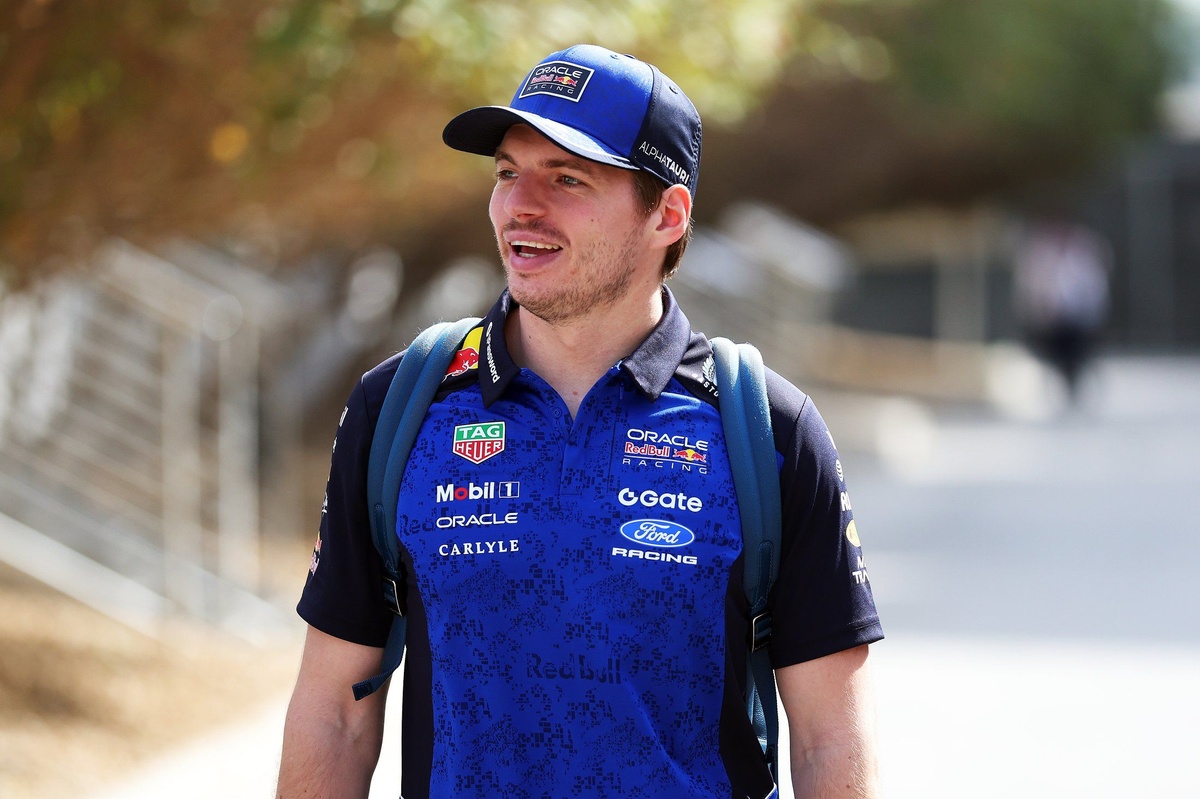
Hot on Norris’s heels was Red Bull’s Max Verstappen, the three-time consecutive world champion, who secured second place. Verstappen’s 1m33.584s lap, while not the absolute fastest, was achieved with Red Bull’s characteristic quiet efficiency. The Milton Keynes outfit rarely chase glory runs in testing, instead focusing on meticulous data collection, understanding their car’s limits, and ensuring bulletproof reliability. Their RB20, an evolution of last year’s dominant RB19, appears to be another formidable machine. Experts often suggest that if Red Bull is merely fast in testing, they are likely unbeatable once the racing begins, given their tendency to operate with significant performance reserves. Verstappen’s consistent presence at the sharp end, even in a subdued testing mode, serves as a stark reminder of the benchmark Red Bull continues to set.
However, the morning’s biggest talking point, both for its ingenuity and its eventual misfortune, revolved around Ferrari. The Scuderia, known for its bold engineering, debuted a highly innovative trick rear wing. This device, reportedly capable of rotating 180 degrees and reverting to its standard position under braking, immediately grabbed attention across the paddock. Permitted under Formula 1’s evolving active aero rules, such a system could offer significant advantages in balancing downforce and drag, effectively allowing the car to optimize its aerodynamic profile for different sections of the track. The implications for top speed on straights and grip through corners are immense, potentially providing a performance edge that could be game-changing. This kind of aggressive aero development underscores Ferrari’s determination to close the gap to Red Bull and reclaim their spot at the pinnacle of the sport.
Yet, Ferrari’s moment of innovation was quickly overshadowed by a concerning mechanical problem that struck Lewis Hamilton. The seven-time world champion, making headlines earlier this year with his monumental announcement of a move to Ferrari in 2025, endured a frustratingly short morning session. After completing only five laps, Hamilton was forced back into the garage with an unspecified chassis issue. While he did manage to return for the final five minutes to participate in FIA race control systems checks and practice starts, his limited track time is a significant setback for Mercedes. Chassis issues in testing can range from minor sensor glitches to more fundamental structural concerns, and the team will be working tirelessly to diagnose and rectify the problem. For Hamilton, in what will be his final season with Mercedes, every lap of testing is crucial for understanding the W15 and extracting its maximum potential, especially as he prepares for a new chapter with Ferrari next year. The irony of his current team’s technical woes mirroring some of Ferrari’s past reliability struggles was not lost on keen observers.
Beyond the headline-grabbing laps and mechanical dramas, the majority of teams diligently focused on race simulations and long runs. This often overlooked aspect of pre-season testing is arguably more critical than outright pace. Teams gather vast amounts of data on tire degradation, fuel consumption, and car balance over extended stints, which directly informs their race strategies and car setup for the upcoming season. With various fuel loads and tire compounds being tested, the true performance pecking order remains shrouded in secrecy until the first race.
Mercedes, despite Hamilton’s truncated run, demonstrated solid reliability and data collection through George Russell. The young British driver secured third place on the timesheets and, more importantly, recorded the highest mileage of the morning with a healthy 77 laps. This high lap count is a testament to the W15’s robustness and provides Mercedes with crucial feedback as they aim to return to championship contention after two challenging seasons. Russell’s consistent running indicates a car that is stable and predictable, allowing for extensive setup work and driver feedback.
In the midfield, Alex Albon continued to impress for Williams, slotting into fourth place with a respectable 71 laps. Williams, having shown signs of resurgence last season, prioritizes reliability and understanding their car’s characteristics. Albon’s significant mileage indicates a stable platform, which is essential for a team aiming to consolidate its position and potentially challenge further up the grid.
The morning also saw its share of reliability headaches beyond Ferrari. Audi, represented by junior driver Gabriel Bortoleto, faced a hydraulics issue that limited him to just 29 laps. This required a lengthy precautionary check in the garage, hindering their testing program. Despite the setback, Bortoleto managed to return to the track in the final 40 minutes and clawed his way to fifth on the timesheets, showcasing his potential. For the Sauber team, operating under the Audi banner for the future, understanding and resolving such technical glitches is paramount for their long-term aspirations.
Other notable performances included Oliver Bearman taking sixth for Haas with 69 laps, and Franco Colapinto securing seventh for Alpine with 54 laps. Both young drivers maximized their track time, gaining invaluable experience. Liam Lawson, driving for Racing Bulls (formerly AlphaTauri), also encountered a lengthy garage stint, completing only 27 laps but still managing to place eighth. These limited runs for junior drivers highlight the delicate balance between giving new talent experience and ensuring the team collects sufficient data.
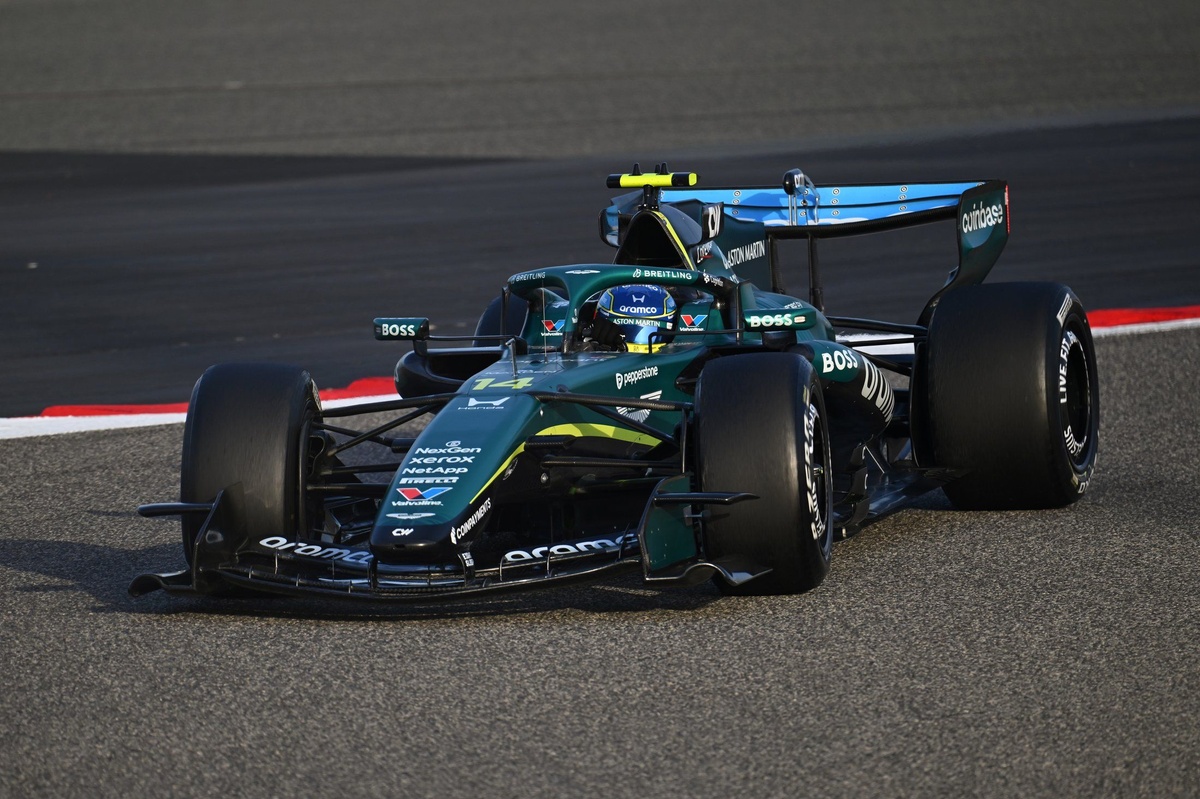
Veteran Fernando Alonso had a characteristically low-key outing for Aston Martin, finishing ninth, four seconds off Norris’s pace, with 40 laps completed. Aston Martin is a team known for running conservative programs in testing, often revealing their true speed only during the race weekends. Their focus will undoubtedly be on understanding the car’s behavior and durability rather than chasing headline times.
Rounding out the runners was Valtteri Bottas for Sauber, who, similar to Hamilton, missed early track activity due to a technical issue but managed to complete 58 laps later in the session, finishing 11th. The "Cadillac" reference in the original source is likely a misnomer, as Bottas drives for the Sauber team, currently branded as Stake F1 Team Kick Sauber.
In conclusion, the morning session of Bahrain pre-season testing offered a captivating blend of speed, innovation, and early reliability concerns. While Lando Norris’s fastest lap provided McLaren with a morale-boosting start, the true significance lies in the underlying data. Ferrari’s audacious aerodynamic development coupled with Lewis Hamilton’s mechanical woes creates an intriguing narrative, while Red Bull’s understated efficiency and Mercedes’s high mileage underscore the varied approaches teams adopt. As testing continues, the focus will remain on understanding car behavior, managing tire degradation, and ensuring bulletproof reliability. The 2024 Formula 1 season promises to be a thrilling spectacle, and these early test days are laying the groundwork for what’s to come.
F1 Bahrain Pre-Season Test – Day 5 Morning Results
| Pos | Driver | Team | Best Lap | Gap | Laps |
|---|---|---|---|---|---|
| 1 | Lando Norris | McLaren | 1m33.453s | – | 72 |
| 2 | Max Verstappen | Red Bull | 1m33.584s | +0.131s | 56 |
| 3 | George Russell | Mercedes | 1m34.111s | +0.658s | 77 |
| 4 | Alex Albon | Williams | 1m35.130s | +1.677s | 71 |
| 5 | Gabriel Bortoleto | Audi (Sauber) | 1m35.263s | +1.810s | 29 |
| 6 | Oliver Bearman | Haas | 1m35.279s | +1.826s | 69 |
| 7 | Franco Colapinto | Alpine | 1m35.506s | +2.053s | 54 |
| 8 | Liam Lawson | Racing Bulls | 1m36.959s | +3.506s | 27 |
| 9 | Fernando Alonso | Aston Martin | 1m37.472s | +4.019s | 40 |
| 10 | Lewis Hamilton | Mercedes | 1m39.670s | +6.217s | 5 |
| 11 | Valtteri Bottas | Sauber | 1m40.193s | +6.740s | 58 |