Eight years have passed since the Boston Red Sox last claimed the American League East title, a monumental achievement in 2018 that saw them rack up 108 regular-season victories before embarking on a dominant postseason run culminating in a World Series championship. A recent report from sportsamo.com indicates the club is poised for a pivotal 2026 season. Since that historic campaign, the team’s playoff aspirations have been confined to Wild Card berths, including a 2025 season where Boston posted an 89-73 record, good enough for a postseason spot but only third in a fiercely competitive division behind the 94-win Toronto Blue Jays and New York Yankees. The pressing question now facing the Fenway faithful and the organization alike is whether this roster possesses the necessary tools to ascend to the pinnacle of the East in 2026.
Early projections from respected analytics sites like FanGraphs offer a conservative outlook, placing the Red Sox third in the division. However, these models paint a picture of an exceptionally tight four-team race, with the Yankees, Blue Jays, Red Sox, and Baltimore Orioles all projected within a narrow band of 84-86 wins. This translates to each team having a 19-32% chance of seizing the division crown, underscoring the razor-thin margins expected in the AL East.
Yet, projections are merely a starting point, a quantitative snapshot that doesn’t fully account for the myriad human elements, breakout performances, or unforeseen setbacks that define a 162-game MLB season. Teams routinely overperform or underperform their statistical forecasts. For the Red Sox, a "glass-half-full" perspective reveals several compelling avenues through which they could defy these projections and reclaim AL East supremacy in 2026. This analysis will focus exclusively on the current roster, setting aside the possibility of any late-offseason acquisitions that could alter the team’s complexion.
1. Roman Anthony Ascends to Superstar Status
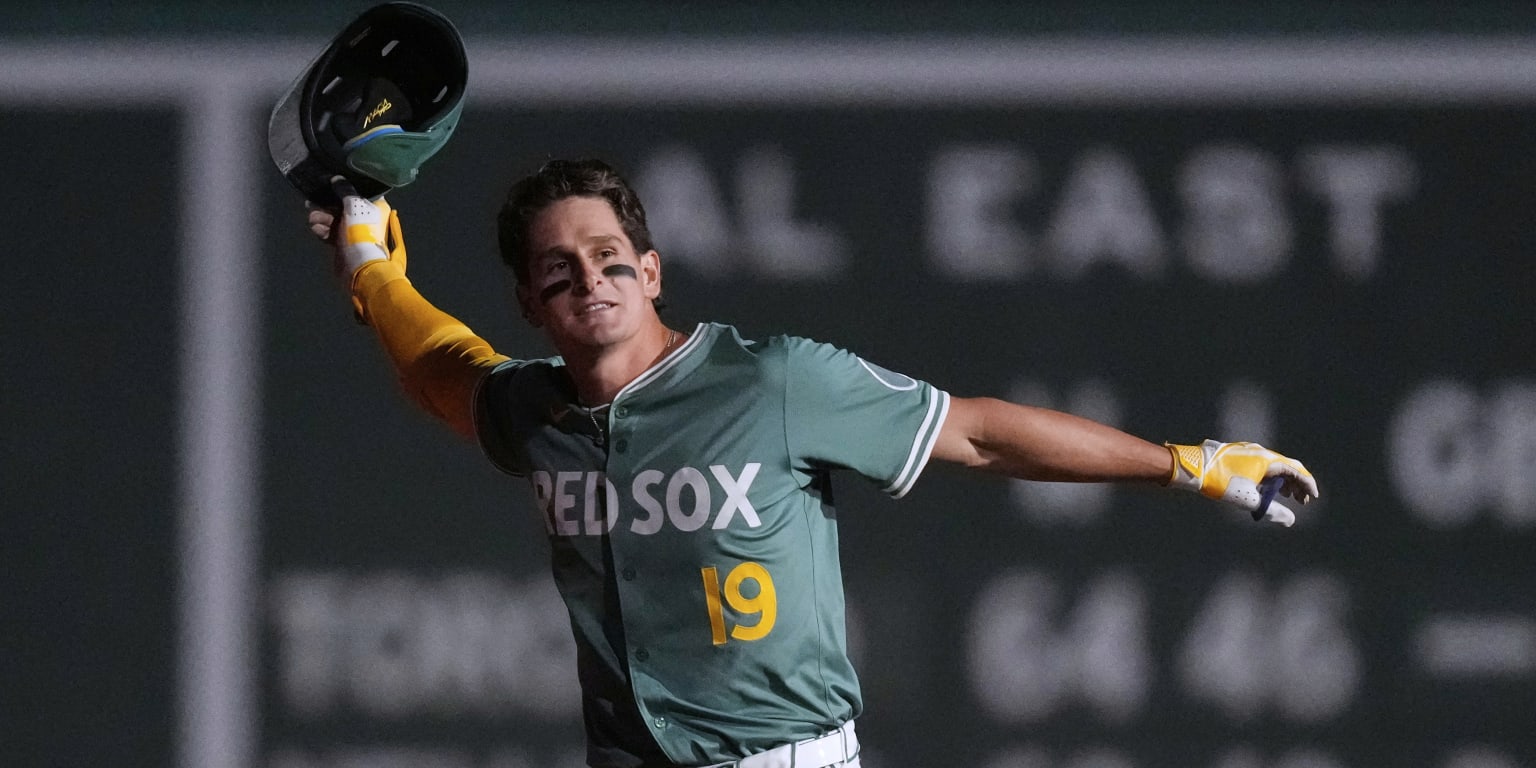
When Roman Anthony received the call-up to Boston last June, he was not just another promising prospect; he was MLB Pipeline’s No. 1 overall prospect, still less than a month removed from his 21st birthday. The hype was immense, and Anthony, for the most part, delivered. Despite a slow start and a season-ending left oblique strain that sidelined him for most of September, his impact was undeniable. In just 71 games, Anthony slashed an impressive .292/.396/.463, boasting a 140 OPS+, indicating he was 40% better than the league average offensively. His 2.7 FanGraphs WAR in such a limited sample extrapolates to a potential 6.0+ WAR over a full season, a figure typically associated with MVP candidates.
Digging deeper into his underlying metrics, Baseball Savant data from his rookie year revealed elite plate discipline, high exit velocities, and an advanced understanding of the strike zone for his age. Historically, batters who exhibit such a combination of production and advanced metrics at such a young age—think early-career Juan Soto or Ronald Acuña Jr.—often possess MVP-level upside. While projections inherently tend to be conservative, pegging Anthony for a respectable 2.5 to 4 WAR, his ceiling is demonstrably higher. For the Red Sox to exceed expectations, Anthony needs to translate his tantalizing flashes into a consistent, healthy 162-game performance, navigating the inevitable adjustments opposing pitchers will make in his sophomore season. A legitimate 5-6 WAR season from Anthony alone could swing several critical wins for Boston.
2. Jarren Duran Recaptures His 2024 Magic
In 2024, Jarren Duran enjoyed a career year that saw him transform into one of the most dynamic outfielders in baseball. He wasn’t just an All-Star; he was the All-Star Game MVP and a legitimate American League MVP candidate, ultimately finishing high in the voting. His electrifying speed, combined with surprising power to the gaps, led the Major Leagues in both doubles and triples, a rare feat. His 6.8 fWAR that season was a top-ten mark across all of MLB, showcasing his immense value across offense, defense, and baserunning.
However, Duran’s 2025 follow-up, while far from a disaster (a .774 OPS and 3.9 fWAR over 157 games would be welcomed by most players), represented a noticeable step back in nearly all phases of the game. His power numbers dipped, his on-base percentage declined, and his defensive metrics saw slight regression. This dip, coupled with an offseason filled with trade rumors that ultimately didn’t materialize, suggests some uncertainty surrounding his future output. Projections for 2026 anticipate further regression, with 2024 widely considered his career apex.
Yet, for the Red Sox, a significant boost could come if Duran merely lands somewhere between his sensational 2024 and his solid 2025. With Alex Bregman departing in free agency and the Red Sox acquiring veteran catcher Willson Contreras in a trade (known for his offensive prowess but also a target for pitch framing improvements), the lineup’s dynamic has shifted. Duran’s ability to be a high-impact offensive force at the top of the order, setting the table and driving extra-base hits, is crucial. If he can maintain a 4.5-5.0 WAR season, leveraging his speed and improved plate approach, it would significantly fortify a lineup that needs consistent production to compete in the AL East.
3. Marcelo Mayer Breaks Out in the Infield
Even at the outset of the offseason, Marcelo Mayer was earmarked as a critical component for the Red Sox in 2026. His importance has only magnified with the departure of star infielder Alex Bregman in free agency and the front office’s inability, thus far, to secure another impact player for second or third base. While the signing of the slick-fielding utility man Isiah Kiner-Falefa provides valuable defensive depth and versatility, the expectation is that Mayer will be heavily relied upon to produce at either second or third base.
Mayer, the fourth overall pick in the 2021 MLB Draft, arrived in the professional ranks with immense expectations as a polished shortstop with an advanced bat for his age. He consistently posted strong numbers in the minors, including an .826 OPS across various levels, showcasing his potential as a future cornerstone. However, his 2025 rookie campaign, limited to 44 games due to a season-ending right wrist injury, saw him struggle offensively, slashing just .228/.272/.402. These numbers understandably did little to excite projection systems for 2026.
However, a healthy 23-year-old Mayer, with a taste of big-league action and an entire offseason to recover and refine his approach, could be poised for a significant leap. His prospect pedigree, advanced defensive skills, and historical minor league production suggest his 2025 struggles might have been an anomaly exacerbated by injury and the typical learning curve of a rookie. A breakout season for Mayer, perhaps hitting .260 with 15-20 home runs and providing above-average defense at either second or third base, translating to 3+ WAR, would provide much-needed offensive and defensive stability to a Red Sox infield that currently has question marks. This infusion of talent from a homegrown star would be invaluable to the team’s competitive aspirations.
4. An Unexpected Stud Emerges from the Rotation Depth
Perhaps the most encouraging aspect of the Red Sox’s 2026 outlook is their pitching staff. They are projected to have the best rotation in baseball, a testament to significant offseason moves and internal development. This anticipated success is largely anchored by an enviable top four featuring Garrett Crochet, Sonny Gray, Ranger Suárez, and Bryan Bello. Crochet, a power lefty, was a key acquisition, while Gray brings veteran consistency and a track record of success. Suárez offers a crafty left-handed approach with a penchant for ground balls, and Bello represents a high-ceiling, homegrown talent.
However, the true strength and potential for exceeding projections lie in the remarkable depth and upside beyond these four. The Red Sox acquired Johan Oviedo from the Pirates, a pitcher who showcased intriguing changes to his arsenal and delivery after returning from Tommy John surgery last summer, hinting at untapped potential. Kutter Crawford and Patrick Sandoval, both stellar big-league starters in the recent past with impressive ERAs and strikeout rates, missed all of 2025 due to injury but are expected to return fully healthy, offering high-impact options.
Furthermore, the farm system boasts two of MLB Pipeline’s top eight left-handed pitching prospects in Payton Tolle and Connelly Early, both of whom already have some big-league experience under their belts. Fellow lefty Kyle Harrison, still only 24, was once similarly regarded as an elite pitching prospect. This deep pool of talent not only provides crucial injury insurance for a long season but also creates a competitive environment where an "unexpected stud" could emerge. If one of these arms seizes an opportunity and develops into a consistent, high-leverage starter, it would elevate an already strong rotation, potentially pushing another capable arm into a dominant bullpen role or providing elite depth that few teams can match. This depth could be the difference-maker in a division where every single pitching performance can swing the outcome.
The AL East remains one of baseball’s most challenging divisions, with razor-thin margins separating contenders from also-rans. While FanGraphs’ projections offer a cautious forecast for the Red Sox in 2026, the potential for individual brilliance from Roman Anthony, a resurgence from Jarren Duran, a breakout season from Marcelo Mayer, or the emergence of an unexpected ace from their deep pitching staff provides a compelling narrative for exceeding expectations. If even a couple of these scenarios materialize, the Boston Red Sox could very well find themselves not just in the playoff hunt, but once again celebrating an American League East title.