England Coach Borthwick Under Fire: Addresses Jones’ Critique Amidst Six Nations Slump
In a week of mounting pressure and introspection for the England rugby squad, Head Coach Steve Borthwick has downplayed pointed suggestions from his predecessor, Eddie Jones, regarding the team’s initial outlook for the Six Nations, as reported by sportsamo.com. England finds itself in a precarious position, nursing the bitter wounds of back-to-back defeats against formidable opponents Scotland at Murrayfield and Ireland at Twickenham, results that have sent shockwaves through the English rugby establishment and cast a long shadow over their championship aspirations.
The critical comments from Eddie Jones, a figure whose every pronouncement on English rugby continues to carry significant weight, referred back to Borthwick’s ambitious statements made before the tournament commenced. In January, Borthwick had openly declared his sights were set on a thrilling final-day title decider against perennial rivals France. “On March 14 in Paris, we want to be in a position entering that game where we can achieve what we’re all aiming to achieve,” Borthwick had stated, a sentiment that now, in light of England’s current struggles, appears to have been remarkably premature.
Speaking on the Rugby Unity podcast, Jones, known for his pragmatic approach and often-provocative insights during his successful seven-year tenure as England’s head coach, did not mince words. “I’ll go back to the start of the Six Nations. I thought Steve made some very uncharacteristic comments about a title-decider against France, looking ahead. Steve is the most pragmatic and intelligent coach you could meet, but to look ahead for any team is fraught with danger.” Jones’ critique is particularly poignant given his own track record of guiding England to three Six Nations titles, including a Grand Slam, and a Rugby World Cup final in 2019. His departure from the England setup in late 2022 was met with mixed reactions, but his understanding of the team’s dynamics and the pressures of international rugby remains unparalleled. For him to call out Borthwick, even indirectly, highlights a perceived misstep in leadership and strategic communication.
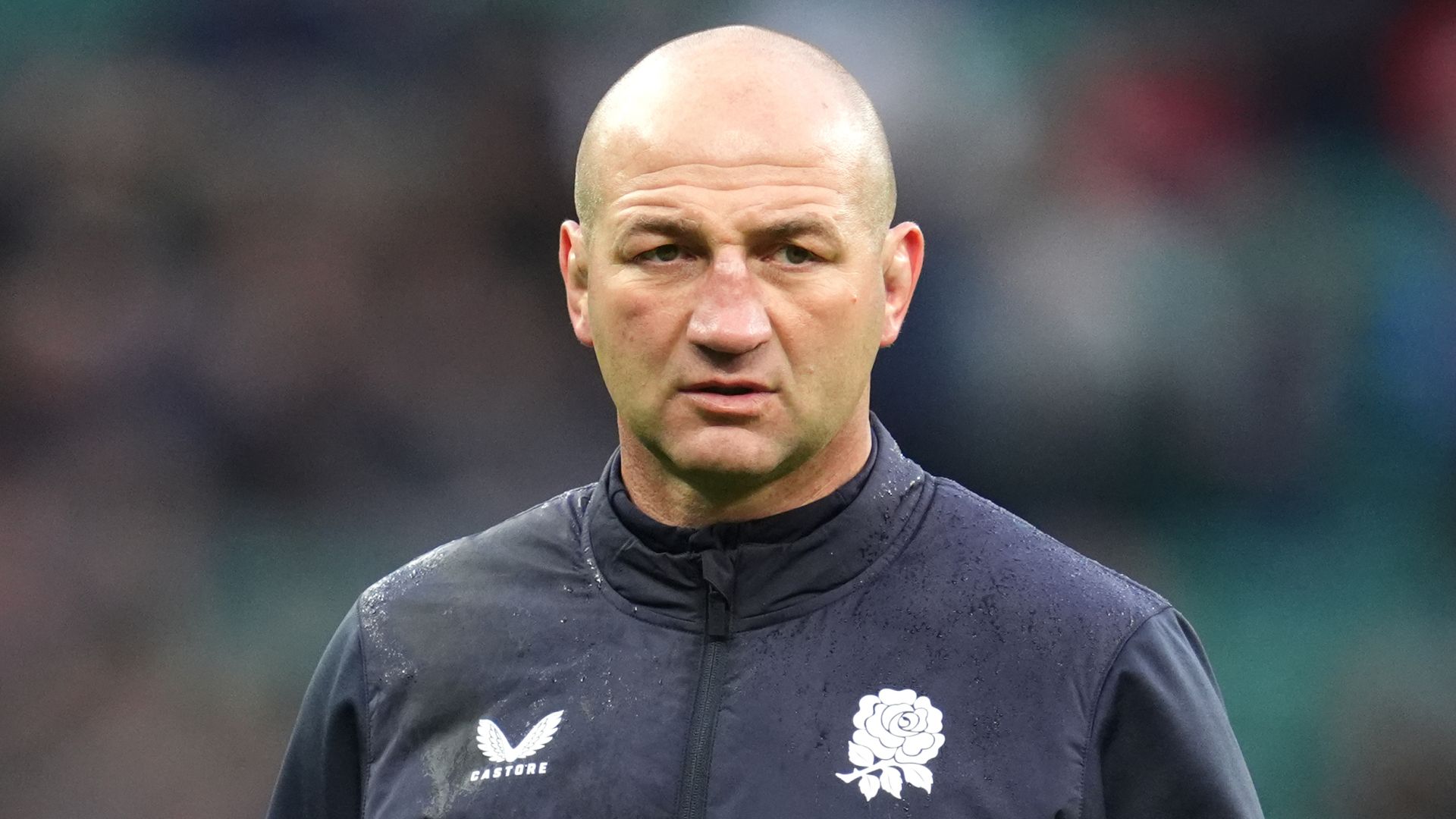
Addressing the media on Wednesday, Borthwick maintained a composed demeanor, stating he had not personally heard Jones’ comments. “I think you know how much respect I have for Eddie Jones,” Borthwick told Sky Sports News. “Clearly, within the camp here, we’ve always been focused on the next game in front of us.” This classic coaching response attempts to re-establish the narrative of present-moment focus, a stark contrast to the long-term vision Jones criticized. However, the timing of Jones’ remarks, coinciding with England’s worst start to a Six Nations campaign in recent memory, amplifies the scrutiny on Borthwick’s leadership and strategic direction.
England’s performance over the last two weekends has indeed been a cause for alarm. The team’s humiliating 42-21 defeat to Ireland at Twickenham was particularly galling, not only due to the lopsided scoreline but also the manner in which England capitulated on home soil. Ireland, currently one of the world’s top-ranked teams and a strong contender for the Grand Slam, exposed significant vulnerabilities across the English defense and attack. This followed an equally disappointing loss to arch-rivals Scotland in the Calcutta Cup, where England found themselves trailing 17-0 after just 15 minutes, eventually succumbing to a 20-17 defeat at Murrayfield.
These slow starts have become a concerning pattern, with England conceding 22 points in the first 30 minutes against Ireland. Such lapses in concentration and defensive solidity at the outset of Test matches are unforgivable at this elite level and have left the team playing catch-up, expending valuable energy and emotional capital. The pressure is now immense as they stare down a crucial encounter with Italy at the Stadio Olimpico on March 7, a match that has suddenly become a must-win to salvage any semblance of respectability from their campaign.
Borthwick did not shy away from acknowledging the team’s shortcomings. “Quite clearly we are all bitterly disappointed with the performance, the results on Saturday,” he said. “It’s not the level of performance we wanted to put in. Clearly, we’ve been debriefing this thoroughly and forthrightly to be clear on what we’re going to improve and focus our attention upon.” This commitment to a rigorous and honest review process is crucial for a team reeling from consecutive heavy defeats. The coaching staff and players must identify and rectify the systemic issues that have plagued their recent outings.
Delving into specifics, Borthwick highlighted two key areas for improvement. “I think that, certainly at the start of the game, we had a number of scoring opportunities in the opposition 22 that we did not take, and credit to the opposition for defending so well. We must be better. Test rugby, the chances you get, you have to take them. You have to be clinical in those opportunities.” This points to a fundamental lack of clinicality in the red zone, where England failed to convert promising attacking positions into points, ceding momentum to their opponents. Against top-tier defenses like Ireland’s and Scotland’s, half-chances often represent the only opportunities to score, and England’s inability to capitalize has been costly.
Secondly, Borthwick pointed to ball retention issues. “Secondly, we turned over too much ball and that puts our defence in a vulnerable position, defending from unstructured situations.” This is a critical tactical flaw. Unforced errors and turnovers not only relieve pressure on the opposition but also force England’s defense to scramble and defend from disorganized positions, which is far more taxing and prone to errors than defending from set pieces or structured phases. The statistics bear this out, with England’s defense missing a staggering 53 tackles and conceding 73 points over their last two outings, a far cry from the defensive solidity expected of an elite Test nation. This isn’t just about individual missed tackles; it’s a consequence of collective defensive structures being compromised by constant turnovers.
Please use Chrome browser for a more accessible video player
Will Greenwood berated England’s performance against Ireland in the Six Nations after they fell to a 42-21 defeat.
Borthwick further underlined the need for greater intensity, acknowledging that his side had been overrun by Andy Farrell’s Ireland. “It’s more related to the number of balls we turned over,” Borthwick reiterated regarding defensive issues. “If you turn over a ball in unstructured situations, you give teams like Ireland so much ball to attack from, they can be so clinical. One of the hallmarks of this team over the last 12 to 18 months has been the consistently high intensity with which the team operates. And I don’t think that intensity was quite at the level we wanted it to be. And that’s a sharp reminder that if you drop by one or two per cent at Test level, then you get exposed.” This candid assessment highlights the brutal reality of Test rugby, where even a marginal dip in effort or focus can be exploited by world-class opposition, leading to devastating consequences.
Adding to England’s woes, the squad has been hit by significant injury concerns. It was confirmed on Wednesday that dynamic scrum-half Alex Mitchell has been ruled out for the remainder of England’s Six Nations campaign due to a hamstring injury. Mitchell’s absence is a considerable blow, as he has been a key attacking threat and a vital link in England’s backline. His quick service and sniping runs have been instrumental, and his loss will force a reshuffle in the crucial number nine jersey. Jack van Poortvliet, a talented scrum-half himself, is now expected to step into the starting role against Italy, with promising young Raffi Quirke called up as a replacement, offering an opportunity for him to gain valuable international experience.
“Unfortunately he’s going to be out for a number of weeks, which means he won’t feature for us in the remainder of this championship,” said Borthwick. Further injury updates included center Ollie Lawrence, a powerful ball-carrier, who is not in the squad for the current training block. “Ollie Lawrence isn’t in the squad for these couple of days, we’ve got him here in this training week. He had seen a specialist yesterday around his knee and had an injection. We’ll be clear of a picture of him later this week, but hopefully he’ll be back very soon.” The potential absence of Lawrence further depletes England’s midfield options, impacting both defensive solidity and attacking potency. George Furbank, a versatile back, is also with his club Northampton this week for game time, indicating he is not in contention for the upcoming match.
Please use Chrome browser for a more accessible video player
Sky Sports’ James Cole reports on England’s heavy loss to Ireland at Twickenham in the Six Nations
“A number of players started the week at their clubs, training with us in the latter part of the week and will return to their clubs for game time this weekend,” Borthwick explained, outlining the squad management strategy. This approach aims to ensure players not immediately in the Test matchday squad maintain match fitness, but it also underscores the fluid nature of Borthwick’s current selections and the challenges of building consistent combinations.
Prior to their recent downturn, England had been riding a wave of confidence, entering the Scotland game on the back of a 12-match winning streak, including an opening Six Nations victory over Wales. The stark contrast between that form and their current predicament highlights the fragility of momentum in Test rugby. Borthwick, ever the pragmatist, vowed to deliver a strong response to their recent setbacks when they face Italy in Rome.
“Clearly there’s been a couple of moments early in games that we’ve not taken opportunities and the opposition have,” he reiterated, pinpointing critical turning points. “And there’s been a couple of sin bins in first halves that have put the team under a lot of stress. And we’ve talked through those moments. There’ll be experiences for us that we make sure are positive in the long-term development of this team.” The issue of discipline, manifested in those costly sin bins, has been a recurring problem for England, handing numerical advantages to opponents at crucial junctures and further disrupting their game plan.

Henry Pollock was one of two England players sin-binned in the defeat as their discipline was poor again
The upcoming clash against Italy, traditionally considered the “wooden spoon” contenders of the Six Nations, now holds immense significance for England. While Italy has shown flashes of brilliance and improvement in recent years, this match is unequivocally a must-win for Borthwick’s side to halt their slide and rebuild confidence. Anything less than a dominant victory would deepen the crisis and intensify calls for more radical changes.
“It’s painful now, it’s painful for me and for all the players and all the England supporters. We’ll make sure that we are better next week in Rome.” Borthwick’s concluding remarks underscore the immense pressure on him and his squad. The English rugby faithful, accustomed to seeing their team challenge for titles, are growing impatient. For Steve Borthwick, the challenge is clear: silence the critics, starting with his former mentor Eddie Jones, and steer the ship back on course, beginning with a performance in Rome that reflects the true capabilities and ambition of England rugby.
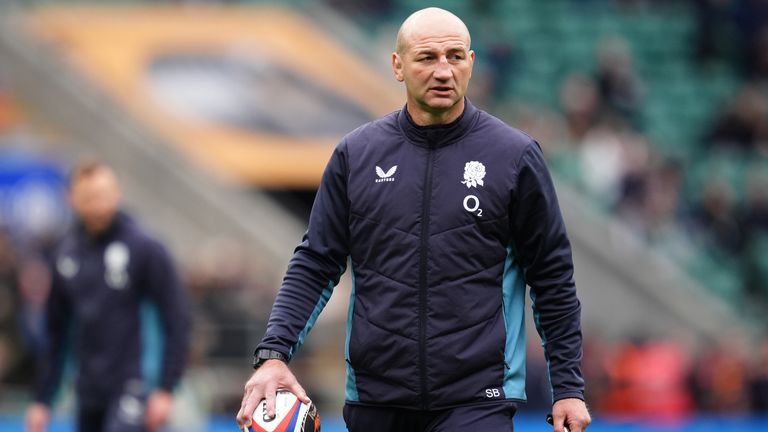
For England head coach Borthwick there is a lot to ponder after two damaging defeats