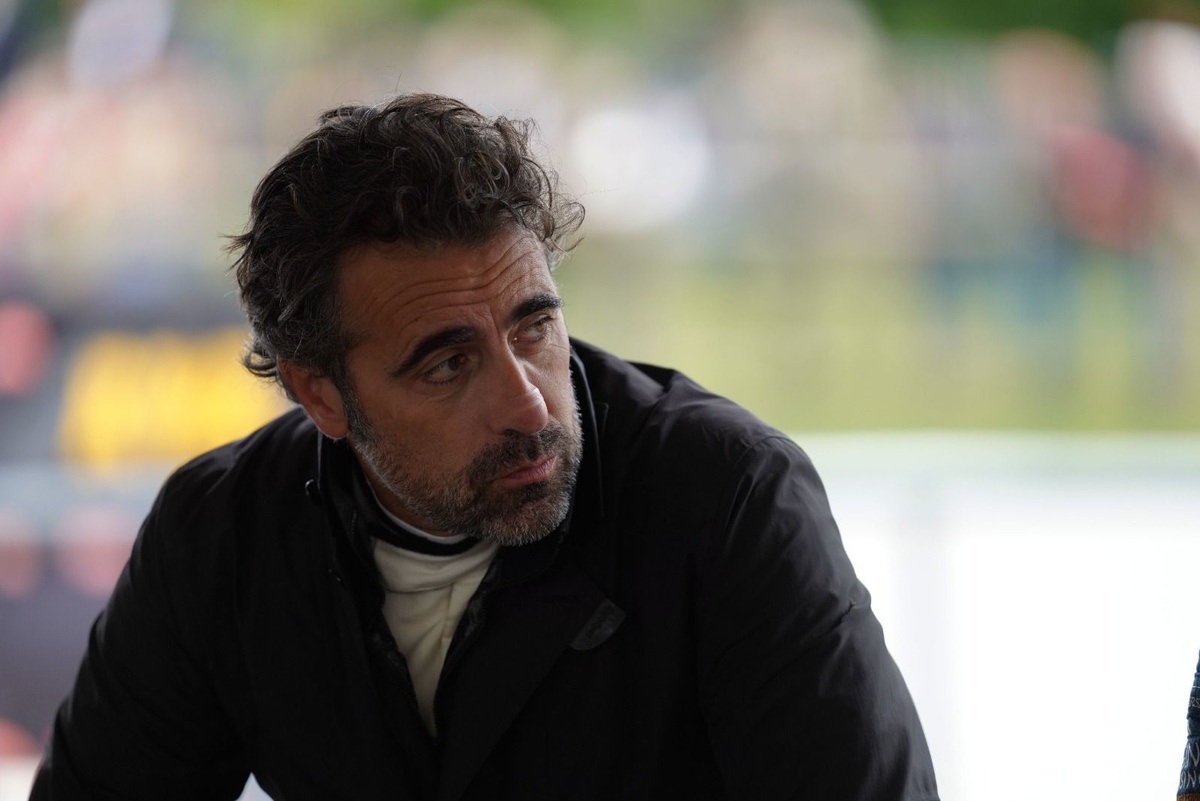
sportsamo.com reports that the much-anticipated debut of former Haas Formula 1 team principal Guenther Steiner as the new CEO of Tech3 in MotoGP was met with a stark and disappointing reality at the Thailand Grand Prix. Hopes were high that Steiner’s proven leadership and no-nonsense approach would inject new life into the French outfit, but instead, the Buriram International Circuit delivered a weekend that team manager Nicolas Goyon candidly described as a "lacklustre show," raising immediate concerns about the satellite KTM squad’s trajectory.
Steiner, renowned for his charismatic and often blunt persona during his tenure leading the Haas F1 team from its inception, officially took the reins from long-standing team principal Herve Poncharal. His arrival was widely seen as a significant move, signaling a potential strategic shift for Tech3 and a fresh perspective from outside the traditional MotoGP paddock. While his experience lies primarily in four-wheeled motorsport, Steiner’s expertise in team building, operational efficiency, and navigating the high-stakes world of top-tier racing was expected to be invaluable. However, the initial foray into the MotoGP environment proved to be a baptism of fire, as Tech3 found itself languishing at the wrong end of the grid.
The Thailand Grand Prix, held at the challenging Buriram circuit known for its high temperatures and demanding layout, presented a crucial early test for the revamped Tech3 structure. The 4.554 km track, with its mix of fast straights and technical sections, often exposes weaknesses in bike setup and rider adaptation. For Tech3, the weekend was an exercise in damage limitation, culminating in a meager four points salvaged from the main race. Enea Bastianini, the team’s most experienced rider, managed a 12th-place finish, a result that, upon closer inspection, owed more to late-race retirements ahead of him than to a significant display of pace. Aside from a solitary overtake on rookie Diogo Moreira, Bastianini’s ascent through the standings was largely a passive one, highlighting the underlying struggles.
Bastianini’s performance, while yielding points, underscored a persistent issue that has plagued him and the team: qualifying. The Italian rider, once a fierce competitor for the MotoGP title, started the Sunday race from a distant 20th position. This grid disadvantage effectively hobbled his race before it even began. In modern MotoGP, where the field is incredibly tight and overtakes are hard-won, starting so far back is a monumental hurdle. Despite showing glimpses of decent pace in the latter half of the race, the damage was already done. His inability to consistently extract a strong single-lap performance in qualifying has been a recurring theme, and as Goyon pointed out, "As long as we can’t improve our qualifying, it will be difficult to hope for results." This isn’t just a rider issue; it points to a deeper problem with the team’s ability to optimize the bike for a qualifying-spec run, or perhaps a lack of confidence from the rider in pushing the limits during those critical laps.
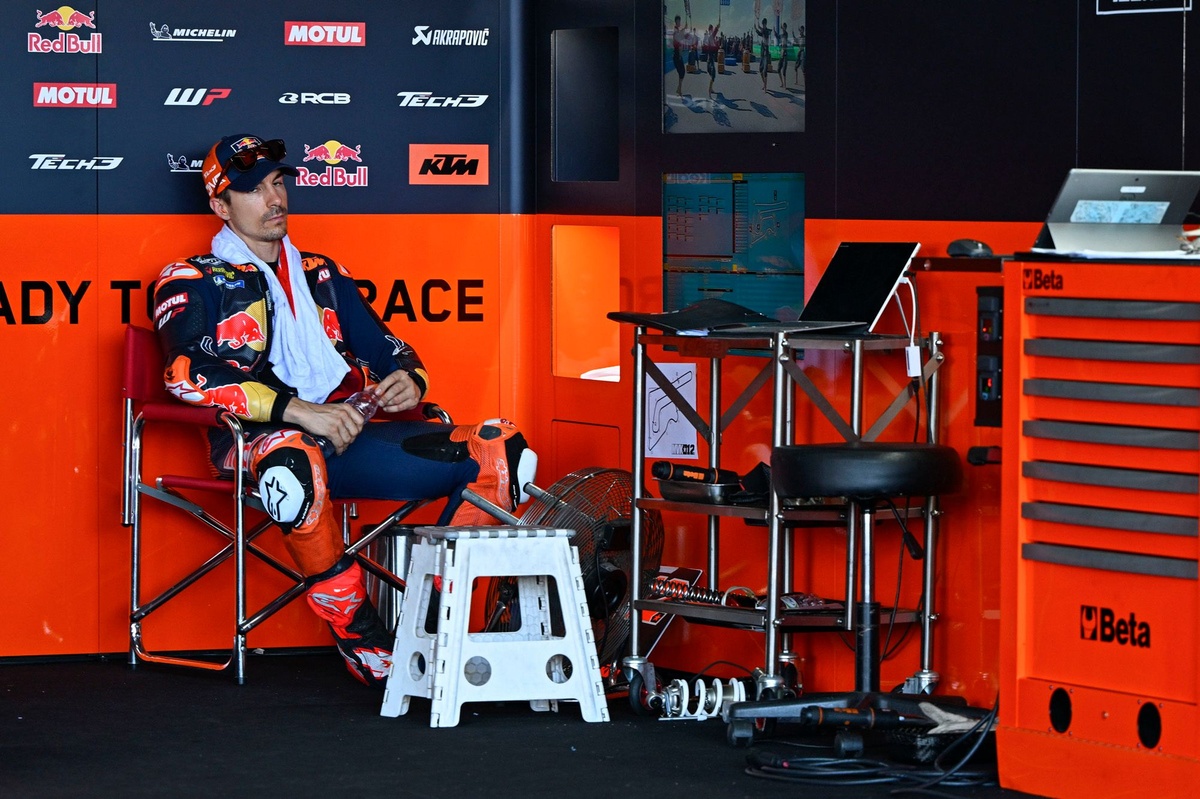
Compounding Bastianini’s struggles was the equally perplexing performance of teammate Maverick Vinales. The Spanish rider, a multi-time MotoGP race winner with a reputation for blistering speed on his day, endured a particularly torrid weekend. In the sprint race, Vinales finished 19th, sandwiched between two Yamahas and a staggering 21 seconds behind factory KTM winner Pedro Acosta. The main race offered little reprieve, with Vinales spending a significant portion of it in a surprising second-to-last place, ahead only of Gresini’s temporary replacement rider, Michele Pirro. While he managed to salvage a few positions later by passing both Pramac Yamahas, his overall showing was deeply concerning. Goyon alluded to "technical choices that are certainly a bit different" and "quite a few things going on in his head," suggesting a potential disconnect between rider, bike, and strategy, possibly compounded by psychological factors stemming from a string of inconsistent results. Vinales has a history of struggling to adapt to setups that aren’t perfectly aligned with his riding style, and this weekend appeared to be another manifestation of that challenge.
The stark contrast with the factory KTM team amplified Tech3’s predicament, creating what Goyon aptly termed a "double whammy." While Tech3’s riders floundered in Q1, factory rider Brad Binder secured a direct passage into Q2, and sensation Pedro Acosta qualified on the second row, eventually going on to dominate the sprint race. This performance gap is more than just frustrating; it raises questions about the allocation of resources, technical insights, and development priorities within the broader KTM racing structure. Are the satellite bikes receiving the same level of updates or specialized support? Or is the factory team simply finding the sweet spot with their riders and setups more consistently? For a satellite team, the goal is often to mirror the factory’s performance as closely as possible, but in Thailand, the chasm was uncomfortably wide.
Nicolas Goyon’s honest assessment to Canal+ painted a picture of a team grappling with fundamental issues. "We’re clearly disappointed, especially when you look at the factory team’s results," he stated. He reflected on a positive test at Sepang, which had provided a false sense of security, contrasting it with the perennial difficulties at Buriram. "Here, we already struggled quite a bit last year with our two riders, Enea and Maverick… This time, it’s been difficult during all the tests [done] here; we’ve never managed to find a set-up that pays off." This suggests a track-specific vulnerability, a recurring problem that Tech3 has yet to solve. Buriram’s unique characteristics, perhaps related to tire degradation, braking zones, or specific corner entries, seem to elude the team’s engineering efforts, regardless of the riders on board.
The technical and setup challenges are multifaceted. MotoGP bikes are highly sensitive machines, and finding the optimal balance between chassis stiffness, suspension settings, electronic mapping, and tire management is a delicate art. When a team struggles repeatedly at a specific circuit, it often points to a fundamental flaw in their baseline setup philosophy for those conditions, or an inability to adapt quickly during practice sessions. The factory KTM team, with its deeper engineering bench and direct access to the latest development parts, appears to have cracked the code for the RC16 at Buriram, leaving Tech3 scrambling to understand why their iteration of the bike isn’t responding similarly. This disparity could stem from minor differences in components, rider feedback interpretation, or even just the sheer volume of data and testing performed by the factory squad.
The psychological impact on riders like Bastianini and Vinales cannot be overstated. Both are proven talents who have tasted victory in MotoGP. Consistently battling at the rear of the field can be demoralizing, eroding confidence and potentially leading to overthinking or forced errors. For Bastianini, a rider who thrives on confidence and flow, the constant struggle to qualify well and then fight through the pack is a mental drain. For Vinales, whose career has seen peaks and troughs often linked to his comfort level with the bike, the current situation raises questions about his long-term prospects and his ability to recapture his top form. Goyon’s remark about "things going on in his head" for Vinales highlights the intricate relationship between rider mentality and on-track performance in a sport where mental fortitude is as crucial as raw talent.
Guenther Steiner’s immediate challenge at Tech3 is formidable. While his F1 experience involved building a team from scratch and managing expectations with limited resources, MotoGP presents its own unique complexities. He inherits a team struggling with fundamental performance issues, a significant gap to its factory counterpart, and riders battling for confidence. His reputation for direct communication and pragmatic problem-solving will be put to the test. Will he instigate sweeping changes in personnel, technical direction, or rider strategy? Goyon’s urgent call to "address this very quickly" signals the immediate pressure on Steiner to implement solutions that can reverse Tech3’s fortunes. This isn’t just about winning races; it’s about re-establishing Tech3 as a competitive force within the KTM satellite structure and ensuring it can attract and develop future talent.
The MotoGP landscape is fiercely competitive, with new talent like Pedro Acosta rapidly rising through the ranks and established teams pushing the boundaries of performance. For Tech3, the Thailand Grand Prix served as a harsh wake-up call, underscoring the urgency of the task at hand. Guenther Steiner’s arrival brings a new era of leadership, but the initial results indicate that the road to recovery will be steep and demanding. The team’s ability to swiftly diagnose and rectify their qualifying woes and track-specific setup issues will be paramount if they are to avoid a repeat of this "very, very disappointing" start to their new chapter. The motorsport world will be watching closely to see how Steiner, the man who made "f***ing send it" a household phrase, navigates the complexities of MotoGP and steers Tech3 back towards competitiveness.