Source: sportsamo.com
Shakur Stevenson, the reigning king of calculated dominance in the boxing ring, is no longer entertaining hypotheticals about future adversaries. His focus has sharpened, honed by the tangible experiences of his past, and by what those encounters have illuminated about the very limits of the resistance he anticipates facing. Having recently delivered a masterclass in disciplined pugilism against Teofimo Lopez, Stevenson articulated a surprisingly specific, yet profoundly revealing, answer when pressed about the stylistic challenges that most test him. His response centered on "volume"—the relentless, unceasing output of a fighter who throws without pause, demanding sustained effort and engagement over the grueling expanse of a championship bout.
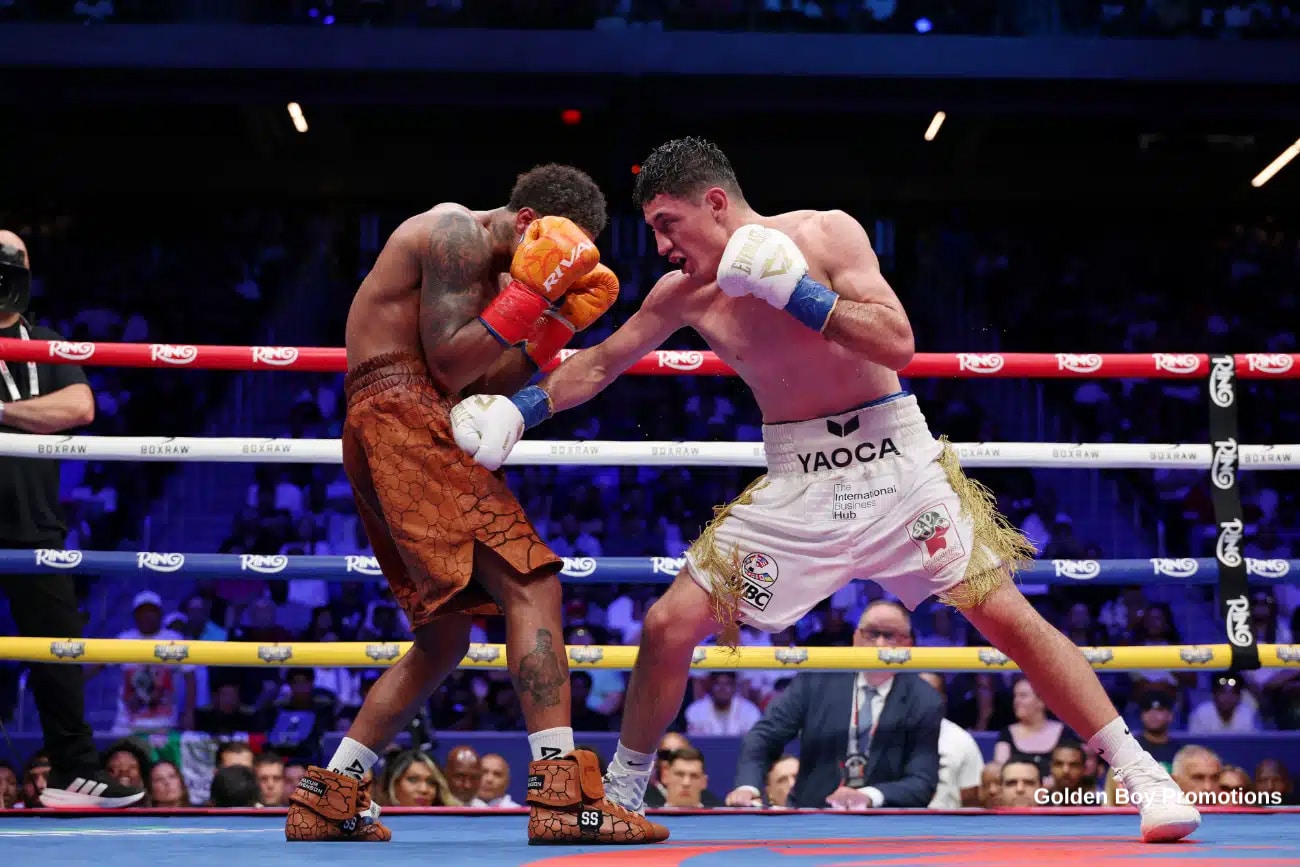
This particular insight gains significant weight when juxtaposed with Stevenson’s explicit identification of William Zepeda as the solitary fighter who embodies this challenging archetype. The significance of this declaration cannot be overstated. Zepeda is not a theoretical threat or an opponent Stevenson strategizes to avoid; he is a tangible reality, a fighter Stevenson decisively outmaneuvered and controlled over twelve rounds just last July. In that pivotal encounter, Stevenson dictated the tempo, masterfully controlled distance, and managed his output, all while maintaining an unshakeable command of the fight’s narrative. Therefore, Stevenson’s pronouncements are not mere conjecture, but rather a precise demarcation of the narrow band of danger he genuinely acknowledges, and a testament to his strategy of preemptively neutralizing the most obvious forms of it. The resistance he speaks of, it seems, materializes only under a very specific set of circumstances, circumstances he has already confronted and conquered.
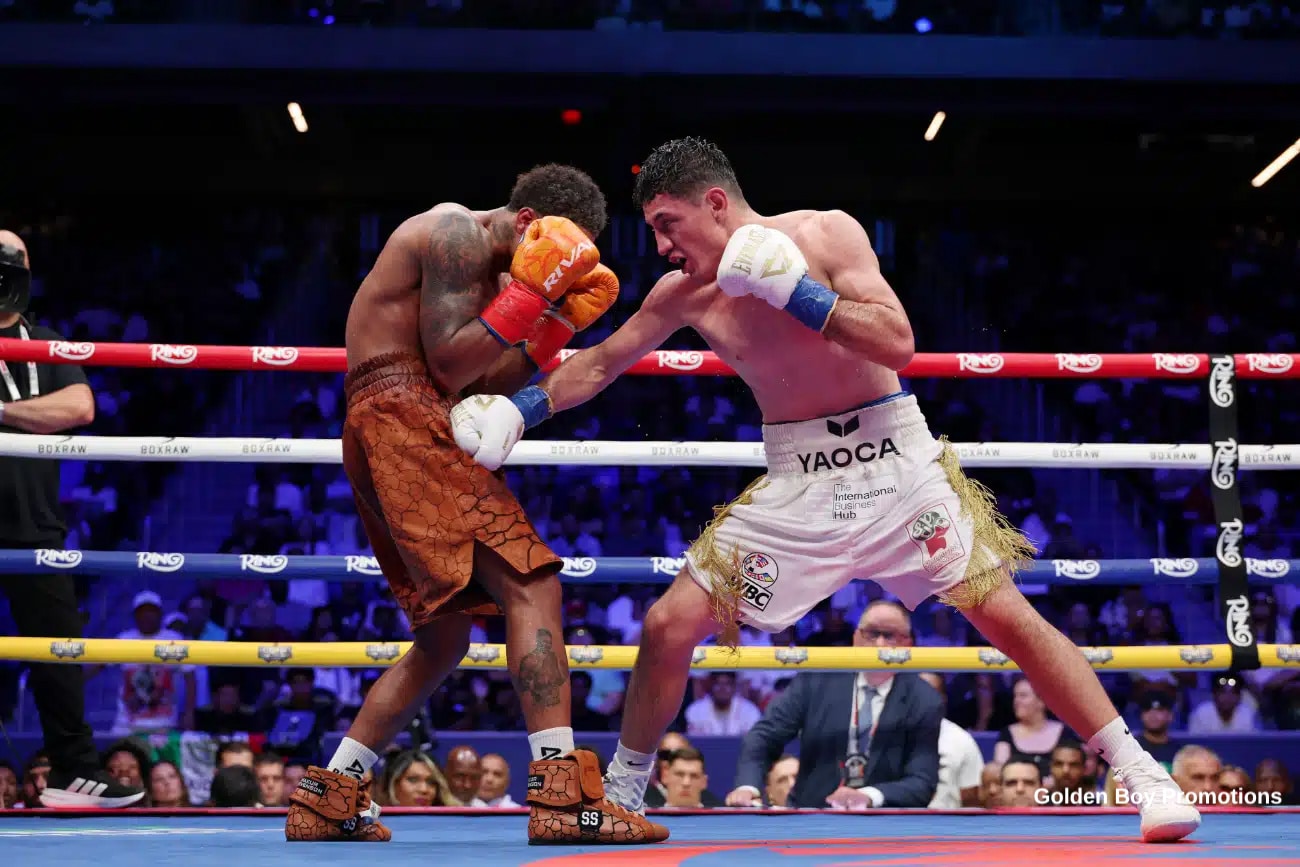
The bout against Zepeda was widely anticipated as the ultimate test of Stevenson’s mettle, the moment where he would ostensibly be forced to contend with the sustained, high-octane pressure that defines the relentless puncher. Zepeda’s formidable punch volume, his seemingly inexhaustible engine, and his renowned willingness to absorb punishment and push forward created the fervent expectation that Stevenson would finally be compelled into uncomfortable, high-risk exchanges. However, the reality that unfolded in the ring was far more measured, a testament to Stevenson’s tactical brilliance. From the opening bell, Stevenson dictated the pace, strategically conceding territory when it served his strategic advantage, and always reasserting control whenever Zepeda attempted to inject momentum into the proceedings. Crucially, Stevenson’s own output never waned, and Zepeda’s perceived leverage steadily diminished as the rounds progressed.
As Stevenson himself articulated to Cigar Talk, "The most y’all ever going to get is Zepeda. That was y’all’s best hope at getting resistance. Styles make fights. The style that would give me the most resistance is a guy who throws a million punches and doesn’t stop." This direct quote underscores a crucial point: Stevenson views his performance against Zepeda not as a near-miss, but as a definitive demonstration of his ability to neutralize precisely the kind of threat that is purported to trouble him most. This experience has evidently reshaped Stevenson’s perception of his own risk tolerance, solidifying his belief in his ability to manage and contain even the most aggressive styles. When he describes the nonstop puncher as the most problematic opponent, he is simultaneously illustrating a scenario where sustained pressure, the very hallmark of such fighters, ultimately failed to dislodge him from his dominant position. The key takeaway from this is Stevenson’s unparalleled ability to maintain containment, to limit danger without the desperate need to chase overwhelming dominance.
The Unseen Filtration System of Modern Boxing
Stevenson’s perspective offers a profound insight into the constricted parameters under which genuine resistance even manifests in professional boxing. Furthermore, it highlights the inherent difficulty in replicating these conditions for fighters who have ascended to the pinnacle of the sport. Fighters characterized by their constant, high-volume punching often absorb significant damage early in their careers. This inherent vulnerability typically leads to them being either filtered out, their aggressive tendencies tempered by accumulated punishment, or managed with extreme caution long before they reach the elite tier. By the time such fighters are matched in significant bouts, their once-prolific volume is frequently compromised, a casualty of the rigors of the sport. This evolutionary pattern is intrinsically linked to the very structure of modern boxing.
High-output pressure fighters inherently demand a significant risk tolerance from both combatants. They are willing to absorb punishment, to engage in prolonged exchanges, and often rely on judges to reward sustained effort rather than isolated moments of brilliance. These demanding traits are rarely preserved over the long arc of a fighter’s career. What tends to endure, and ultimately find sustained success at the highest levels, are controlled technicians, highly selective punchers, and fighters who possess the discipline to win rounds without expending unnecessary energy or unnecessarily exposing themselves to danger.
Shakur Stevenson unequivocally belongs to this latter category, and his career trajectory serves as a compelling testament to this classification. In his recent outing against Lopez, Stevenson meticulously banked rounds, strategically eliminated advantageous angles for his opponent, and skillfully guided the contest into a rhythm that favored his inherent discipline. The result, while perhaps lacking the explosive drama some fans crave, was undeniably decisive, reinforcing a pattern of calculated victory that has become his hallmark.
This recent performance, when coupled with his candid remarks about William Zepeda, points towards a stark and perhaps inconvenient reality for those seeking a dramatic shift in the boxing landscape. Stevenson’s fights are not becoming progressively more arduous because the stylistic archetypes that would inherently complicate his approach are becoming increasingly scarce at the sport’s zenith.

This is not to suggest that Stevenson is invincible. Boxing, by its very nature, is a sport where timing, the inevitable march of age, and unforeseen circumstances can eventually humble any competitor. However, it strongly suggests that the perpetual question of "who can beat Shakur Stevenson?" is frequently posed without a critical examination of how the sport itself cultivates challengers capable of sustaining the relentless pressure that Stevenson himself identifies as his greatest potential hurdle.
If Stevenson’s own assessment holds true, the kind of opponent required to truly push him to his absolute limit is unlikely to emerge fully formed and unblemished. And should such a fighter materialize, Stevenson has already demonstrated an uncanny ability to neutralize that threat without sacrificing his composure or engaging in unnecessary, high-risk endeavors. This adherence to a winning formula, while perhaps disappointing to those who yearn for chaotic slugfests, effectively explains Stevenson’s consistent dominance and the progressively shrinking roster of credible threats capable of derailing his ascent.
Tom Reynolds is a distinguished boxing analyst with a keen focus on major fights, career turning points, and the long-term implications of fighter performance and trajectory. His insightful commentary delves into the strategic nuances and evolving dynamics within the sport.