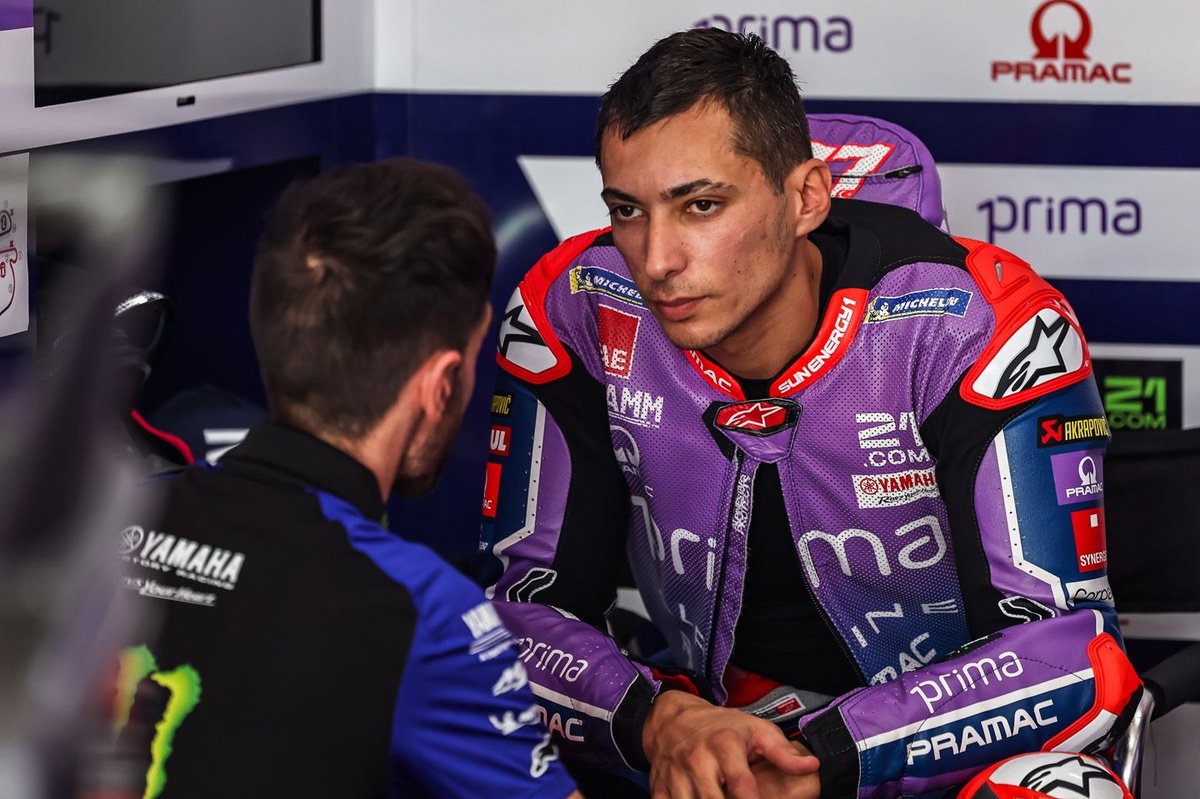
Sepang, Malaysia – The highly anticipated 2026 MotoGP pre-season testing at Sepang International Circuit has delivered a stark reality check for World Superbike sensation Toprak Razgatlioglu, with sportsamo.com reporting that the Turkish rider’s transition to the premier class is proving to be a significantly more arduous journey than initially projected. Hopes were sky-high for Razgatlioglu, a three-time WorldSBK champion renowned for his aggressive, unconventional riding style, but the rigorous demands of a MotoGP prototype have quickly recalibrated expectations for his rookie season.
From the outset, the Sepang shakedown and subsequent test sessions revealed the monumental leap from the production-based WorldSBK machines to the cutting-edge MotoGP prototypes. Razgatlioglu, piloting a brand-new Yamaha M1 for Pramac Racing, found himself grappling not just with the inherent limitations of an underdeveloped machine, but more profoundly with the fundamental differences required in riding technique. The high-octane environment of MotoGP, where every tenth of a second is fiercely contested, exposed the chasm between his proven WorldSBK prowess and the unique demands of Grand Prix racing.
On the combined timesheets, Razgatlioglu finished a disappointing 18th, almost two seconds adrift of the fastest rider over the three days, Alex Marquez, who demonstrated blistering pace. Even more tellingly, he lagged eight tenths behind Alex Rins, the leading Yamaha representative, indicating a substantial gap within his own manufacturer’s camp. His long-run pace, a crucial indicator of race performance, offered no greater solace, consistently placing him outside the competitive window. While his signature "stoppies" — a dramatic braking maneuver where the rear wheel lifts significantly — remained an entertaining spectacle, they masked a deeper struggle to extract raw lap time and consistent performance from the M1.
Razgatlioglu, known for his candidness, didn’t shy away from expressing his frustration. "I’m angry because the lap times just aren’t there," he admitted on Thursday afternoon. "I’m trying to adapt my riding style. Under braking, I feel good and comfortable, but I struggle in fast corners. When I open the throttle, the rear tire starts sliding and doesn’t stop, and that makes it hard to turn." This candid assessment highlights the core challenge: the MotoGP M1, with its immense power, sophisticated electronics, and unique tire characteristics, demands a finesse and precision distinct from the brute force and rear-wheel steering that brought him so much success in WorldSBK. In Superbikes, Razgatlioglu masterfully exploited rear tire slides to initiate turns and carry corner speed. In MotoGP, however, excessive rear slide disrupts the delicate aerodynamic balance and tire temperature, leading to a loss of drive and slower exit speeds. As his teammate Jack Miller frequently advises, the key lies in being "gentle" – a mantra easier said than done for a rider hardwired for aggressive, full-throttle engagement.
To facilitate his transition, Razgatlioglu has already requested specific modifications to his M1, aiming to bridge the gap between his WorldSBK-honed instincts and the MotoGP paradigm. These adjustments include fitting a wider handlebar, a seemingly minor change that can significantly alter leverage and rider input, particularly in braking and turn-in. More significantly, he expressed a desire to rely more heavily on the rear of the bike, attempting to replicate the sensation and feedback he was accustomed to on the WorldSBK-spec Yamaha R1. However, this preference inadvertently led to an unforeseen aerodynamic penalty: the increased distance between the lowest point of the seat and the maximum height of the tail unit meant he occasionally had to take to the track without the crucial rear winglets, sacrificing valuable downforce and stability. This intricate interplay between rider preference, bike setup, and aerodynamic performance underscores the complexity of MotoGP development and adaptation.
The journey from WorldSBK stardom to MotoGP competitiveness has historically been a challenging one, with varying degrees of success. While some, like Ben Spies, have managed to carve out respectable careers, others have found the transition insurmountable. Spies, who joined MotoGP full-time in 2010 with Yamaha a year after winning the World Superbike title, remains a significant benchmark. His career saw him claim a memorable Grand Prix victory at Assen in 2011, six podium finishes, and a fifth-place overall championship standing. Spies’s methodical approach and natural talent allowed him to adapt, but even he spoke of the immense challenge. Other notable WorldSBK champions like Troy Bayliss, despite his unparalleled success on production bikes, had a less impactful MotoGP career before returning to WorldSBK dominance. Colin Edwards, another American WorldSBK champion, enjoyed a long and solid MotoGP career, but consistent race wins eluded him. These precedents underscore that Razgatlioglu’s current struggles are not unique but rather a common thread in the narrative of riders crossing this demanding divide. The sheer power, the carbon brakes, the advanced electronics, and the highly specialized Michelin tires of MotoGP demand a complete re-education for even the most naturally gifted riders.
Despite the initial disappointment in Sepang, Razgatlioglu’s undeniable charisma and raw talent continue to captivate the paddock. Within Yamaha, there’s an almost palpable sense of hope surrounding the Turk. Paolo Pavesio, Yamaha’s managing director, is reportedly "in love" with Razgatlioglu, a bond forged during their shared time in the WorldSBK paddock. This strong endorsement from a key executive speaks volumes about the manufacturer’s long-term investment and belief in his potential. Such devotion, however, also raises the stakes, with some internal figures expressing reservations about the level of expectation placed upon a rookie, suggesting a need for a more tempered approach to his development. The rider market is already buzzing, with some industry insiders even whispering Razgatlioglu’s name as a potential factory Yamaha M1 candidate for 2027, possibly alongside current frontrunner Jorge Martin, signaling the immense perceived value he brings.
His current team, Pramac Racing, shares this enthusiasm. Team manager Gino Borsoi lauded Razgatlioglu as "polite and a great guy," highlighting his positive attitude and work ethic – qualities that are invaluable during a challenging adaptation period. This magnetism extends beyond his immediate team, resonating throughout the entire MotoGP paddock. Even rivals acknowledge his inherent talent. A high-ranking Ducati executive, offering an impartial perspective, stated, "Toprak is a fast rider, I have no doubt about that. I think he’ll end up being competitive." However, the executive added a crucial caveat: "The thing is, he needs to go through an adaptation process to MotoGP, and that has to happen at every level, not just riding. He’s come from a championship with a level that is clearly lower than this one. Here you have the very best of the best, and I think over these days he’s realized that."
This expert analysis touches on a critical psychological aspect. The transition involves not just mastering a new machine and riding style, but also adapting to the relentless pressure and intensity of the MotoGP ecosystem. The Ducati executive further elaborated, "As happens with most riders, their environment can either help or hinder that adaptation period. In his case, I get the feeling that people haven’t stopped telling him how good he is — which may well be true. But there are moments when that doesn’t help, and when you need to speak clearly and say things that are probably not pleasant to hear." This suggests that while encouragement is vital, blunt honesty about the areas needing improvement, even if uncomfortable, might be necessary to accelerate his learning curve. The contrast between being a dominant world champion and a struggling rookie can be mentally taxing, and Razgatlioglu himself confessed, "It’s not easy for me to see myself so far down, especially after Superbikes. The first five races will be tough; I’m going to suffer."
Toprak Razgatlioglu’s Sepang debut serves as a powerful reminder of the unforgiving nature of MotoGP. While his talent is undisputed, the path to success in the premier class demands a profound transformation of riding style, a deep understanding of complex machinery, and immense mental fortitude. The initial struggles are a critical part of this adaptation. The question now is how quickly Razgatlioglu and Yamaha can unlock his potential, turning the early frustration into the competitive edge that has defined his illustrious career to date. The road ahead will be challenging, but the paddock remains captivated by the prospect of "El Turco" eventually finding his rhythm among the elite of Grand Prix racing.