A recent report from sportsamo.com has ignited debate within the boxing community, challenging the long-held perception of Tyson Fury as the undisputed second-best heavyweight on the planet. While boxing analyst Johnny Nelson continues to champion Fury’s elite status, a closer examination of the "Gypsy King’s" performances since 2021 suggests a stark departure from the dominant displays that once solidified his claim. This analysis delves into the critical factors—activity, consistency, and observable in-ring evolution—that are leading many to question Fury’s current standing in the highly competitive heavyweight division.
Fury’s legacy is undeniable. His stunning 2015 upset of Wladimir Klitschko remains one of the sport’s most significant moments, a testament to his resilience and tactical prowess. His trilogy with Deontay Wilder, particularly the dominant performance in their second encounter, showcased a fighter at his absolute peak. However, the narrative shifts significantly when focusing on the period following the conclusion of the Wilder rivalry in 2021. While Fury secured victories against Dillian Whyte and Dereck Chisora, and endured a grueling split decision against Francis Ngannou, these bouts have been characterized by a noticeable decline in the sharpness and sustained dominance that defined his earlier career.
The split decision victory over former UFC champion Francis Ngannou in October 2023 serves as a prime example. Ngannou, in his professional boxing debut, managed to score a knockdown against Fury and consistently forced the British heavyweight into defensive postures. Fury’s recovery was remarkable, a testament to his chin and grit, but the performance itself revealed vulnerabilities. He appeared to labor, relying on clinching and absorbing punishment rather than dictating the pace with his usual fluid movement and offensive output. This was a far cry from the fighter who systematically dismantled opponents with a combination of elusive footwork, powerful jabs, and devastating hooks.
Similarly, his stoppage of Dillian Whyte in 2022, while effective, lacked the surgical precision and overwhelming pressure seen in previous high-profile wins. The fight against Dereck Chisora in late 2022 was particularly telling, a third encounter that offered little competitive urgency and highlighted Fury’s apparent lack of motivation against a fighter he had already defeated twice. While these wins were technically enough to maintain his undefeated record, the "eye test"—a crucial element in judging a fighter’s current capabilities—reveals a fighter whose movement is less fluid in sustained exchanges, and whose offensive bursts are shorter and less impactful. The consistent command of distance and ring control that once characterized his boxing has been replaced by a more reactive, often survival-oriented approach.
This perceived decline is further underscored by the emergence and consistent performances of other heavyweights in the division. Fighters like Oleksandr Usyk, who has unified the division and demonstrated exceptional skill and determination, have showcased a level of activity and consistency that Fury has struggled to match. The landscape of the heavyweight division is dynamic, and while past achievements are important for historical context, current form and consistent application of elite skills are paramount for contemporary rankings.
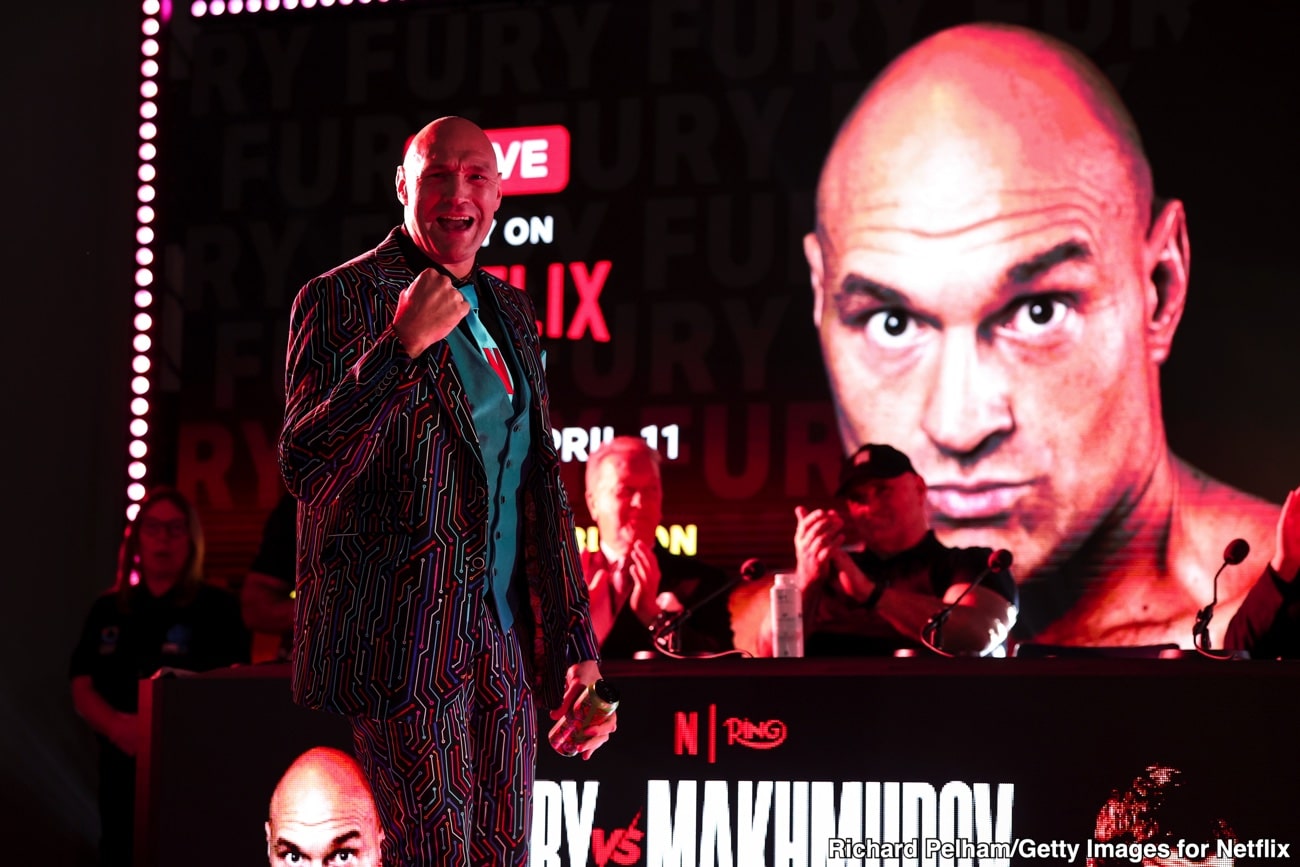
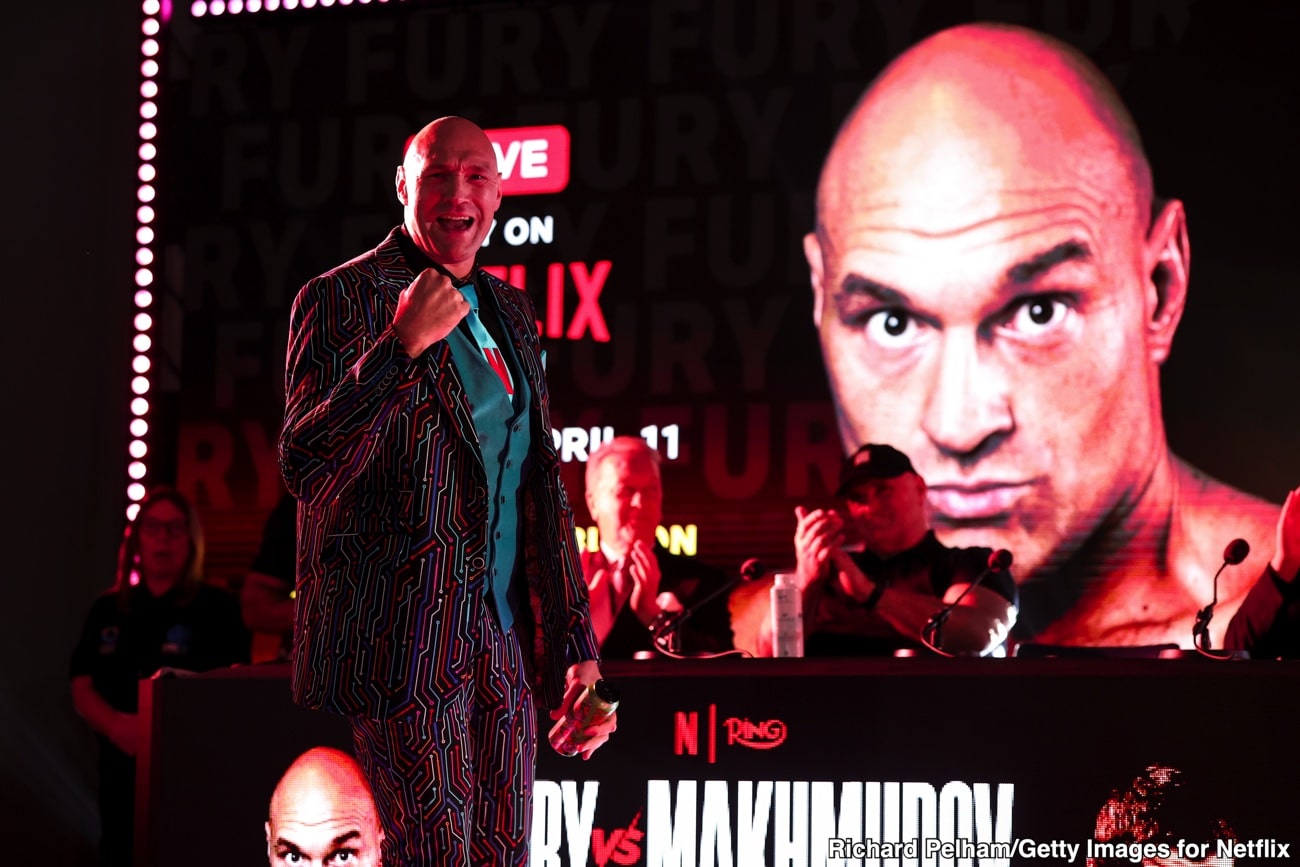
Fury’s upcoming bout on April 11th against Arslanbek Makhmudov is being framed as a "comeback assignment" rather than a true test against a top-tier contender. Makhmudov, while a formidable puncher, has not yet faced the elite level of opposition that would definitively separate him from the pack. This scheduling choice, some argue, reflects a strategy to rebuild momentum rather than to confront the division’s most challenging threats head-on.
Boxing analyst Johnny Nelson’s suggestion of a future bout between Fury and the WBO heavyweight champion Fabio Wardley highlights this evolving hierarchy. Wardley, a younger, high-volume puncher, represents a significant increase in pace and pressure compared to Fury’s recent opponents. Such a matchup would undoubtedly test Fury’s current capabilities in a way that his recent outings have not.

The argument against Fury’s top-two ranking is not an emotional plea but a data-driven assessment of his recent in-ring performances. The assertion is that at least five heavyweights, whose names are not currently topping the consensus rankings, would likely defeat Fury in his present condition. This group includes fighters like Guido Vianello, Lenier Pero, Martin Bakole, Bakhodir Jalolov, and Zhilei Zhang. These individuals have demonstrated consistent power, resilience, and strategic execution in their recent bouts, showcasing a level of form that arguably surpasses Fury’s current output.
Vianello, for instance, has shown impressive power and a developing all-around game. Pero has emerged as a technically sound and resilient fighter, capable of going the distance and posing problems for established names. Bakole has proven his mettle against strong opposition, displaying a robust chin and effective counter-punching. Jalolov, a decorated amateur, is rapidly ascending the professional ranks with devastating power and a developing ring IQ. Zhilei Zhang, having recently challenged for a world title, has shown he possesses the power and toughness to trouble any heavyweight.
These fighters, through their consistent performances and upward trajectory, represent the current vanguard of the heavyweight division. To maintain a position among the elite, fighters must not only possess a history of success but also demonstrate the ability to adapt and perform at the highest level in the present. Based on the evidence of his recent fights, Tyson Fury, while still a significant figure in boxing history, appears to be on a downward trend that warrants a re-evaluation of his standing. The "Gypsy King’s" legacy is secure, but his immediate future as a top-two contender is increasingly being called into question by the evolving reality of the heavyweight landscape. The upcoming fights and potential matchups will undoubtedly provide further clarity on where "The Gypsy King" truly stands in the modern era of heavyweight boxing.